The upcoming NASA Transiting Exoplanet Survey Satellite (TESS) will obtain space-based uninterrupted light curves for a large sample of bright white dwarfs distributed across the entire sky, providing a very rich resource for asteroseismological studies and the search for transits from planetary debris. We have compiled an all-sky catalogue of ultraviolet, optical and infrared photometry as well as proper motions, which we propose as an essential tool for the preliminary identification and characterization of potential targets. We present data for 1864 known white dwarfs and 305 high-probability white dwarf candidates brighter than 17 mag. We describe the spectroscopic follow-up of 135 stars, of which 82 are white dwarfs and 25 are hot subdwarfs. The new confirmed stars include six pulsating white dwarf candidates (ZZ Cetis), and nine white dwarf binaries with a cool main-sequence companion. We identify one star with a spectroscopic distance of only 25 pc from the Sun. Around the time TESS is launched, we foresee that all white dwarfs in this sample will have trigonometric parallaxes measured by the ESA Gaia mission next year.
Space-based photometric measurements first revealed low-amplitude irregularities in the pulsations of Cepheid stars, but their origins and how commonly they occur remain uncertain. To investigate this phenomenon, we present MOST space telescope photometry of two Cepheids. V473 Lyrae is a second-overtone, strongly modulated Cepheid, while U Trianguli Australis is a Cepheid pulsating simultaneously in the fundamental mode and first overtone. The nearly continuous, high-precision photometry reveals alternations in the amplitudes of cycles in V473 Lyr, the first case of period doubling detected in a classical Cepheid. In U TrA, we tentatively identify one peak as the $f_X$ or 0.61-type mode often seen in conjunction with the first radial overtone in Cepheids, but given the short length of the data, we cannot rule out that it is a combination peak instead. Ground-based photometry and spectroscopy were obtained to follow two modulation cycles in V473 Lyr and to better specify its physical parameters. The simultaneous data yield the phase lag parameter (the phase difference between maxima in luminosity and radial velocity) of a second-overtone Cepheid for the first time. We find no evidence for a period change in U TrA or an energy exchange between the fundamental mode and the first overtone during the last 50 years, contrary to earlier indications. Period doubling in V473 Lyr provides a strong argument that mode interactions do occur in some Cepheids and we may hypothesise that it could be behind the amplitude modulation, as recently proposed for Blazhko RR Lyrae stars.
The eclipsing binary theta(1) Orionis B-1, variable star designation BM Ori, is the faintest of the four well-known Trapezium stars at the heart of the Orion Nebula. The primary is a B3 star (similar to 6 M-circle dot) but the nature of the secondary (similar to 2 M-circle dot) has long been mysterious, since the duration and shape of primary eclipse are inappropriate for any sort of ordinary star. Here we report nearly continuous photometric observations obtained with the MOST satellite over similar to 4 cycles of the 6.47 d binary period. The light curve is of unprecedented quality, revealing a deep, symmetric primary eclipse as well as a clear reflection effect and secondary eclipse. In addition, there are other small disturbances, some of which repeat at the same phase over the four cycles monitored. The shape of the primary light curve has clearly evolved significantly over the past 40 years. While its overall duration and depth have remained roughly constant, the slopes of the descent and ascent phases are significantly shallower now than in the past and its distinctive flat-bottomed "pseudo-totality" is much less obvious or even absent in the most recent data. We further demonstrate that the primary eclipse was detected at X-ray wavelengths during the Chandra Orion Ultradeep Project (COUP) study. The light curve continues to be well modeled by a self-luminous and reflective disk-shaped object seen nearly edge-on orbiting the B3 primary. The dramatic change in shape over four decades is modeled as an opacity variation in a tenuous outer envelope or disk of the secondary object. We presume that the secondary is an extremely young protostar at an earlier evolutionary phase than can be commonly observed elsewhere in the Galaxy and that the opacity variations observed are related to its digestion of some accreted matter over the last 50-100 years. Indeed, this object deserves continued observational and theoretical attention as the youngest known eclipsing binary system.
Investigating long series of spectral and photometric observations, we found that the orbital elements of epsilon Aur are subject to much larger uncertainties than usually believed. The H alpha emission is found to move basically with the F primary but its exact location should still be investigated. We also find strong additional absorption and large reddening of the object near the third contact during the eclipse. Episodic atmospheric mass transfer from the F primary towards its companion is tentatively suggested.
NSV 11154 has been confirmed as a new member of the rare hydrogen-deficient R Coronae Borealis (RCB) stars based on new photometric and spectroscopic data. Using new photometry, as well as archival plates from the Harvard archive, we have constructed the historical light curve of NSV 11154 from 1896 to the present. The light curve shows the sudden, deep, irregularly spaced declines characteristic of RCB stars. The visible spectrum is typical of a cool (Teff ≲ 5000 K) RCB star, showing no hydrogen lines, strong C2 Swan bands, and no evidence of 13C. In addition, the star shows small pulsations that are typical of an RCB star and an infrared excess due to circumstellar dust, with a temperature of ∼800 K. The distance to NSV 11154 is estimated to be ∼14.5 kpc. RCB stars are very rare in the Galaxy, so each additional star is important to population studies leading to a better understanding the origins of these mysterious stars. Among the known sample of RCB stars, NSV 11154 is unusual in that it lies well above the Galactic plane (5 kpc) and away from the Galactic center, which suggests that its parent population is neither thick disk nor bulge.
The almost un-interrupted observations from Kepler Space Telescope can be used to search for Earth-size and larger planets around other stars, as well as for stellar variability and asteroseismological study. However, the Kepler's observations are carried out with a single broad-band filter, and ground-based follow-up observations are needed to complement Kepler's light curves to fully characterize the properties of the target stars. Here we present ground-based optical (BVRI) followup observations of V1154 Cyg, the only Cepheid in the Kepler field of view, and deriving basic properties of this star.
Aims. The aim of this work was to perform a multiphase spectroscopic study of W Vir which represents stars of the class of population II Cepheids, in order to trace the behaviour of emission features in different lines, and to use the data to describe the dynamical processes in the atmosphere of this star associated with the shock wave propagation. Methods. Our spectroscopic study of W Vir involved 18 high-resolution spectra obtained with the help of 3.5-m telescope of Apache Point Observatory. These spectra cover W Vir’s pulsational cycle with good phase resolution that enabled us to precisely fix the intervals of appearance, existence and disappearance of many anomalous spectral features, as well as to construct their radial velocity curves. Results. We detected and investigated the behaviour of emission and line doubling in many metallic lines (Na I, Fe I, Fe II, Ba II etc), as well as in hydrogen and helium lines. Analysis of the temporal characteristics of those emission features allowed us to make, in particular, the following conclusion. Conclusions. W Vir consists of two parts: the inner part, which is, in fact, a pulsating star itself with periodic shocks penetrating into the upper atmosphere, an outer one – a circumstellar envelope. The interaction of the main shock wave with the infalling envelope layers can explain the observed peculiarities of the spectral line variability.
We present a review of highlights of our photometric and photo-polarimetric monitoring and mathematical modeling of interacting binary stars of different types classical, asynchronous, intermedi ate polars with 25 timescales corresponding to differ ent physical mechanisms and their combinations (part "Polar"); negative and positive superhumpers in nova-like and dwarf novae stars ("Superhumper"); symbiotic ("Symbiosis"); eclipsing variables with and without ev idence for a current mass transfer ("Eclipser") with a special emphasis on systems with a direct impact of the stream into the gainor star's atmosphere, which we propose to call "Impactors", or V361 Lyr-type stars. Other parts of the ILA project are "Stellar Bell" (pul sating variables of different types and periods - M, SR, RV Tau, RR Lyr, Delta Sct) and "New Variable".
 G. C. Lubcke合作论文数8
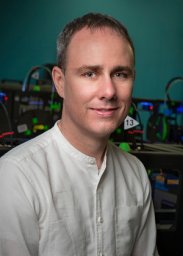 aaron d price合作论文数Res & Evaluat, Museum Sci & Ind8peter r guilbault合作论文数5
 Daniel Kaiser合作论文数Center for Mind/Brain Sciences, University of Trento5
 Bruce Gary合作论文数Jet Propulsion Laboratory, Pasadena, California5T. Vanmunster合作论文数4D. Starkey合作论文数4Frederick J. Vrba合作论文数4U. Munari合作论文数Asiago Observatory, University of Padua;National Institute of Astrophysics, Padova4
 Dirk Terrell合作论文数Department of Space Studies;Southwest Research Institute;Department of Space Studies, Southwest Research Institute4Matthew R. Templeton合作论文数4David Boyd合作论文数4Michael W. Richmond合作论文数4Shawn Dvorak合作论文数4Tom Krajci合作论文数4A. Oksanen合作论文数3timothy hager合作论文数3G. Walker合作论文数3R Kent Honeycutt合作论文数3
 Paula Szkody合作论文数Department of Astronomy, College of Arts & Sciences, University of Washington3Stella Kafka合作论文数3Michael D Koppelman合作论文数Starhouse Observatory3Glenn Gombert合作论文数3Nicholas D. Beser合作论文数3
 Lewis Cook合作论文数3Thomas F. Droege合作论文数3Gary D. Schmidt合作论文数3
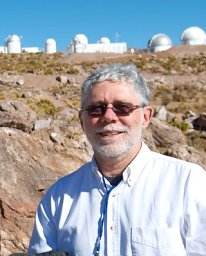 William Herbst合作论文数Astronomy Department;Wesleyan University;Astronomy Department, Wesleyan University3Bill Goff合作论文数2Bernardo Aquino合作论文数2r koff合作论文数2roger c stone合作论文数2charles a pullen合作论文数2marvin e baldwin合作论文数2B. Canzian合作论文数2
 R. H. Nelson合作论文数Waste Isolation Pilot Plant, Carlsbad, New Mexico 88220, USA.2L. Szabados合作论文数2rebecca turner合作论文数2George Wallerstein合作论文数2
 Douglas B. West合作论文数Math Dept., Univ. of Illinois2
 Denis Gillet合作论文数School of Engineering, Ecole Polytechnique Federale de Lausanne2J. Jones合作论文数2Andrei Fokin合作论文数2R. M. Wagner合作论文数2
 Joe Patterson合作论文数Department of Astronomy, Columbia University2Robert James合作论文数2Harry H Guetter合作论文数2R. Miles合作论文数2Brian K. Kloppenborg合作论文数Dept Phys & Astron, Univ Denver2




