Son Of X-Shooter (SOXS) is a spectrograph for the European Southern Observatory (ESO), recently installed at the New Technology Telescope at the La Silla Observatory, Chile. The main instrument goal consists of the characterization of transient sources, based on alerts. It covers from (partially) ultraviolet to visible and near-infrared bands, with a spectral resolution of R similar to 4500, using two separate, wavelength-optimized spectrographs. A scientific-grade visible camera, primarily intended for target acquisition, also provides a "light imaging" mode. We present the design of the SOXS Instrument Control Software, which is in charge of controlling all motors, calibration lamps, and detectors; monitoring sensors and components' status; coordinating the execution of exposures; and implementing all observation, calibration, and maintenance procedures. Given the extensive experience of the SOXS consortium in the development of instruments for the ESO Very Large Telescope, we decided to base the design of the control system on the same standards, both for hardware and software control. We illustrate the control network, the instrument functions and detectors to be controlled, the overall design of the SOXS Instrument Software and its main components. Then, we provide details about the control software for the most SOXS-specific components and peculiar features: the piezoelectric tip-tilt corrector used for active compensation of mechanical flexures of the instrument, the cryogenic piezoelectric slit exchanger for the near-infrared spectrograph, the co-rotator monitoring system, and the control of the commercial-off-the-shelf-based imaging camera.
The Wide-field Spectroscopic Telescope (WST) is a planned 12-meter class dedicated spectroscopic facility for massive spectroscopic surveys. This paper presents the current status of Work Package 4.5, the High Resolution Multi-Object Spectrograph (HR-MOS) module. We describe the international team organization and optical design resulting from extensive trade-off studies, presenting its evolution driven by scientific requirements and technical constraints. Design parameters derived from science cases and astronomical community requirements are detailed. Given the critical importance of mass and volume budgets, we present envelope dimensions and mass estimates for HR-MOS. The spectrograph constructive parameters are defined, including optical fiber specifications, multiplex capability, and modular architecture. Finally, we present the structural analysis addressing mechanical stability and performance requirements for this high-resolution multi-object spectrograph.
WST, the Wide-field Spectroscopic Telescope is a proposed new facility that will provide a transformational gain in spectroscopic survey capability over existing facilities. The WST is a 12 metre class telescope equipped with instrumentation to provide simultaneous observations in both multiple-object spectroscopy and integral field spectroscopy modes. This paper will describe the status of the instruments being designed for the WST, the fibre positioner module, the low and high-resolution multiple object spectrographs, the integral field spectrograph, disperser technology, sustainable detector and cryostat technology, and the calibration system. An overview of the overall layout of the instruments within the WST facility will be provided.
The Wide-field Spectroscopic Telescope (WST) is a planned 12-meter-class dedicated spectroscopic facility designed to address key scientific challenges through large spectroscopic surveys. This paper presents the current status of Work Package 4.5, which focuses on the High-Resolution Multi-Object Spectrograph (MOS-HR) module for WST. The MOSHR instrument is expected to provide a resolving power of R = 40,000 with a multiplexing capability of about 2,000 targets. The mechanical design activities carried out for the development of the HR spectrograph and for the definition of its optomechanical architecture are described. To account for both the scientific requirements of the spectrograph and the manufacturability constraints associated with such a complex instrument, the mechanical layout has been organized into four larger modules, each containing two sub-modules. Guided by feasibility considerations, such as mechanical performance, available volume, and fabrication and assembly aspects, each sub-module adopts a vertical optical bench configuration with optical elements mounted on both sides. Starting from the baseline optical design, the mechanical configuration has been developed to achieve the required alignment accuracy, structural stability, and environmental robustness. The workflow includes the translation of the optical prescription into a complete mechanical model, the definition of the main mounting and alignment interfaces, and preliminary static, modal, and seismic analyses to evaluate performance under operational and survival loads. As an outcome, the proposed design provides architecture that enables preliminary estimates of mass, volume, cost, and mechanical performance in terms of deformation, stress, and modal behavior of the modules.
This White Paper presents the scientific rationale and instrument concept for HRMOS (High-Resolution Multi-Object Spectrograph), a next-generation instrument proposed for the ESO Very Large Telescope within the VLT 2030 roadmap. Current and planned facilities offer either multi-object spectroscopy or ultra-high spectral resolution, but not both. HRMOS fills this gap by combining very high spectral resolution, multi-object capability, and radial-velocity stability, enabling transformative studies in Galactic and extragalactic astrophysics. The baseline design provides a resolving power of R = 80000, radial-velocity precision of 10 m s-1 (goal: 5 m s-1), simultaneous observations of 50-60 targets, and broad optical coverage down to 385 nm. These capabilities enable precise measurements of elemental abundances, isotopic ratios, line profiles, and radial velocities for large stellar samples, including crowded fields, star clusters, the Galactic bulge, and nearby dwarf galaxies. HRMOS will address key questions on the age of the oldest stellar populations through nucleocosmochronology, the formation and survival of planetary systems, the assembly history of the Milky Way and satellites, the origin of the heaviest elements, stellar evolution, and the chemical and dynamical properties of the interstellar and circumgalactic medium. It will bridge large spectroscopic surveys and the next generation of extremely large telescopes, with strong synergies with 4MOST, Gaia, TESS, PLATO, the proposed Haydn mission, and future ELT instruments. Building on VLT/FLAMES heritage, HRMOS represents a strategic investment for European astronomy in the 2030s.
The Wide-field Spectroscopic Telescope (WST) is a proposed 12-m class facility entirely dedicated to spectroscopic surveys, combining a high-multiplex multi-object spectrograph operating at low (MOS-LR) and high (MOS-HR) spectral resolution with a giant panoramic integral-field spectrograph (IFS), all three operating in parallel. Diffraction gratings are the key dispersing elements of all three instruments and, given the very large number and size of the units required, drive critical trade-offs in throughput, feasibility and production cost. This paper reviews the two grating technologies under consideration for WST, Volume Phase Holographic Gratings (VPHG) and binary (lithographic, surface-relief) gratings, summarizing their working principles and the parameters that control their diffraction efficiency. We then present the current baseline grating parameters and vendor results for each instrument: low-dispersion, VPHGs for the IFS; a four-arm GRISM layout for MOS-LR; and two competing high-resolution disperser architectures (8M16D and 16M4D) for MOS-HR, where binary gratings show a promising path to diffraction efficiencies beyond what is achievable with VPHGs. We conclude with the main open challenges, chiefly the mass production of hundreds of grating units within cost and schedule and the next steps foreseen to consolidate the disperser baseline for WST.
Ariel ( Atmospheric Remote-Sensing Infrared Exoplanet Large Survey) is ESA's M4 mission within the "Cosmic Vision" program, set to launch in 2029. Its goal is to survey the atmospheres of known exoplanets using transit spectroscopy. The mission employs a 1-meter-class telescope that is optimized for spectroscopy in the 1.95 to 7.8 mu m wavelength range, operating at cryogenic temperatures between 40 and 50 K. The Ariel Telescope features an off-axis, unobscured Cassegrain configuration, incorporating a parabolic recollimating tertiary mirror and a flat folding mirror that directs the output beam parallel to the optical bench. Additionally, the secondary mirror is mounted on a roto-translating stage to allow for adjustments during the mission. All mirrors and supporting structures are made from an aerospace-grade aluminium alloy, 6061-T651, chosen for its ease of manufacturing and thermalization. However, the material's low stiffness presents unique challenges for integration and alignment. A series of simulations were conducted to analyse the telescope ' s alignment, with a specific focus on mechanical tolerances and their impact on the optical performance. The paper thoroughly describes the simulation setup, the methodology used to assess tolerance effects, and presents the resulting data, offering valuable guidance for optimizing telescope alignment and ensuring robust optical performance.
ANDES (ArmazoNes high Dispersion Echelle Spectrograph) is a fibre-fed echelle spectrograph for the ELT with three spectral arms, spanning 0.4-1.8 mu m (goal 0.35-2.4 mu m) at similar to 100,000 resolution. It enables sensitive observations of astronomical objects, such as exoplanets, fundamental physics and other frontier science cases. We describe the instrument's design and architecture, emphasizing its unique features. The design is driven by requirements on resolving power, slit area, spectral coverage and stability. The instrument can operate in seeing-limited or SCAO modes, with options for sky and/or calibration measurements. In SCAO mode, it can use a small Integral Field Unit (IFU) with different spaxel scales. The light from the telescope reaches the Front-End on the Nasmyth platform, which has four insertable modules: two seeing-limited arms, one SCAO arm and one IFU arm. They are connected by fibres or fibre bundles to the Spectrographs in different locations: the Nasmyth Platform and the Coude room. The wavelength splitting depends on the fibre transparency. The subsystems are placed at different distances from the telescope. In Phase-B-one, we performed analyses to define the best trade-off for the budgets and architecture. We extended the spectrographs toward the goal ranges as much as possible. ANDES is complex, but its sophisticated and modular design will enable next-generation astronomy research.
 Marco Riva合作论文数Osservatorio Astronomico di Brera64
 Matteo Aliverti合作论文数INAF Osservatorio Astron Brera62
 Andrea Baruffolo合作论文数62
 Giuliano Pignata合作论文数Universidad Andrés Bello;Universidad de Tarapacá61
 Pietro Schipani合作论文数Istituto Nazionale di AstroFisica59S. J. Smartt合作论文数58
 Rosario Cosentino合作论文数Osservatorio Astrofisico di Catania;TNG - Telescopio Nazionale Galileo, INAF58Davide Ricci合作论文数MiNDSTEp Consortium58G. Capasso合作论文数58Fabrizio Vitali合作论文数57Hanindyo Kuncarayakti合作论文数Astronomy Research Division and Bosscha Observatory, Bandung Institute of Technology57Sergio D’Orsi合作论文数56Salvatore Scuderi合作论文数55
 Sergio Campana合作论文数Osservatorio Astronomico di Brera53
 Gianluca Li Causi合作论文数52
 Iair Arcavi合作论文数School of Physics and Astronomy, Faculty of Exact Sciences, Tel Aviv University;CIFAR51Seppo Mattila合作论文数Imperial College of Science, Technology and Medicine51
 Avishay Gal-Yam合作论文数Department of Particle Physics and Astrophysics, Faculty of Physics, Weizmann Institute of Science49
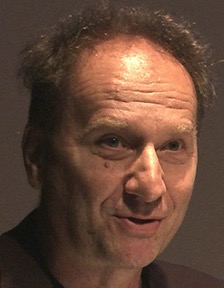 Massimo Della Valle合作论文数Capodimonte Astronomical Observatory, Napoli, Istituto Nazionale di Astrofisica;Scuola Superiore Meridionale, Federico II;Cattolica University49Ofir Hershko合作论文数47
 Maximilian Stritzinger合作论文数Department of Physics and Astronomy, Aarhus University43
 Sagi Ben-Ami合作论文数Department of Particle Physics & Astrophysics, Faculty of Physics, The Weizmann Institute of Science42Andrea Tozzi合作论文数Osserv Astrofis Arcetri, INAF40
 Stephen Smartt合作论文数Astrophysics Research Centre, School of Mathematics and Physics, Queen's University Belfast;Department of Physics, University of Oxford;Hintze Centre for Astrophysical Surveys, University of Oxford39
 Kalyan Radhakrishnan合作论文数INAF Osservatorio Astron Padova38Matteo Munari合作论文数INAF, Osservatorio di Catania Catania Italy38Federico Biondi合作论文数37D. R. Young合作论文数IBM Thomas J. Watson Research Center36Riccardo U. Claudi合作论文数36Marco Landoni合作论文数34Mirko Colapietro合作论文数34
 José Antonio Araiza-Durán合作论文数34Francesco D'Alessio合作论文数33Adam Rubin合作论文数32Giorgio Pariani合作论文数32Michael Rappaport合作论文数31Ricardo Zanmar Sanchez合作论文数31
 Laurent Marty合作论文数30Matteo Genoni合作论文数28Jani Achrén合作论文数28Enrico Cappellaro合作论文数28
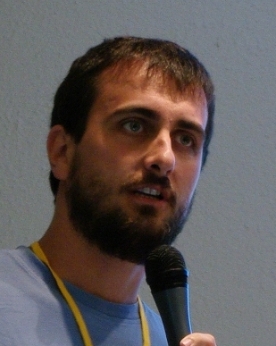 Paolo D'Avanzo合作论文数Brera Astronomical Observatory, Italian National Institute of Astrophysics28M. Genoni合作论文数27M. Landoni合作论文数27Rosario Di Benedetto合作论文数25
 Jari Kotilainen合作论文数25M. Colapietro合作论文数24J. Achrén合作论文数24Rachel Bruch合作论文数24




