The STAR collaboration reports a measurement of the transverse single-spin asymmetries, A(N), for neutral pions produced in polarized proton collisions with protons (pp), with aluminum nuclei (pAl) and with gold nuclei (pAu) at a nucleon-nucleon center-of-mass energy of 200 GeV. Neutral pions are observed in the forward direction relative to the transversely polarized proton beam, in the pseudorapidity region 2.7 < eta < 3.8. Results are presented for pi(0)s observed in the STAR forward meson spectrometer electromagnetic calorimeter in narrow Feynman x (x(F)) and transverse momentum (p(T)) bins, spanning the range 0.17 < x(F) < 0.81 and 1.7 < p(T) < 6.0 GeV/c. For fixed x(F) < 0.47, the asymmetries are found to rise with increasing transverse momentum. For larger x(F), the asymmetry flattens or falls as p(T) increases. Parametrizing the ratio r(A) = A(N)(pA)/A(N)(pp) = A(P) over the kinematic range, the ratio r(A) is found to depend only weakly on A, with < P > = -0.027 +/- 0.005. No significant difference in P is observed between the low-p(T) region, p(T) < 2.5 GeV/c, where gluon saturation effects may play a role, and the high-p(T) region, p(T) > 2.5 GeV/c. It is further observed that the value of A(N) is significantly larger for events with a large-p(T) isolated pi(0) than for events with a nonisolated pi(0) accompanied by additional jetlike fragments. The nuclear dependence r(A) is similar for isolated and nonisolated pi(0) events.
We report systematic measurements of bulk properties of the system created in Au + Au collisions at root S-NN = 14.5 GeV recorded by the STAR detector at the Relativistic Heavy Ion Collider (RHIC). The transverse momentum spectra of pi(+/-), K-+/-, and p((p) over bar) are studied at midrapidity (vertical bar y vertical bar < 0.1) for nine centrality intervals. The centrality, transverse momentum (p(T)), and pseudorapidity (eta) dependence of inclusive charged particle elliptic flow (v(2)), and rapidity-odd charged particles directed flow (v(1)) results near midrapidity are also presented. These measurements are compared with the published results from Au + Au collisions at other energies, and from Pb Pb collisions at root S-NN = 2.76 TeV. The results at root S-NN = 14.5 GeV show similar behavior as established at other energies and fit well in the energy dependence trend. These results are important as the 14.5-GeV energy fills the gap in mu(B), which is of the order of 100 MeV, between root S-NN = 11.5 and 19.6 GeV. Comparisons of the data with UrQMD and AMPT models show poor agreement in general.
A measurement of the fragmentation functions of jets into charged particles in p Pb collisions and pp collisions is presented. The analysis utilizes 28 nb(-1) of p Pb data and 26 pb(-1) of pp data, both at root(TN)-T-s= 5.02 TeV, collected in 2013 and 2015, respectively, with the ATLAS detector at the LHC. The measurement is reported in the centre-of-mass frame of the nucleon-nucleon system for jets in the rapidity range vertical bar y*vertical bar <1.6 and with transverse momentum 45 < p(T) < 260 GeV. Results are presented both as a function of the charged-particle transverse momentum and as a function of the longitudinal momentum fraction of the particle with respect to the jet. The pp fragmentation functions are compared with results from Monte Carlo event generators and two theoretical models. The ratios of the p +Pb to pp fragmentation functions are found to be consistent with unity. (C) 2018 CERN for the benefit of the ATLAS Collaboration. Published by Elsevier B.V.
Bose-Einstein correlations between identified charged pions are measured for $p$+Pb collisions at $\sqrt{s_{\mathrm{NN}}}=5.02$ TeV using data recorded by the ATLAS detector at the LHC corresponding to a total integrated luminosity of $28$ $\mathrm{nb}^{-1}$. Pions are identified using ionization energy loss measured in the pixel detector. Two-particle correlation functions and the extracted source radii are presented as a function of collision centrality as well as the average transverse momentum ($k_{\mathrm{T}}$) and rapidity ($y^{\star}_{\pi\pi}$) of the pair. Pairs are selected with a rapidity $-2<y^{\star}_{\pi\pi}<1$ and with an average transverse momentum $0.1<k_{\mathrm{T}}<0.8$ GeV. The effect of jet fragmentation on the two-particle correlation function is studied, and a method using opposite-charge pair data to constrain its contributions to the measured correlations is described. The measured source sizes are substantially larger in more central collisions and are observed to decrease with increasing pair $k_{\mathrm{T}}$. A correlation of the radii with the local charged-particle density is demonstrated. The scaling of the extracted radii with the mean number of participating nucleons is also used to compare a selection of initial-geometry models. The cross-term $R_\mathrm{ol}$ is measured as a function of rapidity, and a nonzero value is observed with $5.1\sigma$ combined significance for $-1<y^{\star}_{\pi\pi}<1$ in the most central events.
A search is described for a Higgs boson decaying into two photons, one of which has an internal conversion to a muon or an electron pair (ll gamma). The analysis is performed using proton-proton collision data recorded with the CMS detector at the LHC at a centre-of-mass energy of 8 TeV, corresponding to an integrated luminosity of 19.7 inverse femtobarns. The events selected have an opposite-sign muon or electron pair and a high transverse momentum photon. No excess above background has been found in the three-body invariant mass range 120 \u003c m[ll gamma] \u003c 150 GeV, and limits have been derived for the Higgs boson production cross section times branching fraction for the decay H to gamma* gamma to ll gamma, where the dilepton invariant mass is less than 20 GeV. For a Higgs boson with m[H] = 125 GeV, a 95% confidence level (CL) exclusion observed (expected) limit is 6.7 (5.9 +2.8/-1.8) times the standard model prediction. Additionally, an upper limit at 95% CL on the branching fraction of H to J/Psi gamma for the 125 GeV Higgs boson is set at 1.5E-3.
A search for a massive resonance decaying into a standard-model-like Higgs boson (H) and a W or Z boson is reported. The analysis is performed on a data sample corresponding to an integrated luminosity of 19.7 fb^(−1), collected in proton-proton collisions at a centre-of-mass energy of 8 TeV with the CMS detector at the LHC. Signal events, in which the decay products of Higgs, W, or Z bosons at high Lorentz boost are contained within single reconstructed jets, are identified using jet substructure techniques, including the tagging of b hadrons. This is the first search for heavy resonances decaying into HW or HZ resulting in an all-jet final state, as well as the first application of jet substructure techniques to identify H → WW* → 4q decays at high Lorentz boost. No significant signal is observed and limits are set at 95% confidence level on the production cross sections of W′ and Z′ in a model with mass-degenerate charged and neutral spin-1 resonances. Resonance masses are excluded for W′ in the interval [1.0, 1.6] TeV, for Z′ in the intervals [1.0, 1.1] and [1.3, 1.5] TeV, and for mass-degenerate W′ and Z′ in the interval [1.0, 1.7] TeV.
We report on simultaneous broadband observations of the TeV-emitting blazar Markarian 501 between 2013 April 1 and August 10, including the first detailed characterization of the synchrotron peak with Swift and NuSTAR. During the campaign, the nearby BL Lac object was observed in both a quiescent and an elevated state. The broadband campaign includes observations with NuSTAR, MAGIC, VERITAS, the Fermi Large Area Telescope, Swift X-ray Telescope and UV Optical Telescope, various ground-based optical instruments, including the GASP-WEBT program, as well as radio observations by OVRO, Metsahovi, and the F-Gamma consortium. Some of the MAGIC observations were affected by a sand layer from the Saharan desert, and had to be corrected using event-by-event corrections derived with a Light Detection and Ranging (LIDAR) facility. This is the first time that LIDAR information is used to produce a physics result with Cherenkov Telescope data taken during adverse atmospheric conditions, and hence sets a precedent for the current and future ground-based gamma-ray instruments. The NuSTAR instrument provides unprecedented sensitivity in hard X-rays, showing the source to display a spectral energy distribution (SED) between 3 and 79 keV consistent with a log-parabolic spectrum and hard X-ray variability on hour timescales. None (of the four extended NuSTAR observations) show evidence of the onset of inverse-Compton emission at hard X-ray energies. We apply a single-zone equilibrium synchrotron self-Compton (SSC) model to five simultaneous broadband SEDs. We find that the SSC model can reproduce the observed broadband states through a decrease in the magnetic field strength coinciding with an increase in the luminosity and hardness of the relativistic leptons responsible for the high-energy emission.
Background Neonatal sepsis is one of the major causes of morbidity and mortality at the community and hospital levels in India. There are several community practices associated with and contributing to Neonatal sepsis, especially late onset variety.Objective To analyze whether scalp shaving is an independent risk factor associated with community acquired late onset neonatal sepsis and the causative organism responsible.Methods This was a prospective, non-interventional, observational study. The study was conducted at two tertiary teaching hospitals in Eastern India from 1st May 2010 to 30th April 2011. A total of 382 babies were diagnosed as Late Onset Neonatal Sepsis and 410 , age and sex matched controls were taken from the Well Baby and Immunization clinics. The patients were clinically screened for sepsis and "septic screen" and blood, urine and CSF cultures sent, as needed.Results History of scalp shaving was present in 46(12.04%) out of 382 cases of Late Onset Neonatal Sepsis as compared to 20(4.87%) of 410 matched community controls, the difference was statistically significant (p<0.005). Positive blood cultures were obtained in 20(43.48%) out of 46 scalp shaven babies as compared to 118(35.11%) out of 336 non scalp shaven babies. The commonest organism in babies with scalp shaving was found to be methicillin resistant Staphylococcus aureus(MRSA), whereas the most common organism in non scalp shaven babies was Klebsiella pnuemoniae.Conclusion Scalp shaving appears to be an independent variable associated with community acquired Late Onset Neonatal Sepsis.Journal of College of Medical Sciences-Nepal, 2013, Vol-9, No-3, 35-44
 Swaminathan Kailas合作论文数Physics Group, Bhabha Atomic Research Centre29
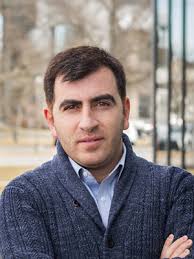 Irakli Chakaberia合作论文数Lawrence Berkeley National Laboratory24
 Sarah Boutle合作论文数School of Physics and Astronomy, University of Glasgow23steven worm合作论文数23
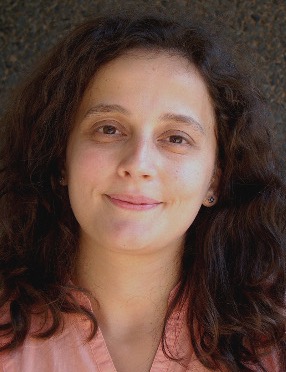 Sevil Salur合作论文数Department of Physics and Astronomy, School of Arts and Sciences, Rutgers University;Department of Physics, Yale University23
 Daniela Bortoletto合作论文数Department of Physics, University of Oxford23Sergey Senkin合作论文数University of Bristol(University of Bristol),Bristol,United Kingdom23Tejinder Virdee合作论文数22David Colling合作论文数22Konstantinos Theofilatos合作论文数university of patras22Lamia Benhabib合作论文数Subatech - Laboratoire de Physique Subatomique et des Technologies Associées(SUBATECH),Nantes,France22
 Rong-Shyang Lu (呂榮祥)合作论文数Department of Physics, National Taiwan University22Daniele Trocino合作论文数Northeastern University(Northeastern University,Northeastern Univ),Boston,United States22Pelin Kurt合作论文数University of Illinois at Chicago(University of Illinois at Chicago),Chicago,United States22Predrag Milenovic合作论文数Dept Phys, Univ Florida22Frank Golf合作论文数University of California, Santa Barbara(University of California),Santa Barbara,United States22Boris Mangano合作论文数University of California, San Diego(University of California, San Diego,University of California),La Jolla,United States22Mark Pesaresi合作论文数Imperial College London(Imperial College,Imperial College London),London,United Kingdom22Georgia Karapostoli合作论文数imperial college london22
 Helen Heath合作论文数School of Physics, University of Bristol22
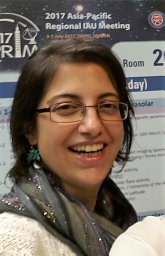 Eleni Petrakou合作论文数National Taiwan University, Natl Taiwan Univ22Silvia Taroni合作论文数Universität Zürich(University of Zurich,University of Zürich,Universität Zürich),Zurich,Switzerland22Francesco Santanastasio合作论文数European Organization for Nuclear Research(CERN),Geneve,Switzerland22Gigi Rolandi合作论文数CERN, Geneva, Switzerland22Luca Perrozzi合作论文数European Organization for Nuclear Research(CERN),Geneve,Switzerland22Stefano Mersi合作论文数European Organization for Nuclear Research(CERN),Geneve,Switzerland22Martina Malberti合作论文数European Organization for Nuclear Research(CERN),Geneve,Switzerland22Olivier Bondu合作论文数European Organization for Nuclear Research(CERN),Geneve,Switzerland22Alessio Bonato合作论文数European Organization for Nuclear Research(CERN),Geneve,Switzerland22
 Santiago Folgueras Gomez合作论文数Department of Física, University of Oviedo22Hugues Brun合作论文数Universidad de Oviedo(Universidad de Oviedo,University of Oviedo),Oviedo,Spain22
 Carlo Battilana合作论文数Dipartimento di Fisica e Astronomia, Università di Bologna22Grzegorz Brona合作论文数European Organization for Nuclear Research(CERN),Geneve,Switzerland22Maria Margherita Obertino合作论文数Univ Piemonte Orientale, Novara, Italy22
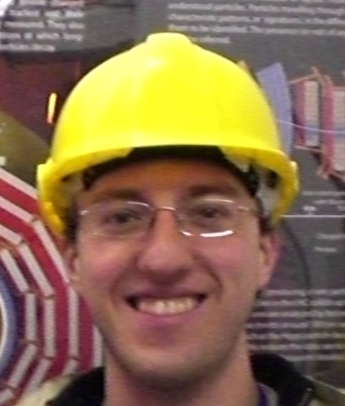 Marco Musich合作论文数Université Catholique de Louvain22Shervin Nourbakhsh合作论文数DEPT CHEM, IOWA STATE UNIV SCI & TECHNOL22Alessio Ghezzi合作论文数European Organization for Nuclear Research(CERN),Geneve,Switzerland22Antonio Tropiano合作论文数European Organization for Nuclear Research(CERN),Geneve,Switzerland22Federica Primavera合作论文数European Organization for Nuclear Research(CERN),Geneve,Switzerland22Cesare Calabria合作论文数European Organization for Nuclear Research(CERN),Geneve,Switzerland22
 Hamed Bakhshian合作论文数Department of Physics, Isfahan University of Technology22Loukas Gouskos合作论文数Dept Phys, Univ Calif Santa Barbara22Eleni Ntomari合作论文数NCSR Demokritos, Athens, Greece22Niklas Pietsch合作论文数European Organization for Nuclear Research(CERN),Geneve,Switzerland22Sebastian Naumann-Emme合作论文数Deutsch Elektronen Synkrotron DESY, D-22607 Hamburg, Germany22Johannes Hauk合作论文数European Organization for Nuclear Research(CERN),Geneve,Switzerland22Heiko Geenen合作论文数European Organization for Nuclear Research(CERN),Geneve,Switzerland22Paul Papacz合作论文数European Organization for Nuclear Research(CERN),Geneve,Switzerland22Natalie Heracleous合作论文数European Organization for Nuclear Research(CERN),Geneve,Switzerland22




