Given the evolution of an arbitrary open quantum system, we formulate a general and unambiguous method to separate the internal energy change of the system into an entropy-related contribution and a part causing no entropy change, identified as heat and work, respectively. We also demonstrate that heat and work admit geometric and dynamical descriptions by developing a universal dynamical equation for the given trajectory of the system. The dissipative and coherent parts of this equation contribute exclusively to heat and work, where the specific role of a work contribution from a counterdiabatic drive is underlined. Next we define an expression for the irreversible entropy production of the system which does not have explicit dependence on the properties of the ambient environment; rather, it depends on a set of the system's observables excluding its Hamiltonian and is independent of internal energy change. We illustrate our results with three examples.
A universal scheme is introduced to speed up the dynamics of a driven open quantum system along a prescribed trajectory of interest. This framework generalizes counterdiabatic driving to open quantum processes. Shortcuts to adiabaticity designed in this fashion can be implemented in two alternative physical scenarios: one characterized by the presence of balanced gain and loss, the other involves non-Markovian dynamics with time-dependent Lindblad operators. As an illustration, we engineer superadiabatic cooling, heating, and isothermal strokes for a two-level system, and provide a protocol for the fast thermalization of a quantum oscillator.
Fast nonadiabatic control protocols known as shortcuts to adiabaticity have found a plethora of applications, but their use has been severely limited to speeding up the dynamics of isolated quantum systems. We introduce shortcuts for open quantum processes that make possible the fast control of Gaussian states in nonunitary processes. Specifically, we provide the time modulation of the trap frequency and dephasing strength that allow preparing an arbitrary thermal state in a finite time. Experimental implementation can be done via stochastic parametric driving or continuous measurements, readily accessible in a variety of platforms.
Quantum speed limits set an upper bound to the rate at which a quantum system can evolve. Adopting a phase-space approach, we explore quantum speed limits across the quantum-to-classical transition and identify equivalent bounds in the classical world. As a result, and contrary to common belief, we show that speed limits exist for both quantum and classical systems. As in the quantum domain, classical speed limits are set by a given norm of the generator of time evolution.
A universal relation is established between the quantum work probability distribution of an isolated driven quantum system and the Loschmidt echo dynamics of a two-mode squeezed state. When the initial density matrix is canonical, the Loschmidt echo of the purified double thermofield state provides a direct measure of information scrambling and can be related to the analytic continuation of the partition function. Information scrambling is then described by the quantum work statistics associated with the time-reversal operation on a single copy, associated with the sudden negation of the system Hamiltonian.
We introduce a scheme for the quantum simulation of many-body decoherence based on the unitary evolution of a stochastic Hamiltonian. Modulating the strength of the interactions with stochastic processes, we show that the noise-averaged density matrix simulates an effectively open dynamics governed by k-body Lindblad operators. Markovian dynamics can be accessed with white-noise fluctuations; non-Markovian dynamics requires colored noise. The time scale governing the fidelity decay under many-body decoherence is shown to scale as N^{-2k} with the system size N. Our proposal can be readily implemented in a variety of quantum platforms including optical lattices, superconducting circuits, and trapped ions.
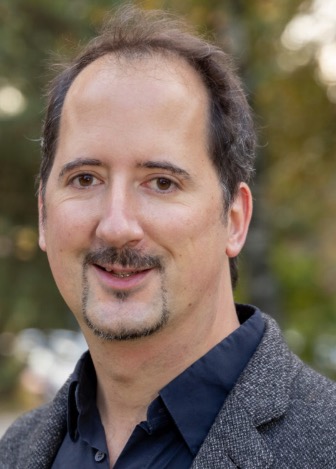 Adolfo del Campo合作论文数Department of Physics and Materials Science, Faculty of Science, Technology and Medicine, University of Luxembourg;Donostia International Physics Center;Department of Physics, University of Massachusetts Boston6
 Ali T. Rezakhani合作论文数Department of Physics;Sharif University of Technology;Department of Physics, Sharif University of Technology2Inigo Luis Egusquiza合作论文数Fisika Teorikoaren Saila2Sahar Alipour合作论文数Department of Physics;Sharif University of Technology;Department of Physics, Sharif University of Technology2
 Mathieu Beau合作论文数1Léonce Dupays合作论文数Dept Phys & Mat Sci, Univ Luxembourg1
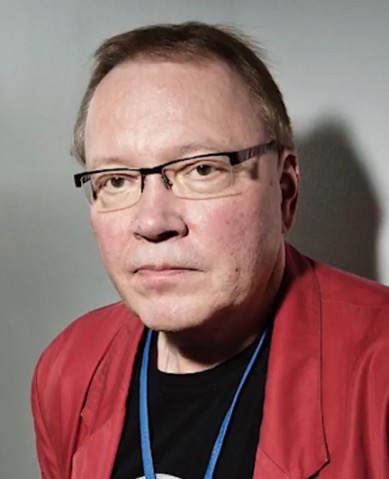 Tapio Ala-Nissila合作论文数Department of Mathematical Sciences, Loughborough University;Department of Applied Physics, Aalto University School of Science1
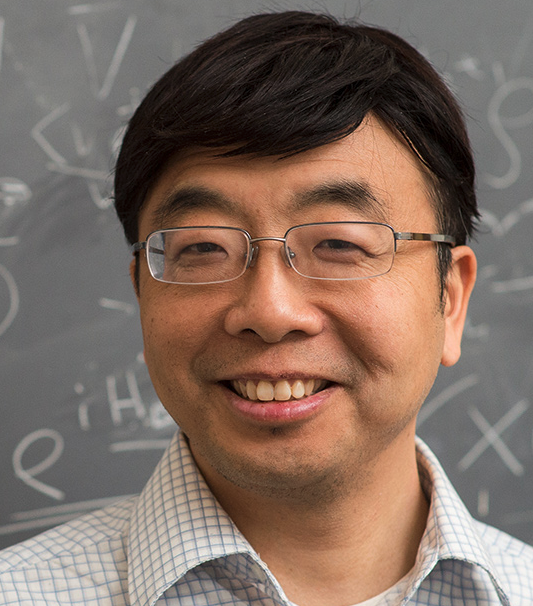 Jianshu Cao合作论文数Massachusetts Institute of Technology;Freiburg Institute for Advanced Studies, Universitat Freiburg1
 Javier Molina-Vilaplana合作论文数Universidad Politécnica de Cartagena1
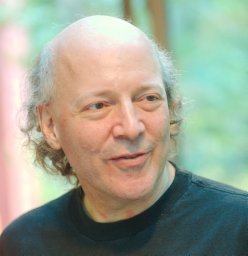 Norman Margolus合作论文数Laboratory for Computer Science;Massachusetts Institute of Technology;Laboratory for Computer Science, Massachusetts Institute of Technology1




