A study was undertaken on the northwestern coast of Portugal to evaluate the selectivity effect of both tooth spacing and mesh size on the catch of the white clam (Spisula solida). Two typical clam dredges, equipped with different tooth spacing and mesh size, were towed side by side. Three tooth spacing (20, 40 and 60mm) and three mesh sizes (35, 40 and 50mm) were investigated. The dredge selectivity experiments were performed by attaching a cover bag with a 20mm mesh to the gear. Individual hauls were analysed by the SELECT model. The Fryer’s mixed model of between-haul variation was also applied to data. The results showed that the space between teeth does not have an effect on selectivity. Tooth length was directly related to the dredge’s capture efficiency. The only factor that contributed to dredge size selection was mesh size. The 50% retention lengths estimated for mesh sizes 30, 40 and 50mm were 25.68, 26.35 and 31.94mm, respectively. For all mesh sizes, very narrow selection ranges were observed. The most appropriate mesh size to be enforced within the Portuguese northwestern S. solida fishery should be 40mm.
The effect of dredging on bottom structure was assessed, to estimate the damage inflicted on the benthic macrofauna left on the dredge path and to evaluate aggregations of scavengers within the track. Sediment suspended during dredging rapidly resettled both on sand and sandy-mud bottoms. Dredge tracks were deeper on sandy-mud sediments and persisted longer than in sandy sediments. The disappearance of tracks in both sediment types depended both on current strength and wave action. Damage and mortality induced by dredging on the macrobenthic animals left on the dredge path was relatively low. Post-fishing SCUBA diver observations showed that damaged animals left on the dredge path rapidly attracted scavengers, mainly Ophiura albida . Immediately after the tow ophiuroids reached densities eight times greater in the track region than in the background. However, they dispersed again rapidly because only few damaged fauna were available on the dredge tracks. Undamaged or slightly damaged shellfish started to rebury immediately after escaping from the dredge.
The white clam Spisula solida is harvested along the entire coast of Portugal using mechanical dredges. In this study, the total direct mortality of the macrobenthic community caused by three types of clam dredges (north dredge-ND, traditional dredge-TD, and the metallic grid dredge-GD) used in the S. solida fishery was determined and compared. The relationship between mortality and catching efficiency for each type of dredge was also assessed. Our results showed significant differences for total direct mortality between the ND and both the GD and TD dredges. This difference was largely attributed to the mortality of animals that died in the dredge track as a direct result of the physical damage inflicted by the dredge passing. It was also found that the damage to uncaught individuals is directly related to gear efficiency. The lower catching efficiency of the ND (64%) led to a higher proportion of damaged individuals being left in the dredge path, when compared with the more efficient GD (98%) and TD (90%) dredges. Short and long-term implications of the impact of dredging on the composition of benthic communities are discussed. From fisheries management and ecological points of view, there are obvious advantages to introduce into the bivalve dredge fisheries more efficient and selective dredges in order to reduce the number of damaged individuals and by-catch, and consequently decreasing the impact on the macrobenthic communities. (C) 2003 International Council for the Exploration of the Sea. Published by Elsevier Ltd. All rights reserved.
In situ observations of clam dredging showed that the effects of the dredge on the benthic macrofauna may not be constant during a tow. A sand buffer forms in front of the gear approximately 10 m after the beginning of a tow, and this pushes the sediment partially aside. In this study, we analyse differences in abundance, the number of taxa present, diversity, and evenness within sections of dredge-tracks in a disturbed, fished area and a non-fished area along the southern coast of Portugal. These areas were sampled by divers before and after dredge-fishing activity. At each site, three dredge-tracks were produced. These tracks were divided in three longitudinal sections (start, middle and end) and two transverse sections (track and edge). Six quadrats were used to sample macrofauna in each section of every track and edge. Our results show differences exist in macrofaunal distribution and abundance across sections of a dredge-track. These differences should be considered in any assessment of the short-term ecological impact of dredges on benthic macrofauna.
Macro and meiobenthic communities of two fishing areas (Vilamoura and Lagos) in the western part of south Portugal (Algarve coast) were analysed. Both locations had been under severe dredge-fishing impact until four years previously. Vilamoura has since continued to be dredged, while fishing activity in Lagos was stopped in 1995 as a response to overfishing. For each location, three replicate areas were analysed at depths of 7–9 m. In each of these areas, 18 quadrats for macrofauna and 12 cores for meiofauna were randomly sampled by SCUBA divers during September 1999. The Shannon–Weiner diversity index was higher for meiofauna in the fished area, whereas macrofauna diversity was higher in the recently non-fished area. Bray–Curtis dissimilarity between the two areas was 87·82%. Major differences were found between Ampeliscidea, Amphiura mediterranea, Spisula solida, Haustoriidae, Nemertinea and Diogenes pugilator populations at the two sites. There was higher abundance but lower biomass of potential macrofaunal scavengers in the fished area, and carnivore biomass was also higher in this area. Deposit-feeders dominated meiofauna abundance in both study areas. The community structure of the continuously fished area was dominated by small, opportunistic, short-lived species while the community structure of the recently non-fished area was dominated by more fragile and long-living sessile organisms.
Experiments to assess the effect of mesh size and tooth spacing on the catch of Spisula solida were undertaken with the aim of determining an optimal combination of these two characteristics to minimize the dredging impact on by-catch species. However, our data showed that tooth spacing, mesh size and the interactions between these two factors did not affect the number of damaged macrofaunal individual's caught. This may be because infauna entered the dredge without passing through the space between the teeth and the mesh of the net bag closed as it was stretched by the weight of the contents, preventing the escape of the caught individuals. Thus, independently of mesh size, when the dredge is towed over the sediment, the retained individuals were injured due to abrasion between animals and/or between animals and debris. The severity of injuries inflicted by dredging on different macrobenthic species is related to their morphology and fragility. (C) 2002 International Council for the Exploration of the Sea. Published by Elsevier Science Ltd. All rights reserved.
To evaluate a possible introduction of a new dredge in the fishery of (Linnaeus, 1758), IPIMAR has conducted a study with the objective of comparing the efficiency of two dredges (traditional dredge and the new dredge design) and evaluating their impact on the benthic community. The experiments were carried out during March 1999 on the Southwest coast of Portugal, from a site off Troia. Three different tow durations of 5, 10 and 20 min were investigated. A total of 24 hauls were accomplished, 4 for each tow duration and dredge. The experiments were conducted by attaching a cover bag with a 20 mm mesh to the gear. After each haul, the catches in the bag and in the cover were sorted separately. All individuals retained were attributed scores on a scale of 1–4 in which 1 equates to good and 4 equates to dead. The results obtained showed that catches from the traditional dredge (TD) are composed of a great fraction of juveniles of , while in the new dredge (NDD) catches are composed, almost entirely, by individuals with a superior size to the minimum legal length (50 mm). This result indicates that the mesh of the bag of the TD used in the exploitation of this resource is not adequate. For the 3 different tow durations, the mean fishing yield obtained for the NDD was always superior to the TD, due to its greater efficiency in capture. The proportion of by-catch is significantly higher when the TD is used. For all 3 tow duration, the TD caused mortalities on the target species and on the macrobenthic community in the same order of magnitude as the NDD. Since the fishery of is managed by daily quotas per boat, when using the NDD the impact on the macrobenthic community is reduced by about 50% due to its greater efficiency of capture. Another advantage in the usage of the NDD relatively to the TD, is to allow the smallest individuals (independently of the species) to escape rapidly through the metallic bars on the grid, increasing their probability of survival.
 Luis Chícharo合作论文数University of Algarve8
 Miguel Gaspar合作论文数7
 Miguel Neves Santos合作论文数Instituto de Investigação das Pescas e do Mar;Centro Regional de Investigação Pesqueira;Instituto de Investigação das Pescas e do Mar, Centro Regional de Investigação Pesqueira5CC Monteiro合作论文数5F. Leitão合作论文数4c augustin合作论文数3
 Ann Bucklin合作论文数Department of Marine Sciences, University of Connecticut3J Regala合作论文数2lluisa de yebra合作论文数2M. D. Dias合作论文数2
 Filipe Alves合作论文数2
 Kathryn Cook合作论文数2Jasmin Renz合作论文数2Maria Angela Pita Sobral合作论文数2
 Elaine S. Fileman合作论文数Centre for Coastal and Marine Science;Plymouth Marine Laboratory;Centre for Coastal and Marine Science, Plymouth Marine Laboratory2Mark C. Benfield合作论文数Department of Oceanography and Coastal Sciences, Louisiana State University2
 Piotr Margonski合作论文数2
 Maiju Lehtiniemi合作论文数Finnish Institute of Marine Research2Ana Maria Matildes Dos Santos合作论文数2Silke Laakmann合作论文数Marine Zoology (FB 2), University of Bremen2
 Peter H. Wiebe (Peter Wiebe)合作论文数Department of Biology, Woods Hole Oceanographic Institution2T. Kobari合作论文数1
 Panagiotis Kasapidis合作论文数Hellen Ctr Marine Res HCMR, Inst Marine Biol Biotechnol & Aquaculture IMBBC1
 Rodríguez-Ezpeleta Naiara合作论文数Marine Res Div, AZTI1
 Blanco-Bercial Leocadio合作论文数University of Connecticut1
 Majaneva Sanna合作论文数The University Centre in Svalbard;Faculty of Biological and Environmental Sciences, University of Helsinki;The University Centre in Svalbard, University of Helsinki1
 Anthony C. Atkinson合作论文数Department of Statistics, London School of Economics and Political Science;Department of Economics, Universita di Parma1
 C. E. M. Wagner合作论文数HEP Division;Argonne National Laboratory;HEP Division, Argonne National Laboratory1
 Solvita Strake合作论文数Latvian Institute of Aquatic Ecology, 8 Daugavgrivas, LV-1048 Riga, Latvia1
 Jeffrey A. Runge合作论文数Gulf of Maine Research Institute, School of Marine Sciences, University of Maine1
 Pennie Lindeque合作论文数Plymouth Marine Laboratory1Eileen Bresnan合作论文数FRS Marine Laboratory1
 Priscilla Licandro合作论文数Integrative Marine Ecology Department, Stazione Zoologica Anton Dohrn Napoli1Tone Falkenhaug合作论文数Institute of Marine Research1
 Juan Carlos Molinero合作论文数Institut de Recherche Pour le Développement1Padmini Dalpadado合作论文数1
 Astthor Gislason合作论文数Marine Research Institute1
 Sebastien Putzeys合作论文数1E. J. H. Head合作论文数1A. Campos合作论文数1
 H. Petursdottir合作论文数1
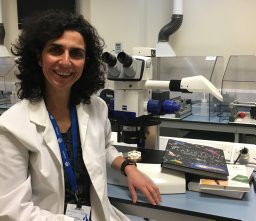 Claudia Castellani合作论文数British Oceanographic Data Centre1
 Lidia Yebra合作论文数Instituto Español de Oceanografía, Centro Oceanográfico de Málaga1
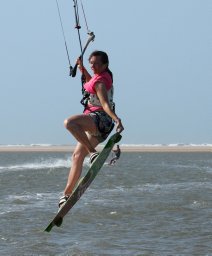 Sophie G. Pitois合作论文数1




