95.8SiO2–4.2HfO2 planar waveguide activated by 0.2mol% Er and 0.2mol% Yb was fabricated by multi-target rf-sputtering technique. The optical parameters were measured by an m-line apparatus operating at 543.5, 632.8, 1319 and 1542nm. The waveguide compositions were investigated by energy dispersive spectroscopy. The waveguide exhibits a single propagation mode at 1.3 and 1.5μm with an attenuation coefficient of 0.2dB/cm at 1.5μm. The emission of 4I13/2→4I15/2 transition of Er3+ ion, with a 42nm bandwidth was observed upon TE0 mode excitation at 980 and 514.5nm. Photoluminescence excitation spectroscopy was used to obtain information about the effective excitation efficiency of Er3+ ions by co-doping with Yb3+ ions. Channel waveguide in rib configuration were fabricated by wet etching process in the active film.
We report on the experimental demonstration of efficient adiabatic light transfer between the outer waveguides in a finite array of evanescently-coupled optical waveguides with negligible excitation of all the intermediate waveguides.
An active two dimensional near field imaging of a High Electron Mobility Transistor (HEMT) used as THz detector has been performed. The reflective imaging system developed at the ENEA FEL Facility in Frascati has been used to this purpose. This imaging technique has shown to be particularly powerful in resolving various coupling mechanisms of the incident radiation with the device.
An optical analogue of two-photon Rabi oscillations, occurring in a three-level atomic or molecular system coherently driven by two detuned laser fields, is theoretically proposed and experimentally demonstrated using three evanescently coupled optical waveguides realized on an active glass substrate. The optical analogue stems from the formal analogy between spatial propagation of light waves in the three-waveguide structure and the coherent temporal evolution of populations in a three-level atomic medium driven by two laser fields under two-photon resonance. In our optical experiment, two-photon Rabi oscillations are thus visualized as a slow spatial oscillatory exchange of light power between the two outer waveguides of the structure with a small excitation of the central waveguide.
 Vittorio Foglietti合作论文数Istituto di Fotonica e Nanotecnologie IFN-CNR, Via Cineto Romano 42, 00156 Roma, Italy7
 Giuseppe Della Valle合作论文数Dipartimento di Fisica, Politecnico di Milano3
 Toney Teddy Fernandez合作论文数STEM, University of South Australia3
 Marco Ornigotti合作论文数Dipartimento di Fisica;Istituto di Fotonica e Nanotecnologie del CNR;Politecnico di Milano;Istituto di Fotonica e Nanotecnologie del CNR, Politecnico di Milano3
 Paolo Laporta合作论文数Dipartimento di Fisica, Politecnico di Milano3
 E. Cianci合作论文数2
 Longhi Stefano合作论文数Dipartimento di Fisica, Politecnico di Milano;University of the Balearic Islands2
 W. VASTARELLA合作论文数1S Longhi合作论文数1a cetronio合作论文数1A Masci合作论文数1Pentti Korhonen合作论文数1Daniele Pochesci合作论文数1K. Tran Ngoc合作论文数1G. Speranza合作论文数1Andrea Chiappini合作论文数1M. Ferrari合作论文数1A. Doria合作论文数1m ilie合作论文数1
 Roberto Pilloton合作论文数Area della Ricerca di RM1, CNR-IC1
 Stefano Pelli合作论文数international federation of accountants1Simone Catoni合作论文数1Kari Ronka合作论文数1
 Albino Chiasera合作论文数Istituto di Fotonica e Nanotecnologie1E. Moser合作论文数Dipartimento di Fisica, Università di Trento and INFM1Massimiliano Dispenza合作论文数1
 Emilio Giovenale合作论文数INN-FIS, ENEA1F. Evangelisti合作论文数Physics Department "E. Amaldi",, Universití degli Studi Roma TRE1R. Buttiglione合作论文数1
 Pham Thanh Huy合作论文数Hanoi Advanced School of Science and Technology, Hanoi University of Technology1Claudio Lanzieri合作论文数1
 Luca Nardi合作论文数Centro Ricerche Casaccia, Via Anguillarese 301, I-00123, Rome, Italy1Anna Maria Fiorello合作论文数1
 Ennio Giovine合作论文数1
 Paolo Biagioni合作论文数Dipartimento di Fisica, Politecnico di Milano1
 Manu Lahdes合作论文数1
 Kari Kautio合作论文数1
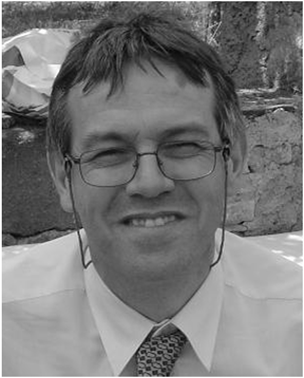 Marco Peroni合作论文数1C. Armellini合作论文数1
 Y. Jestin合作论文数Istituto di Fotonica e Nanotecnologie1
 Marco Finazzi合作论文数Nano-Optics Laboratory, Department of Physics, Politecnico di Milano1
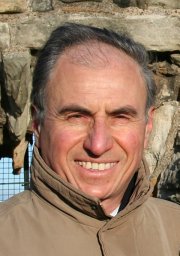 Gian Piero Gallerano合作论文数Dip . Sviluppo Tecnologie di Punta1
 Romolo Marcelli合作论文数CNR-IMM Roma1
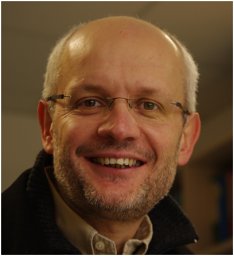 Gualtiero Nunzi Conti合作论文数Centro Fermi;Compendio del Viminale;Department of Materials and Devices;Fondazione Bruno Kessler;Department of Materials and Devices, Centro Fermi1
 Stefania Quaresima合作论文数Ist Trattamento Minerali, CNR1
 Jyrki Ollila合作论文数1
 Giancarlo C. Righini合作论文数Istituto di Fisica Applicata "Nello Carrara";Centro Fermi1
 Lamberto Duò合作论文数Dipartimento di Fisica, Politecnico di Milano1
 B. N. Shivakiran Bhaktha合作论文数University of Trento, Università di Trento1




