Context. The Fred Young Submillimeter Telescope (FYST) line intensity mapping (LIM) survey will measure the power spectrum (PS) of the singly ionized carbon 158 mu m fine-structure line, [CII], to trace the appearance of the first galaxies that emerged during and right after the epoch of reionization (EoR, 6 < z < 9). Aims. We aim to quantify the contamination of the (post-)EoR [CII] LIM signal by foreground carbon monoxide (CO) line emission (3 < J(up) < 12) and assess the efficiency to retrieve this [CII] LIM signal by the targeted masking of bright CO emitters. Methods. Using the IllustrisTNG300 simulation, we produced mock CO intensity tomographies based on empirical star formation rate-to-CO luminosity relations. Combining these predictions with the [CII] PS predictions of the first paper of this series, we evaluated a masking technique where the interlopers are identified and masked using an external catalog whose properties are equivalent to those of a deep Euclid survey. Results. Prior to masking, our [CII] PS forecast is an order of magnitude lower than the predicted CO contamination in the 225 GHz ([CII] emitted at z = 6.8 - 8.3) band of the FYST LIM survey, at the same level in its 280 GHz ([CII] emitted at z = 5.3 - 6.3) and 350 GHz ([CII] emitted at z = 4.1 - 4.8) bands, and an order of magnitude higher in its 410 GHz ([CII] emitted at z = 3.4 - 3.9) band. For our fiducial model, the optimal masking depth is reached when less than 10% of the survey volume is masked at 350 and 410 GHz but around 40% at 280 GHz and 60% at 225 GHz. At these masking depths we anticipate a detection of the [CII] PS at 350 and 410 GHz, a tentative detection at 280 GHz, whereas at 225 GHz the CO signal still dominates our model. In the last case, alternative decontamination techniques will be needed.
Aims. We have implemented a novel method to create simulated [CII] emission line intensity mapping (LIM) data cubes using COSMOS 2020 galaxy catalogue data. It allows us to provide solid lower limits for previous simulation-based model predictions and the expected signal strength of upcoming surveys. Methods. We applied [CII]158 mu m luminosity models to COSMOS 2020 to create LIM cubes covering a 1.2 x 1.2deg2 sky area. These models were derived using galaxy bulk property data from the ALPINE-ALMA survey over the redshift range of 4.4 < z < 5.9, while additional models were taken from the literature. The LIM cubes cover 3.42 < z < 3.87, 4.14 < z < 4.76, 5.34 < z < 6.31, and 6.75 < z < 8.27, matched to planned observations from the EoR-Spec module of the Prime-Cam instrument in the Fred Young Submillimeter Telescope (FYST). We also created predictions including additional galaxies below current detection limits by 'extrapolating' from the faint end of the COSMOS 2020 luminosity function, comparing these to predictions from the literature. In addition, we computed the signal-to-noise (S/N) ratios for the power spectra, using parameters from the planned FYST survey with predicted instrumental noise levels. Results. We find lower limits for the expected power spectrum using the likely incomplete empirical data: when normalised by 2 pi 2, the amplitudes at k = 1 Mpc-1 are 3.06 x 10⁷, 1.43 x 10⁷, 9.80 x 10⁵, 2.77 x 10⁵ (Jy sr-1)2 for the aforementioned redshift ranges. For the extrapolated sample, the power spectra are consistent with prior predictions, indicating that extrapolation is a viable method for creating mock LIM cubes. In this case, we expect a result of S/N> 1 when using FYST parameters. However, our high-redshift results remain inconclusive because of the poor completeness of COSMOS 2020 at z > 6.3. These predictions will be improved on the basis of future JWST data.
We present a detailed overview of the science goals and predictions for the Prime-Cam direct detection camera/spectrometer being constructed by the CCAT-prime collaboration for dedicated use on the Fred Young Submillimeter Telescope (FYST). The FYST is a wide-field, 6-m aperture submillimeter telescope being built (first light in mid-2024) by an international consortium of institutions led by Cornell University and sited at more than 5600 meters on Cerro Chajnantor in northern Chile. Prime-Cam is one of two instruments planned for FYST and will provide unprecedented spectroscopic and broadband measurement capabilities to address important astrophysical questions ranging from Big Bang cosmology through reionization and the formation of the first galaxies to star formation within our own Milky Way galaxy. Prime-Cam on the FYST will have a mapping speed that is over ten times greater than existing and near-term facilities for high-redshift science and broadband polarimetric imaging at frequencies above 300 GHz. We describe details of the science program enabled by this system and our preliminary survey strategies.
 C. Karoumpis合作论文数3
 Frank Bertoldi合作论文数Argelander-Institute for Astronomy, University of Bonn3
 Benjamin Magnelli合作论文数Argelander-Institut für Astronomie3Dominik A. Riechers合作论文数2Thomas Nikola合作论文数1T. Badescu合作论文数1T. Nikola合作论文数1Rebecca Jackson合作论文数1M. Tahani合作论文数1R. Timmermann合作论文数1V. Muralidhara合作论文数1Colton Broughton合作论文数1Bugao Zou合作论文数1Anthony Huber合作论文数1Benjamin Beringue合作论文数1Maude Charmetant合作论文数1Haruki Ebina合作论文数1Kayla Rossi合作论文数1J. Wheeler合作论文数1Y. Okada合作论文数1
 Anirban Roy合作论文数1Adrian Sinclair合作论文数1Cody J. Duell合作论文数1
 Eve M. Vavagiakis合作论文数Dept Phys, Cornell Univ1Zachary B. Huber合作论文数1Nicholas F. Cothard合作论文数NASA Goddard Space Flight Center1Dongwoo T. Chung合作论文数1Jeff McMahon合作论文数Dept Phys, Univ Chicago1Kaja Rotermund合作论文数Dept Phys & Atmospher Sci, Dalhousie Univ1B. C. Matthews合作论文数1Joseph E. Golec合作论文数Dept Phys, Univ Chicago1Patricio A. Gallardo合作论文数Dept Phys, Cornell Univ1Laura M. Fissel合作论文数1Roberto Puddu合作论文数1Ronan Higgins合作论文数1
 Yaqiong Li合作论文数1Laura C. Keating合作论文数1R. Simon合作论文数1
 P. Mauskopf合作论文数Sch Earth & Space Explorat, Arizona State Univ1
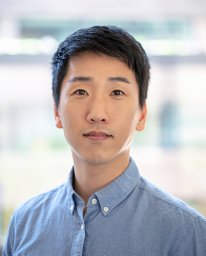 Steve K Choi合作论文数Dept Astron, Cornell Univ1
 Patrick N. Breysse合作论文数Johns Hopkins Bloomberg School of Public Health1
 Michael Vissers合作论文数National Institute of Standards and Technology;SQMS Center, Fermi National Accelerator Laboratory1
 Reinhold Schaaf合作论文数1
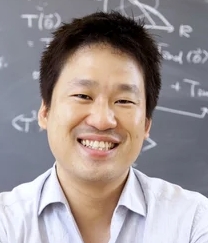 Eiichiro Komatsu合作论文数Department of Physical Cosmology, Max Planck Institute for Astrophysics;The International Max Planck Research School on Astrophysics, Ludwig Maximilians University Munich1
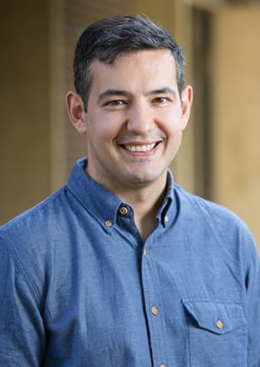 Nicholas Battaglia合作论文数Astronomy, College of Arts and Sciences, Cornell University1
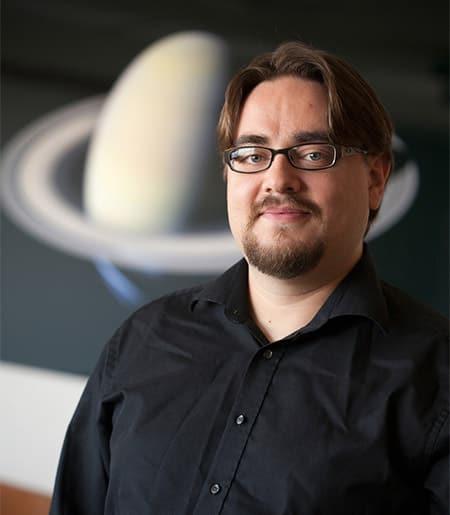 Dominik Alexander Riechers合作论文数Department of Astronomy, The College of Arts and Sciences, Cornell University1
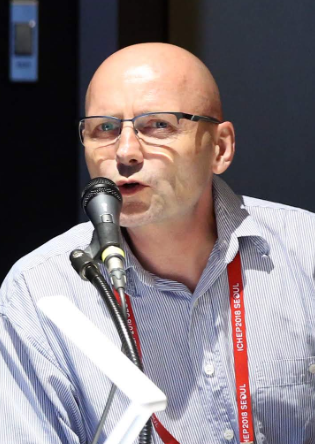 Jens Erler合作论文数Institut fur Kernphysik, Johannes Gutenberg-Universitat Mainz1
 Jurgen Stutzki合作论文数Mathematisch-Naturwissenschaftliche Fakultät, Universitat Zu Koln1
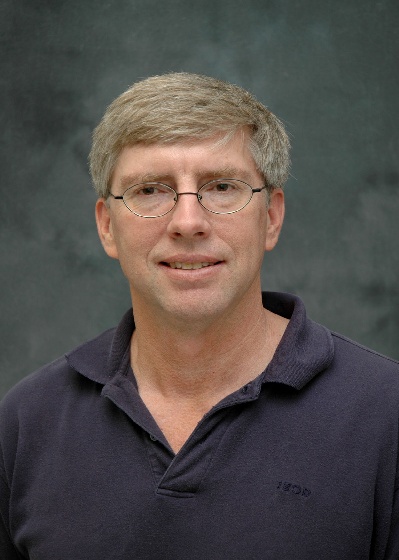 Norman Murray合作论文数Canadian Institute for Theoretical Astrophysics, University of Toronto;McLennan Physical Laboratories, University of Toronto1




