Lifelong development allows animals and machines to adapt to changes in the environment as well as in their own systems, such as wear and tear in sensors and actuators. An important use case of such adaptation is industrial odor-sensing. Metal-oxide-based sensors can be used to detect gaseous compounds in the air; however, the gases interact with the sensors, causing their responses to change over time in a process called sensor drift. Sensor drift is irreversible and requires frequent recalibration with additional data. This paper demonstrates that an adaptive system that represents the drift as context for the skill of odor sensing achieves the same goal automatically. After it is trained on the history of changes, a neural network predicts future contexts, allowing the context+skill sensing system to adapt to sensor drift. Evaluated on an industrial dataset of gas-sensor drift, the approach performed better than standard drift-naive and ensembling methods. In this way, the context+skill system emulates the natural ability of animal olfaction systems to adapt to a changing world, and demonstrates how it can be effective in real-world applications.
During natural disasters, emergency communication systems become overloaded, and people are forced to turn to social media to make requests for help. This study employs machine learning and artificial intelligence to automatically detect, identify, and categorize tweets relevant to first responders during Hurricane Harvey. We curate a dataset of tweets, present a labeling scheme based on relevance and urgency, and develop neural and non-neural machine learning models to automatically categorize tweets. Our best relevance classifiers, language models BERT and XLNet, perform significantly better than non-neural models and the deep convolutional neural network (CNN) and achieve comparable F1 scores. Ultimately, this study furthers machine learning and crisis communication research by developing methods to automatically categorize tweets that can signal to first responders of individuals' requests for help in urgent, life-threatening disasters. Our work also finds large pretrained language models promising for the development of well-performing disaster tweet classifiers in future work.
Automated simplification models aim to make input texts more readable. Such methods have the potential to make complex information accessible to a wider audience, e.g., providing access to recent medical literature which might otherwise be impenetrable for a lay reader. However, such models risk introducing errors into automatically simplified texts, for instance by inserting statements unsupported by the corresponding original text, or by omitting key information. Providing more readable but inaccurate versions of texts may in many cases be worse than providing no such access at all. The problem of factual accuracy (and the lack thereof) has received heightened attention in the context of summarization models, but the factuality of automatically simplified texts has not been investigated. We introduce a taxonomy of errors that we use to analyze both references drawn from standard simplification datasets and state-of-the-art model outputs. We find that errors often appear in both that are not captured by existing evaluation metrics, motivating a need for research into ensuring the factual accuracy of automated simplification models.
We consider the problem of learning to simplify medical texts. This is important because most reliable, up-to-date information in biomedicine is dense with jargon and thus practically inaccessible to the lay audience. Furthermore, manual simplification does not scale to the rapidly growing body of biomedical literature, motivating the need for automated approaches. Unfortunately, there are no large-scale resources available for this task. In this work we introduce a new corpus of parallel texts in English comprising technical and lay summaries of all published evidence pertaining to different clinical topics. We then propose a new metric based on likelihood scores from a masked language model pretrained on scientific texts. We show that this automated measure better differentiates between technical and lay summaries than existing heuristics. We introduce and evaluate baseline encoder-decoder Transformer models for simplification and propose a novel augmentation to these in which we explicitly penalize the decoder for producing "jargon" terms; we find that this yields improvements over baselines in terms of readability.
Social media is increasingly used by people during large-scale natural disasters to request emergency help. Previous work has had success in applying machine-learning classifiers to detect tweets in coarse-grained categories, such as disaster type and relevance. However, there is a dearth of work that focuses on detecting tweets containing requests for help that are actionable by first responders. Using over 5 million tweets posted during 2017's Hurricane Harvey in Houston, U.S., we show that though such requests are uncommon, their often life-or-death nature justifies the development of tweet classifiers to detect them. We find that the best-performing classifiers are a convolutional neural network (CNN) trained on word embeddings, support vector machine (SVM) trained on average word embeddings, and multilayer perceptron (MLP) trained on a combination of unigrams and part-of-speech (POS) tags. These models achieve F1 scores of over 0.86, confirming their efficacy in detecting urgent tweets. We highlight the utility of average word embeddings for training non-neural models, and that such features produce results competitive with more traditional n-gram and POS features.
 Junyi Jessy Li合作论文数Department of Linguistics, College of Liberal Arts, The University of Texas at Austin2
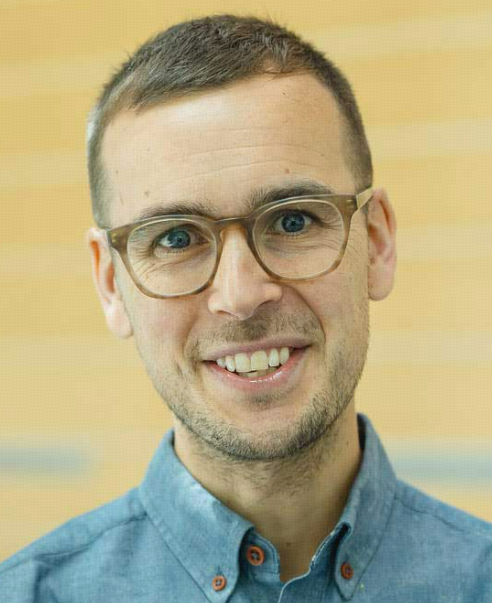 Byron C. Wallace合作论文数Khoury College of Computer Sciences, Northeastern University2
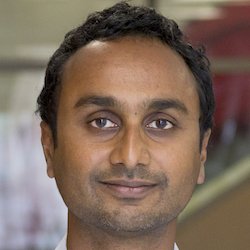 Dhiraj Murthy合作论文数Goldsmiths College, University of London2
 William Sheffield合作论文数1
 James E. Warner合作论文数School of Civil and Environmental Engineering, Cornell University1
 Jay Shenoy合作论文数Department of Computer Science, University of Illinois Urbana-Champaign1
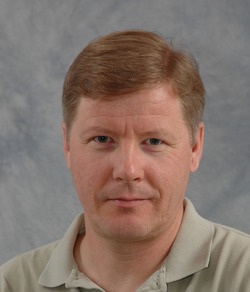 Risto Miikkulainen合作论文数Department of Computer Science, College of Natural Sciences, The University of Texas at Austin;Department of Neuroscience, College of Natural Sciences, The University of Texas at Austin;Cognizant AI Labs1
 Iain Marshall合作论文数King's College London1




