— The review presents the experiments performed with the KEDR detector at the e^ + e^ - collider VEPP-4M in the energy range of √(s) = 1.84–3.88 GeV. The cross section of e^ + e^ - annihilation to hadrons was measured at 22 points of this range and the search for narrow resonances was conducted below 3.1 GeV. The masses of J / . -0emψ and ψ (2S) mesons were measured with a record accuracy better than 3 ×10^ - 6 ; their partial and total widths were determined. Measurements of the tau lepton mass and masses of charged and neutral D mesons were performed with high precision. The measurements of the ψ (3770) parameters are discussed, and attention is drawn to some inconsistency of the procedure employed by the Particle Data Group for determining its parameters.
The TAIGA astrophysical complex includes now 3 IACTs at the distance 300-500 m between each other and 1km2 area wide-angle timing array TAIGA-HiSCORE. At energies above 40 TeV, a hybrid approach to the detection of gamma-rays becomes possible - the detection of EAS by both IACTs and the TAIGA-HiSCORE installation. The main advantage of the joint operation of the IACTs and timing is their good gamma/hadron separation, even by only few telescopes on the large area, by image parameters information and EAS another parameter (core position, direction and energy) that can be better reconstructed by the timing array. In this paper the following topics of a hybrid method are discussed: data processing and analysis, a comparison experimental results with Monte-Carlo simulations, selection of the first events with the energy more than 100 TeV from Crab Nebula in 250 hours of observation. The data were taken during the period of installation deployment, with one IACT in operation and half of the area of TAIGA-HiSCORE installation.
This paper is devoted to the analysis of simulation results of TAIGA-IACT in stereo mode of observations and describes the technique of gamma-ray detection with energies higher than several TeV. TAIGA-IACT is part of the TAIGA astrophysics complex. Installation currently consists of three operating telescopes located 300-500 m apart. Two additional telescopes will begin operation in the next two years. We describe a new gamma-hadron separation technique for point-like source observations.
We present the study of the decay J/ψ → ρπ . The results are based on of 5.2 million J/ψ events collected by the KEDR detector at the VEPP-4M collider. The branching fractions are measured to be ℬ ( J/ψ → ρπ ) = (2 . 072 ± 0 . 017 ± 0 . 062) ∙ 10 − 2 and ℬ ( J/ψ → π + π − π 0 ) = (1 . 878 ± 0 . 013 ± 0 . 051) ∙ 10 − 2 , where the first uncertainties are statistical and the second systematic. Our results are more precise than the previous relative measurements.
Using the 1.32 pb^-1 statistics collected at the J/ψ peak with the KEDR detector at the VEPP-4M e^+e^- collider, we measured the branching fractions of J/ψ meson decays to the final states 2( π ^+π ^-)π ^0 , K^+K^-π ^+π ^-π ^0 , 2( π ^+π ^-) and K^+K^-π ^+π ^- . The results obtained for the decays J/ψ→ 2( π ^+π ^-)π ^0 , J/ψ→ K^+K^-π ^+π ^-π ^0 contradict the measurements performed by other groups in the last century, but agree well with recent results of BABAR and BESIII collaborations.
Abstract Using the 1.32 $$\hbox {pb}^{-1}$$ pb - 1 statistics collected at the $$J/\psi $$ J / ψ peak with the KEDR detector at the VEPP-4M $$e^{+}e^{-\, }$$ e + e - collider, we measured the branching fractions of $$J/\psi $$ J / ψ meson decays to the final states 2( $$\pi ^{+}\pi ^{-})\pi ^{0}$$ π + π - ) π 0 , $$K^{+}K^{-}\pi ^{+}\pi ^{-}\pi ^{0}$$ K + K - π + π - π 0 , 2( $$\pi ^{+}\pi ^{-})$$ π + π - ) and $$K^{+}K^{-}\pi ^{+}\pi ^{-}$$ K + K - π + π - . The results obtained for the decays $$J/\psi \rightarrow $$ J / ψ → 2( $$\pi ^{+}\pi ^{-})\pi ^{0}$$ π + π - ) π 0 , $$J/\psi \rightarrow K^{+}K^{-}\pi ^{+}\pi ^{-}\pi ^{0}$$ J / ψ → K + K - π + π - π 0 contradict the measurements performed by other groups in the last century, but agree well with recent results of BABAR and BESIII collaborations.
Using the 1.32 pb(-1) statistics collected at the J/psi peak with the KEDR detector at the VEPP-4M e(+)e(-) collider, we measured the branching fractions of J/psi meson decays to the final states 2(pi(+)pi(-))pi(0), K+K- pi(+)pi(-)pi(0), 2(pi(+)pi(-)) and K+K- pi(+)pi(-). The results obtained for the decays J/psi -> 2(pi(+)pi(-))pi(0), J/psi -> K+K- pi(+)pi(-)pi(0) contradict the measurements performed by other groups in the last century, but agree well with recent results of BABAR and BESIII collaborations.
Using the 1.32 pb^-1 statistics collected at the J/ψ peak with the KEDR detector at the VEPP-4M e^+e^- collider, we measured the branching fractions of J/ψ meson decays to the final states 2( π ^+π ^-)π ^0 , K^+K^-π ^+π ^-π ^0 , 2( π ^+π ^-) and K^+K^-π ^+π ^- . The results obtained for the decays J/ψ→ 2( π ^+π ^-)π ^0 , J/ψ→ K^+K^-π ^+π ^-π ^0 contradict the measurements performed by other groups in the last century, but agree well with recent results of BABAR and BESIII collaborations.
The study of baryon excitation spectra provides insight into the inner structure of baryons. So far, most of the world-wide efforts have been directed towards N^* and spectroscopy. Nevertheless, the study of the double and triple strange baryon spectrum provides independent information to the N^* and spectra. The future antiproton experiment P ANDA will provide direct access to final states containing a pair, for which production cross sections up to μ b are expected in p̅ p reactions. With a luminosity of L=10^31 cm ^-2 s ^-1 in the first phase of the experiment, the expected cross sections correspond to a production rate of ∼ 10^6 events /day . With a nearly 4π detector acceptance, P ANDA will thus be a hyperon factory. In this study, reactions of the type p̅ p → ^+ ^*- as well as p̅ p → ^*+ ^- with various decay modes are investigated. For the exclusive reconstruction of the signal events a full decay tree fit is used, resulting in reconstruction efficiencies between 3 and 5
The antiproton experiment PANDA at FAIR is designed to bring hadron physics to a new level in terms of scope, precision and accuracy. In this work, its unique capability for studies of hyperons is outlined. We discuss ground-state hyperons as diagnostic tools to study non-perturbative aspects of the strong interaction, and fundamental symmetries. New simulation studies have been carried out for two benchmark hyperon-antihyperon production channels: $${\bar{p}}p \rightarrow {\bar{\varLambda }}\varLambda $$ p ¯ p → Λ ¯ Λ and $${\bar{p}}p \rightarrow {\bar{\varXi }}^+\varXi ^-$$ p ¯ p → Ξ ¯ + Ξ - . The results, presented in detail in this paper, show that hyperon-antihyperon pairs from these reactions can be exclusively reconstructed with high efficiency and very low background contamination. In addition, the polarisation and spin correlations have been studied, exploiting the weak, self-analysing decay of hyperons and antihyperons. Two independent approaches to the finite efficiency have been applied and evaluated: one standard multidimensional efficiency correction approach, and one efficiency independent approach. The applicability of the latter was thoroughly evaluated for all channels, beam momenta and observables. The standard method yields good results in all cases, and shows that spin observables can be studied with high precision and accuracy already in the first phase of data taking with PANDA.
The Facility for Antiproton and Ion Research (FAIR) in Darmstadt, Germany, provides unique possibilities for a new generation of hadron-, nuclear- and atomic physics experiments. The future antiProton ANnihilations at DArmstadt (PANDA or PANDA) experiment at FAIR will offer a broad physics programme, covering different aspects of the strong interaction. Understanding the latter in the non-perturbative regime remains one of the greatest challenges in contemporary physics. The antiproton-nucleon interaction studied with PANDA provides crucial tests in this area. Furthermore, the high-intensity, low-energy domain of PANDA allows for searches for physics beyond the Standard Model, e.g. through high precision symmetry tests. This paper takes into account a staged approach for the detector setup and for the delivered luminosity from the accelerator. The available detector setup at the time of the delivery of the first antiproton beams in the HESR storage ring is referred to as the Phase One setup. The physics programme that is achievable during Phase One is outlined in this paper.
The study of baryon excitation spectra provides insight into the inner structure of baryons. So far, most of the world-wide efforts have been directed towards $$N^*$$ and $$\varDelta $$ spectroscopy. Nevertheless, the study of the double and triple strange baryon spectrum provides independent information to the $$N^*$$ and $$\varDelta $$ spectra. The future antiproton experiment $$\overline{\text{ P }}$$ ANDA will provide direct access to final states containing a $${\overline{\varXi }}\varXi $$ pair, for which production cross sections up to $$\mu \text{ b }$$ are expected in $$\bar{\text{ p }}$$ p reactions. With a luminosity of $$L=10^{31}$$ cm $$^{-2}$$ s $$^{-1}$$ in the first phase of the experiment, the expected cross sections correspond to a production rate of $$\sim 10^6\, \text{ events }/\text{day }$$ . With a nearly $$4\pi $$ detector acceptance, $$\overline{\text{ P }}$$ ANDA will thus be a hyperon factory. In this study, reactions of the type $$\bar{\text{ p }}$$ p $$\rightarrow $$ $${\overline{\varXi }}^{+}$$ $$\varXi ^{*-}$$ as well as $$\bar{\text{ p }}$$ p $$\rightarrow $$ $${\overline{\varXi }}^{*+}$$ $$\varXi ^{-}$$ with various decay modes are investigated. For the exclusive reconstruction of the signal events a full decay tree fit is used, resulting in reconstruction efficiencies between 3 and 5%. This allows high statistics data to be collected within a few weeks of data taking.
The antiproton experiment PANDA at FAIR is designed to bring hadron physics to a new level in terms of scope, precision and accuracy. In this work, its unique capability for studies of hyperons is outlined. We discuss ground-state hyperons as diagnostic tools to study non-perturbative aspects of the strong interaction, and fundamental symmetries. New simulation studies have been carried out for two benchmark hyperon-antihyperon production channels: $${\bar{p}}p \rightarrow {\bar{\varLambda }}\varLambda $$ and $${\bar{p}}p \rightarrow {\bar{\varXi }}^+\varXi ^-$$ . The results, presented in detail in this paper, show that hyperon-antihyperon pairs from these reactions can be exclusively reconstructed with high efficiency and very low background contamination. In addition, the polarisation and spin correlations have been studied, exploiting the weak, self-analysing decay of hyperons and antihyperons. Two independent approaches to the finite efficiency have been applied and evaluated: one standard multidimensional efficiency correction approach, and one efficiency independent approach. The applicability of the latter was thoroughly evaluated for all channels, beam momenta and observables. The standard method yields good results in all cases, and shows that spin observables can be studied with high precision and accuracy already in the first phase of data taking with PANDA.
This paper reports on Monte Carlo simulation results for future measurements of the moduli of time-like proton electromagnetic form factors, $$|G_{E}|$$ | G E | and $$|G_{M}|$$ | G M | , using the $$\bar{p} p \rightarrow \mu ^{+} \mu ^{-}$$ p ¯ p → μ + μ - reaction at $$\overline{\text {P}}\text {ANDA}$$ P ¯ ANDA (FAIR). The electromagnetic form factors are fundamental quantities parameterizing the electric and magnetic structure of hadrons. This work estimates the statistical and total accuracy with which the form factors can be measured at $$\overline{\text {P}}\text {ANDA}$$ P ¯ ANDA , using an analysis of simulated data within the PandaRoot software framework. The most crucial background channel is $$\bar{p} p \rightarrow \pi ^{+} \pi ^{-}$$ p ¯ p → π + π - , due to the very similar behavior of muons and pions in the detector. The suppression factors are evaluated for this and all other relevant background channels at different values of antiproton beam momentum. The signal/background separation is based on a multivariate analysis, using the Boosted Decision Trees method. An expected background subtraction is included in this study, based on realistic angular distributions of the background contribution. Systematic uncertainties are considered and the relative total uncertainties of the form factor measurements are presented.
The study of baryon excitation spectra provides insight into the inner structure of baryons. So far, most of the world-wide efforts have been directed towards N ∗ and Δ spectroscopy. Nevertheless, the study of the double and triple strange baryon spectrum provides independent information to the N ∗ and Δ spectra. The future antiproton experiment PANDA will provide direct access to final states containing a ΞΞ pair, for which production cross sections up to μ b are expected in ¯ pp reactions. With a luminosity of L = 10 31 cm − 2 s − 1 in the first phase of the experiment, the expected cross sections correspond to a production rate of ∼ 10 6 events / day. With a nearly 4 π detector acceptance, PANDA will thus be a hyperon factory. In this study, reactions of the type ¯ pp → Ξ + Ξ ∗− as well as ¯ pp → Ξ ∗+ Ξ − with various decay modes are investigated. For the exclusive reconstruction of the signal events a full decay tree fit is used, resulting in reconstruction efficiencies between 3 and 5%. This allows high statistics data to be collected within a few weeks of data taking.
This paper reports on Monte Carlo simulation results for future measurements of the moduli of time-like proton electromagnetic form factors, vertical bar G(E)vertical bar and vertical bar G(M)vertical bar, using the (p) over barp -> mu(+)mu(-) reaction at PANDA (FAIR). The electromagnetic form factors are fundamental quantities parameterizing the electric and magnetic structure of hadrons. This work estimates the statistical and total accuracy with which the form factors can be measured at PANDA, using an analysis of simulated data within the PandaRoot software framework. The most crucial background channel is (p) over barp -> pi(+)pi(-), due to the very similar behavior of muons and pions in the detector. The suppression factors are evaluated for this and all other relevant background channels at different values of antiproton beam momentum. The signal/background separation is based on a multivariate analysis, using the Boosted Decision Trees method. An expected background subtraction is included in this study, based on realistic angular distributions of the background contribution. Systematic uncertainties are considered and the relative total uncertainties of the form factor measurements are presented.
The electronic width of the J/psi meson and its product by the branching fractions of J/psi meson decay to hadrons and electrons measured with the KEDR detector at the VEPP-4M e(+)e(-) collider have been reported in ref. [1].
This documents describes the technical design and the expected performance of the Barrel DIRC detector for the PANDA experiment. The Barrel DIRC will provide hadronic charged particle identification in the polar angle range of $22^\circ$ to $140^\circ$ for particle momenta between 0.5 GeV/c and 3.5 GeV/c. The design is based on the successful BaBar DIRC with several key improvements. The performance and system cost were optimized in detailed detector simulations and validated with full system prototypes using particle beams at GSI and CERN. The final design meets or exceeds the PID goal of clean $π/K$ separation with at least 3 standard deviations over the entire phase space of charged kaons in the Barrel DIRC.
The (P) over bar ANDA (anti-Proton ANnihiliation at DArmstadt) experiment will be one of the four flagship experiments at the new international accelerator complex FAIR (Facility for Antiproton and Ion Research) in Darmstadt, Germany. (P) over bar ANDA will address fundamental questions of hadron physics and quantum chromodynamics using high-intensity cooled antiproton beams with momenta between 1.5 and 15 GeV/c and a design luminosity of up to 2 x 10(32) cm(-2) S-1. Excellent particle identification (PID) is crucial to the success of the (P) over bar ANDA physics program. Hadronic PID in the barrel region of the target spectrometer will be performed by a fast and compact Cherenkov counter using the detection of internally reflected Cherenkov light (DIRC) technology. It is designed to cover the polar angle range from 22 degrees to 140 degrees and will provide at least 3 standard deviations (s.d.) pi/K separation up to 3.5 GeV/c, matching the expected upper limit of the final state kaon momentum distribution from simulation. This documents describes the technical design and the expected performance of the (P) over bar ANDA Barrel DIRC detector. The design is based on the successful BaBar DIRC with several key improvements. The performance and system cost were optimized in detailed detector simulations and validated with full system prototypes using particle beams at GSI and CERN. The final design meets or exceeds the PID goal of clean pi/K separation with at least 3 s.d. over the entire phase space of charged kaons in the Barrel DIRC.
This paper summarises a comprehensive Monte Carlo simulation study for precision resonance energy scan measurements. Apart from the proof of principle for natural width and line shape measurements of very narrow resonances with PANDA, the achievable sensitivities are quantified for the concrete example of the charmonium-like X(3872) state discussed to be exotic, and for a larger parameter space of various assumed signal cross-sections, input widths and luminosity combinations. PANDA is the only experiment that will be able to perform precision resonance energy scans of such narrow states with quantum numbers of spin and parities that differ from $ J^{PC} = 1^{--}$.
 Ap Onuchin合作论文数214Ve Blinov合作论文数196E. A. Kravchenko合作论文数165
 Yuri I. Skovpen (尤里斯科夫片)合作论文数Hadron Interactions Physics Laboratory, Novosibirsk State University150T. Held合作论文数145
 Valery Ivanovich Telnov合作论文数Novosibirsk State University;Budker Institute of Nuclear Physics145M. Steinke合作论文数142
 Miriam Fritsch合作论文数Institute for Experimental Physics, AG Hadrons and Nuclei, Ruhr-Universität Bochum;Faculty of Physics and Astronomy, Ruhr University Bochum142
 Klaus Götzen合作论文数GSI Helmholtz Centre for Heavy Ion Research134Marc Pelizäus合作论文数University of Hawaii134Serednyakov Sergey Ivanovich合作论文数Budker Institute of Nuclear Physics, Siberian Division, Russian Academy of Sciences133
 Christopher Hearty合作论文数Department of Physics & Astronomy, Faculty of Science, The University of British Columbia130
 Ingrid Ofte合作论文数Anello Photonics130Y. Karyotakis合作论文数130
 Dominique Boutigny合作论文数Institut National de Physique Nucleaire et de Physique des Particules129
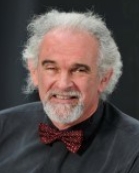 Paul Kyberd合作论文数College of Engineering, Design and Physical Sciences, Brunel University London129
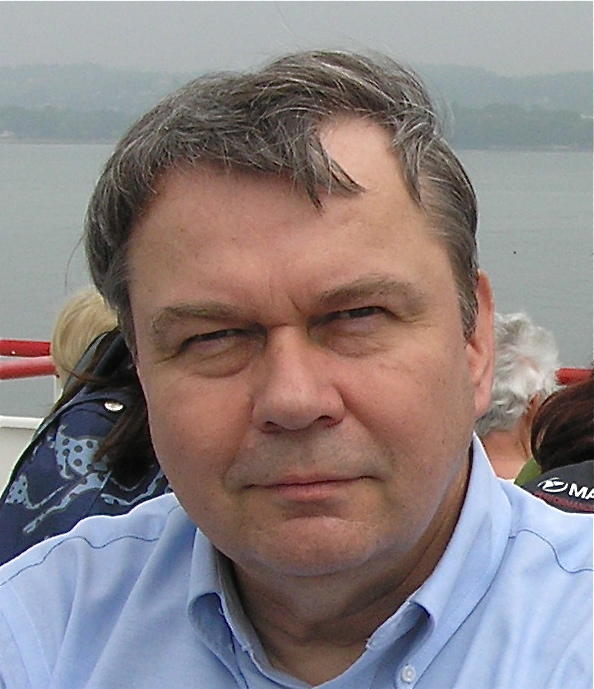 Gerald Eigen合作论文数Department of Physics and Technology, University of Bergen129
 David Kirkby合作论文数Dept Phys & Astron, Univ Calif Irvine129
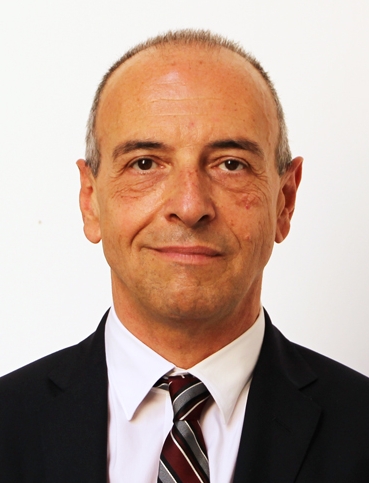 Diego Bettoni合作论文数Laboratori Nazionali di Legnar, INFN129R. K. Mommsen合作论文数128John Kadyk合作论文数128Y. Groysman合作论文数128
 Natalie Roe合作论文数Lawrence Berkeley National Laboratory127G. Kukartsev合作论文数126Evgeny Solodov合作论文数126
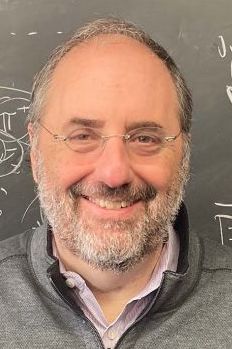 Claudio Campagnari合作论文数Physics Department, University of California Santa Barbara;CERN125M. Pripstein合作论文数125N. Chevalier合作论文数124G. Nesom合作论文数124L. Piemontese合作论文数124A. Dvoretskii合作论文数124
 Dmytro Kovalskyi合作论文数Massachusetts Institute of Technology123M. Dickopp合作论文数123An Yushkov合作论文数123S. D. Foulkes合作论文数123
 Enrico Feltresi合作论文数Pietro Fiorentini Spa123
 Lucien Cremaldi合作论文数Department of Physics and Astronomy, University of Mississippi123
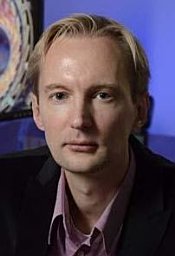 A. V. Gritsan合作论文数Johns Hopkins University123
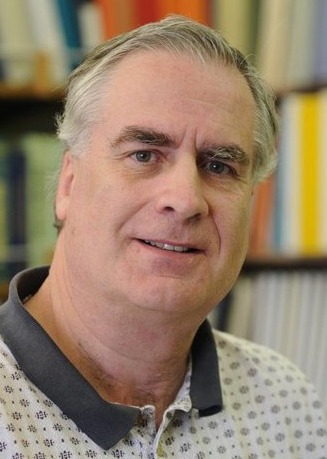 Frank C. Porter合作论文数The Division of Physics, Mathematics and Astronomy, California Institute of Technology123
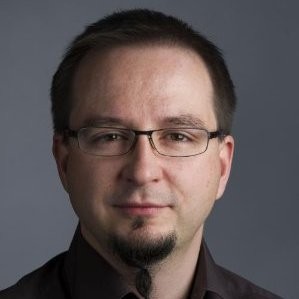 Andreas Petzold合作论文数Scientific Data Management Department, Scientific Computing Center, Karlsruhe Institute of Technology123
 Romulus Godang合作论文数Department of Physics, College of Arts and Sciences, University of South Alabama;University of Mississippi123D. Altenburg合作论文数123G. Finocchiaro合作论文数123F. Salvatore合作论文数University of Pavia and INFN, Pavia, Italy123H. Nicholson合作论文数122Dp Stoker合作论文数122Gilbert Grosdidier合作论文数Laboratoire de l'Accélérateur Linéaire, Institut National de Physique Nucléaire et de Physique des Particules122
 Rolf Dubitzky合作论文数CARIAD122
 Robert Kroeger合作论文数Department of Physics and Astronomy, University of Mississippi122




