We present an experimental demonstration of ultrafast electron diffraction (UED) with THz-driven electron bunch compression and time-stamping that enables UED probes with improved temporal resolution. Through THz-driven longitudinal bunch compression, a compression factor of approximately four is achieved. Moreover, the time-of-arrival jitter between the compressed electron bunch and a pump laser pulse is suppressed by a factor of three. Simultaneously, the THz interaction imparts a transverse spatiotemporal correlation on the electron distribution, which we utilize to further enhance the precision of time-resolved UED measurements. We use this technique to probe single-crystal gold nanofilms and reveal transient oscillations in the THz near fields with a temporal resolution down to 50 fs. These oscillations were previously beyond reach in the absence of THz compression and time-stamping.
C 3 is an opportunity to realize an e + e - collider for the study of the Higgs boson at √ s = 250 GeV, with a well defined upgrade path to 550 GeV while staying on the same short facility footprint [2,3]. C 3 is based on a fundamentally new approach to normal conducting linear accelerators that achieves both high gradient and high efficiency at relatively low cost. Given the advanced state of linear collider designs, the key system that requires technical maturation for C 3 is the main linac. This paper presents the staged approach towards a facility to demonstrate C 3 technology with both Direct (source and main linac) and Parallel (beam delivery, damping ring, ancillary component) R&D. The primary goal of the C 3 Demonstration R&D Plan is to reduce technical and cost risk by building and operating the key components of C 3 at an adequate scale. This R&D plan starts with the engineering design, and demonstration of one cryomodule and will culminate in the construction of a 3 cryomodule linac with pre-production prototypes. This R&D program would also demonstrate the linac rf fundamentals including achievable gradient and gradient stability over a full electron bunch train and breakdown rates. It will also investigate beam dynamics including energy spread, wakefields, and emittance growth. This work will be critical to confirm the suitability of the C 3 beam parameters for the physics reach and detector performance in preparation for a Conceptual Design Report (CDR), as well as for follow-on technology development and industrialization. The C 3 Demonstration R&D Plan will open up significant new scientific and technical opportunities based on development of high-gradient and high-efficiency accelerator technology. It will push this technology to operate both at the GeV scale and mature the technology to be reliable and provide high-brightness electron beams. The timeline for progressing with C 3 technology development will be governed by practical limitations on both the technical progress and resource availability. It consists of four stages: Stage 0) Ongoing fundamental R&D on structure prototypes, damping and vibrations. Stage 1) Advancing the engineering maturity of the design and developing start-to-end simulations including space-charge and wakefield effects. This stage will include testing of strucutres operating at cryogenic temperatures. Beam tests would be performed with high beam current to test full beam loading. Stage 2) Production and testing of the first cryomodule at cryogenic temperatures. This would provide sufficient experimental data to compile a CDR and it is anticipated for Stage 2 to last 3 years and to culminate with the transport of photo-electrons through the first cryomodule. Stage 3) Updates to the engineering design of the cryomodules, production of the second and third cryomodule and their installation. Lower charge and lower emittance beams will be used to investigate emittance growth. The successful full demonstration of the 3 cryomodules to deliver up to a 3 GeV beam and achieve the C 3 five gradient will allow a comprehensive and robust evaluation of the technical design of C 3 as well as mitigate technical, schedule, and cost risks required to proceed with a Technical Design Report (TDR).
A better understanding of the THz near-field properties is necessary for the optimization of THz generation efficiency, transport, and coupling. We demonstrate a fast and efficient technique for spatial and temporal characterization of single cycle strong field THz pulses in the near-field of a LiNbO 3 source using electro-optic sampling. In this technique an enlarged probe beam and CCD camera are used to image the entire THz field in one shot. Using this technique, we have reconstructed the full temporal 3D THz near-field close to the LiNbO 3 emission face.
Visualizing ultrafast dynamics at the atomic scale requires time-resolved characterization with femtosecond temporal resolution. For fully relativistic electron bunch probes, existing techniques for single-shot ultrafast electron diffraction (UED) are limited by the achievable electron probe bunch length, charge, and timing jitter. We present the first experimental demonstration of dual-fed THz-driven compression and time-stamping that enables electron probes with improved temporal resolution. This technique utilizes two counter-propagating quasi-single-cycle THz pulses generated from two OH-1 organic crystals coupled into an optimized THz compressor structure. We demonstrate electron bunch compression and time-of-arrival jitter suppression by a factor of 3 paving the way toward unique opportunities for UED time-resolved measurements.
We demonstrate a technique for robust spatial and temporal characterization of single cycle strong field Terahertz pulses in the near-field of a LiNbO 3 source using electro-optic sampling.
C$^3$ is an opportunity to realize an e$^+$e$^-$ collider for the study of the Higgs boson at $\sqrt{s} = 250$ GeV, with a well defined upgrade path to 550 GeV while staying on the same short facility footprint. C$^3$ is based on a fundamentally new approach to normal conducting linear accelerators that achieves both high gradient and high efficiency at relatively low cost. Given the advanced state of linear collider designs, the key system that requires technical maturation for C$^3$ is the main linac. This white paper presents the staged approach towards a facility to demonstrate C$^3$ technology with both Direct (source and main linac) and Parallel (beam delivery, damping ring, ancillary component) R&D. The white paper also includes discussion on the approach for technology industrialization, related HEP R&D activities that are enabled by C$^3$ R&D, infrastructure requirements and siting options.
Terahertz generation by optical rectification in LiNbO 3 is a promising technique for generating intense THz radiation for particle acceleration and beam manipulation. A better understanding of the THz near-field properties is necessary for the optimization of THz generation efficiency, transport, and coupling. We demonstrate a technique for spatial and temporal characterization of single cycle strong field THz pulses in the near-field of a LiNbO 3 source using electro-optic sampling. Using this technique, we have reconstructed the full temporal 3D THz near-field close to the LiNbO 3 emission face.
We demonstrate a preliminary measurement of THz streaking of ultrafast electron bunches generated from an rf photoeinjector using an efficient THz deflector structure. We show that the structure can achieve upward of 1.5 MV/cm of peak deflecting THz fields subsequently improving the timing resolution of ultrafast electron diffraction measurements.
Mei Bai6, Tim Barklow6, Ankur Dhar6, Ram C. Dhuley2, Chris Doss9, Joseph Duris6, Auralee Edelen6, Claudio Emma6, Josef Frisch6, Annika Gabriel6, Spencer Gessner6, Carsten Hast6, Arkadiy Klebaner2, Anatoly K. Krasnykh6, John Lewellen6, Matthias Liepe1, Michael Litos9, Jared Maxson1, David Montanari2, Pietro Musumeci8, Cho-Kuen Ng6, Mohamed A. K. Othman6, Marco Oriunno6, Dennis Palmer6, J. Ritchie Patterson1, Michael E. Peskin6, Thomas J. Peterson6, Ji Qiang3, James Rosenzweig8, Vladimir Shiltsev, Evgenya Simakov4, Bruno Spataro5, Emma Snively6, Sami Tantawi6 and Glen White6
We show a method for detection and correction of the time-of-arrival jitter of electron bunches generated from an rf photoeinjector through Terahertz time-stamping, subsequently improving the temporal resolution of pump-probe UED measurements.
We demonstrate a new technique for MeV-UED beamlines that enables unprecedented temporal resolution in pump-probe measurements. This technique utilizes two counter-propagating quasi-single-cycle THz pulses generated from two OH-1 organic crystals, coupled into an optimized THz structure to produce compressed electron bunches with suppressed jitter. We show that the timestamping technique can improve the temporal resolution of single-shot time-resolved diffraction measurements in single-crystal samples by 3 fold. INTRODUCTION Ultrafast structural dynamics are well understood through pump-probe characterization using ultra-fast electron diffraction (UED) and X-ray free electron laser (XFEL) instruments. Advancements in electron diffraction and spectroscopy techniques open new frontiers for scientific discovery through interrogation of ultrafast phenomena [1-4]. UED technology has been a very active area of innovation bolstered by pivotal research in rf accelerators that can achieve an ever-increasing brightness and unprecedented spatiotemporal resolution. Furthermore, laser-generated THz radiation has seen a surge of interest as an efficient approach for manipulating ultrafast photoelectrons with high temporal precision and efficiency. Indeed THz technology [5-10] offers potential improvements in accelerator performance and brightness. Previously, we have demonstrated that strong-field THz radiation can be utilized to efficiently manipulate and compress ultrafast electron probes and also offer temporal diagnostics with subfemtosecond resolution enabled by the inherent phase locking of THz radiation to the photoemission optical drive [11-14]. In this work, we demonstrate a novel THz compression and time-stamping technique to probe solidstate materials at time scales previously inaccessible with standard UED [15]. MEV-UED SETUP WITH THz-INDUCED TIME-STAMPING A simplified schematic of the dual-fed THz compression and time stamp setup at the SLAC MeV-UED beamline is shown in Fig. 1 (see Table 1 for beam parameters). Laser pulses from a Ti:Saphhire laser source at 800 nm with 25 fs r.m.s and up to 13 mJ of pulse energy are used to generate UV for the rf photoinjector, THz pulses for electron temporal streaking diagnostics, and near infrared (λ = 1300 nm) source for separate THz puulses used for compression and time-stamping. Two OH-1 crystals were pumped with two 1300 nm laser beam obtained from an optical parametric amplifier (OPA) and transported into the vacuum chamber for the compression stage. The laser pulses are controlled in delay and amplitude. The realized THz energy efficiency is about 0.4%. Both THz pulses are then guided to feed a compressor structure using 2’’ diameter off-axis parabolic (OAP) mirrors with 2’’ focal length. An example of the measured THz pulses inside the compressor structure using electro-optic sampling (EOS) is shown in Fig. 2. Figure 1: (a) Layout of the dual fed THz compressor and (b) photo of the setup inside the MeV-UED beamline. Table 1: Summary of SLAC MeV-UED Beamline Parameters with THz Induced Time-Stamping
THz-frequency accelerating structures could provide the accelerating gradients needed for next generation particle accelerators with compact, GV/m-scale devices. Current THz accelerators are limited by significant losses during transport of THz radiation from the generating nonlinear crystal to the electron acceleration structure. In addition, the spectral properties of high-field THz sources make it difficult to couple THz radiation into accelerating structures. Dielectric accelerator structures reduce these losses because THz radiation can be coupled laterally into the structure, as opposed to metallic structures where THz radiation must be coupled along the beam path. In order to utilize these advantages, we are investigating the optimization of THz accelerating structures for comparison between metallic and dielectric devices. These results will help to inform future designs of improved dielectric THz acceleration structures.
Visualizing ultrafast dynamics at the atomic scale requires time-resolved pump-probe characterization with femtosecond temporal resolution. For single-shot ultrafast electron diffraction (UED) with fully relativistic electron bunch probes, existing techniques are limited by the achievable electron probe bunch length, charge, and timing jitter. We present the first experimental demonstration of pump-probe UED with THz-driven compression and time-stamping that enable UED probes with unprecedented temporal resolution. This technique utilizes two counter-propagating quasi-single-cycle THz pulses generated from two OH-1 organic crystals coupled into an optimized THz compressor structure. Ultrafast dynamics of photoexcited bismuth films show an improved temporal resolution from 178 fs down to 85 fs when the THz-compressed UED probes are used with no time-stamping correction. Furthermore, we use a novel time-stamping technique to reveal transient oscillations in the dynamical response of THz-excited single-crystal gold films previously inaccessible by standard UED, achieving a time-stamped temporal resolution down to 5 fs.
This project investigates the possibility of echo generation with electrons in the IOTA ring. Through simulations the eects of dierent beam and ring parameters on echo amplitude and full width half max are tested. We nd that transverse coupling and delay time have signicant eects on echo generation and will have to be care- fully controlled in future experiments. Eect of decoherence time, quadrupole kick strength, quantum excitation, synchrotron damping, and momentum spread are also investigated. It is found that it is possible to produce echoes of signicant amplitude and full width half max in the IOTA ring despite the eects of synchrotron damp- ing. Relation and agreement of echoes produced with predictions of nonlinear theory of beam echoes is also investigated. Findings from this study can be used to inform future beam echo experiments at the IOTA ring.
 Mohamed A. K. Othman合作论文数SLAC National Accelerator Laboratory, Stanford University11
 Matthias C. Hoffmann合作论文数Stanford Linear Accelerator Laboratory, Stanford University9
 Emilio Alessandro Nanni合作论文数SLAC National Accelerator Laboratory, Stanford University8
 Emma Snively合作论文数7
 Xiaozhe Shen (沈晓哲)合作论文数Natl Accelerator Lab, SLAC6Xijie Wang合作论文数4E. A. Nanni合作论文数4Cho-Kuen Ng合作论文数3Glen White合作论文数3Tim Barklow合作论文数3Josef C. Frisch合作论文数3Fuhao Ji合作论文数3
 Auralee Edelen合作论文数Natl Accelerator Lab, SLAC3Michael Kozina合作论文数SLAC Natl Accelerator Lab, Menlo Pk, CA 94025 USA3
 Samantha M. Lewis合作论文数Fermilab Natl Accelerator Lab, POB 500, Batavia, IL 60510 USA3
 Claudio Emma合作论文数Natl Accelerator Lab, SLAC3
 Duan Luo (罗端)合作论文数Natl Accelerator Lab, SLAC3B. Spataro合作论文数Lab Nazl Frascati, INFN3
 Jared Maxson合作论文数Department of Physics, College of Arts and Sciences, Cornell University3
 Sergei Nagaitsev合作论文数Department of Physics, Old Dominion University;Brookhaven National Laboratory;Jefferson Lab3
 Evgenya Simakov合作论文数Acceleration and Operations Technology Division, Los Alamos National Laboratory3
 Stephen P. Weathersby合作论文数SLAC National Accelerator Laboratory, Stanford University3Martin Breidenbach合作论文数Stanford Linear Accelerator Center3
 Matthias Liepe合作论文数Departments of Physics, College of Arts & Sciences, Cornell University3
 Pietro Musumeci合作论文数Department of Physics & Astronomy, College of Physical Sciences, University of California, Los Angeles3Ji Qiang (强洁)合作论文数3
 James Rosenzweig合作论文数Department of Physics and Astronomy, University of California, Los Angeles;Particle Beam Physics Laboratory, University of California, Los Angeles;RadiaBeam Technologies;Rayton3
 Sergey a Belomestnykh合作论文数Cornell University3
 Michael Litos合作论文数Department of Physics;Boston University;Department of Physics, Boston University3
 Vladimir Shiltsev合作论文数Fermi National Accelerator Laboratory3Arkadiy Klebaner合作论文数2Praful Vasireddy合作论文数SLAC Natl Accelerator Lab, Stanford Univ2Carsten Hast合作论文数2
 Joseph W Duris合作论文数2John Power合作论文数2Xueying Lu合作论文数2Brandon Weatherford合作论文数2
 Kramer Patrick L合作论文数SLAC National Accelerator Laboratory, 2575 Sand Hill Road, United States2
 S. J. Gessner合作论文数Stanford Linear Accelerator Center, Stanford University2Caterina Vernieri合作论文数2
 Robert Joel England合作论文数Stanford Linear Accelerator Center, Stanford University2
 Kent Wootton合作论文数School of Physics, The University of Melbourne2
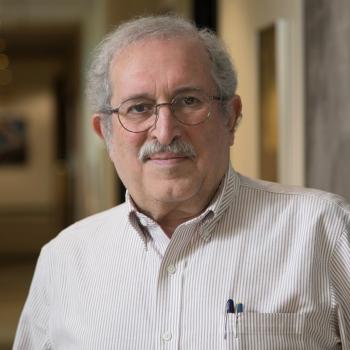 Michael E. Peskin合作论文数SLAC National Accelerator Laboratory, Stanford University2
 John W Lewellen合作论文数Advanced Photon Source;Argonne National Laboratory;Argonne National Laboratory2
 Alireza Nassiri合作论文数2Chunguang Jing合作论文数Euclid Techlabs LLC, Euclid Techlabs LLC2William J. Berg合作论文数1E. Nanni合作论文数1J.Ritchie Patterson合作论文数1




