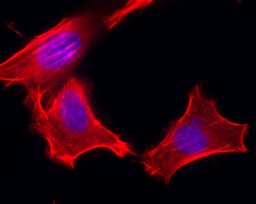
MEKK2 (MAP/ERK kinase kinase-2) is a serine/threonine kinase that belongs to the MEKK/STE11 family of MAP kinase kinase kinases (MAP(3) Ks). MEKK2 integrates stress and mitogenic signals to the activation of NF-kappa B, JNK1/2, p38, and ERK5 pathways. We have found that MEKK2 is regulated through a phosphorylation-dependent association with 14-3-3, a group of adapters that modulate dimerization and association between proteins. We found that MEKK2 was phosphorylated at Thr-283, which resulted in decreased activation loop phosphorylation at Ser-519 and consequently reduced activity. Mechanistically, we found that MEKK2 associated with inactive MEKK2 in the absence of 14-3-3 binding, which led to trans-autophosphorylation of Ser-519. Enforced binding with 14-3-3 reduced Ser-519 trans-autophosphorylation. Expression of T283A MEKK2 within a MEKK2(-/-) background enhanced stress-activated c-Jun N-terminal kinase activity while elevating IL-6 expression, but also reduced ERK activation with a corresponding reduced proliferation rate. These results indicate that Thr-283 phosphorylation is an important regulatory mechanism for MEKK2 activation.
The protein kinase MEKK3 is essential for tumor necrosis factor alpha (TNFalpha)- and lipopolysaccharide-induced activation of nuclear factor kappaB, although the mechanism by which TNF receptor 1 and Toll-like receptors regulate MEKK3 is largely unknown. In this study we have identified MEKK3 Thr(294) as a novel site of phosphorylation that regulates MEKK3 binding with 14-3-3. Phosphorylation of MEKK3 at Thr(294) was observed for both endogenous and ectopically expressed MEKK3. Mutation of Thr(294) to alanine abolished 14-3-3-MEKK3 association and incubation with phosphorylated peptides mimicking Thr(P)(294) competed for 14-3-3 binding. Mutation of Thr(294) did not alter Ser(526) phosphorylation within the activation loop. However, expression of T294A MEKK3 elevated TNFalpha-stimulated NF-kappaB transcriptional activity, suggesting that Thr(294) phosphorylation and 14-3-3 binding negatively regulate MEKK3. Stimulation with TNFalpha or lipopolysaccharide caused a rapid decrease in Thr(294) phosphorylation of endogenous MEKK3 and subsequent loss of 14-3-3 association. Thus, this study identifies a potentially important regulatory step in MEKK3 signaling via dephosphorylation of Thr(294), which reduces 14-3-3 binding correlating with MEKK3 pathway activation.