The review addresses direct methane oxidation - an important fundamental problem,which has attracted much attention of researchers in recent years. Analysis of the available results on biomimetic and bio-inspired methane oxygenation has demonstrated that assimilating of the experience of Nature on oxidation of methane and other alkanes significantly enriches the arsenal of chemistry and can radically change the character of the entire chemical production,as well as enables the solution of many material,energetic and environmental problems. The bibliography includes 310 references.
The most interesting recent publications dealing with so-called artificial photosynthesis, i.e., the development of photocatalytic converters of solar energy to the chemical bond energy using the fundamental principles of natural oxygenic photosynthesis, are discussed. The key stages of photosynthesis that should be reproduced in the artificial converters include light harvesting and transport of the light quantum to reaction centres where photo induced charge separation occurs to give elementary reducing agents and oxidants (electrons and holes). The dark catalytic reactions involving the elementary reducing agents and oxidants give stable end products, namely, dioxygen and carbohydrates in the natural photosynthesis or dioxygen and hydrogen in the artificial photosynthesis. The bibliography includes 99 references.
The hydrolysis kinetics of the dimeric complex (CuATP2− · OH2)2 {D} up to ≈40% ATP conversion at 25°C, pH 5.7–7.8, and [Cu · ATP]0 = (2.07 ± 0.03) × 10−3 mol/l is analyzed by numerical simulation. CuADP− + Pi (Pi is an inorganic phosphate) form from DOH−, and the latter forms rapidly from D. The abstraction of H+ from the coordinated H2O molecule is an irreversible reaction involving an OH− ion from the medium. The maximum possible DOH− concentration at a given pH is reached at the initial stage of hydrolysis (0.3–6.0 min after the initiation of hydrolysis). CuADP− + Pi form from D via two consecutive irreversible steps. The ADP buildup rate in the process is determined by the reversible conformational transformation of DOH− resulting in a pentacovalent intermediate (IntK). OH− ions from the medium are involved both in IntK formation and in the reverse reaction and are a hydrolysis inhibitor. AMP forms from the intermediate IntK3, which forms reversibly from DOH−, OH− ions from the medium being involved in the forward and reverse reactions. This is followed by irreversible (AMPH)− formation involving H3O+ ions from the medium. The rate and equilibrium constants are determined for the formation and decomposition of hydrolysis intermediates. The concentrations of the intermediates are plotted versus time for various pH values. The structures of the intermediates are suggested. The causes of a peak appearing in the initial ADP formation rate versus pH curve are analyzed.
Reports on nitrogen fixation in solution are reviewed. The optimum catalyst is the polynuclear complex. The reaction proceeds as a multielectron process, and the limiting step involves the electron transfer from a reducing agent.
With the use of labeled methane-14C and by chromatographic analysis it was shown that gold-containing protein ("Au-protein"), isolated from goldphilic Micrococcus luteus bacteria, catalyzes the oxidation of methane to methanol in the system also containing NADH, air, K(3)Fe(CN)(6) and Tris-HCl buffer. Presumably Au-protein helps bacteria to survive when usual sources of carbon and energy are scarce.
Gold(III) and gold(I) complexes, NaAuCl4 and ClAuPPh3, efficiently catalyse the oxidation of alkanes by H2O2 in acetonitrile solution at 75°C. Turnover numbers (TONs) attain 520 after 144 h. Alkyl hydroperoxides are the main products, whereas ketones (aldehydes) and alcohols are formed in smaller concentrations. It is suggested on the basis of the bond selectivity study that at least one of the pathways in Au-catalysed alkane hydroperoxidation does not involve the participation of free hydroxyl radicals. Possibly, the oxidation begins from the alkane hydrogen atom abstraction by a gold oxo species. The oxidation of cyclooctane by air at room temperature catalysed by NaAuCl4 in the presence of Zn/CH3COOH as a reducing agent and methylviologen as an electron-transfer agent gave cyclooctanol (TON=10).
Kinetic data on hydrolysis of ZnATP2− complexes confirm the enzyme-like mechanism of the reaction. The whole sequence of steps for the formation and transformations of the intermediates is established by numerical modelling in a wide range of concentrations (4×10⁻⁴–0.3 M) in the pH range 7.1–7.4. The rates of active center formation and appropriate equilibria are governed by H+ transfer from coordinated water with formation of hydrogen bond between the (N1) atom of the second ZnATP2− molecule and the γ-phosphate moiety of the first ZnATP2− molecule. The rate and equilibrium constants are higher in trimeric associates as compared to dimeric ones. Among the steps of ADP formation in the pH-independent channel, H+ transfer from the hydrogen bond with O−–Pγ of ZnATP2− to the hydrogen bond with O−–Pβ of ZnADP− forming in the course of general base catalysis is the rate determining step. It is followed by the rapid and reversible substitution of ligand H2PO4− by H2O in the Zn2+ coordination sphere. Hydrogen bond participation leads to reversible ADP formation. AMP is shown to be formed also via associates, and the conformation transformation determines the induction period. The induction period decreases as the concentration of ZnATP2− increases. The rate and equilibrium constants of all steps are evaluated and variation of the intermediate concentrations in the course of hydrolysis is presented.
Reactions of azobenzene have been studied with heteronuclear iron-lithium compounds formed in the reaction of FeCl3 with LiPh, one of the dinitrogen reducing systems of the Vol'pin type: Ph4FeLi4(OEt2)4 (1) and (H2)FePh4Li4(OEt2)4 (2). The structures of the azobenzene complexes formed, (N2Ph2)3FeLi3(OEt2)3 (3) and (N2Ph2)3FeLi2(THF)2 (4), as well as an ether-containing analog of the latter, (N2Ph2)3FeLi2(OEt2)2 (5), were determined by X-ray analysis of single crystals. Coordination of azobenzene at FeLi3 and FeLi2 clusters was shown to result in a sigificant elongation of the NN bond; partial cleavage of this bond on protolysis of the complexes resulted in the formation of hydrazobenzene and aniline. Magnetic susceptibility measurements and theoretic analysis of a similar model complex leads to the conclusion that the iron oxidation state in 3 may be considered between iron (I) and iron(III) (close to iron(I)), whereas in 4 and 5 it is close to iron(II).
Acetylene was reduced by zinc amalgam in the presence of three synthetic polynuclear complexes: {[Mg2Mo8O22(OMe)6(MeOH)4]−2·[Mg(MeOH)6]2+}6MeOH (I), (Bu4N)2[Fe4S4(SPh)4] (II), [Me4N][VFe3S4Cl3(DMF)3]·2DMF (III) and the iron-molybdenum cofactor of nitrogenase Azotobacter vinelandii MoFe7(S2−)9·homocitrate, FeMo-co (IV). Thiophenol was found to greatly facilitate the reaction in the presence of complexes I, II, IV. The reaction is catalytic and for I and IV proceeds at the amalgam surface. Thiophenol seems to increase the adsorption of the complexes, serving as an electron bridge to transfer electrons to the catalyst. In the case of II a homogeneous reduction of the substrate occurs presumably after the cluster reduction at the surface and with III the catalytic reduction proceeds only under the action of sodium amalgam; no thiophenol cocatalytic action is observed. Relevance to N2 enzymatic reduction is discussed.
The pH dependence of the initial rate of the Zn.ATP (1:1) hydrolysis was studied at 50 degrees C. The Zn2+OH- moiety was found to be active in the hydrolysis producing ADP and P-i only in cyclic conformation of phosphate chain in a dimer (ZnATP(2-))(2)H+OH- or in a monomer ZnATP(2-)OH(-). The value of the rate constant for the cleavage of the P(gamma)-OP(beta) bond by the Zn2+OH- ion anack in the monomeric cyclic form ZnATP(2)-OH- shows the crucial role of the interaction of Zn2+ with N-7 of the adenine base. The analysis of the data for the dimer suggests that N-1 atom of the second ATP molecule coordinates proton and forms a hydrogen bond with gamma-phosphate of the first ATP molecule. This results in the pH-independent channel for the dimer hydrolysis. The selective formation of ADP+P-i in both forms (monomeric and dimeric) and dose values of their hydrolysis rate constants indicate that the ATP conformation in these forms are analogous. At pH greater than or equal to 8.5 AMP and pyrophosphate are produced in parallel with ADP and P-i from the very start of the reaction, the rate of AMP formation increasing as pH increases.
The crystal structure of 1,4-dilithiumbutadiene 2 obtained in the reaction of tolane with an iron(II) hydridolithium complex shows that 2 is a dimer with four lithium atoms, forming a distorted tetrahedron with short LiLi and LiC distances. Implication for the reaction of the iron-lithium complex with dinitrogen is discussed.
Kinetic data on ATP4− hydrolysis in a complex with Zn2+ confirm the enzyme-like mechanism of the reaction. Dependence of the selectivity on pH is observed, which is explained by parallel reactions of cyclic and open conformations.
X-ray structure of the complex salt {[Cp(2)Zr(mu-PPh)](2)}{[(THF)(3)Li](2)(mu-Cl)}, 1, as well as its EPR spectrum and magnetic susceptibility have been investigated. The results indicate that the anionic part of the complex is the mixed valence [Zr(III)Zr(IV)] monoanion. From the comparison of the complex 1 and dinitrogen complex {[Cp(2)-Zr(mu-PPh)](2)}{[(THF)(3)Li](2)(mu-N-2)}, 2, published elsewhere it follows that the anions of both the complexes are identical and therefore the cation of 2 has also a unit charge. it is concluded that the cation {[(THF)(3)Li](2)(mu-N-2)}(+) can be regarded as a complex of N-2 with the pair (Li...Li)(+) or that of N-2(-) stabilized by two Li+ cations. Theoretical grounds for the existence of such complex ion are discussed.
Bi- and polymolybdenum(V-VI) complexes containing -O-Mg-O- and mu-O bridges have been isolated and their structure investigated by X-ray diffraction method. When reduced to the Mo(III) state the complexes are active catalysts for dinitrogen reduction by sodium amalgam in the presence of surface active phospholipid and organic phosphines. The structure of the catalytic complexes is discussed in connection with the mechanism of dinitrogen activation.
AbstractChemInform is a weekly Abstracting Service, delivering concise information at a glance that was extracted from about 100 leading journals. To access a ChemInform Abstract of an article which was published elsewhere, please select a “Full Text” option. The original article is trackable via the “References” option.
A novel reaction involving O+ transfer from phenazine di-N-oxide radical cation (OPO+.) to secondary amines to form phenazine mono-N-oxide (OP) and nitroxyl radical has been observed and investigated by cyclic voltammetry and EPR methods.
 E. Z. Utyanskaya合作论文数8TA Bazhenova合作论文数4
 Albert A. Shteinman合作论文数Department of Kinetics and Catalysis, Institute of Problems of Chemical Physics, Russian Academy of Sciences4M. Yu. Antipin合作论文数A. N. Nesmeyanov Institute of Organoelement Compounds of Russian Academy of Sciences (INEOS RAS)4AM KHENKIN合作论文数3B. V. Lidskii合作论文数3Yu. T. Struchkov合作论文数3
 Alexander Shestakov合作论文数3Andrey Sorokin合作论文数3
 Konstantin A. Lyssenko合作论文数Department of Physical Chemistry, Lomonosov Moscow State University;Institute of Organoelement Compounds, Russian Academy of Sciences3NT DENISOV合作论文数2Af Shestakov合作论文数2Ni Sosfenov合作论文数2
 Victor A Kulikov合作论文数2Ag Pavlovskii合作论文数2Khenkin Alexander M合作论文数2O. I. Koifman合作论文数2Mikhail L Khidekel合作论文数2
 Georgiy B. Shul'pin合作论文数N. N. Semenov Institute of Chemical Physics, Russian Academy of Sciences2Militza G. Neihaus合作论文数2E. M. Koldasheva合作论文数Institute of Chemical Physics in, Chernogolovka Russian Academy of Sciences2V. V. Abalyaeva合作论文数2Alexander S Semeikin合作论文数2N. S. Emelyanova合作论文数1KA Lysenko合作论文数1Igor A. Misurkin合作论文数1Anatoly L. Buchachenko合作论文数1Elena Burlakova合作论文数1Serge F. Timashev合作论文数1V. A. Benderskii合作论文数1Andrew A. Berlin合作论文数1N. V. Lariontseva合作论文数1Ak Shilova合作论文数1LA LEVCHENKO合作论文数1Gn Petrova合作论文数1In Ivleva合作论文数1
 Yurii V Geletii合作论文数Department of Chemistry, Emory University1
 Georg Süss Fink合作论文数Institut de Chimie, Faculté des sciences, Université de Neuchâtel1
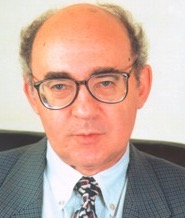 Vladimir I. Minkin合作论文数Institute of Physical and Organic Chemistry, Southern Federal University1
 Sergey Alexeevich Marakushev合作论文数1A. P. Sadkov合作论文数1S. V. Goryachev合作论文数1M. A. Bazhenova合作论文数1Mikhail Yu. Antipin合作论文数1N Shuvalova合作论文数1S Mironova合作论文数1G. Petrova合作论文数1Tamara a Bazhenova合作论文数1




