Single-mode laser action, up to 4-times the threshold power, in a diode-pumped Nd-doped phosphate glass fiber having a 300-µm core is demonstrated. Subtle differences associated with the effectiveness of diode-pumping gain-guided, index-antiguided fibers are discussed.
Single mode laser action in a diode-pumped gain-guided, index- antiguided Nd 3+ -doped phosphate glass fiber having a 200-μm-diameter core is demonstrated. Near-Gaussian beam quality was maintained, even when pumped up to four times the threshold pump power, indicating robust lowest order mode oscillation. Subtle differences associated with the effectiveness of diode pumping gain-guided, index-antiguided fibers are discussed.
I will present an illustrated tour of some of the notable events and individuals along the timeline from Einstein in 1916 to Townes in 1951, Schawlow and Townes in 1958, Shawanga Lodge in 1959, Maiman in 1960, and the first few of the incredibly productive years that followed. Article not available.
Get PDF Email Share Share with Facebook Tweet This Post on reddit Share with LinkedIn Add to CiteULike Add to Mendeley Add to BibSonomy Get Citation Copy Citation Text A. E. Siegman, "Optics with Gain: Fresnel Reflection, Lenserf Reflection, and Evanescent Waveguide Gain," in Frontiers in Optics 2008/Laser Science XXIV/Plasmonics and Metamaterials/Optical Fabrication and Testing, OSA Technical Digest (CD) (Optica Publishing Group, 2008), paper JWA26. Export Citation BibTex Endnote (RIS) HTML Plain Text Citation alert Save article
Single mode oscillation in a 200 mum core diameter gain guided index anti-guided fiber laser is demonstrated. Single mode oscillation is maintained for pumping of up to four times laser threshold, limited by available pump power.
Optical fibers with large diameter cores having a negative index step from cladding to core combined with an adequately large gain coefficient in the core provide near-optimal mode properties for fiber lasers delivering robust single transverse mode operation with very large mode areas. Basic properties and simple design formulas for such fibers are presented.
Recent observations of apparently single mode gain-guided lasing in Nd3+ fibers with 100 µm diameter index anti-guided cores demonstrate the potential of gain guiding for single mode fiber lasers with very large mode areas.
Single mode laser oscillation is achieved in a 200 mu m diameter core end pumped gain guided index anti-guided fiber. The near-Gaussian beam quality of the laser is maintained at up to four times laser threshold.
A number of important optical systems, including gain-guided semiconductor lasers and unstable optical resonators, have governing equations that are linear but not Hermitian or self-adjoint. As a consequence, the propagation eigenmodes of these systems are not orthogonal in the usual fashion but rather are biorthogonal to a set of adjoint functions. If one wishes to expand an arbitrary wave of such a system in terms of its eigenmodes, conventional wisdom says that the expansion coefficients are given by the quadrature integrals between the input wave and the adjoint functions. Using a parabolic gain-guided system with complex Hermite–Gaussian eigenfunctions as a test case, we find that under a wide range of circumstances finite expansions using the quadrature integrals fail to converge properly, even for simple and realistic input functions. We then demonstrate that the coefficients for a finite expansion with minimum least-squares error in a biorthogonal system must be obtained from a more complex procedure based on inverting the eigenmode orthogonality matrix. Further tests on the complex Hermite–Gaussian system show that series expansions using these minimum-error coefficients converge and give much smaller errors under all circumstances.
We have observed large mode area, apparently single-mode, gain-guided laser oscillation in fibers having 100 micron diameter Nd-doped index-anti-guided cores, with the core index significantly lower than the cladding index. Article not available.
The generous contributions of OSA's leadership, individual and corporate members and friends are greatly appreciated. Through their support, the Foundation raised more than $112,000 in 2005, exceeding our goal by 12 percent. Last year, the Foundation funded eight programs, including a travel grant program for students in developing countries; a grant program that provided OSA Local Sections and Student Chapters with funding to conduct youth science outreach around the globe; translation of OpticsForKids.org into Spanish; membership grants to students and scientists in developing countries; a collaboration with the Girl Scouts of the USA to encourage middle-school-aged young women to learn about optics and photonics; and more. We thank our donors and volunteers for making these achievements possible.
We have experimentally demonstrated coherent combining of 2 and then 4 fiber lasers, with respectively 99% and 95% combining efficiency. The combining method investigated here is based on a multi-arm resonator of interferometric configuration. In spite of its interferometric nature, the multi-arm laser operates without significant power fluctuations, even in an unprotected environment. This occurs when the arm length difference is large enough to introduce spectral modulations of period smaller than the laser bandwidth. We have also experimentally shown that the combining method is compatible with wavelength tuning. A Mach-Zehnder Fiber Laser was tuned over a wide spectral range of 60nm. Theoretically then, we confirm that the combining method can be scaled to a large number of lasers without decreasing the combining efficiency. 8. A. Shirakawa, T. Sekiguchi, Matsuo, and K.-i. Ueda, “Scalable coherent beam combining of fiber lasers,” in Advanced Solid-State Photonics (TOPS Vol. 83), J. J. Zayhowski, Ed., pp. 82–84 (Optical Society of America (2003). Also presented at CLEO 2003. Abstract: Not available. 9. M. Minden, H. W. Bruesselbach, J. L. Rogers, M. S. Mangir, D. C. Jones, G. J. Dunning, D. L. Hammon, A. J. Solis, and L. Vaughan, “Self-organized coherence in fiber laser array,” in Fiber Lasers: Technology, Systems, and Applications: Proceedings of SPIE – Volume 5335, vol. 5335, June 2004. Abstract: Self-organized coherence between fiber lasers has been reported both via all-fiber 2x2 directional coupler trees and in spatially multi-core fibers. We have taken this a major step forward, coupling together a number of independent fiber lasers to obtain a spatially and spectrally coherent far field, with no active length, polarization, or amplitude control. The near field output comes from a spatial array rather than from a single fiber, making this approach scalable to extremely high power. 10. Stephen Wolfram, The Mathematica Book (Cambridge University Press, 1996).
The authors report laser oscillation in what appears to be a single transverse mode with very large mode area in optical fibers having heavily Nd-doped 100μm diameter cores with refractive index significantly lower in the core than in the surrounding cladding. Since fibers of this type cannot support conventional index-guided modes, their results appear to confirm a recent analysis which predicts gain-guided single-mode propagation in index antiguided fibers, provided the gain coefficient in the core exceeds a threshold value. Fibers of this type may be of significant interest for amplifiers and oscillators having large power outputs and/or small nonlinear pulse distortion.
The conventional Fourier transform has a well-known uncertainty relation that is defined in terms of the first and second moments of both a function and its Fourier transform. It is also well known that Gaussian functions, when translated to an arbitrary centre and supplemented by a linear phase factor, provide a complete set of minimum uncertainty states (MUSs) that exactly achieves the lower bound set by this uncertainty relation. A similarly general set of MUSs and uncertainty relations are derived here for discrete and/or periodic generalizations of the Fourier transform, namely for the discrete Fourier transform and the Fourier series. These extensions require a modified definition for the width of a periodic distribution, and they lead to more complex uncertainty relations that turn out to depend on the centroid location and mean frequency of the distribution. The derivations lead to novel generalizations of Hermite–Gaussian functions and, like Gaussians, the MUSs can play a special role in a range of Fourier applications.
We propose a generalized radiation-field quantization formalism, where quantization does not have to be referenced to a set of power-orthogonal eigenmodes as conventionally required. This formalism can be used to directly quantize the true system eigenmodes, which can be non-power-orthogonal due to the open nature of the system or the gain/loss medium involved in the system. We apply this generalized field quantization to the laser linewidth problem, in particular, lasers with non-power-orthogonal oscillation modes, and derive the excess-noise factor in a fully quantum-mechanical framework. We also show that, despite the excess-noise factor for oscillating modes, the total spatially averaged decay rate for the laser atoms remains unchanged.
This memo presents a simple analysis of small-scale self focusing or filamentation effects in strongly diverging or converging optical beams (“tapered beams”) propagating in nonlinear or saturable optical media. In contrast to the collimated beam case where the nonlinear perturbations can be modelled as uniformly spaced periodic ripples, the nonlinear phase and amplitude ripples in the tapered-beam case can be modeled as nonlinear Newton’s rings or Fresnel zone plates. These perturbations, although they preserve their shape with distance, do not grow exponentially with distance as in the collimated beam case because they lack the Talbot interaction that is necessary for exponential growth. Instead they tend to grow either logarithmically or as a power of z with distance.
Get PDF Email Share Share with Facebook Tweet This Post on reddit Share with LinkedIn Add to CiteULike Add to Mendeley Add to BibSonomy Get Citation Copy Citation Text A. E. Siegman, "Fiber Fourier optics: previous publication," Opt. Lett. 27, 381-381 (2002) Export Citation BibTex Endnote (RIS) HTML Plain Text Citation alert Save article
 Philippe Fauchet合作论文数School of Engineering, Vanderbilt University13
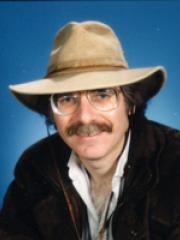 Rick Trebino合作论文数School of Physics, College of Sciences, Georgia Institute of Technology11
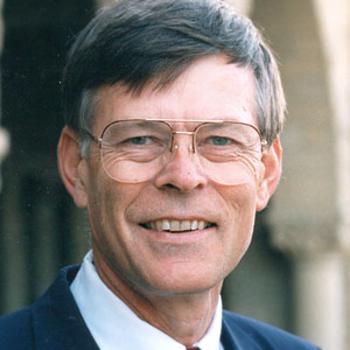 Robert Byer合作论文数Department of Applied Physics, Stanford University10
 Dj Kuizenga合作论文数9
 John Ballato合作论文数The Holcombe Department of Electrical and Computer Engineering, Clemson University;Department of Materials Science and Engineering, Clemson University;Tetramer;Layer Metrics Inc.8
 Michael Bass合作论文数CREOL, The College of Optics and Photonics, University of Central Florida;Department of Physics, College of Sciences, University of Central Florida8
 Martin C. Richardson合作论文数Laser & Plasma Laboratory, University of Central Florida;Department of Physics, College of Sciences, University of Central Florida8
 Donald Phillion合作论文数8Vikas Sudesh合作论文数Institute for Materials Research, Tohoku University8
 Stephen a Biellak合作论文数7
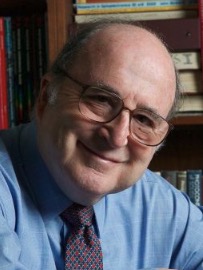 Gordon S. Kino合作论文数Department of Electrical Engineering, Stanford University6
 Stephen E. Harris合作论文数Edward L. Ginzton Laboratory, Stanford University6
 Malcolm R. Beasley合作论文数The Applied Physics Department, Stanford University6B. J. Mcmurtry合作论文数6Paul L. Mussche合作论文数6Y. Sun合作论文数5Yuh-Jen Cheng合作论文数5Raymond Arrathoon合作论文数5J. E. Fouquet合作论文数4Zhou Guosheng合作论文数4
 Bruce Auld合作论文数4Timothy S. Mccomb合作论文数4Jean-Luc Doumont合作论文数4
 Michael D. Fayer合作论文数Department of Chemistry, School of Humanities & Sciences, Stanford University4SC SHENG合作论文数3Jm Heritier合作论文数3
 Dana D. Dlott合作论文数Department of Chemistry, College of Liberal Arts & Sciences, University of Illinois at Urbana-Champaign;School of Chemical Sciences, University of Illinois at Urbana-Champaign;Fredrick Seitz Materials Research Laboratory, University of Illinois at Urbana-Champaign3W. S. C. Chang合作论文数3Charles E. Barker合作论文数3J CHUNG合作论文数2KR MANES合作论文数2AG KOSTENBAUDER合作论文数2d a watkins合作论文数2Ying Chen合作论文数2jose r salcedo合作论文数2h heffner合作论文数2Fanning, G.合作论文数2
 Jeff F. Young合作论文数Department of Physics and Astronomy, The University of British Columbia2John R Whinnery合作论文数2Philippe M. Fauchet合作论文数2A. G. Kostenbauder合作论文数2Thomas F Johnston合作论文数2C. G. Fanning合作论文数2Dirk J. Kuizenga合作论文数2Julie E. Fouquet合作论文数2J. A. Ruff合作论文数2Takehiro Fukushima合作论文数2M. Sasnett合作论文数2




