Cerium formate hollow spheres and cerium hydroxycarbonate nanorods with residual formate groups are effective for reducing palladium(II) salts onto their surfaces. Calcination of the new materials obtained by this surface-assisted reduction method gives highly active PdO/CeO2 nanostructures with Pd well dispersed on the substrate. Temperature-programmed oxidation experiments showed that these nanomaterials are good catalysts for the low-temperature oxidation of methane, with 50% conversion temperatures (T(50%)) at ∼300 °C.
A variety of electronic and magnetic states can be obtained for graphene decorated with inorganic nanoparticles, as shown on p. 937 by S. K. Pati, C. N. R. Rao et al.
A variety of nanostructures of carbon and inorganic nanomaterials possessing different dimensionalities have been synthesized and characterized in the last few years. Several of these nanostructures are found to have properties of utility with potential applications. Using the nanostructures in many situations requires their dispersions in suitable solvents. This can be done in most instances by appropriate functionalization of the nanostructures. In this contribution, we provide an account of the covalent and noncovalent methods of functionalization of carbon and inorganic nanostructures and their subsequent solubilization in nonpolar, polar, and aqueous media.
Polyoctasilsesquioxane (POSS) has been employed to covalently functionalize nanostructures of TiO2, ZnO and Fe2O3 as well as carbon nanotubes, nanodiamond and graphene to enable their dispersion in polar solvents. Covalent functionalization of these nanostructures with POSS has been established by electron microscopy, EDAX analysis and infrared spectroscopy. On heating the POSS-functionalized nanostructures, silica-coated nanostructures are obtained. POSS-functionalized nanoparticles of TiO2, Fe2O3 and graphite were utilized to prepare polymer-nanostructure composites based on PVA and nylon-6,6.
By heating H3BO3 with urea in 1 6 molar ratio, nanoparticles and nanotubes of BN are obtained The urea-boric acid reaction can also be exploited to obtain graphene analogues of BN, with the number of layers depending on the relative proportions of the two reactants Synthesis with a high proportion of urea yields a product containing graphene analogues of BN with an average of 2 layers The surface area of BN increases with the decreasing number of layers, and the high surface area BN also exhibits high CO2 adsorption Few layer BN can be solubilized by interaction with Lewis bases Nanopans and nanosheets formed by graphene like BN are generated by the vapor phase reaction of NH3 and BBr3 at 1223 K Nanopans of BN, being reported for the first time, have a bottom comprising single layer BN and a wall of 0 7 nm height The average inner volume of the nanopan is around 400 nm(3)
This article describes successful incorporation of multiwalled boron nitride nanotubes (BNNTs) and various functionalized BNNTs by Lewis bases such as trioctylamine (TOA), tributylamine (TBA), and triphenylphosphine (TPP), etc., in organogels formed by triphenylenevinylene (TPV)-based low molecular weight gelator (LMWG) in toluene and consequent characterization of the resulting gel nanocomposites. Functionalized BNNTs were synthesized first, and the presence of tubular structures with high aspect ratio and increased diameter compared to the starting BNNTs was confirmed by SEM, TEM, and Raman spectroscopy. The micrographs of composites of 1 and BNNTs showed evidence of wrapping of the gelator molecules on to the BNNT surface presumably brought about by pi-pi stacking and van der Waals interactions. This leads to the formation of densely packed and directionally aligned fibrous networks. Such "reinforced" aggregation of the gelator molecules in presence of doped BNNTs led to an increase in the sol-to-gel transition temperature and the solidification temperature of the gel nanocomposites as revealed from differential scanning calorimetry. Rheological investigations of the gel nanocomposites indicate that the flow properties of the resulting materials become resistant to applied stress upon incorporation of even a very low wt % of BNNTs. Finally, the increase in thermal conductivity of the nanocomposite compared to the gelator alone was observed for the temperature range of 0-60 degrees C which may make these composites potentially useful in various applications depending on the choice and the amount of BNNT loading in the composite.
The cover shows images of inorganic nanostructures of different dimensionalities, flanking the schematic and high-resolution image of BN. The fullerene and nanotube structures are of MoS2 (synthesized by R. Tenne and co-workers). The nanowires are of Si3N4 while the nanoflowers are of ZnO (prepared by C. N. R. Rao and co-workers).
Anorganische Schichten: Graphenartiges MoS2 und WS2 wurde durch drei verschiedene chemische Methoden hergestellt. Mikroskopische Untersuchungen offenbarten, dass die Strukturen aus einer oder wenigen Schichten aufgebaut sind (siehe TEM-Aufnahme von WS2-Schichten), und ein atomar aufgelöstes TEM-Bild zeigt, dass schichtförmiges MoS2 eine hexagonale Anordnung von Mo- und S-Atomen aufweist (siehe Einschub).
Ternary metal oxynitrides are generally prepared by heating the corresponding metal oxides with ammonia for long durations at high temperatures. In order to find a simple route that avoids use of gaseous ammonia, we have employed urea as the nitriding agent. In this method, ternary metal oxynitrides are obtained by heating the corresponding metal carbonates and transition metal oxides with excess urea. By this route, ternary metal oxynitrides of the formulae MTaO2N (M=Ca, Sr or Ba), MNbO2N (M=Sr or Ba), LaTiO2N and SrMoO3−xNx have been prepared successfully. The oxynitrides so obtained were generally in the form of nanoparticles, and were characterized by various physical techniques.
In view of the important need to generate well-dispersed inorganic nanostructures in various solvents, we have explored the dispersion of nanostructures of metal oxides such as TiO2, Fe3O4 and ZnO in solvents of differing polarity in the presence of several surfactants. The solvents used are water, dimethylformamide (DMF) and toluene. The surfactant-solvent combinations yielding the best dispersions are reported alongwith some of the characteristics of the nanostructures in the dispersions. The surfactants which dispersed TiO2 nanowires in water were polyethylene oxide (PEO), Triton X-100 (TX-100), polyvinyl alcohol (PVA) and sodium bis(2-ethylhexyl) sulphosuccinate (AOT). TiO, nanoparticles could also be dispersed with AOT and PEO in water, and with AOT in toluene. In DMF, PVA, PEO and TX-100 were found to be effective, while in toluene, only AOT gave good dispersions. Fe3O4 nanoparticles were held for long periods of time in water by PEO, AOT, PVA and polyethylene glycol (PEG), and by AOT in toluene. In the case of ZnO nanowires, the best surfactant-solvent combinations were found to be, PEO, sodium dodecyl sulphate (SDS) and AOT in water and AOT, PEG, PVA, PEO and TX-100 in DMF. In toluene, stable dispersions of ZnO nanowires were obtained with PEO. We have also been able to disperse oxide nanostructures in non-polar solvents by employing a hydrophobic silane coating on the surface.
Covalent functionalization of nanowires of TiO2, ZnO and Al2O3 has been carried out by employing the organosilicon reagents aminopropyltriethoxysilane and hexadecyltrimethoxysilane (HDTMS). The presence of the organosilane coating was confirmed by electron microscopy, energy dispersive X-ray analysis (EDXA) and IR spectroscopy. HDTMS-coated oxide nanowires give stable dispersions in CCl4 and toluene. Nanoparticles of these metal oxides as well as of CeO2 and Fe3O4 could be solubilized in non-polar solvents by functionalizing with HDTMS. Nanotubes and nanoparticles of BN could also be functionalized and solubilized with HDTMS. Organotin reagents have also been used to covalently functionalize oxide nanostructures and multi-walled carbon nanotubes, thereby producing stable dispersions in CCl4 and toluene. The organotin reagents used were dibutyldimethoxytin and trioctyltinchloride. Covalent functionalization of nanostructures using organosilane and organotin reagents provides a general method applicable to large class of inorganic materials as well as carbon nanotubes and is likely to be useful in practice.
While solubilization of graphene in nonpolar solvents can be accomplished through covalent functionalization, by involving the preparation of a long-chain alkylamide derivative, it is more easily accomplished by interaction with an organosilane or an organotin reagent such as hexadecyltrimethoxysilane and dibutyldimethoxytin. Noncovalent functionalization of graphene through pi-pi interaction by using 1-pyrenebutanoic acid succinimidyl ester gives stable dispersions in dimethylformamide. Interaction of graphene with surfactants produces stable aqueous dispersions, Igepal being effective even at low concentrations.
A simple route involving urea as the nitrogen source has been employed to carry out boron nitride coating on carbon fibers, multi-walled carbon nanotubes and inorganic nanowires. The process involves heating the carbon fibers and nanotubes or inorganic nanowires in a mixture of H3BO3 and urea, followed by a heat treatment at 1000 °C in a N2 atmosphere. We have been able to characterize the BN coating by transmission electron microscopy as well as X-ray photoelectron spectroscopy. The urea decomposition route affords a simple method to coat boron nitride on one-dimensional nanostructures.
Optical properties of nanocomposites of GaN nanocrystals, 2–4 nm in diameter, with conjugated polymers such as poly(2-methoxy,5-(2-ethylhexoxy)-1,4-phenylenevinylene (MEHPPV) as well as with phosphors nanoparticles have been investigated for use as white light sources. Photoluminescence spectra of the nanocomposites with different weight ratios of the two components are reported. Weak electroluminescence has been observed in the case of MEHPPV-GaN nanocomposites. The GaN–nanophosphor composites exhibit a high quality white light with good CIE coordinates along with an excellent colour rendering index.
Covalent functionalisation of nanodiamond has been carried out by employing several methods. One of them involves the reaction of acid-treated nanodiamond with thionyl chloride followed by reaction with a long-chain aliphatic amine to produce the amide derivative. The second method involves reaction of acid-treated nanodiamond with an organosilicon or organotin reagent such as hexadecyltrimethoxysilane, dibutyldimethoxytin, and perfluoro-octyltriethoxysilane. The products of covalent functionalisation produce excellent dispersions in CCl4 and toluene. SiO2–and SnO2–covered nanodiamond are obtained by heating the nanodiamond coated with the organosilane and the organotin reagents, respectively. By interaction of nanodiamond with surfactants such as sodium bis(2-ethylhexyl) sulphosuccinate (AOT), Triton X-100 (TX-100), polyvinyl alcohol (PVA), cetyltrimethylammonium bromide (CTAB), and tert-octylphenoxy poly(oxyethylene)ethanol (IGEPAL) gives good dispersions in water, the best dispersion with the lowest surfactant concentration being obtained with IGEPAL.
Interstitial molybdenum ternary nitrides, MnMo3N (M=Fe and Co, n=3; M=Ni, n=2), can be obtained by heating the molybdate precursors, FeMoO4, CoMoO4 and NiMoO4 with urea in the 1:12 molar ratio in the 900–1000°C range. Fe3Mo3N and Co3Mo3N are obtained in pure form. The nickel nitride has the composition Ni2Mo3N and therefore is in admixture with nickel. All the nitrides have been characterized by various physical methods.
Nanoparticles of CeO2, Fe3O4, TiO2 and ZnO get coated by hexadecyltriethoxysilane on refluxing the nanoparticles and the organosilane in a hydrocarbon solvent. The organosilane-coated metal oxide nanoparticles give stable dispersions in hydrocarbon solvents due to their hydrophobic surface. On heating in air, the organosilane-coated metal oxide nanoparticles yield to silica-coated core-shell type nanoparticles.
Nanoparticles of superconducting YBa2Cu3O7-delta (YBCO) (T-c, = 91 K) exhibit ferromagnetism at room temperature while the bulk YBCO, obtained by heating the nanoparticles at high temperature (940 degrees C), shows a linear magnetization curve. Across the superconducting transition temperature, the magnetization curve changes from that of a soft ferromagnet to a superconductor. Furthermore, our experiments reveal that not only nanoparticles of metal oxides but also metal nitrides such as NbN (Tc = 6-12 K) and delta-MoN (T-c - 6K) exhibit room-temperature ferromagnetism. (C) 2007 Elsevier Ltd. All rights reserved.
We have been able to prepare nanoparticles (∼4nm diameter) of cubic γ-Mo2N by a simple procedure involving the reaction of MoCl5 with urea at 873K. The nanoparticles show a superconducting transition around 6.5K. The γ-Mo2N nanoparticles are readily transformed to nanoparticles of δ-MoN with a slightly larger diameter on heating in a NH3 atmosphere at 573K. Phase-pure δ-MoN obtained by this means shows a superconducting transition around 5K.
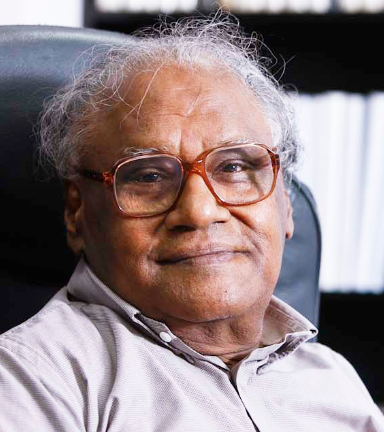 C.N.R. Rao (拉奥)合作论文数Jawaharlal Nehru Centre for Advanced Scientific Research19
 A. Sundaresan合作论文数3
 Kalyan Raidongia合作论文数Jawaharlal Nehru Centre for Advanced Scientific Research Chemistry and Physics of Materials Unit2
 S. R. C. Vivekchand合作论文数Chemistry and Physics of Materials Unit;Jawaharlal Nehru Centre for Advanced Scientific Research;Chemistry and Physics of Materials Unit, Jawaharlal Nehru Centre for Advanced Scientific Research2
 Arun Manna合作论文数New Chemistry Unit and CSIR Centre of Excellence in Chemistry, Jawaharlal Nehru Centre for Advanced Scientific Research2
 A. Govindaraj合作论文数Solid State and Structural Chemistry Unit, Indian Institute of Science2Suman K Samanta合作论文数1
 S V Bhat合作论文数1
 Anirban Ghosh合作论文数1
 Rahman Gholami合作论文数The University of Manchester1Renee W. Y. Man合作论文数1
 Swapan K Pati合作论文数Theoretical Sciences Unit, Jawaharlal Nehru Centre for Advanced Scientific Research1
 Jeffrey M. Gordon合作论文数Department of Solar Energy and Environmental Physics, Ben-Gurion University of the Negev/Jacob Blaustein Institutes for Desert Research, Ben-Gurion University of the Negev1
 Biswajit Choudhury合作论文数Department of Physics, Tezpur University1Vickers Susan M合作论文数1
 Michael Wolf合作论文数Department of Chemistry, Faculty of Science, The University of British Columbia1
 Eugene A Katz合作论文数Department of Solar Energy and Environmental Physics;Institutes for Desert Research;Ben-Gurion University of the Negev;Institutes for Desert Research, Ben-Gurion University of the Negev1
 Barun Das合作论文数Chemistry and Physics of Materials Unit;Jawaharlal Nehru Centre for Advanced Scientific Research;Chemistry and Physics of Materials Unit, Jawaharlal Nehru Centre for Advanced Scientific Research1Moshe Levy合作论文数1
 Ranjan Datta合作论文数Department of Chemistry, Jadavpur University1
 Basant Chitara合作论文数International Centre for Materials Science and CSIR Centre for Excellence in Chemistry, Jawaharlal Nehru Centre for Advanced Scientific Research1
 Daniel Feuermann合作论文数Alexandre Yersin Department of Solar Energy and Environmental Physics, Ben-Gurion University of the Negev1
 Kevin Smith合作论文数Department of Physics, College of Arts & Sciences, Boston University;Department of Materials Science & Department of Engineering, College of Engineering, Boston University;Department of Chemistry, Boston University1
 Mark MacLachlan合作论文数Department of Chemistry, Faculty of Science, The University of British Columbia;NanoMat1
 Santanu Bhattacharya合作论文数Faculty of Science Education & Research, Indian Institute of Science;Faculty of Science, Indian Institute of Science1
 K. Gopalakrishnan合作论文数Tata Institute of Fundamental Research1
 Dattatray Late合作论文数University of Lavras1
 Hema Sundara Matte合作论文数1Dotan Babai合作论文数1
 Anupama Ghosh合作论文数Solid State and Structural Chemistry Unit, Indian Institute of Science1
 S. Jafar Hoseini合作论文数College of Sciences, Shiraz University1Ana Albu-Yaron合作论文数1S. Reshma合作论文数1
 Sandeep Ghosh合作论文数DST unit on Nanoscience and CSIR Centre of Excellence in Chemistry, Jawaharlal Nehru Centre for Advanced Scientific Research Chemistry and Physics of Materials Unit1M. Ramya Harika合作论文数1
 Mina Alyani合作论文数Faculty of Chemical Engineering, Tarbiat Modares University1
 Urmimala Maitra合作论文数International Centre for Materials Science, Jawaharlal Nehru Centre for Advanced Scientific Research1
 Reshef Tenne合作论文数Department of Materials and Interfaces, Faculty of Chemistry, Weizmann Institute of Science1K. S. Subrahmanyam合作论文数Chemistry and Physics of Materials Unit;Jawaharlal Nehru Centre for Advanced Scientific Research;Chemistry and Physics of Materials Unit, Jawaharlal Nehru Centre for Advanced Scientific Research1




