This Letter presents the first search for dark matter axions with mass in the ranges 76.56 to 76.82 μeV and 79.31 to 79.53 μeV using a prototype setup for the MAgnetized Disk and Mirror Axion eXperiment (MADMAX). The experimental setup employs a dielectric haloscope consisting of three sapphire disks and a mirror to resonantly enhance the axion-induced microwave signal within the magnetic dipole field provided by the 1.6 T Morpurgo magnet at CERN. Over 14.5 days of data collection, no axion signal was detected. A 95% CL upper limit on the axion-photon coupling strength down to |g_{aγ}|∼2×10^{-11} GeV^{-1} is set in the targeted mass ranges, surpassing previous constraints, assuming a local axion dark matter density ρ_{a} of 0.3 GeV/cm^{3}. This study marks the first axion dark matter search using a dielectric haloscope.
MADMAX, a future experiment to search for axion dark matter, is based on a novel detection concept called the dielectric haloscope. It consists of a booster composed of several dielectric disks positioned with mu m precision. A prototype composed of one movable disk was built to demonstrate the mechanical feasibility of such a booster in the challenging environment of the experiment: high magnetic field to convert the axions into photons and cryogenic temperature to reduce the thermal noise. It was tested both inside a strong magnetic field up to 1.6 T and at cryogenic temperatures down to 35 K. The measurements of the velocity and positioning accuracy of the disk are shown and are found to match the MADMAX requirements.
Forward Silicon Detector of the BM@N experiment was used for tests of the straw detector and for the measurement of the straw R–t dependence (straw diameter d = 6 mm) based on cosmic muon tracking by reconstruction software based on the “BmnRoot” framework. The cosmic muon stand consists of scintillators, silicon planes, the straw detector and Data Acquisition System. Silicon planes are based on Double-sided Silicon Strip Detectors (DSSD) with strip pitch 95 μm for p+ side and 103 μm—for n+ side. The stereo angle between strips is 2.5°. A general view of the stand, a description of silicon planes and first measurement results of the straw R–t dependence are presented.
We report some highlights from the ARIES APEC workshop on “Storage Rings and Gravitational Waves” (SRGW2021), held in virtual space from 2 February to 18 March 2021, and sketch a tentative landscape for using accelerators and associated technologies for the detection or generation of gravitational waves.
Baikal-GVD is a deep-underwater neutrino detector of cubic-kilometer scale. It is designed to detect astrophysical neutrinos up to multi-PeV energies and beyond. The deployment of this facility began in spring 2015. Since April 2020, the detector includes seven clusters, each consisting of eight strings carrying in total 288 optical modules located at depths of 750 to 1275 m. By the end of the first phase of construction of the detector in 2024, it is planned to deploy 15 clusters, whereby an effective volume of 0.75 km $${}^{3}$$ for detecting high-energy cascades would be reached. The design and status of the Baikal-GVD detector are described in the present article along with selected results of data analysis.
The Baikal-GVD deep underwater neutrino experiment participates in the international multi-messenger program to detect the astrophysical sources of high- and ultrahigh-energy cosmic-ray particles, being at the stage of array deployment and a step-by-step increase of the telescope's effective volume to the scale of a cubic kilometer. At present, the telescope consists of seven clusters containing 2016 photodetectors. The effective volume of the detector has reached 0.35 km(3) for the selection of shower events from neutrino interactions in Baikal water. The experimental data have been accumulated in a continuous exposure mode since 2015, allowing a prompt data analysis and a celestial-sphere monitoring program to be implemented in real time. We discuss the structure of the data acquisition system, describe the physical event reconstruction procedure in the mode of fast response to alerts, and present the results of our analysis of nine alerts from the polar IceCube telescope from early September to late October 2020.
Neutrino astronomy offers a novel view of the non-thermal Universe and is complementary to other astronomical disciplines. The field has seen rapid progress in recent years, including the first detection of astrophysical neutrinos in the TeV–PeV energy range by IceCube and the first identified extragalactic neutrino source (TXS 0506+056). Further discoveries are aimed for with new cubic-kilometer telescopes in the Northern Hemisphere: Baikal-GVD, in Lake Baikal, and KM3NeT-ARCA, in the Mediterranean sea. The construction of Baikal-GVD proceeds as planned; the detector currently includes over 2000 optical modules arranged on 56 strings, providing an effective volume of 0.35 km $${}^{3}$$ . We review the scientific case for Baikal-GVD, the construction plan, and first results from the partially built array.
A.D. Avrorin, A.V. Avrorin, V.M. Aynutdinov, Z. Bardáčová, R. Bannasch, I.A. Belolaptikov, V.B. Brudanin, N.M. Budnev, G.V. Domogatsky, A.A. Doroshenko, A.N. Dyachok, Zh.-A.M. Dzhilkibaev, V. Dik, R. Dvornický, E. Eckerová, T.V. Elzhov, L. Fajt, 5 S.V. Fialkovski, A.R. Gafarov, K.V. Golubkov, N.S. Gorshkov, T.I. Gress, R.A. Ivanov, M.S. Katulin, K.G. Kebkal, O.G. Kebkal, E.V. Khramov, M.M. Kolbin, K.V. Konischev, K.A. Kopański, A.V. Korobchenko, A.P. Koshechkin, V.A. Kozhin, M.K. Kryukov, M.V. Kruglov, V.F. Kulepov, M.B. Milenin, R.R. Mirgazov, D.V. Naumov, V. Nazari, W. Noga, D.P. Petukhov, E.N. Pliskovsky, M.I. Rozanov, 9 V.D. Rushay, E.V. Ryabov, G.B. Safronov,0,∗ B.A. Shaybonov, M.D. Shelepov, F. Šimkovic, 5 A.V. Skurikhin, A.G. Solovjev, M.N. Sorokovikov, I. Štekl, 5 E.O. Sushenok, O.V. Suvorova, V.A. Tabolenko, B.A. Tarashansky, Y.V. Yablokova, S. Yakovlev and D.N. Zaborov Institute for Nuclear Research, Russian Academy of Sciences, Moscow, Russia Comenius University, Bratislava, Slovakia EvoLogics Gmbh, Berlin, Germany Joint Institute for Nuclear Research, Dubna, Russia Irkutsk State University, Irkutsk, Russia 5 Czech Technical University in Prague, Prague, Czech Republic Nizhny Novgorod State Technical University, Nizhny Novgorod, Russia Institute of Nuclear Physics of Polish Academy of Sciences (IFJ PAN), Kraków, Poland Moscow State University, Moscow, Russia St. Petersburg State Marine Technical University, St.Petersburg, Russia
The COMPASS collaboration has collected the currently largest data set on diffractively produced pi(-) pi(-) pi(+) final states using a negative pion beam of 190 GeV/c momentum impinging on a stationary proton target. This data set allows for a systematic partial-wave analysis in 100 bins of three-pion mass, 0.5 < m(3 pi) < 2.5 GeV/c(2), and in 11 bins of the reduced four-momentum transfer squared, 0.1 < t' < 1.0 (GeV/c)(2). This two-dimensional analysis offers sensitivity to genuine one-step resonance production, i.e. the production of a state followed by its decay, as well as to more complex dynamical effects in nonresonant 3 pi production. In this paper, we present detailed studies on selected 3p partial waves with J(PC) = 0(-+) ,1(++) ,2(-+) ,2(++) ,and 4(++). In these waves, we observe the well-known groundstate mesons as well as a new narrow axial-vector meson a(1)(1420) decaying into f(0) (980)pi. In addition, we present the results of a novel method to extract the amplitude of the pi(-)pi(+) subsystem with I(G)J(PC) = 0(+)0(++) in various partial waves from the pi(-)pi(-)pi(+) data. Evidence is found for correlation of the f (0)(980) and f(0)(1500) appearing as intermediate pi(-)pi(+) isobars in the decay of the known pi(1800) and pi(2)(1880).
 M. S. Katulin合作论文数7Kozhin V.合作论文数7
 Valiollah Nazari合作论文数7M. V. Kruglov合作论文数7N. S. Gorshkov合作论文数7VB BRUDANIN合作论文数7Zh.-A. M. Dzhilkibaev合作论文数7A. O. Doroshenko合作论文数7O. G. Kebkal合作论文数7
 Alexander Avrorin合作论文数7A. R. Gafarov合作论文数7V. F. Kulepov合作论文数7K. V. Golubkov合作论文数7M. M. Kolbin合作论文数7A. P. Koshechkin合作论文数7A. V. Korobchenko合作论文数7D. Zaborov合作论文数7D. Naumov合作论文数7Konstantin Kebkal合作论文数7Nikolay Budnev合作论文数Faculty of Physics, Irkutsk State University7I. A. Belolaptikov合作论文数7A. D. Avrorin合作论文数6a v skurikhin合作论文数6O. V. Suvorova合作论文数6D. P. Petukhov合作论文数6V. A. Tabolenko合作论文数6M. I. Rozanov合作论文数6M. D. Shelepov合作论文数6G. B. Safronov合作论文数6
 Evgenii Sushenok合作论文数6M. N. Sorokovikov合作论文数6E. Khramov合作论文数Joint Institute for Nuclear Research, JINR Dubna, RU - 141 980 Moscow Region, Russia6
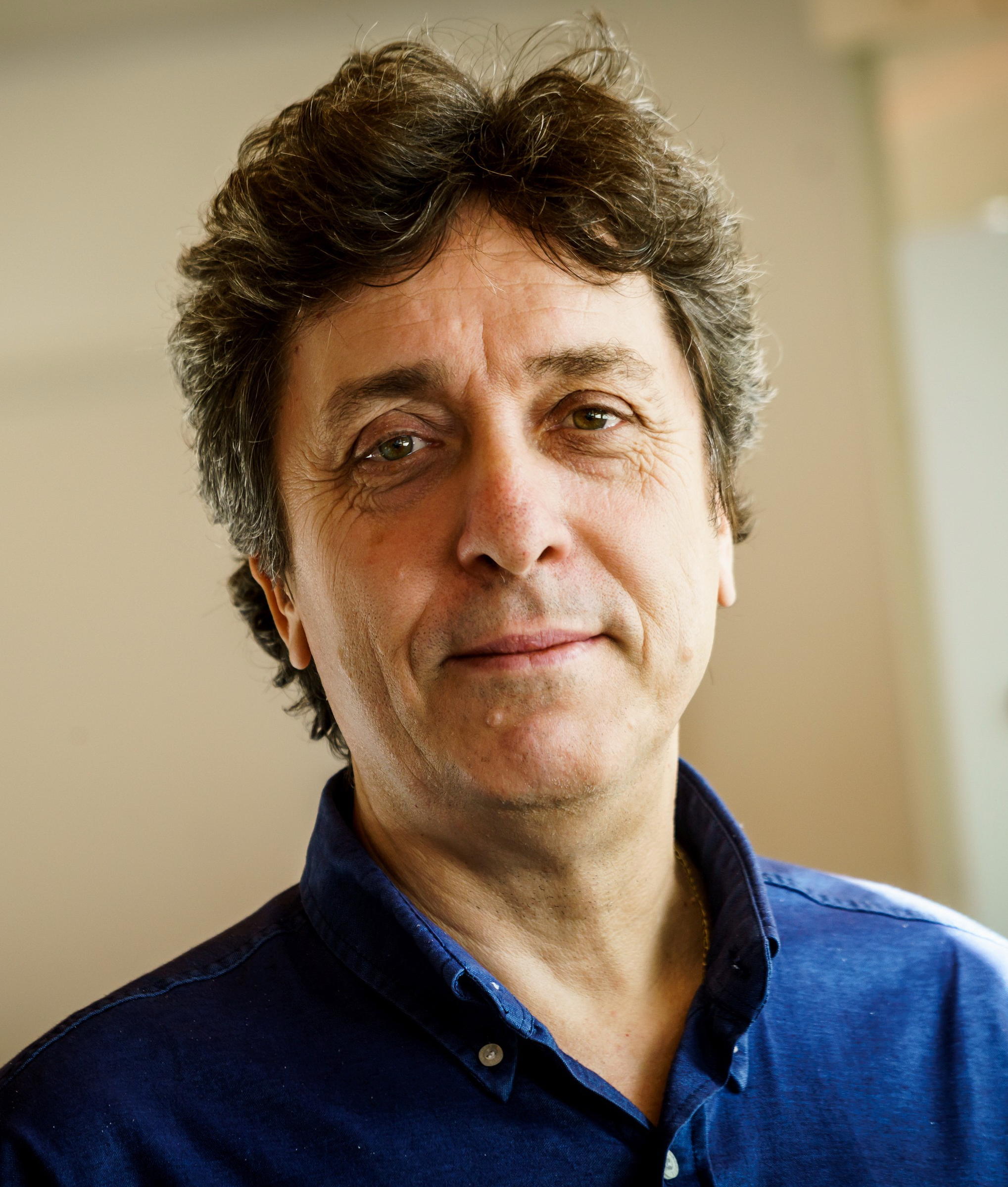 Štekl Ivan合作论文数Department of Administrative and Technical Services, Institute of Experimental and Applied Physics, Czech Technical University in Prague6E. Eckerová合作论文数5Z. Bardačová合作论文数5L. Fajt合作论文数5
 Rudolf Bannasch合作论文数5T. V. Elzhov合作论文数4T. I. Gres合作论文数4A. G. Solovjev合作论文数4V. D. Rushay合作论文数4A. N. Dyachok合作论文数4M. B. Milenin合作论文数4K. V. Konishchev合作论文数4V. M. Aynutdinov合作论文数4R. R. Mirgazov合作论文数4E. N. Pliskovsky合作论文数4G. V. Domogatsky合作论文数4E. V. Ryabov合作论文数3




