This paper aims to examine how deductive geometry was constituted in two didactic book collections by Osvaldo Sangiorgi — named by pre-modern (1950s) and the modern (1960s) ones. The guiding question of the study is: how does Sangiorgi change the proposal of a deductive geometry for the 3rd grade of junior Brazilian high schools in the modern collection compared to the pre-modern collection? Postulates, theorems, and demonstrations are examined in detail, emphasizing the quantitative and qualitative aspects, as well as the methodological recommendations. This analyzes shows that the modern collection brought about significant changes and contributions both in the scope of Euclidean geometry, of a geometry to teach, and in the methodological didactic aspects by proposing the insertion of exploratory and experimental exercises, different registers of representations, which means, in our point of view, a geometry for teaching, which can be interpreted as an intuitive geometry, taken from the 1st and 2nd grades of the Brazilian Minimum Program of 1951.
Este artigo traz um recorte de uma dissertação de mestrado cujo objetivo principal foi investigar de que maneira práticas de Resolução de Problemas podem ser implementadas na sala de aula e como são vivenciadas pelos estudantes, com ênfase no papel das diferentes representações semióticas em seus processos de resolução. Para tanto, realizou-se uma experiência com turmas de 1ª série do Ensino Médio de uma escola pública da cidade de São Paulo, inspirada na competição internacional Rali Matemático Transalpino. A estratégia metodológica envolveu um estudo experimental de intervenção, organizado em três fases, cuja análise dos dados produzidos foi de natureza qualitativa, à luz das pesquisas na área, bem como da teoria dos registros de representação semiótica de Raymond Duval. A análise dos dados produzidos mostrou que os alunos vivenciaram a experiência como participantes ativos nos processos de resolução dos problemas e, por meio das discussões realizadas, reconheceram a importância da mobilização de diferentes representações como auxiliares no desenvolvimento das resoluções, ainda que tenham apresentado dificuldades em atividades de conversão do registro numérico tabular para o registro simbólico-algébrico.
A adolescência dentre os seus limites, segundo a Organização Mundial da Saúde, está entre os 10 a 19 anos. Nesta fase encontram-se as primeiras descobertas, sociais, emocionais e físicas. Artigos revelam que é nesse período que eles estão em busca da autodescoberta, associada a sexualidade. O Instituto Brasileiro de Geografia e Estatística (IBGE), juntamente com o Ministério da Saúde, levantaram dados que indicaram que 30% dos adolescentes já tiveram relação sexual. Mudanças constantes nesta fase da vida, geram eventos de despreparo, sem uma responsabilidade que consequentemente é gerada ao longo da vida, tendo como resultado os riscos de reprodução que uma mulher adulta teria. Os métodos anticoncepcionais acabam sendo descartados por esse grupo etário.
ÍNDICE DE ABORTAMENTO NA ADOLESCÊNCIA NOS ÚLTIMOS 5 ANOS, NO AMAZONAS. A adolescência dentre os seus limites, segundo a Organização Mundial da Saúde, está entre os 10 a 19 anos. Nesta fase encontram-se as primeiras descobertas, sociais, emocionais e físicas. Artigos revelam que é nesse período que eles estão em busca da autodescoberta, associada a sexualidade. O Instituto Brasileiro de Geografia e Estatística (IBGE), juntamente com o Ministério da Saúde, levantaram dados que indicaram que 30% dos adolescentes já tiveram relação sexual. Mudanças constantes nesta fase da vida, geram eventos de despreparo, sem uma responsabilidade que consequentemente é gerada ao longo da vida, tendo como resultado os riscos de reprodução que uma mulher adulta teria. Os métodos anticoncepcionais acabam sendo descartados por esse grupo etário. No Amazonas, o registro para aborto, em 5 anos, foi de 4.720. O aborto é definido como a interrupção da gestação, uma forma de expulsar o feto em menos de 22 semanas, com menos de 16 centímetros, menos 500g, com a morte do produto de concepção.
De grande importância para o estudo da Geometria são as figuras. O principal motivo é que na resolução de um problema, tais representaçõespermitem, em geral, um acesso mais direto aos objetos da situação e menos custoso que um texto. Mas, muitas vezes, para resolver umproblema, é necessário transformar ou modificar uma dada figura em outras, a fim de obter novos elementos que poderão levar à ideia de suasolução ou de uma prova. Essa capacidade de modificar uma figura envolve o que R. Duval denomina apreensão operatória da figura. Umtipo de modificação consiste na divisão da figura em outras subfiguras que podem ser reagrupadas para formar novas figuras. A capacidadede modificar uma figura de partida para visualizar a resolução de um problema pode ser desenvolvida e deve ser estimulada pelo professor noensino da Matemática, em particular na Geometria. Nesse artigo, com base nos trabalhos do referido autor, apresentamos exemplos específicosque caracterizam e destacam o papel e a importância da apreensão operatória para analisar o funcionamento de uma figura na abordagem deuma situação geométrica por um sujeito. E ainda, introduzimos constructos teóricos da abordagem semiótica, a fim de realçar as possíveisinfluências de ambientes de Geometria Dinâmica em processos de visualização e nas representações que estudantes podem construir deconceitos e problemas geométricos nesses ambientes.Palavras-chave: Geometria. Figuras. Apreensão Operatória. Visualização. AbstractFigures assume an important role in the study of Geometry. It should be emphasized, as the main reason, that such representations allow moredirect access to objects of the problems, richer and less expensive than texts. Nevertheless, the figure can be seen by students, differently fromwhat a teacher sees. Often, transforming or modifying figures in other ones is a helpful approach, and necessary to obtain new elements thatmay lead to the idea of a problem solution or proof. This ability to modify a figure refers to an operative apprehension of the figure. It canbe mentioned that one important type of modification consists of dividing the figure into other sub figures that can be regrouped to form newshapes. The ability to modify a starting figure to visualize the solution of a problem can be developed and should be stimulated by the teacherin the teaching of Mathematics, in Geometry. This text presents and highlights the role and importance of the operative apprehension of figuresbased on specific examples.Keywords: Geometry. Figures. Operative Apprehension. Visualization.
Since four years, a group of seven secondary school mathematics teachers and teacher educators has been involved in a research project dealing with the issue of dynamic geometry resource quality. The aim of this paper is to examine the impact of this involvement on their practices both as teachers and teacher educators. Based on the analysis of various resources produced by the group members before their participation in the research and nowadays, as well as on the group's auto-analysis of the evolution of their own practices, we could highlight a significant evolution in their way of using dynamic geometry in a classroom, as well as in their teacher training offer and content.
The profusion of resources, mostly on the Internet, makes the issue of their quality more and more pressing. Teachers often find themselves unable to choose from among them those that would be the most relevant to their educational goal and to the context of their classes. In our previous work, we claimed that acquiring resource analysis skills is one of the keys to the teachers’ professional development supporting the integration of dynamic geometry systems. Based on this assumption, we have designed a quality questionnaire for the i2geo repository aiming at framing the analysis of available resources by the platform users. The research reported in this paper, which is a continuation of this work, explores the way the quality criteria are taken into account in the design and use of resources by members of the community that has emerged around the repository and sheds light on possible evolutions of teachers’ and teacher educators’ professional practices due to their involvement in the resource quality evaluation.
Since four years, a group of seven secondary school mathematics teachers and teacher educators has been involved in a research p oject dealing with the issue of dynamic geometry resource quality. The aim of this paper is to examine the impact of this involvement on their practices both as teac hers and teacher educators. Based on the analysis of various resources produced by th e group members before their participation in the research and nowadays, as well as on the group’s auto-analysis of the evolution of their own practices, we could h ighlight a significant evolution in their way of using dynamic geometry in a classroom, as well as in their teacher training offer and content.
One of the objectives of the Intergeo project was to provide European mathematics teachers with “good quality” pedagogical material supporting the use of dynamic geometry software in classrooms. With this aim in view, an online repository/platform was developed to gather various dynamic geometry resources, based on the idea of a teachers’ community feeding the repository, (re)using available resources and sharing practices related to the use of dynamic geometry in classrooms. The repository is thus open to contributions of any user who can deposit, browse, download and use resources, which naturally raises the question how to handle the resource quality issue in such an open environment. This paper reports on the way we tackled this issue in the Intergeo project. We first explain what we mean by a “good quality” dynamic geometry resource. We then provide a rationale behind the design of a questionnaire, the main tool for resource quality reviews, which are at the core of the quality assessment process implemented in the repository. Several experiments carried out with groups of teachers in order to confront our research-based view of the resource quality with the teachers’ one and to observe teachers’ usages of the quality assessment process are also reported in the paper. The outcomes of these experiments highlight strengths and limitations of the resource quality assessment process. They also tend to show that the idea of involving teachers into the resource quality assessment is a promising way of stimulating the use of dynamic geometry in classrooms, provided that teachers benefit from a support to make the quality process their own.
The poster [1] presents the I2Geo platform developed within the Intergeo project [2] whose ambition was to develop a Pan-European math teacher community enabled to share resources and practices in using dynamic geometry (DG). We present the main tools and services i2geo offers to stimulate the use of DG in mathematics classes.
This paper concerns a Brazilian-French joint research regarding math teachers and their activity related to design and use of resources. More precisely, it refers to two axes of this project, dedicated to ICT integration and to teachers’ didactical decisions. Since the project has just begun, this paper aims at presenting a new theoretical approach to teachers’ documentation as a possible common background, and some preliminary observations as possible seeds for further elaboration. The main questions are: how do teachers act, alone or collectively, to gather and exploit resources enabling them to teach? How comparative studies could help understand what is at stake in teachers’ documentation? We present here some reflexions on the first question. Results based on comparative studies will be reported at the next PME.
We focus on the means to support the use of ICT by math teachers. Despite the availability and accessibility of ICT tools and the recommendations in the curricula in many countries to use it, teachers are reluctant to use technologies. In the case of dynamic geometry systems (DGS), several reasons explain this resistance. The multiplicity of DGS and resources makes it difficult to identify relevant and quality resources. Moreover, the availability of resources does not solve the problem of their appropriation by teachers, which requires an evolution of teachers' competencies and their conceptions about the role of technology in teaching and learning of mathematics. These considerations have led to one of the goals of I2Geo project, which is at the core of this contribution: a quality assessment process for dynamic geometry resources based on an evaluation of resources by users. In order to frame the resource evaluation, we have designed a questionnaire addressing aspects that contribute to the mathematical, instrumental, didactical, pedagogical and ergonomic quality of a resource. The aim is to collect users' opinions reflecting the use of resources in a classroom and thus stimulate their reuse by others and their improvement. Several experiments that have been carried out with groups of teachers allowed analysing strengths and limitations of resource quality assessment. It turns out that the questionnaire is a helpful tool for the appropriation of resources since it prompts teachers to analyse in detail main aspects of a resource that each criterion of the questionnaire addresses.
In this research report, we present a comparative study between Brazil and France, regarding the secondary-tertiary transition, focusing more particularly on the concept of function. Relying on theoretical constructs of the anthropological theory of didactics, and more specifically on the hierarchy of levels of co-determination, we show the existence of two contrasted functional worlds where the secondary-tertiary transition does not raise the same problems, and the role played in these differences by contextual characteristics situated at different levels of co-determination.
This article addresses research related to the use of digital technologies in the teaching and learning of mathematics in Brazil. Its scope is limited to the context of school mathematics and, more specifically, to an ongoing research programme which involves the development of collaborative research partnerships with teachers of mathematics. The paper begins with a brief presentation of the introduction of computers into the Brazilian educational scenario in the 1980s, highlighting how computer technology was heralded as a key to permitting new pedagogical approaches appropriate to the constructivist philosophy of that time. It goes on to consider recent developments in the theoretical frameworks used to interpret mathematics learning in the presence of digital technologies and the importance of focusing on the learning system as a whole, considering epistemological, cognitive and pedagogic dimensions concomitantly. In this vein, it is argued that for any real integration to take place, the mathematical practices afforded by digital tools must be considered legitimate by all the actors in this process and, perhaps most notably, by teachers. The rest of the paper focuses on our approaches to involve teachers in making decisions about technology use in their own classrooms. The strategy used was based on the realisation of research activities underpinned by the idea of the collaborative design of learning situations and the goal of including the wide diversity of learners that characterises Brazilian mathematics classrooms.
Neste artigo, descrevem-se sinteticamente as fases de organização para a construção de conceitos matemáticos segundo a dialética ferramenta-objeto introduzida por R. Douady. Esse tipo de organização enfatiza a importância de se alternar, no ensino, os aspectos ferramenta e objeto de uma dada noção matemática, fornecendo ainda princípios metodológicos interessantes para o professor. Um exemplo de tal organização é apresentado no campo da Geometria, e mais precisamente, relativo ao Teorema de Pitágoras.
O objetivo deste estudo foi investigar as estratégias e procedimentos adotados por professores de Matemática e/ou Física do Ensino Médio, quando da resolução de questões sobre simetria axial e reflexão em espelhos planos. Para tal, foram aplicados questionários que exploravam situações de simetria em contextos matemáticos e físicos. Os resultados mostraram que as estratégias adotadas pelos grupos podem variar de acordo com o contexto (matemático ou físico), ainda que as situações propostas sejam análogas, do ponto de vista dos conhecimentos envolvidos.
The present text describes and characterises the tools “Locus” and “Trace” of Cabri-géomètre II, in relations to a study of geometric transformation, more precisely, the passage from the notion of transformation of figures to the notion of applications1 that map points on the plane onto the plane itself. In particular it discusses how the conception of image of a figure under a transformation can evolve—through interaction in a “milieu” organised around Cabri-géomètre—such that students move from views of figure-images as undecomposible entities to see them as sets of image-points. Moreover, the study allowed the identification that the notion of trajectory (in a dynamic interpretation) has an important role in this conceptually difficult passage and that dynamic geometry environment renovate this notion.
 Francesco Fidecaro合作论文数Physics Department, Pisa University36
 d schlatter合作论文数36M. Takashima合作论文数36A. Vayaki合作论文数36W. Tejessy合作论文数36F. Steeg合作论文数36A. Minten合作论文数36T. Barczewski合作论文数36Michael Schmelling合作论文数Max-Planck-Institut fuer Kernphysik36
 Matthias Kasemann合作论文数Deutsche Elektronen-Synchrotron36
 Edward Blucher合作论文数Department of Physics, The University of Chicago;Enrico Fermi Institute, The University of Chicago36
 Ronald Settles合作论文数36W. Blum合作论文数35I. Lehraus合作论文数35
 Alberto Lusiani合作论文数Science Department, Scuola Normale Superiore;INFN Sezione di Pisa35B. Gobbo合作论文数35
 David Cinabro合作论文数College of Liberal Arts and Sciences, Wayne State University;U.S. Department of Energy35W. Witzeling合作论文数CERN European Organisation for Nuclear Research35S. Roehn合作论文数34S Haywood合作论文数34
 Thomas Lohse合作论文数Institut für Physik, Humboldt Universität zu Berlin34
 John S. Conway合作论文数Department of Physics and Astronomy, University of California, Davis34
 Joseph Boudreau合作论文数Department of Physics and Astronomy, University of Pittsburgh34
 Doug Cowen合作论文数Department of Physics, Eberly College of Science, The Pennsylvania State University34
 Pier Marr合作论文数Department of Physical Sciences, Earth and Environment, University of Siena33R. Richter合作论文数33Werner Wiedenmann合作论文数Department of Physics, University of Wisconsin-Madison33A. Roth合作论文数33Luigi Rolandi合作论文数33
 Leo Bellantoni合作论文数Fermilab32H. Rotscheidt合作论文数32R. C. Jared合作论文数32S. R. Amendolia合作论文数31
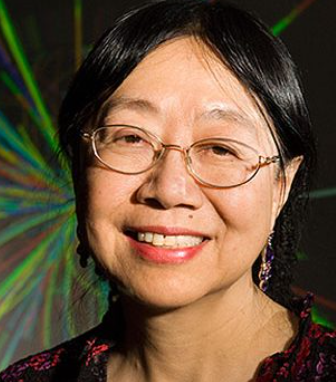 Sau Lan Wu合作论文数Department of Physics, College of Letters & Science, University of Wisconsin-Madison31Owen D Boyle合作论文数31M. A. Ciocci合作论文数30
 A. W. Halley合作论文数Department of Physics and Astronomy, University of Glasgow30
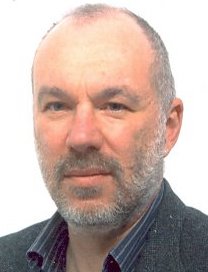 Franco Ligabue合作论文数Scuola Normale Superiore di Pisa29
 Glen Cowan合作论文数Centre for Particle Physics and Astronomy, Department of Physics, Royal Holloway, University of London29Kleinknecht K合作论文数29
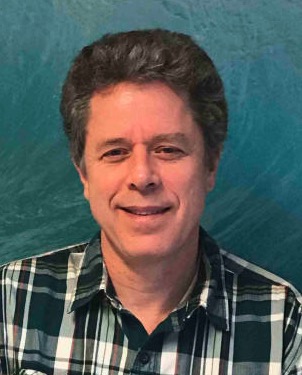 Robert P. Johnson合作论文数Physical & Biological Sciences Division, Physics Department, University of California, Santa Cruz;Santa Cruz Institute for Particle Physics, University of California, Santa Cruz29L.A.T. Bauerdick合作论文数29U. Stierlin合作论文数28P. Zografou合作论文数28A. Falvard合作论文数28A. Rougé合作论文数28At Belk合作论文数28f prulhiere合作论文数28B. Michel合作论文数28




