Here, safer nuclear fuels which can sustain in the high temperature and neutron fluence environment of the reactor core are investigated to utilize nuclear energy peacefully. At Nuclear Fuel Complex in Hyderabad, nuclear fuels are being manufactured which are best suited for the high temperature and fluence environment of the reactor core even in accidental scenarios. In this paper, nuclear fuels manufactured at NFC, Hyderabad are presented. The developed nuclear fuels have higher equivalent hydraulic diameter and breeding capability to produce U . Nuclear fuels having higher equivalent hydraulic diameter reduce the reactor core temperature substantially. These fuels have negative temperature coefficient of reactivity. Thus, in case of an accident, the fuel temperature never exceeds the safety limit. Therefore, the thermal heat available across the secondary of a heat exchanger can be utilized for different industrial processes. This allows the development of key technologies, such as safer co-generation of electricity and Hydrogen. The Three-Stage Indian Nuclear Power Program developed at BARC has been explained that eliminates loopholes from NPT and avoids buildup of stockpiles of Uranium, Plutonium. The safely produced Hydrogen gas has been utilized in many ways for different environmentally benign applications. Moreover, the processing of iron ore with the energy obtained from the IHX secondary side, eliminates the burning of coals and CO2 emissions into the environment. Several radioisotopes have been developed and used for medical applications from spent fuel.
Resolution of conflict between growing energy needs and threat of climate change necessitates a rapid transition to non-fossil energy sources of which nuclear energy is an essential key component. For a country like India which is endowed with abundant Thorium resources and only modest Uranium resources, harnessing Thorium for her energy needs has been a key development objective. Even for other countries, Thorium presents an attractive nuclear energy alternative that has the advantage of greater safety and larger resource base as well as higher proliferation resistance. While the optimised solution for harnessing Thorium over the long term could take time, there are opportunities to get started with Thorium almost immediately using established nuclear power reactor technologies and address some of the barriers to growth of nuclear energy utilising the advantages that Thorium can offer. This would also enable scaling up our experience with Thorium and facilitate transition from Uranium to Thorium at the contemporary scale of operation whenever such a change is contemplated.
India is going through significant transformations – aspirational, economic, social and technological. Indian youth, whose number has in fact created a window of opportunity for the country, are the prime movers of these transformations. The level of success we achieve, going forward, is thus directly dependent on our ability to enable each one of our youth to realize his/her full potential. Our key education challenge is thus to create an ecosystem that enables precisely this.
The objective of rapid development of rural population in a sustainable manner with a view to bridging the urban-rural divide would require leveraging knowledge and technology in an environment conducive for innovation. The concept of a CILLAGE that incorporates the best of a city in a village is developed with this objective in mind. A CILLAGE is a knowledge-based ecosystem for integrated education, research, technology development and deployment as well as capacity building in rural areas. The focus of research work at a CILLAGE is on regional problems. CILLAGE activities also include a comprehensive engagement with people in the neighbourhood for demonstration and deployment of relevant technologies through a number of Advanced Knowledge-based Rural Technology Initiative (AKRUTI) centres located in the neighbourhood. CILLAGE should thus become a centre of innovation in rural areas to solve the problems of the region and disseminate the developed technologies in the region through AKRUTI centres. This article discusses the philosophy of the CILLAGE concept and describes its implementation through an example.
The growing economic empowerment of an increasing part of the world’s population and small amount of carbon space available, necessitates a quick shift to non-fossil energy sources that are large enough to meet future energy requirements. Apart from electricity, energy in fluid form, derived through non-fossil means is also needed. It is, thus, important to progressively replace fossil fuels and increase the share of nuclear and solar power in the overall energy mix. For expansion of nuclear capacity, it is important to squarely address various fears associated with nuclear energy by eliminating the possibility of any adverse impact in the public domain. Since time is running out, we need to explore how to achieve this objective through reconfiguration of available technologies even as we develop new technologies specifically for the purpose. This paper argues that the use of thorium, together with innovative reactor designs such as that of the advanced heavy water reactor (AHWR), under development in India can, by and large, eliminate many of the perceived risks associated with nuclear energy. In the long run, a mix of advanced technologies such as molten salt reactors, accelerator-driven systems, and fast reactors will be necessary to sustain nuclear energy.
Despite global consensus on the urgent need to limit global warming, firm actions to cap and reverse the level of greenhouse gases in earth’s atmosphere are still eluding us. The large scale developmental needs of the developing world and the little carbon space that is available to accommodate them in the business as usual mode clearly requires immediate actions on facilitation and adoption of low carbon pathways by both the developed and the developing countries. In the Indian context, it appears that meeting the anticipated very large growth in energy needs using energy re-sources available within the country, in a sustainable way, would also require adoption of non-fossil energy pathways on a relatively urgent basis. The presentation discusses some approaches towards ensuring sustainable energy supply for meeting development aspirations of a large developing country like India through non-fossil means.
Well friends, I think you will agree with me that we had a very good and lively conference. It is important for us to recognize that today nearly 1/6th of the global electricity comes from nuclear power. This, however, has reached a plateau on account of a number of issues that we all are aware of. Thorium, which is a larger resource compared with uranium, seems to have the potential to resolve many of the issues that impede the rapid growth of nuclear power.
Seismic signals due to any underground nuclear explosion events are known to be influenced by the local geology of the test site and the yield level. In this paper, transient three-dimensional finite element code SHOCK-3D developed for the simulation of underground nuclear explosion events has been used to obtain synthetic acceleration signals for Baneberry site (Nevada) single and composite rock media. At this site an underground nuclear test of 10 kT conducted on 18th December 1970 at source depth of 278 m resulted into venting as reported by Terhune et al with 2D simulation results and later by us through 3D simulation in Ranjan et al. First, the reasons of the venting for this event are summarized. After the successful validation of the 3D numerical model for Baneberry site rock media, parametric studies are carried out for 1 and 8 kT yields at 100 m depth (Scaled Depths of Burst SDOB ∼ 100 and 50 m/kT1/3, respectively) for homogeneous and composite Paleozoic and Tuff media of Baneberry site. It is demonstrated that the near source local geological formations and associated nonlinear effects significantly influence the seismic signals. With this study the seismic decoupling of the source by an order of magnitude has been illustrated. Finally, it is concluded that the seismic signals alone, in the absence of in-depth information of the local geology of the specific test site, are not appropriate measures of the source strength.
Indigenously developed Pressurized Heavy Water Reactors (PHWRs) that form the backbone of current stage of nuclear power development in India have seen continuous evolution of their containment systems. This evolution that has taken place over implementation of 18 PHWRs (200/220/540MWe) has encompassed all aspects of containment design, viz. the structural system, energy management system, radio-activity management and hydrogen management system. As a part of ongoing efforts toward strengthening of safety performance, India is also ready with the design of Advance Heavy Water Reactor (AHWR), which represents a technology demonstrator for advanced reactor systems and for thorium utilization. This reactor has a number of improved passive safety features and it is capable of meeting the demanding safety challenges that future reactor system would be expected to meet as a result of emerging expectations in the background of accidents over the past three decades viz. those at Three Mile Island (1979), Chernobyl (1986) and most recently at Fukushima (2011). In this lecture I shall focus on the evolution of nuclear reactor containments in India and highlight the design, associated structural and thermal hydraulics safety assessment made over the years for the improvement of containment performance.
Nuclear energy professionals need to understand and address the catastrophe syndrome that of late seems to be increasingly at work in public mind in the context of nuclear energy. Classically the nuclear power reactor design and system evolution has been based on the logic of minimization of risk to an acceptable level and its quantification based on a deterministic approach and backed up by a further assessment based on the probabilistic methodology. However, in spite of minimization of risk, the reasons for anxiety and trauma in public mind that still prevails in the context of severe accidents needs to be understood and addressed. Margins between maximum credible accidents factored in the design and the ultimate load withstanding capacities of relevant systems need to be enhanced and guaranteed with a view to minimize release of radioactivity and avoid serious impact in public domain. A more realistic basis for management of an accident in public domain also needs to be quantified for this purpose. Assurance to public on limiting the consequences to a level that does not lead to a trauma is something that we need to be able to credibly demonstrate and confirm. The findings from Chernobyl reports point to significant psychological effects and related health disorders due to large scale emergency relocation of people that could have been possibly reduced by an order of magnitude without significant additional safety detriment. A combination of probabilistic and deterministic approaches should be evolved further to minimize consequences in public domain through enhancing safety margins and adding greater precision to quantitatively predicting accident progression and its management. The paper presents the case studies of the extreme external event such as tsunami and its impact on the coastal nuclear plants in India, the containment integrity assessment under the extreme internal event of over-pressurization and aircraft impact along with hydrogen deflagration/detonation-induced loadings. These are at the moment extremely burning issues-due to the severe accidents of Fukushima, Chernobyl and Three Mile Island reactors. In the present day context identifying the extreme loadings in a separate category and the corresponding margin assessment is necessary in addition to the implementation of the mitigation and upgraded safety measures. Further, the paper attempts to address the question of public trauma in the event of a serious nuclear reactor accident, a need that has been felt in view of the recent Fukushima and earlier Chernobyl accidents and the resulting large scale relocation due to the present deficient policies and the inherent limitations of Linear No Threshold (LNT) principle.
An essential ingredient of excitement in any activity is the existence of a challenge. In basic R&D the challenge lies in either discovering, or in understanding the hitherto unknown. In mission oriented R&D, on the other hand, the challenge lies in reaching a well-defined objective under several constraints. Taking three examples from different fields, the paper highlights the building up of excitement in mission oriented R&D.
This paper highlights a three-dimensional (3-D) transient numerical simulation of the Baneberry event of December 18, 1970, with a 10-kT yield and a 278-m source depth, conducted at the Nevada Test Site. This site has complex geological features with preexisting faults and layered geological strata characterized by a hard Paleozoic layer below the source, and saturated tuff on the west side of the source and clay-rich tuff toward the east side, both overlaid by top alluvial layers. In addition, a layer of 50% montmorillonite is sandwiched between two layers of 20% montmorillonite on the east end. This event is reported to have vented because of fault rupture and shock-wave reflections from a closer hard Paleozoic layer near the source. Here, the shock-induced slip along the preexisting fault plane has an important bearing on the containment efficiency of this event. None of the earlier reported simulation studies address the above slip phenomenon and the influence of variation in geological strata in the presence of the preexisting fault in a 3-D framework for underground nuclear events. The paper describes the capabilities of the SHOCK-3D finite element code for simulating short-time shock-wave propagation, fault rupture leading to sliding along the fault plane, and subsequent crater formation at ground zero with a long-duration transient computation to study the quasi-static behavior of the Baneberry event. Precise modeling schemes of the composite geological strata and fault system demonstrate that a dip-slip mechanism had developed for this event, leading to final venting. The present numerical computation results with SHOCK-3D are in excellent agreement with site observations. In addition, the limitations of earlier reported simulation results from the TENSOR two-dimensional axisymmetric code presented by Terhune et al. have also been overcome.
India has chalked out a nuclear power program based on its domestic resource position of uranium and thorium. The first stage started with setting up the Pressurized Heavy Water Reactors (PHWR) based on natural uranium and pressure tube technology. In the second phase, the fissile material base will be multiplied in Fast Breeder Reactors using the plutonium obtained from the PHWRs. Considering the large thorium reserves in India, the future nuclear power program will be based on thorium–233U fuel cycle. However, there is a need for the timely development of thorium-based technologies for the entire fuel cycle. The Advanced Heavy Water Reactor (AHWR) has been designed to fulfill this need. The AHWR is a 300 MWe, vertical, pressure tube type, heavy water moderated, boiling light water cooled natural circulation reactor. The fuel consists of (Th–Pu)O2 and (Th–233U)O2 pins. The fuel cluster is designed to generate maximum energy out of 233U, which is bred in situ from thorium and has a slightly negative void coefficient of reactivity. For the AHWR, the well-proven pressure tube technology has been adopted and many passive safety features, consistent with the international trend, have been incorporated. A distinguishing feature which makes this reactor unique, from other conventional nuclear power reactors is the fact that it is designed to remove core heat by natural circulation, under normal operating conditions, eliminating the need of pumps. In addition to this passive feature, several innovative passive safety systems have been incorporated in the design, for decay heat removal under shut down condition and mitigation of postulated accident conditions. The design of the reactor has progressively undergone modifications and improvements based on the feedbacks from the analytical and the experimental R&D. This paper gives the details of the current design of the AHWR.
Three-dimensional transient numerical simulation of coupled gas cavity and geological medium problem resulting from underground nuclear explosion events is complex due to the gas cavity growth, resulting into the large deformations and large strains of the geological medium and shock-induced high strain-rate dependence of the response. However, it is important to establish the effects of local inelastic and nonlinear behaviour due to crushing and cracking of the geological medium, on the shock-waves near the source and the seismic signals beyond the elastic radius, This study also helps simulate the shock-wave reflection effects from the free surface near the ground zero, mound growth, spall near the free surface and the subsequent free fall of the mound due to gravity effect resulting in crater formation. The impacting spalled rock layers give rise to secondary seismic signals in addition to the primary signals that are observed in the near field which in turn are known to influence the far-field seismic signals. The present article describes the capabilities of a three-dimensional transient finite element code, SHOCK-3D, for the short-time cavity growth, shock-wave propagation, mound growth and its free fall along with the settlement of the M-Dund observed after a longer duration for the composite layer medium. The code predictions are bench-marked for the near-source experimental observations of the first Indian nuclear explosion event of 1974, carried out at the Pokhran best site.
Governments and industries have different perceptions about knowledge management. Coporate houses limit their vision to 3–5 years, while governments have to plan for decades. The industry works in a competitive environment and has to direct R&D towards customising the existing knowledge base, while governments have to direct R&D towards search for further knowledge. For a higher education programme to succeed, four attributes are very important. These are: the linkage of the higher education programme with frontline research, providing necessary excitement to the young students; the linkage with the society, the industry and national programme; and the matching of the needs of the human resource development programme with the actual requirements.
share my ftelings and thoughts with"each one of you through the BARC NeW>c ~ leuer for the first time after 1 assumed charge as the Director of the most prestigious researchcentre in the At the outset, 1 would like to opportunity to convey my sincer and gratitude for the highly em and reassuring congratulatory receivedfom all o/you in B4RC as ftom the various eminent personalities, G Expectationsof the people of our countryfom urs have also been carefUlly noted through t, messages, Let me also take this opportunity toplace on rec gratitude to our Chairman and all other eminent 1 their~appreciation, trust and confidence reposedon me to t ~""'" of steering the activities of this multi-disciplh thankfUl to all my colleagueswho have toiled with 'ith .total commitment and dedication for succesifUlcompledo
 S.C. Mahajan合作论文数17R.I.K. Moorthy合作论文数11S.K. Maiti合作论文数10
 B.K. Dutta合作论文数Reactor Safety Division, Bhabha Atomic Research Center10N.K. Mukhopadhyay合作论文数10H.s. Kushwaha合作论文数9
 Ram Kumar Singh合作论文数7S K Sikka合作论文数5
 V. Venkat Raj合作论文数Health, Safety and Environment Group, Bhabha Atomic Research Centre5
 Jyoti K. Sinha合作论文数Department of Mechanical, Aerospace & Civil Engineering, School of Mechanical, Aerospace and Civil Engineering, The University of Manchester4
 Tarun Kant合作论文数Department of Civil Engineering, Indian Institute of Technology Bombay4H.R. Srirangarajan合作论文数4A. Rama Rao合作论文数4R. Chidambaram合作论文数bhabha atomic research centre3
 Raj Kumar Singh合作论文数Ctr Oceans Rivers Atmosphere & Land Sci, Indian Inst Technol Kharagpur2
 Abhijit Mukherjee合作论文数School of Civil and Mechanical Engineering, Curtin University;Faculty of Science and Engineering, Curtin University2R.K Sinha合作论文数2
 Srinivasan Suryanarayan合作论文数2
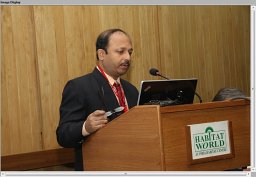 Jayanta Chattopadhyay合作论文数RSD, Bhabha Atomic Research Centre2Kamala Balakrishnan合作论文数2Falguni Roy合作论文数2
 Himmat S. Kushwaha合作论文数2G. J. Nair合作论文数2P R Dastidar合作论文数2R.S. Soni合作论文数2D. Saha合作论文数1P. G. Kulkarni合作论文数1
 Dinesh Chawla合作论文数1Smita S. Mule合作论文数1
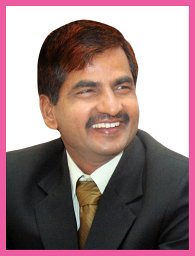 Babruvahan Ronge合作论文数Department of Mechanical Engineering, SVERI's College of Engineering1S.K. Mehta合作论文数1J. Krishnan合作论文数1
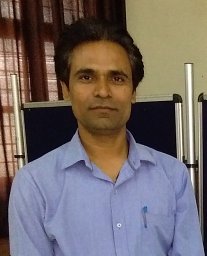 Rajeev Ranjan合作论文数School of Materials Science and Technology;Institute of Technology;Banaras Hindu University;Institute of Technology, Banaras Hindu University1T.K. Basu合作论文数1Umasankari Kannan合作论文数1B.T. Patil合作论文数1Naresh Kumar Maheshwari合作论文数1Hariom Yadav合作论文数1Pravin R Raijade合作论文数1
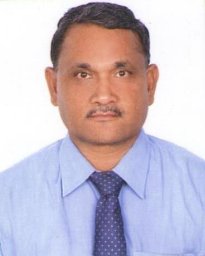 Bhupendra S. Tomar合作论文数Radiochemistry Division, Bhabha Atomic Research Centre1Vishwesh V Kulkarni合作论文数1S. B. Degweker合作论文数1Vijai Shukla合作论文数Institute of Medical Sciences, Banaras Hindu University1
 D.K. Chandraker合作论文数1P. Swami Prasad合作论文数1Smitha Manohar合作论文数1
 Prashant Pawar合作论文数Department of Civil Engineering, SVERI's College of Engineering, Pandharpur1G.P. Reddy合作论文数1




