We show that the variational energy principle of the multi-region relaxed magnetohydrodynamic (MRxMHD) model can be used to predict finite-pressure linear tearing instabilities. In this model, the plasma volume is sliced into sub-volumes separated by ‘ideal interfaces’, and in each volume the magnetic field relaxes to a Taylor state, where the pressure gradient ∇ p = 0 . The MRxMHD model is implemented in the Stepped-Pressure Equilibrium Code (SPEC) so that the equilibrium solution in each region is computed while preserving the force balance across the interfaces. As SPEC computes the Hessian matrix (a discretized stability matrix), the stability of an MRxMHD equilibrium can also be computed with SPEC. In this article, using SPEC, we investigate the effect of local pressure gradients and the ∇ p = 0 in the vicinity of the resonant surface of a tearing mode. For low-beta plasma, we have been able to illustrate a relationship between the resistive singular-layer theory (Coppi et al 1966 Nucl. Fusion 6 101; Glasser et al 1975 Phys. Fluids 18 875–88) and the MRxMHD model. Within the singular layer, the volume-averaged magnetic helicity and the flux-averaged toroidal flux are shown to be the invariants for the linear tearing modes in SPEC simulations. Our technique to compute MRxMHD stability is first tested numerically in a cylindrical tokamak and its application in toroidal geometry is demonstrated. We demonstrate an agreement between the stability boundary obtained with SPEC simulation and the resistive inner-layer theories.
In the Wendelstein 7-X (W7-X) stellarator, the vacuum rotational transform, ι, has a flat radial profile and does not cross any major rational resonance. Nevertheless, during plasma operation the ι‐profile can be strongly modified by electron cyclotron current drive in such a way that the resulting ι-profile passes through low-order rational values, and this can trigger magnetohydrodynamic (MHD) events. Indeed, W7-X plasmas are sometimes subject to repetitive collapses of core confinement, which can be observed regardless of the direction in which the EC current is driven. Even though the origin of these MHD instabilities is under investigation, the crashes may be connected to the formation of magnetic islands and magnetic reconnection. In the present work, we try to shed light on the dynamics of different events happening during the course of sawtooth cycles in W7-X by proposing a model that combines a slow current diffusion with a recipe for fast relaxation that conserves the corresponding helical flux (Kadomtsev 1975 Fiz. Plazmy 1 710–15). We also propose a simple model based on Taylor relaxation (Taylor 1974 Phys. Rev. Lett. 33 1139), (Taylor 1986 Rev. Mod. Phys. 58 741) to predict the nonlinear redistribution of plasma current caused by the largest of the observed events.
Over the last decade, a variational principle based on a generalisation of Taylor’s relaxation, referred to as multi-region relaxed magnetohydrodynamics (MRxMHDs) has been developed. The numerical solutions of the MRxMHD equilibria have been constructed using the Stepped Pressure Equilibrium Code (SPEC) (Hudson et al 2012 Phys. Plasmas 19 112502). In principle, SPEC could also be established to describe the MRxMHD stability of an equilibrium. In this work, a theoretical framework is developed to relate the second variation of the energy functional to the so-called Hessian matrix, enabling the prediction of MHD linear instabilities of cylindrical plasmas, and is implemented in SPEC. The negative and positive eigenvalues of the Hessian matrix predict the stability of an equilibrium. Verification studies of SPEC stability results with the M3D-C 1 code and the tearing mode Δ′ criterion have been conducted for ideal and resistive MHD instabilities, respectively, in a pressureless cylindrical tokamak, and have shown good agreement. Our stability analysis is a critical step towards understanding the MHD stability of three-dimensional MHDs where nested flux surfaces, magnetic islands and stochastic regions co-exist.
It is shown that the variational principle of multi-region relaxed magnetohydrodynamics (MRxMHD) can be used to predict the stability and nonlinear saturation of tearing modes in strong guide field configurations without resolving the dynamics and without explicit dependence on the plasma resistivity. While the magnetic helicity is not a good invariant for tearing modes, we show that the saturated tearing mode can be obtained as an MRxMHD state of a priori unknown helicity by appropriately constraining the current profile. The predicted saturated island width in a tearing-unstable force-free slab equilibrium is shown to reproduce the theoretical scaling at small values of Δ′ and the scaling obtained from resistive magnetohydrodynamics simulations at large Δ′.
 Zhisong Qu合作论文数4
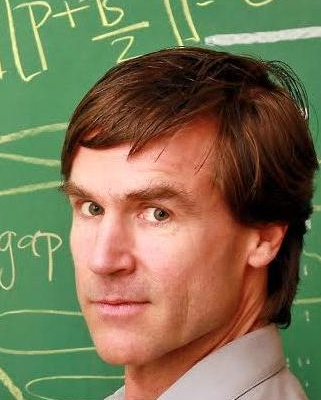 Stuart Hudson合作论文数Max-Planck-Princeton Center, Princeton University;Princeton Plasma Physics Laboratory4
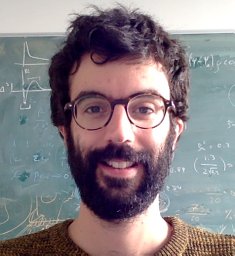 Joaquim Loizu合作论文数Institute of Biomedical Engineering, Imperial College London4
 D. C. Thapliyal合作论文数2m j hole合作论文数2
 Bob Dewar合作论文数Institute for Climate, Energy & Disaster Solutions, Australian National University2
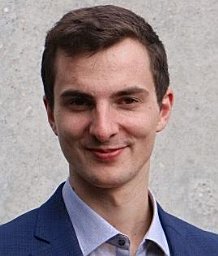 A. Baillod合作论文数Ecole Polytech Fed Lausanne, Swiss Plasma Ctr2C. Nuehrenberg合作论文数1K. Aleynikova合作论文数Max Planck Inst Plasma Phys, Teilinst Greifswald1Y. Gao合作论文数1M. Zanini合作论文数1A. M. Wright合作论文数Princeton Plasma Phys Lab, Princeton, NJ 08540 USA1Kian Rahbarnia合作论文数1
 Yimin Huang合作论文数University of New Hamsphire Durham, University of New Hampshire1Turkin Y合作论文数1
 Martin Hirsch合作论文数Instituto de Fisica Corpuscular1Henning Thomsen合作论文数1
 Per Helander合作论文数Stellarator Theory Division, Max Planck Institute for Plasma Physics1
 Nate Ferraro合作论文数Theory Department, Princeton Plasma Physics Laboratory, Princeton University1
 Joachim Geiger合作论文数Division of Stellarator Theory, Max Planck Institute for Plasma Physics1




