New actinide materials give crucial insights into how to produce safer and more efficient nuclear energy, reduce nuclear waste, ensure security, and uncover new physics and chemistry that cannot be accessed in any other way. In this work, we present the discovery and characterization of a new uranium compound U2Rh2Sb, which turns out to be a candidate for the intermediate-valence behavior. The material shows a characteristic feature in the magnetic susceptibility around T = 50 K, which can be described within the interconfiguration-fluctuation model for intermediate valence systems. We find the energy difference between the 5f 3(U3+) and 5f 2(U4+) states to be Delta Eex/kB approximate to 400 K, and the corresponding valence fluctuation temperature to be Tvf approximate to 140 K. The value of the electronic specific heat coefficient y = 50 mJ mol-1U K-2 signals a modest enhancement of the effective mass of electrons. The electrical resistivity indicates metallic behavior, albeit with a small residual resistivity ratio. Measurements of thermoelectric properties indicate a change of sign in the Seebeck coefficient around 100 K, with a minimum achieved at 60 K, which coincides with the broad peak observed in the magnetic susceptibility. The experimental results are compared with the theoretical analysis based on first-principles calculations, including lattice dynamics.
The unfilled skutterudite ${\mathrm{CoSb}}_{3}$ is a small-gap semiconductor which was predicted to be close to a strain-induced transition to a topological-insulator phase passing through a topological quantum critical point. As a starting point to strain measurements, the aim of this work is to characterize the electronic structure of as-grown samples. Two types of samples, one grown in Sb flux and the other by an inclined rotary Bridgman technique, are compared based on structural properties, resistivity, Hall effect, and magnetization. All samples appear metallic with small growth-dependent hole doping. Measurements of quantum oscillations in magnetization and angle-dependent electronic transport confirm the calculated band structure at ambient pressure. The Fermi surface consists of a single spherical sheet at the $\mathrm{\ensuremath{\Gamma}}$ point, and the purest samples grown by the Bridgman technique have a Fermi energy lying 25 meV below the valence-band edge. Band-structure calculations provide an accurate description of the experimental results. Hence, this compound is suitable for an investigation of topological states under strain.
Unconventional superconductivity in non-centrosymmetric superconductors has attracted a considerable amount of attention. While several lanthanide-based materials have been reported previously, the number of actinide-based systems remains small. In this work, we present the discovery of a novel cubic complex non-centrosymmetric superconductor Th_4Be_33Pt_16 ( I4̅3d space group). This intermetallic cage compound displays superconductivity below T_c = 0.90 ± 0.04 K, as evidenced by specific heat and resistivity data. Th_4Be_33Pt_16 is a type-II superconductor, which has an upper critical field H_c2 = 0.27 T and a moderate Sommerfeld coefficient γ _n = 16.3 ± 0.8 mJ mol^-1_Th K^-2 . A non-zero density of states at the Fermi level is evident from metallic behavior in the normal state, as well as from electronic band structure calculations. The isostructural U_4Be_33Pt_16 compound is a paramagnet with a moderately enhanced electronic mass, as indicated by the electronic specific heat coefficient γ _n = 200 mJ mol^-1_U K^-2 and Kadowaki–Woods ratio A/γ ^2 = 1.1 × 10^-5 Ω cm K^2 mol_U^2 (mJ) ^-2 . Both Th_4Be_33Pt_16 and U_4Be_33Pt_16 are crystallographically complex, each hosting 212 atoms per unit cell.
CeOs_{4}Sb_{12} (COS) and PrOs_{4}Sb_{12} (POS) are two representative compounds that provide the ideal vantage point to systematically study the physics of multi-f-electron systems. COS with Ce 4f^{1}, and POS with Pr 4f^{2} configurations show distinct properties of Kondo insulating and heavy fermion superconductivity, respectively. We unveiled the underlying microscopic origin by angle-resolved photoemission spectroscopy studies. Their eV-scale band structure matches well, representing the common characters of conduction electrons in ROs_{4}Sb_{12} systems (R=rare earth). However, f electrons interact differently with conduction electrons in COS and POS. Strong hybridization between conduction electrons and f electrons is observed in COS with band dependent hybridization gaps, and the development of a Kondo insulating state is directly revealed. Although the ground state of POS is a singlet, finite but incoherent hybridization exists, which can be explained by the Kondo scattering with the thermally excited triplet crystalline electric field state. Our results help us to understand the intriguing properties in COS and POS, and provide a clean demonstration of the microscopic differences in heavy fermion systems with 4f^{1} and 4f^{2} configurations.
Crystallographically complex compounds often possess peculiar physical properties, the evolution of which can be tracked by changing one of the constituent elements at a time. We report the discovery and synthesis of isotypic ${R}_{4}{\mathrm{Be}}_{33}{\mathrm{Pt}}_{16}$ (R = Y, La--Nd, Sm--Lu) compounds, which crystallize with the noncentrosymmetric cubic space group $I\overline{4}3d$. The lattice parameters vary from $a=13.6682(4)\phantom{\rule{0.16em}{0ex}}\AA{}$ for R = La to $a=13.4366(3)\phantom{\rule{0.16em}{0ex}}\AA{}$ for R = Lu. ${R}_{4}{\mathrm{Be}}_{33}{\mathrm{Pt}}_{16}$ phases exhibit a wide range of ground states. R = Y, La, and Lu analogs display superconductivity. Their calculated electronic structures show nonzero density of states at the Fermi level, with the value of the Sommerfeld coefficient consistent with those obtained experimentally. The rest of the ${R}_{4}{\mathrm{Be}}_{33}{\mathrm{Pt}}_{16}$ compounds exhibit magnetic ground states with ordering temperatures ranging from ${T}_{\text{mag}}=0.4$ K (R = Yb) to ${T}_{\text{mag}}=40$ K (R = Pr). The diversity of physical properties of ${R}_{4}{\mathrm{Be}}_{33}{\mathrm{Pt}}_{16}$ compounds can likely be attributed to the nature of the individual rare-earth elements, structural noncentrosymmetry, the large number of atoms per unit cell (212), as well as the complex multicenter interactions within the Be-Pt framework.
Unconventional superconductivity in non-centrosymmetric superconductors has attracted a considerable amount of attention. While several lanthanide-based materials have been reported previously, the number of actinide-based systems remains small. In this work, we present the discovery of a novel cubic complex non-centrosymmetric superconductor Th4Be33Pt16 (I (4) over bar 3d space group). This intermetallic cage compound displays superconductivity below T-c = 0.90 +/- 0.04 K, as evidenced by specific heat and resistivity data. Th4Be33Pt16 is a type-II superconductor, which has an upper critical field H-c2 = 0.27 T and a moderate Sommerfeld coefficient gamma(n) = 16.3 +/- 0.8 mJ mol(Th)(-1) K-2. A non-zero density of states at the Fermi level is evident from metallic behavior in the normal state, as well as from electronic band structure calculations. The isostructural U4Be33Pt16 compound is a paramagnet with a moderately enhanced electronic mass, as indicated by the electronic specific heat coefficient gamma(n) = 200 mJ mol(U)(-1)K(-2) and Kadowaki-Woods ratio A/gamma(2) = 1.1 x 10(-5) mu Omega cm K-2 mol(U)(2)(mJ)(-2). Both Th4Be33Pt16 and U4Be33Pt16 are crystallographically complex, each hosting 212 atoms per unit cell.
Abstract Unconventional superconductivity in non-centrosymmetric superconductors has attracted a considerable amount of attention. While several lanthanide-based materials have been reported previously, the number of actinide-based systems remains small. In this work, we present the discovery of a novel cubic complex non-centrosymmetric superconductor $${\text {Th}}_4{\text {Be}}_{{33}}{\text {Pt}}_{{16}}$$ Th 4 Be 33 Pt 16 ( $$I{\bar{4}}3d$$ I 4 ¯ 3 d space group). This intermetallic cage compound displays superconductivity below $$T_{\text {c}} = 0.90 \pm 0.04$$ T c = 0.90 ± 0.04 K, as evidenced by specific heat and resistivity data. $${\text {Th}}_4{\text {Be}}_{{33}}{\text {Pt}}_{{16}}$$ Th 4 Be 33 Pt 16 is a type-II superconductor, which has an upper critical field $${\text {H}}_{{\text {c}}2} = 0.27$$ H c 2 = 0.27 T and a moderate Sommerfeld coefficient $$\gamma _{\text {n}} = 16.3 \pm 0.8$$ γ n = 16.3 ± 0.8 mJ $${\text {mol}}^{-1}_{\text {Th}}$$ mol Th - 1 $${\text {K}}^{-2}$$ K - 2 . A non-zero density of states at the Fermi level is evident from metallic behavior in the normal state, as well as from electronic band structure calculations. The isostructural $${\text {U}}_4{\text {Be}}_{{33}}{\text {Pt}}_{{16}}$$ U 4 Be 33 Pt 16 compound is a paramagnet with a moderately enhanced electronic mass, as indicated by the electronic specific heat coefficient $$\gamma _{\text {n}} = 200$$ γ n = 200 mJ $${\text {mol}}^{-1}_{\text {U}}$$ mol U - 1 $${\text {K}}^{-2}$$ K - 2 and Kadowaki–Woods ratio $$A/\gamma ^2 = 1.1 \times 10^{-5}$$ A / γ 2 = 1.1 × 10 - 5 $$\upmu $$ μ $$\Omega $$ Ω cm $${\text {K}}^2$$ K 2 $${\text {mol}}_{\text {U}}^2$$ mol U 2 (mJ) $$^{-2}$$ - 2 . Both $${\text {Th}}_4{\text {Be}}_{{33}}{\text {Pt}}_{{16}}$$ Th 4 Be 33 Pt 16 and $${\text {U}}_4{\text {Be}}_{{33}}{\text {Pt}}_{{16}}$$ U 4 Be 33 Pt 16 are crystallographically complex, each hosting 212 atoms per unit cell.
Andrea Amorese, 2 Martin Sundermann, 2 Brett Leedahl, Andrea Marino, 3 Daisuke Takegami, Hlynur Gretarsson, 4 Andrei Hloskovsky, Christoph Schlüter, Maurits W. Haverkort, Yingkai Huang, Maria Szlawska, Dariusz Kaczorowski, Sheng Ran, ∗ M. Brian Maple, Eric D. Bauer, Andreas Leithe-Jasper, Peter Thalmeier, Liu Hao Tjeng, and Andrea Severing 2 Institute of Physics II, University of Cologne, Zülpicher Straße 77, 50937 Cologne, Germany Max Planck Institute for Chemical Physics of Solids, Nöthnitzer Straße 40, 01187 Dresden, Germany Dipartimento di Fisica, Politecnico di Milano, Piazza Leonardo da Vinci 32, I-20133 Milano, Italy PETRA III, Deutsches Elektronen-Synchrotron (DESY), Notkestraße 85, 22607 Hamburg, Germany Institute for Theoretical Physics, Heidelberg University, Philosophenweg 19, 69120 Heidelberg, Germany van der Waals-Zeeman Institute, University of Amsterdam, 1098 XH Amsterdam, The Netherlands Institute of Low Temperature & Structure Research, Polish Academy of Science, Wroclaw, Poland Department of Physics, University of California, San Diego, La Jolla, California, USA Los Alamos National Laboratory, Los Alamos, New Mexico 87545, USA (Dated: April 29, 2020)
. The electronic structure and physical properties of the pnictide compound families RE OFeAs ( RE = La, Ce, Pr, Nd, Sm), A Fe 2 As 2 ( A = Ca, Sr, Ba, Eu), LiFeAs and FeSe are quite similar. Here, we focus on the members of the A Fe 2 As 2 family whose sample composition, quality and single-crystal growth are more controllable compared with the other systems. Using first-principles band structure calculations, we focus on understanding the relationship between the crystal structure, charge doping and magnetism in A Fe 2 As 2 systems. We will elaborate on the tetragonal to orthorhombic structural distortion along with the associated magnetic order and anisotropy, the influence of doping on the A site and the Fe site and the changes in the electronic structure as a function of pressure. Experimentally, we investigate the substitution of Fe in SrFe 2 − x TM x As 2 by other 3d transition metals, TM = Mn, Co or Ni. In contrast to a partial substitution of Fe by Co or Ni (electron
We report on comprehensive de Haas-van Alphen (dHvA) and electronic band-structure studies of the superconducting skutterudites LaPt4Ge12 (T-c= 8.3 K) and PrPt4Ge12(T-c = 7.9 K). Both materials show very rich spectra of dHvA oscillations with similar and only slightly varying angular-dependent frequencies. The spectral richness can partly be rationalized by the elaborated electronic band structures resulting in several Fermi surfaces built by six different bands. The effective cyclotron masses of both superconductors lie between about 0.5 and 1.1 times the free-electron mass. Although these values are small, we find moderate mass enhancements between about 2 and 4 when comparing to the calculated masses. Our results evidence the localized character of the 4f electrons in the Pr compound and are in line with an electron-phonon mediated multiband superconductivity, largely identical for both compounds.
Uranium-based compounds possess several properties which make them suitable candidates for thermoelectric applications—complex crystal structures made of heavy components, electrons with enhanced effective masses, as well as low thermal conductivity. However, the difficulty in predicting their properties by computational means, coupled with the lack of experimental investigations on these peculiar systems, limits our understanding of the effect of 5f- and conduction electron hybridization on the Seebeck coefficient, as well as electric and thermal conductivities. In this work, we examine a family of uranium-based materials with a crystal structure of the ternary Zintl phase Y3Au3Sb4. The thermoelectric properties of U3T3Sb4 (T = Ni, Pd, and Pt) compounds are highly dependent upon their microstructures and compositions, arising from the differences in their synthesis. The maximum value of the thermoelectric figure of merit ZT≈0.02 was obtained for the U3Pt3Sb4 compound in the −100 °C ≤T≤ 100 °C temperature range, which makes this material interesting for further development in aerospace applications.
The magnetic, thermal, and transport properties as well as electronic band structure of MnPtSi are reported. MnPtSi is a metal that undergoes a ferromagnetic transition at T-c = 340(1) K and a spin-reorientation transition at T-N = 326(1) K to an antiferromagnetic phase. First-principles electronic structure calculations indicate a not-fully polarized spin state of Mn in a d(5) electron configuration with J = S = 3/2, in agreement with the saturation magnetization of 3 mu(B) in the ordered state and the observed paramagnetic effective moment. A sizable anomalous Hall effect in the antiferromagnetic phase alongside the computational study suggests that the antiferromagnetic structure is noncollinear. Based on thermodynamic and resistivity data we construct a magnetic phase diagram. Magnetization curves M(H) at low temperatures reveal a metamagnetic transition of spin-flop type. The spin-flopped phase terminates at a critical point with T-cr approximate to 300 K and H-cr approximate to 10 kOe, near which a peak of the magnetocaloric entropy change is observed. Using Arrott plot analysis and magnetoresistivity data we argue that the metamagnetic transition is of a first-order type, whereas the strong field dependence of T-N and the linear relationship of the T-N with M-2 hint at its magnetoelastic nature.
The field of heavy-fermion physics emerged nearly four decades ago and has since remained one of the most prominent research directions in condensed-matter physics. Nonetheless, while significant progress has been made in unraveling heavy-fermion behavior and accompanying exotic phenomena, many questions remain. This issue can be advanced from two directions: comprehensive understanding of existing materials and discovery of novel systems. In this work, we propose a targeted method for discovery of uranium-based heavy-fermion materials by synthesis of complex intermetallic compounds with low mass percentage of uranium, high coordination number of uranium, and long overall shortest uranium bond length. We report the discovery and synthesis of the new complex uranium-based heavy-fermion material U23Hg88, which suggests this approach to be a reliable route for the targeted search of novel strongly correlated uranium-based materials. The Sommerfeld coefficient gamma = 630 mJ mol(U)(-1)K(-2) indicates extremely strong electronic correlations and places U23Hg88 among the heaviest uranium-based compounds. U23Hg88 orders antiferromagnetically below T-N = 2.2 K and displays a dual nature of the 5f electrons. This work will pave a way for a comprehensive understanding of heavy-fermion phenomena in general and uranium-based systems in particular.
We present muon spin rotation and relaxation $(\ensuremath{\mu}\mathrm{SR})$ measurements as well as demagnetizing-field-corrected magnetization measurements on polycrystalline samples of the noncentrosymmetric superconductor BeAu. From $\ensuremath{\mu}\mathrm{SR}$ measurements in a transverse field, we determine that BeAu is a type-I superconductor with H${}_{c}=$ 258 Oe, amending the previous understanding of the compound as a type-II superconductor. To account for demagnetizing effects in magnetization measurements, we produce an ellipsoidal sample, for which a demagnetization factor can be calculated. After correcting for demagnetizing effects, our magnetization results are in agreement with our $\ensuremath{\mu}\mathrm{SR}$ measurements. Using both types of measurements, we construct a phase diagram from $T=30$ mK to ${T}_{c}\ensuremath{\approx}3.25$ K. We then study the effect of hydrostatic pressure and find that 450 MPa decreases T${}_{c}$ by 35 mK, comparable to the change seen in the type-I elemental superconductors Sn, In, and Ta. This suggests BeAu is far from a quantum critical point accessible by the application of pressure.
In the antiferromagnetic heavy-fermion compound U2Zn17, the Sommerfeld coefficient. can be enhanced if all Zn atoms are replaced by a combination of Cu and Al or Cu and Ga. In the former ternary phase, glassy behavior was observed, while for the latter, conflicting ground-state reports suggest material quality issues. In this work, we investigate the U2Cu17-xGax substitutional series for 4.5 <= x <= 9.5. In the homogeneity range of the phase with the Th2Zn17-type of crystal structure, all samples exhibit glassy behavior with 0.6 K <= T-f <= 1.8 K. The value of the electronic specific heat coefficient gamma in this system exceeds 900 mJ/mol(U) K-2. Such a drastic effective-mass enhancement can possibly be attributed to the effects of structural disorder, since the role of electron concentration and lattice compression is likely minimal. Crystallographic disorder is also responsible for the emergence of non-Fermi-liquid behavior in these spin-glass materials, as evidenced by logarithmic divergence of magnetic susceptibility, specific heat, and electrical resistivity.
Mixed spin-singlet and spin-triplet pairing can occur in noncentrosymmetric superconductors. In this respect, a comprehensive characterization of the noncentrosymmetric superconductor BeAu was carried out. It was established that BeAu undergoes a structural phase transition from a low-temperature noncentrosymmetric FeSi structure type to a high-temperature centrosymmetric structure in the CsCl type at T-s = 860 K. The low-temperature modification exhibits a superconducting transition below T-c = 3.3 K. The values of lower (H-c1 = 32 Oe) and upper (H-c2 = 335 Oe) critical fields are rather small, confirming that this type-II (kappa(G-L) = 2.3) weakly coupled (lambda(e-p) = 0.5, Delta C-e/gamma T-n(c) approximate to 1.26) superconductor can be well understood within the Bardeen-Cooper-Schrieffer theory. The muon spin relaxation analysis indicates that the time-reversal symmetry is preserved when the superconducting state is entered, supporting conventional superconductivity in BeAu. From the density functional band structure calculations, a considerable contribution of the Be electrons to the superconducting state was established. On average, a rather small mass renormalization was found, consistent with the experimental data.
We report on the electronic band structure, structural, magnetic, and thermal properties of Ce2Rh3Sn5. Ce LIII-edge XAS spectra give direct evidence for an intermediate valence behavior. Thermodynamic measurements reveal magnetic transitions at T-N1 approximate to 2.9 K and T-N2 approximate to 2.4 K. Electrical resistivity shows behavior typical for the Kondo lattices. The coexistence of magnetic order and valence fluctuations in a Kondo lattice system we attribute to a peculiar crystal structure in which Ce ions occupy two distinct lattice sites. Analysis of the structural features of Ce2Rh3Sn5, together with results of electronic band structure calculations and thermodynamic and spectroscopic data indicate that at low temperatures only Ce ions from the Ce1 sublattice adopt a stable trivalent electronic configuration and show local magnetic moments that give rise to the magnetic ordering. By contrast, our study suggests that Ce2 ions exhibit a nonmagnetic Kondo-singlet ground state. Furthermore, the valence of Ce2 ions estimated from the Ce LIII-edge XAS spectra varies between +3.18 at 6 K and +3.08 at room temperature. Thus our joined experimental and theoretical investigations classify Ce2Rh3Sn5 as a multivalent charge-ordered system.
 Schnelle, Walter合作论文数Max-Planck-Institut fur Chemische Physik fester Stoffe85
 H. Rosner合作论文数Max-Planck-Institut fur Chemische Physik fester Stoffe59
 Yu. Grin合作论文数47
 Roman Gumeniuk合作论文数Institut für Experimentelle Physik, TU Bergakademie Freiberg39
 Peter Franz Rogl合作论文数Institute of Materials Chemistry and Research, University of Vienna;Northeastern University32Ulrich Burkhardt合作论文数28Yuri Grin合作论文数23
 Michael Nicklas合作论文数Max Planck Institute for the Chemical Physics of Solids23
 Dariusz Kaczorowski合作论文数Institute of Low Temperatures and Structure Research, Polish Academy of Sciences17Yu. Prots合作论文数17
 Frank Steglich合作论文数TU Dresden;Center for Correlated Matter, Zhejiang University;Max-Planck-Institute for Chemical Physics of Solids16
 Michael Baenitz合作论文数Physics of Quantum Materials Department, Max Planck Institute for Chemical Physics of Solids15Horst Borrmann合作论文数Max-Planck-Institut für Chemische Physik fester Stoffe13
 Eteri Svanidze合作论文数Rice Univ, Dept Phys & Astron, Houston, TX 77005 USA11
 A. A. Gippius合作论文数Moscow State University11
 Takao Mori (森孝雄)合作论文数Research Center for Materials Nanoarchitectonics, National Institute for Materials Science;Graduate School of Science and Technology, University of Tsukuba11
 Alfred Amon合作论文数Department of Chemistry, University College London10A. Rabis合作论文数10J. A. MYDOSH合作论文数9
 Takaho Tanaka (田中高穂)合作论文数Materials Information Office, National Institute for Materials Science;Scientific Information Office, National Institute for Materials Science9Alim Ormeci合作论文数Max Planck Institute for Chemical Physics of Solids, Nöthnitzer Strasse 40, D-01187 Dresden, Germany9
 Jörg Sichelschmidt合作论文数Max Planck Institute for Chemical Physics of Solids9Veremchuk Igor合作论文数8Rustem Khasanov合作论文数8
 Alexander Maisuradze合作论文数Laboratory for Muon Spin Spectroscopy, Paul Scherrer Institut8Kurt Hiebl合作论文数8
 Ying Shi合作论文数7
 Alex Amato合作论文数Center for Neutron and Muon Sciences, Paul Scherrer Institute7
 Walter Steiner合作论文数7Franz Weitzer合作论文数7
 Monika Gamza合作论文数School of Engineering and Computing, The University of Lancashire7E. Morozova合作论文数6
 Andriy Grytsiv合作论文数Institute of Physical Chemistry, University of Vienna6
 John Michael Coey合作论文数School of Physics, Trinity College Dublin6Henri Noel合作论文数Institut des Sciences Chimiques de Rennes, Université de Rennes6
 Geibel, Christoph合作论文数Max Planck Institute for Chemical Physics of Solids6R. Cardoso-Gil合作论文数6
 Krzysztof Gofryk合作论文数Institute of Low Temperature and Structure Research, Polish Academy of Sciences6
 Liu Hao Tjeng合作论文数Max Planck Institute for Chemical Physics of Solids5Anastasia M. Alekseeva合作论文数5
 Ulrich Schwarz合作论文数Max Planck Institute for Chemical Physics of Solids5
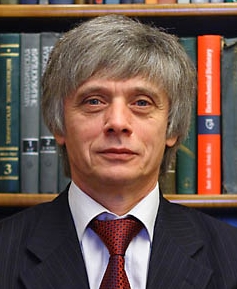 Evgeny V. Antipov合作论文数Laboratory of Inorganic Crystallochemistry, Division of Inorganic Chemistry, Department of Chemistry, Moscow State University;Department of Electrochemistry, Faculty of Chemistry, Moscow State University5
 John Mydosh合作论文数5Qinian Qi合作论文数5M. Juckel合作论文数4sarah ackerbauer合作论文数4C. Baines合作论文数Paul Scherrer Inst, Lab Muon Spin Spect, CH-5232 Villigen, Switzerland4
 Primoz Kozelj合作论文数4C. Godart合作论文数4




