Objective. - Analyzing the results and validating the procedure of testicular sperm extraction (TESE) performed on the day of oocyte retrieval in non obstructive azoospermia (NOA) patients.Patients and methods. - Sixty TESE were performed on the day of oocyte retrieval (dOR), in 52 NOA men. Patients were sorted into three groups according to the results of the surgical procedure: 1: sperm recovery with possible sperm freezing (n = 20); 2: sperm recovery without freezing (n = 27); 3: "negative" biopsy (n = 13). ICSI outcomes in the two groups with sperm recovery were compared to those of ICSI performed with frozen-thawed sperm obtained from TESE performed (n = 13).Results. - The rate of positive sperm retrieval was 78%. While the overall clinical pregnancy rate was 50%, no difference in the fertilization, implantation and clinical pregnancy rates was found in the two groups with positive sperm retrieval as compared to frozen-thawed sperm group. Twelve pregnancies were obtained in patients without further sperm cryopreservation.Conclusion. - After TESE in NOA men, cryopreserved sperm produced comparable results with freshly obtained sperm. However, TESE performed on dOR can offer the opportunity, in patients with rare sperm that might not survive freeze-thaw, to have a possible fresh embryo transfer. Couples should be counselled regarding the possibility of oocyte retrieval without sperm for ICSI. (C) 2010 Elsevier Masson SAS. All rights reserved.
OBJECTIVE: Recently, it has been reported that the normal morphology of the sperm nucleus defined by MSOME was positively associated with ART outcomes. However, the nature of these vacuoles is still unclear. Some authors propose that vacuoles are from acrosomal origin, others that they are of nuclear origin. The aim of this study was to analyze cytologically these vacuoles, trying to identify their subcellular origin and to determine their relationship with chromatin packaging. DESIGN: Prospective study. MATERIALS AND METHODS: Nine human sperm samples obtained from infertile patients were studied. Spermatozoa were fixed in methanol and then subjected to wide a panel of stainings (Golgi complex, plasma membrane, markers of autophagy) prior to observation at high magnification in differential interference contrast microscopy, wide-field fluorescence and confocal microscopy. 3D reconstructions of confocal images were carried out using Bitplane's Imaris software. Spermatozoa total DNA were stained using propidium iodide, and to test whether the occurrence of nuclear vacuoles may be correlated with sperm chromatin packaging abnormalities. Spermatozoa were also submitted to chromomycin A3 staining. RESULTS: None of the antibodies used was able to stain the nuclear vacuoles observed. Total nucleic acid staining by propidium iodide, subsequent observation by confocal microscopy and 3D reconstruction revealed that vacuoles are hollow structures that cross nuclei. They are devoid of nucleic acids and colocalize perfectly with the refringent vacuoles. We finally failed to evidence any correlation between the occurrence of nuclear hollows and chromatin packaging abnormalities as revealed by chromomycin A3 staining. CONCLUSION: On the basis of these results we are still unable to determine the origin and the content of the nuclear hollows. We may conclude that they are devoid of nucleic acids and that abnormalities in chromatin packaging are not involved in their occurrence.
 Nelly Frydman合作论文数2
 Laurence Rocher合作论文数1S Madoux合作论文数1Nicolas Chevalier合作论文数1Ferlicot Sophie合作论文数1
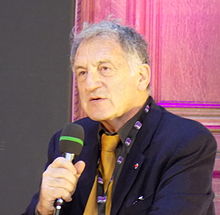 René Frydman合作论文数Department of Obstetrics and Gynecology and Reproductive Endocrinology, Hôpital Antoine Béclère, Clamart, France1
 Michael Grynberg合作论文数1Vincent Blin合作论文数1Veronique Izard合作论文数1L. Hesters合作论文数1Renato Fanchin合作论文数1E. Feyereisen合作论文数1
 N. Prisant合作论文数1




