We propose a novel point cloud U-Net diffusion architecture for 3-D generative modeling capable of generating high-quality and diverse 3-D shapes while maintaining fast generation times. Our network employs a dual-branch architecture, combining the high-resolution representations of points with the computational efficiency of sparse voxels. Our fastest variant outperforms all nondiffusion generative approaches on unconditional shape generation, the most popular benchmark for evaluating point cloud generative models, while our largest model achieves state-of-the-art results among diffusion methods, with a runtime approximately 70% of the previously state-of-the-art point-voxel diffusion (PVD), measured on the same hardware setting. Beyond unconditional generation, we perform extensive evaluations, including conditional generation on all categories of ShapeNet, demonstrating the scalability of our model to larger datasets, and implicit generation, which allows our network to produce high-quality point clouds on fewer timesteps, further decreasing the generation time. Finally, we evaluate the architecture’s performance in point cloud completion and super-resolution. Our model excels in all tasks, establishing it as a state-of-the-art diffusion U-Net for point cloud generative modeling. The code is publicly available at https://github.com/JohnRomanelis/SPVD
3D Gaussian Splatting (3DGS) has emerged as a powerful technique for novel view synthesis, yet its high bitrate requirements pose significant challenges for storage and transmission. To enable practical applications and ensure interoperability within the 3DGS ecosystem, standardised compression formats are essential. In this paper, we propose a novel non-uniform quantisation scheme specifically tailored for 3DGS models. Our approach adapts to the underlying data distribution by applying importance-weighted quantisation and eliminating post-voxelisation redundancy through importance weighted merging. Extensive evaluations on benchmark datasets demonstrate that our method achieves state-of-the-art compression performance. Furthermore, the proposed scheme is compatible with any point-cloud-based representation and is intended as a formal contribution to the upcoming MPEG 3DGS compression standardisation activities.
This study benchmarks the effectiveness of multiple subjective quality assessment (QA) methods for evaluating the perceptual quality of light field (LF) content in the context of image coding applications. A passive visualization approach is adopted, where LF data are rendered as pseudo-video sequences and assessed on calibrated 4K 2D displays under controlled laboratory conditions. Three subjective test protocols, including two rating-based and a pairwise comparison (ranking-based) method, are evaluated through six experimental configurations, incorporating different viewing trajectories and interaction modes. This setup, together with our proposals for deploying inter-rater consistency criteria (e.g., error consistency), enables a comprehensive evaluation of the reliability and suitability of different subjective experiments for LF QA. The results confirm the superior discriminability of the pairwise comparison tests over the rating-based methods. Among the rating-based approaches, the method employing a comparative scale scoring outperformed the one based on an impairment scale. Moreover, the performance of several objective QA metrics was evaluated by comparing their scores against the subjective scores obtained from the three test protocols. The outcomes of this study provide methodological guidance for designing subjective LF quality experiments, highlighting the trade-offs between reliability, sensitivity, and experimental cost, and offer insights relevant to future standardization efforts in LF coding.
Generative motion prediction must satisfy three simultaneous requirements for real-world autonomy: high accuracy, diverse multimodal futures, and strictly bounded latency. Diffusion models meet the first two but violate the third, requiring tens to hundreds of denoising steps. We identify a conditioning strategy that resolves this tension: single-step integration is accurate when the underlying transport problem is local. A model that must both discover the correct behavioral mode and traverse a long displacement in one step accumulates large discretization errors; conditioning the base distribution to lie near plausible futures reduces the problem to short-range refinement, the regime where a single Euler step suffices. We instantiate this local transport conditioning in FlowS, a conditional flow matching framework with two mechanisms. First, an online, scene-conditioned learned prior emits K calibrated anchor trajectories per agent, each already near a plausible future, converting mode discovery into local correction. Second, a step-consistent displacement field enforces semigroup self-consistency, guaranteeing that a single step inherits multi-step accuracy. Crucially, anchoring this field at learned priors along straight-line paths yields a stable, low-variance training target, unlike prior self-consistency methods that suffer from high-variance bootstrap signals on curved diffusion paths. On the Waymo Open Motion Dataset, FlowS achieves state-of-the-art Soft mAP (0.4804) and mAP (0.4703) with ensemble at 75 FPS with single-step inference, demonstrating that local transport conditioning makes one-step generative motion prediction practical for safety-critical autonomy. Code and pretrained models will be released upon acceptance.
The evolution of Advanced Driver Assistance Systems (ADAS) has increased the need for robust and generalizable algorithms for multi-object tracking. Traditional statistical model-based tracking methods rely on predefined motion models and assumptions about system noise distributions. Although computationally efficient, they often lack adaptability to varying traffic scenarios and require extensive manual design and parameter tuning. To address these issues, we propose a novel 3D multi-object tracking approach for vehicles, HybridTrack, which integrates a data-driven Kalman Filter (KF) within a tracking-by-detection paradigm. In particular, it learns the transition residual and Kalman gain directly from data, which eliminates the need for manual motion and stochastic parameter modeling. Validated on the real-world KITTI dataset, HybridTrack achieves 82.72% HOTA accuracy, significantly outperforming state-of-the-art methods. We also evaluate our method under different configurations, achieving the fastest processing speed of 112 FPS. Consequently, HybridTrack eliminates the dependency on scene-specific designs while improving performance and maintaining real-time efficiency.
3D instance segmentation is crucial for obtaining an understanding of a point cloud scene. This paper presents a novel neural network architecture for performing instance segmentation on 3D point clouds. We propose to jointly learn coefficients and prototypes in parallel which can be combined to obtain the instance predictions. The coefficients are computed using an overcomplete set of sampled points with a novel multi-scale module, dubbed dilated point inception. As the set of obtained instance mask predictions is overcomplete, we employ a non-maximum suppression algorithm to retrieve the final predictions. This approach allows to omit the time-expensive clustering step and leads to a more stable inference time. The proposed method is not only 28% faster than the state-of-the-art, it also exhibits the lowest standard deviation. Our experiments have shown that the standard deviation of the inference time is only 1.0% of the total time while it ranges between 10.8 and 53.1% for the state-of-the-art methods. Lastly, our method outperforms the state-of-the-art both on S3DIS-blocks (4.9% in mRec on Fold-5) and PartNet (2.0% on average in mAP).
Novel view synthesis has recently been revolutionized by 3D Gaussian Splatting (3DGS), which enables real-time rendering through explicit primitive rasterization. However, existing methods tie visual fidelity strictly to the number of primitives: quality downscaling is achieved only through pruning primitives. We propose the first inherently scalable primitive for radiance field rendering. Fourier Splatting employs scalable primitives with arbitrary closed shapes obtained by parameterizing planar surfels with Fourier encoded descriptors. This formulation allows a single trained model to be rendered at varying levels of detail simply by truncating Fourier coefficients at runtime. To facilitate stable optimization, we employ a straight-through estimator for gradient extension beyond the primitive boundary, and introduce HYDRA, a densification strategy that decomposes complex primitives into simpler constituents within the MCMC framework. Our method achieves state-of-the-art rendering quality among planar-primitive frameworks and comparable perceptual metrics compared to leading volumetric representations on standard benchmarks, providing a versatile solution for bandwidth-constrained high-fidelity rendering.
Residual error propagation remains a fundamental problem in recurrent models, where small prediction inaccuracies compound over time and degrade long-horizon performance. Accurately modeling the correlation structure of such residuals is critical for reliable uncertainty quantification in probabilistic multivariate timeseries forecasting. While recent time-series deep models efficiently parametrize time-varying contemporaneous correlations, they often assume temporal independence of errors and neglect spatial correlation across the observed network. In this paper, we introduce Teger, a structured uncertainty module that overcomes the spa- tial and temporal limitations of error-correlated autoregressive forecasting. Teger proposes a spatial curvature-aware graph rewiring mechanism explicitly strengthening information-bottleneck edges identified by discrete Forman curvature. The component is integrated into a low-rank-plus-diagonal covariance head, preserving tractable inference via the Woodbury identity. Teger is backbone-agnostic, requiring only the latent state produced by any autoregressive encoder. We provide theoretical evidence of Teger, and experimentally evaluate it on LSTM, Transformer, and xLSTM backbones across four real-world spatio-temporal datasets, showing consistent improvement in Continuous Ranked Probability Score (CRPS). We further provide a formal theoretical analysis connecting curvature-aware rewiring to (i) oversquashing alleviation, (ii) improved spectral connectivity, (iii) reduced effective resistance, and (iv) improved covariance calibration bounds
Wireless multi-hop ad hoc networks are essential for infrastructure-less connectivity in dynamic and often resource constrained environments, where routing performance must remain robust under mobility, interference, and adverse conditions. This paper presents a configurable Network Simulator 3 (ns3) simulation testbed for evaluating Artificial Intelligence (AI)assisted routing techniques in wireless ad hoc networks under repeatable, comparable conditions. The testbed loads scenario parameters from a JavaScript Object Notation (JSON) configuration, covering topology generation (grid, random-geometric, clustered), mobility (static, Random Waypoint, Gauss-Markov), traffic profiles (echo, Constant Bit Rate/User Datagram Protocol (CBR/UDP), Voice over Internet Protocol (VoIP)-like, videolike), and an optional energy model. To ensure fair protocol comparison and automation, a single experiment definition can declare multiple routing algorithms; the simulator then executes one isolated operating system (OS) process per routing protocol (e.g., Ad hoc On-Demand Distance Vector (AODV), Optimized Link State Routing (OLSR), Destination-Sequenced DistanceVector (DSDV), and an AI mode) and produces standardized artifacts for each run, including FlowMonitor-based metrics (throughput, delay, packet loss), packet capture (PCAP) traces, Network Animator (NetAnim) visualizations, and route-tracking logs. The testbed also supports configurable “zones” that introduce controlled stressors such as no-fly regions, wireless jammers, and propagation obstacles, enabling systematic robustness studies. Finally, we integrate ns-3 Artificial Intelligence (ns3ai) via an OpenAI Gym (OpenGym)-based stub to validate the C++/Python interaction pathway needed for learning-based routing, establishing a practical foundation for future closed-loop AI routing controllers and benchmark-driven evaluation.
The acquisition of depth information sensorial data is critically important in medical applications, such as the monitoring of the elderly or the extraction of human biometrics. In such applications, compressing the stream of depth video data plays an important role due to bandwidth constraints on transmission channels. This paper introduces a novel lightweight compression system that encodes the semantics of the input depth video and can operate in both lossless and L-infinite near-lossless compression modes. A quantization technique that targets the L-infinite norm for sparse distributions and a new L-infinite compression method that sets bounds on the quantization error is proposed. The proposed codec enables the control of the coding error on every pixel in the input video data, which is crucial in medical applications. Experimental results show an average improvement of 45% and 17% in lossless mode compared to standalone JPEG-LS and CALIC codecs, respectively. Furthermore, in near-lossless mode, the proposed codec achieves superior rate-distortion performance and reduced maximum error per frame compared to HEVC. Additionally, the proposed lightweight codec is designed to perform efficiently in real time when deployed on an embedded depth-camera platform.
Near-lossless coding schemes traditionally rely on uniform quantization to control the maximum absolute error (L∞ norm) of residual signals, often assuming a parametric model for the source distribution. This paper introduces a novel design framework for non-uniform, entropy-aware L∞-oriented scalar quantizers that leverages a tight and differentiable approximation of the L∞ distortion metric and does not require any parametric density function formulations. The framework is evaluated on both synthetic parametric sources and real-world medical depth map video datasets. For smoothly decaying distributions, such as the continuous Laplacian or discrete two-sided geometric distributions, the proposed method naturally converges to near-uniform quantizers, consistent with theoretical expectations. In contrast, for sparse or irregular sources, the algorithm produces highly non-uniform bin allocations that adapt to the local distribution structure and improve rate-distortion efficiency. When embedded in a residual-based near-lossless compression scheme, the resulting codec consistently outperforms versions equipped with uniform or piecewise-uniform quantizers, as well as state-of-the-art near-lossless schemes such as JPEG-LS and CALIC.
Color correction methods for multi-view images are typically divided into global-based and local-based approaches. Global methods perform global color mapping but fail to address local differences, leading to local color inconsistencies. Local methods focus on regional color mapping based on distributions or semantics but struggle with sparse semantic correspondences and are sensitive to lighting and noise. To address these, we propose a hybrid color correction method for light field images. First, a global color correction is applied to ensure overall correction. Moreover, an object matching algorithm is designed to match regions and calculate both global and local similarities between images to refine the corrections. Next, a local optimization module is introduced to optimize the adjustment of specific regions. Finally, gradient preservation is incorporated to maintain structural consistency. Experiments on our proposed dataset using a 3×3 light field camera array demonstrate that our method outperforms existing approaches.
Time series data often suffers from resolution limitations due to hardware constraints, sampling frequency restrictions, or economic considerations. While super-resolution techniques have seen significant advancements in computer vision, their application to spatio-temporal data presents unique challenges that remain under-explored. We argue that pure generative or auto-regressive approaches are subpar for the multi-modal super-resolution task. Hence, we introduce ChronoFusion, a novel hybrid model that simultaneously enhances both spatial and temporal resolution of time series data. Our approach leverages a graph variational autoencoder combined with adaptive attention mechanisms to generate high-resolution time series from low-resolution inputs. Unlike previous methods that handle spatial and temporal super-resolution separately, ChronoFusion integrates both dimensions through a proxy subspace. Extensive evaluation on traffic datasets in various locations demonstrates that ChronoFusion outperforms state-of-the-art methods by 10% on average in interpolation fidelity on unseen nodes while maintaining temporal consistency. Furthermore, our model demonstrates strong capabilities in handling missing data. The method's versatility across diverse spatio-temporal traffic applications makes it a valuable contribution to time series analysis and modeling. Github Repo
We propose a novel framework, Guided Sparse Point-Voxel Diffusion (G-SPVD), for Point Cloud generation guided from a single visual input - either an image or a rough hand-drawn sketch, both from an unknown viewing angle. G-SPVD combines a Vision Transformer with a Diffusion Model that iteratively forms a noisy set of points to match the requested input. Our quantitative evaluation demonstrates that our framework achieves state-of-the-art results compared to other methods in single-image reconstruction on the ShapeNet dataset. Moreover, despite the reduced information available in sketchbased inputs, our sketch-guided model still attains competitive reconstruction metrics. We present several qualitative results for both tasks to further illustrate the effectiveness of our method. Finally, we evaluate our method on unconditional generation, demonstrating that our model can generate shapes with quality and diversity on par with the current state-of-the-art. Our code will be released upon publication.
Tracking multiple objects based on textual queries is a challenging task that requires linking language understanding with object association across frames. Previous works typically train the whole process end-to-end or integrate an additional referring text module into a multi-object tracker, but they both require supervised training and potentially struggle with generalization to open-set queries. In this work, we introduce ReferGPT, a novel zero-shot referring multi-object tracking framework. We provide a multi-modal large language model (MLLM) with spatial knowledge enabling it to generate 3D-aware captions. This enhances its descriptive capabilities and supports a more flexible referring vocabulary without training. We also propose a robust query-matching strategy, leveraging CLIP-based semantic encoding and fuzzy matching to associate MLLM generated captions with user queries. Extensive experiments on Refer-KITTI, Refer-KITTIv2 and Refer-KITTI+ demonstrate that ReferGPT achieves competitive performance against trained methods, showcasing its robustness and zero-shot capabilities in autonomous driving. The codes are available on https://github.com/Tzoulio/ReferGPT
Multivariate time-series (MTS) forecasting is fundamental to applications ranging from urban mobility and resource management to climate modeling. While recent generative models based on denoising diffusion have advanced state-of-the-art performance in capturing complex data distributions, they suffer from significant computational overhead due to iterative stochastic sampling procedures that limit real-time deployment. Moreover, these models can be brittle when handling high-dimensional, non-stationary, and multi-scale periodic patterns characteristic of real-world sensor networks. We introduce FreqFlow, a novel framework that leverages conditional flow matching in the frequency domain for deterministic MTS forecasting. Unlike conventional approaches that operate in the time domain, FreqFlow transforms the forecasting problem into the spectral domain, where it learns to model amplitude and phase shifts through a single complex-valued linear layer. This frequency-domain formulation enables the model to efficiently capture temporal dynamics via complex multiplication, corresponding to scaling and temporal translations. The resulting architecture is exceptionally lightweight with only 89k parameters - an order of magnitude smaller than competing diffusion-based models-while enabling single-pass deterministic sampling through ordinary differential equation (ODE) integration. Our approach decomposes MTS signals into trend, seasonal, and residual components, with the flow matching mechanism specifically designed for residual learning to enhance long-term forecasting accuracy. Extensive experiments on real-world traffic speed, volume, and flow datasets demonstrate that FreqFlow achieves state-of-the-art forecasting performance, on average 7% RMSE improvements, while being significantly faster and more parameter-efficient than existing methods
While automatic anthropometric measurement extraction has witnessed growth in recent years, effective, non-contact, and precise measurement methods for dressed humans in arbitrary poses are still lacking, limiting the widespread application of this technology. The occlusion caused by clothing and the adverse influence of posture on body shape significantly increase the complexity of this task. Additionally, current methods often assume the availability of a complete 3D body mesh in a canonical pose (e.g., “A” or “$T$” pose), which is not always the case in practice. To address these challenges, we propose MeasureXpert, a novel learningbased model that requires only two unregistered, partial, and dressed body scans as input, and accommodates entirely independent and arbitrary poses for each scan. MeasureXpert computes a comprehensive representation of the naked body shape by synergistically fusing features from the front- and back-view partial point clouds. The comprehensive representation obtained is mapped onto a 3D undressed body shape space, assuming a canonical posture and incorporating predefined measurement landmarks. A pointbased offset optimization is also developed to refine the reconstructed complete body shape, enabling accurate regression of measurement values. To train the proposed model, a new large-scale dataset, consisting of 300 K samples, was synthesized. The proposed model was validated using two publicly available real-world datasets and was compared with different relevant methods. Extensive experimental results demonstrate that MeasureXpert achieves superior performance compared to the reference methods. The code and dataset are available at: MeasureXpertProject
Real-time relative pose (RP) estimation is a cornerstone for effective multi-agent collaboration. When conventional global positioning infrastructure such as GPS is unavailable, the use of Ultra-Wideband (UWB) technology on each agent provides a practical means to measure inter-agent range. Due to UWB's precise range measurements and robust communication capabilities, external hardware installations are not needed. However, when only a single UWB device per agent is used, the relative pose between the agents can be unobservable, resulting in a complex solution space with multiple possible RPs. This letter proposes a novel method based on an Unscented Particle Filter (UPF) that fuses single UWB ranges with visual-inertial odometry (VIO). The proposed decentralized method solves the multi-modal solution in 3D (4-DoF) for the RP when it is unobservable. Moreover, a pseudo-state is introduced to correct the rotational drift of the agents. Through simulations and experiments involving two robots, the proposed solution was shown to be competitive and less computationally expensive than state-of-the-art algorithms. Additionally, the proposed solution provides all possible relative poses from the first measurement.
Point cloud compression is essential for the efficient storage and transmission of 3D data in various applications, such as virtual reality, autonomous driving, and 3D modelling. Most existing compression methods employ voxelisation, all of which uniformly partition 3D space into voxels for more efficient compression. However, uniform voxelisation may not capture the underlying geometry of complex scenes effectively. In this paper, we propose a novel non-uniform voxelisation technique for point cloud geometry compression. Our method adaptively adjusts voxel sizes based on local point density, preserving geometric details while enabling more accurate reconstructions. Through comprehensive experiments on the well-known benchmark datasets ScanNet, ModelNet and ShapeNet, we demonstrate that our approach achieves better compression ratios and reconstruction quality in comparison to traditional uniform voxelisation methods. The results highlight the potential of non-uniform voxelisation as a viable and effective alternative, offering improved performance for point cloud geometry compression in a wide range of real-world scenarios.
In the rapidly evolving landscape of mobility modelling, the application of deep learning approaches introduces both opportunities and challenges. Such approaches, while powerful, yield opaque models that lack interpretability and adaptability to diverse traffic contexts. Addressing those challenges, a finite set of humanly-interpretable traffic states is exploited here for the purpose of facilitating the annotation of mobility data with meaningful labels such as congestion, free-flow, traffic build-up, etc. Such annotation unlocks a range of opportunities to integrate multiple complementary approaches for modelling state transition behaviour. Concretely, a novel hybrid modelling framework is introduced in this article leveraging multiple data representations (temporal, time-frequency and symbolic) with the aim to forecast traffic progression in terms of humanly-explicable state transitions. Three distinct modelling paradigms are subsequently explored: neural, neural-to-symbolic, and symbolic-to-neural, by demonstrating their potential to capture and forecast traffic dynamics on real-world mobility data. While the fully neural approach is undoubtedly the most accurate one, the two neuro-symbolic approaches offer a better trade-off between accuracy on one side and interpretability, probability calibration, and computational efficiency, on the other. This work illustrates the importance of tailored data representations in understanding and predicting complex mobility behaviour, highlighting the benefits of hybrid approaches in achieving interpretability and efficiency in traffic data analysis.
 Peter Schelkens合作论文数Department of Electronics and Informatics, Vrije Universiteit Brussel;Imec190
 Jan Cornelis合作论文数ETRO department133
 Nikos Deligiannis合作论文数Department of Electronics and Informatics, Vrije Universiteit Brussel53
 Joeri Barbarien合作论文数44
 Alin Alecu合作论文数Lake Image Systems28
 Pengpeng Hu合作论文数Vrije Univ Brussel, Dept Elect & Informat, Brussels, Belgium23
 Leon Denis合作论文数23
 Rik Van De Walle合作论文数IDLAB - Internet Technology and Data Science Lab, Faculty of Engineering and Architecture, Ghent University;CESAER22
 Yiannis Andreopoulos合作论文数Department of Electronic and Electrical Engineering, Faculty of Engineering Sciences, University College London21
 Ionut Schiopu合作论文数21
 Shao-Ping Lu (卢少平)合作论文数19
 Fabio Verdicchio合作论文数Electronics and Optical Engineering Research Group, School of Engineering, University of Aberdeen;King's College, University of Aberdeen19Frederik Verbist合作论文数19
 Bruno Cornelis合作论文数Interdisciplinary Institute for Broadband Technology (IBBT),, Vrije Universiteit Brussel (VUB),18
 Jürgen Slowack合作论文数18
 Peter Lambert合作论文数17Geert Van Der Auwera合作论文数Qualcomm Technologies Inc.16
 Gauthier Lafruit合作论文数IMEC16
 Bruylants, Tim合作论文数14
 M. Stoufs合作论文数14
 Remco Royen合作论文数13
 David Blinder合作论文数Vrije Universiteit Brussel13
 Mihaela van der Schaar合作论文数Faculty of Mathematics, University of Cambridge;Cambridge Centre for AI in Medicine, University of Cambridge;The Alan Turing Institute;Department of Applied Mathematics and Theoretical Physics, University of Cambridge13
 Steven Dewitte合作论文数Faculty of Engineering, Vrije Universiteit Brussel13
 Shahid M. Satti合作论文数13
 Xinxin Dai合作论文数12
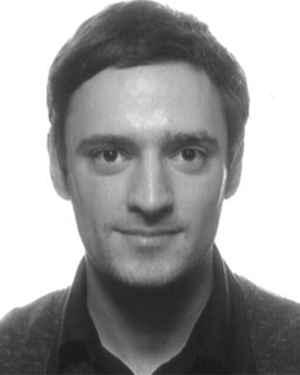 Beerend Ceulemans合作论文数12
 Tom Clerckx合作论文数12
 Yangxintong Lyu合作论文数Dept Elect & Informat, Vrije Univ Brussel11
 Quentin Bolsee合作论文数Vrije Univ Brussel, Dept Elect & Informat, Brussels, Belgium11Jan Hanca合作论文数11
 W. Philips合作论文数Department of Electronics and Information Systems of Ghent University
Flemish Fund for Scientific Research (FWO)11Rudi Deklerck合作论文数Department of Electronics and Informaticsm, Vrije Universiteit Brussel11
W. Philips合作论文数Department of Electronics and Information Systems of Ghent University
Flemish Fund for Scientific Research (FWO)11Rudi Deklerck合作论文数Department of Electronics and Informaticsm, Vrije Universiteit Brussel11 A. Salomie合作论文数11
 Vasile Dadarlat合作论文数Computer Science Department, Technical University of Cluj-Napoca11
 Aleksandra Pizurica合作论文数Department of Telecommunications and Information Processing, Ghent University;International Big Data Analytics Lab, Ghent University11
 Jozef Skorupa合作论文数10Ioannis Andreopoulos合作论文数9
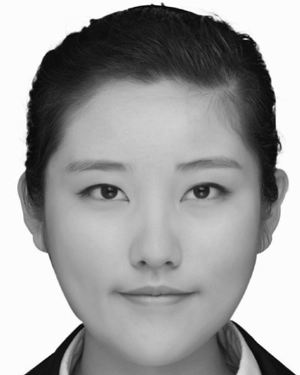 Ran Zhao合作论文数9
 Nastaran Nourbakhsh Kaashki合作论文数Dept Elect & Informat ETRO, Vrije Univ Brussel VUB9
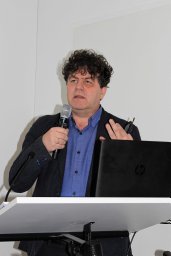 Marc Jacobs合作论文数Interdisciplinary Institute for Broadband Technology (IBBT, Vrije Universiteit Brussel9Geert Braeckman合作论文数9
 Leonard Livadaru合作论文数8Rui Zhong (钟睿)合作论文数School of Computer, Central China Normal University8
 Stefaan Mys合作论文数8
 A. I. Gavrilescu合作论文数8Bogdan Oniga合作论文数7Cernea, D.C.合作论文数7
 Alecsandru Simion合作论文数7




