Interference is a major obstacle in radio communications, especially when opportunistic frequency reuse is an inherent requirement for maximising spectral efficiency in heterogeneous networks. A typical example is encountered in cellular communications where macrocell‐edge users receive interference from small cell transmissions that use the same radio frequency band. Innovating interference management algorithms are employed towards this end, which because of their interdependencies with numerous parameters of the target operating scenario and various low‐level implementation aspects, need to be prototyped in real‐time signal processing platforms in order to be credibly verified. In this paper, we present the development and experimental validation of a macrocell/femtocell coexistence scenario in close to real‐life conditions. The inclusion of an agile interference management scheme increased the signal processing complexity at the physical layer. This overhead was appropriately addressed by engaging advanced parallel processing techniques, optimisations of the arithmetic operations and intelligent reuse of logic and memory resources in the field programmable gate array (FPGA)‐based baseband processing architecture. Copyright © 2014 John Wiley & Sons, Ltd.
Input Multiple Output Orthogonal Frequency Division Multiplexing technology is an advanced transmission technique for wireless communication systems. In this paper, the 64 point pipeline FFT/IFFT processor is introduced for efficient implementation of OFDM architecture. The IFFT processor is used to modulate the subcarrier in transmitter section and FFT processor demodulate the subcarrier in receiver section in the architecture. Our design adopts a single-path delay feedback style requiring less memory space and reconfigurable complex constant multiplier and bit parallel multiplier used in pipeline FFT/IFFT processor, instead of using ROM's to store twiddle factors that consuming lower power. The design of ROM-less FFT/IFFT processor is applied to OFDM architecture in the IEEE 802.16d communication standard. The result shows overall architecture design using the FFT/IFFT processor that gives efficient power, area and timing specifications considerably. Index Terms
The IEEE 802.16e-2005 standard, also denoted as mobile WiMAX, was introduced as one of the first real efforts towards the deployment of fourth generation communication systems providing fixed and mobile broadband wireless access. Mobile WiMAX supports multiple input multiple output (MIMO) antenna techniques which are considered a key technology in wireless communication systems for increasing both data rates and system performance. This paper presents a real-time 2 × 2 MIMO mobile WiMAX receiver with a detailed description of the architecture, design and implementation steps. The complexity of the real-time baseband signal processing has been scaled-up due to the high channel bandwidth that was adopted. Numerous equipment and instrumentation comprising our high performance experimental MIMO testbed were used to validate the operation of the mobile WiMAX receiver. The paper includes a subset of results that demonstrate the system-performance using standard 2 × 2 MIMO mobile channels.
This paper addresses the problem of coordinated radio resource allocation in the downlink for a set of femtocells operating on the same band under OFDMA access. We focus on the minimization of the total transmitted power subject to minimum rate constraints for the users connected to the femtocells in the set. By using interference prices to represent the interference cost at each receiver, a distributed solution is proposed, where each transmitter solves a convex optimization problem. For the sake of generality, multiple antennas are considered at both transmitters and receivers. Therefore, the solution includes, as particular cases, the three possible antenna configurations: multiple-input multiple-output (MIMO), multiple-input single-output (MISO), and single-input single-output (SISO). In the solution obtained, the transmitter avoids allocating large power at those carriers and directions for which the interference caused to the users in other femtocells is more critical. If the power required to fulfill the target rates is low, with the consequent reduction of the caused interference, the solution tends to be the conventional waterfilling solution.
This paper presents the design, implementation and experimental validation of a real-time FPGA-based mobile WiMAX baseband transceiver. Three different antenna configuration schemes were implemented and tested, namely the Single Input Single Output (SISO), the Single Input Multiple Output (SIMO) and the Multiple Input Multiple Output (MIMO). A reproducible design methodology enabled the deployment of the 20 MHz bandwidth prototype. The paper also includes a functional description of the implemented baseband processing blocks for each antenna scheme. A real-time testbed has hosted the three baseband implementations. A dedicated data-capturing interface facilitated their performance comparison in respect to the equivalent Matlab models.
A comparison between two multicarrier (MC) transmission techniques is presented: OFDM, based on cyclic prefix (CP), and FBMC, based on filterbank architecture. Multistream multiple input multiple output (MIMO) techniques that require channel state information (CSI) at the transmitter and receiver, are applied in these schemes to improve their throughput. When perfect CSI is assumed, OFDM presents lower energy-efficiency than FBMC due to the use of the CP. However, unlike OFDM, the use of multiple streams increases interference in FBMC. When imperfect CSI is considered, while there is neither inter-symbol interference (ISI) nor inter-carrier interference (ICI) in OFDM, FBMC still suffers this effect. In scenarios with low coherence bandwidth channels, the performance of FBMC degrades due to a significant increase in interference. On the contrary, OFDM is shown to be more robust in such scenarios. In this paper, we explore analytically and by means of simulation, the sources of errors together with the effects of channel coherence bandwidth and the energy-efficiency trade-off observed for both systems.
In this paper we present a performance comparison between two different multi-carrier transmission techniques: OFDM, based on the FFT and cyclic prefix (CP) addition; and FBMC (FilterBank MultiCarrier), which, as indicated by its name, is based on a filterbank architecture. For both schemes, we propose a joint beamforming design to be applied in multi-input-multi-output (MIMO) systems, which requires channel state information (CSI) at both communication ends. If perfect CSI is assumed, FBMC presents a higher energy-efficiency since it does not require a CP, differently to OFDM. However, in the imperfect CSI case, the opposite occurs: while in OFDM the presence of errors in the CSI does not cause intersymbol interference (ISI) and inter-carrier interference (ICI), in the FBMC case we show, both analytically and through simulation results, that imperfections in the CSI imply both ISI and ICI, which leads to an energy-efficiency loss. To mitigate this loss, we propose a novel robust receive beamforming strategy. In the simulations section, the performance of FBMC with robust beamforming is shown to outperform OFDM even in imperfect CSI conditions. The characterization of the tradeoff between energy-efficiency and robustness against channel uncertainty, both with robust and non-robust strategies, is, therefore, the objective of the present paper and also the motivation for future robust designs for FBMC multiantenna systems.
Given a zero forcing transmit beamforming, we focus on how the multi-antenna access point distributes the scarce resource (power) among the single-antenna terminals. Since there is a clear trade-off between the satisfaction of the individual needs and the global performance of the cell, several criteria are proposed, ranging from a classical physical layer point of view of capacity (rate) maximization to bit error rate (BER)-based cost functions, which are closer to the second layer of the protocol stack. Between two traditional techniques, namely the uniform power allocation and the equal BER and rate, a new one is proposed, which ultimately provides an intermediate performance. Then, we add BER (or signal to noise ratio) constraints so that the admission control problem has to be solved. Among traditional options, we propose a new mechanism to balance the above-mentioned trade-off between the total performance and the particular user behavior. The results in terms of fairness are presented by a mean vs. variance plot and by the Gini plot.
This paper considers a wireless communication system with multiple transmit and receive antennas, i.e., a multiple-input-multiple-output (MIMO) channel. The objective is to design the transmitter according to an imperfect channel estimate, where the errors are explicitly taken into account to obtain a robust design under the maximin or worst case philosophy. The robust transmission scheme is composed of an orthogonal space-time block code (OSTBC), whose outputs are transmitted through the eigenmodes of the channel estimate with an appropriate power allocation among them. At the receiver, the signal is detected assuming a perfect channel knowledge. The optimization problem corresponding to the design of the power allocation among the estimated eigenmodes, whose goal is the maximization of the signal-to-noise ratio (SNR), is transformed to a simple convex problem that can be easily solved. Different sources of errors are considered in the channel estimate, such as the Gaussian noise from the estimation process and the errors from the quantization of the channel estimate, among others. For the case of Gaussian noise, the robust power allocation admits a closed-form expression. Finally, the benefits of the proposed design are evaluated and compared with the pure OSTBC and nonrobust approaches.
This paper presents a new approach to robust beamforming based on fuzzy logic theory that is suitable for both point and scattered sources. The presented technique is based on the optimum beamformer and makes it robust to an imperfect estimate of the direction of arrival (DOA) even when powerful interferences are within the uncertainty range of the desired source. This robust approach solves the deficiencies of the classical non-robust space reference beamformers (SRB) in which the real DOA and the presumed one are taken as equal, although they are not. At low signal-to-noise ratio (SNR) the fuzzy inference-based beamformer relies on the fuzzy description of the DOA estimation, and at high SNR it places more emphasis on the estimated DOA. Interference rejection is well achieved for Interference to noise ratios (INRs) over the SNR. When the number of antennas is large, the fuzzy inference based beamformer can be implemented by means of a general side lobe canceller (GSLC) architecture and stability improves while the beamformer is still capable of suppressing weak interferences. The proposed schemes are compared with existing techniques, showing that the fuzzy inference beamformer can be an alternative when considering scenarios with DOA uncertainty and interferences. The main goals of the proposed scheme are: DOA robustness, adjustability, and numerical stability, which shortens the distance between theory and implementation.
One of the multiple advantages of communicating through MIMO systems is their inherent ability to provide flexible configurations. Following this line of thought, in this paper we present a generic framework to study the degrees of freedom in the design of MIMQ communication systems (e.g.: code length, number of multiplexed streams, or receiver structure). Precisely, we focus our efforts to bridge the gap between the design of MIMO systems with full and no channel state information at the transmitter side and also with different complexiry degrees at ihe receiver side. For instance, we can establish a trade-off, not only between the achievable rates and the diversity or beamforming gains, but also between the rate and the robustness to uncertainties in the channel state information.
This paper proposes a new technique in the context of multi-user scheduling in Orthogonal Frequency Division Multiplexing (OFDM) and Multi-Input-Multi-Output (MIMO) systems by considering a design that is also robust to channel uncertainties. The whole technique is divided into two parts: i) a robust design for each particular MIMO link exploiting an imperfect Channel State Information (CSI) and ii) a multi-user design for the scheduling policy. The link between both stages is practical, intuitive, and simple. The robust MIMO design is based on a worst-case approach that maximizes via convex optimization procedures the worst possible Signal to Noise Ratio (SNR) given a specified channel uncertainty region. The scheduling policy, also calculated with convex optimization techniques, minimizes the total number of utilized subcarriers. Therefore, the design is scalable in the sense of having the capability to incorporate new future potential users.
One of the multiple advantages of communicating through MIMO systems is their inherent ability to provide flexible configurations. Following this line of thought, in this paper we present a generic framework to study the degrees of freedom in the design of MIMO communication systems (e.g.: code length, number of multiplexed streams, or receiver structure). Precisely, we focus our efforts to bridge the gap between the design of MIMO systems with full and no channel state information at the transmitter side and also with different complexity degrees at the receiver side. For instance, we can establish a trade-off, not only between the achievable rates and the diversity or beamforming gains, but also between the rate and the robustness to uncertainties in the channel state information.
In this paper it is considered a system combining a multiple antenna transmitter and a single antenna Maximum Likelihood receiver. The design objective consists in the maximization of the SNR taking into account robustness and scalability issues. Scalability is desired, so that the transmitter can be easily redesigned if a new antenna is added or dropped. On the other hand, robustness refers to the ability of the system to work under imperfections, such as errors in the presumed channel estimate, and quantization of the transmit filters and signal samples due to the use of a finite-bit DSP. In this work, some parameters are presented that measure the robustness capabilities of this kind of architectures. Based on these criteria, the designers could easily evaluate how their system can perform under realistic assumptions and deployments.
This paper addresses the problem of the spatial scheduling of users in a cell for simultaneous downlink transmission from a base statimultiple antennas on (BS) having multiple antennas under a perspective of joint Physical and Medium Access Control (PHY-MAC) design. First of all, we compute the transmit beamvectors for each group according to a zero forcing (ZF) criterion, which gives a simple closed-form solution. We show first that it is equivalent to the minimization of the maximum bit error rate (BER). In this paper, the main contribution lies on the resolution of the NP-complete combinatorial problem that comes up as a cost function if we want to minimize the total transmit power. The solution of the NP-complete problem is performed by the stochastic technique simulated annealing (SA). Additionally, we present two heuristic algorithms that may enable a real-time implementation of this scheduling approach.
 Ai Perez-Neira合作论文数5MA Lagunas合作论文数4
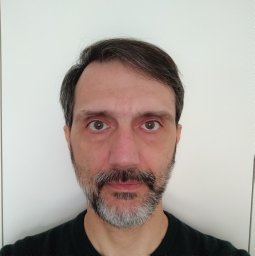 Nikolaos Bartzoudis合作论文数Department of Electronic & Electrical Engineering;Loughborough University;Department of Electronic & Electrical Engineering, Loughborough University4
 Oriol Font-Bach合作论文数Parc Mediterrani de la Tecnología (PMT),, Centre Tecnològic de Telecomunicacions de Catalunya (CTTC),3M Payaro合作论文数2
 Miquel Payaró合作论文数CTTC, Castelldefels, Spain2
 Antoni Morell合作论文数Group of Signal;Processing for Communications and Navigation;Universitat Autonoma de Barcelona;Group of Signal|Processing for Communications and Navigation, Universitat Autonoma de Barcelona2
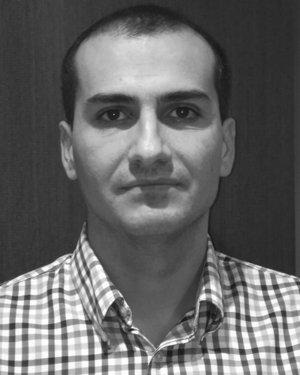 Adrian Agustin合作论文数Signal Processing and Communications Group;Technical University of Catalonia;Signal Processing and Communications Group, Technical University of Catalonia2
 David López Bueno合作论文数2D Bartolome合作论文数1Mao-Hsu Yen合作论文数1
 YU Yuan-Chu合作论文数1ana i pkrezneira合作论文数1miquel payard合作论文数1jose vidal manzano合作论文数1
 Ana Isabel Pérez-Neira合作论文数Universitat Politècnica de Catalunya;Centre Tecnològic de Telecomunicacions de Catalunya1
 Sao-Jie Chen合作论文数1
 Sergio Barbarossa合作论文数Dipartimento di Ingegneria dell'Informazione, Elettronica e Telecomunicazioni, Sapienza Università di Roma1
 Chen-Yi Lee (李鎮宜)合作论文数Institute of Electronics, National Yang Ming Chiao Tung University1
 Luis Blanco合作论文数Centre Tecnològic de Telecomunicacions de Catalunya1
 Josep Vidal合作论文数Dept. of Signal Theory & Commun., Univ. Politecnica de Catalunya1
 Chu Yu合作论文数1
 Marc Molina合作论文数1
 D. Bartolome合作论文数Catalonia Telecommun. Technol. Center1
 Inaki Estella Aguerri合作论文数Amazon1
 Daniel P. Palomar (鋒西龍)合作论文数Department of Electronic and Computer Engineering, School of Engineering, The Hong Kong University of Science and Technology;Department of Industrial Engineering & Decision Analytics, School of Engineering, The Hong Kong University of Science and Technology1
 Montse Nájar合作论文数Dep . of Signal Theory and Communications;Universitat Politècnica de Catalunya;Dep . of Signal Theory and Communications, Universitat Politècnica de Catalunya1




