To investigate the effects of gravity for the crystal growth of macromolecules, the effects of acceleration during re-entry and the influence of orbit-radiation in the X-ray range for already grown protein crystals the COSIMA hardware was re-configured. The system now fulfils all needs for a multi-approach crystallization experiment. The achieved crystallization results are equivalent to the best which can be obtained by crystallization techniques used in the laboratories. The modification of the hardware, in particular the newly designed crystallization vials, will be described in detail. In October 1991, COSIMA IV was performed on a Russian re-entry Photon capsule. 99 crystallization experiments were accomodated using three different protein crystallization techniques. Additionally, five already grown crystals were send to analyse the influence of the transport. Four radiation detectors were integrated to measure the radiation dose during the mission. A comparison of space- and ground-grown crystals will be included, which were not influenced by a malfunction of the satellite power supply.
We have grown crystals of two bacterial enzymes, thermolysin fromBacillus thermoproteolyticus and a novel 23 kD lysozyme fromStreptomyces coelicolor, on the unmanned COSIMA-2 space mission. The crystals obtained under microgravity conditions were compared with crystals grown in a ground control experiment using identical hardware, and with those obtained in ‘hanging drops’ in the laboratory. For both enzymes, the space-grown crystals tended to be longer but thinner than their terrestrial counterparts. The diffraction properties of each type of crystals were assessed by collecting nearly complete diffraction data sets using an area detector. Space-grown crystals of the enzymes showed much weaker diffraction than both the ground control and the laboratory-grown crystals. Possible reasons for this are discussed.
For the crystallization of proteins under microgravity conditions, a Chinese re‐entry system was used, in which 101 experiments of 25 different biological macromolecules were accommodated. From the results obtained we conclude that under microgravity conditions crystal growth can only be expected under those crystallization conditions which also permit crystal growthon earth. A number of space‐grown crystals were larger in size and of a better quality in their ability to diffract X‐rays than the corresponding ground control crystals grown at the Chinese launch site. However, the space‐grown crystals have not reached the X‐ray diffraction quality of the crystals obtained under optimal conditions in the home laboratories.
 Christian Betzel合作论文数Institute of Physiological Chemistry, UKE2
 Alexander Liesum合作论文数2
 Rolf Hilgenfeld (罗尔夫·希根菲尔德)合作论文数Institut für Molekulare Medizin, Universität zu Lübeck2R. Storm合作论文数1Marcia Visanji合作论文数1M Hennig合作论文数1
 Wolfram Saenger合作论文数Freie Universitat Berlin1
 Georg E. Schulz合作论文数Albert-Ludwigs-Universität Freiburg1
 Volker A. Erdmann合作论文数Free University Berlin Institute for Chemistry ; Biochemistry1Wolfgang Weber合作论文数1
 Keith S Wilson合作论文数Department of Chemistry, University of York1Hartmut Janczikowski合作论文数1A. Müller-Fahrnow合作论文数1Martina Düvel合作论文数1Zbigniew Dauter合作论文数1
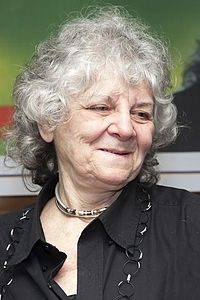 Ada Yonath合作论文数Helen and Milton A. Kimmelman Center for Biomolecular Structure and Assembly, Weizmann Institute of Science1
 Winfried Hinrichs合作论文数1
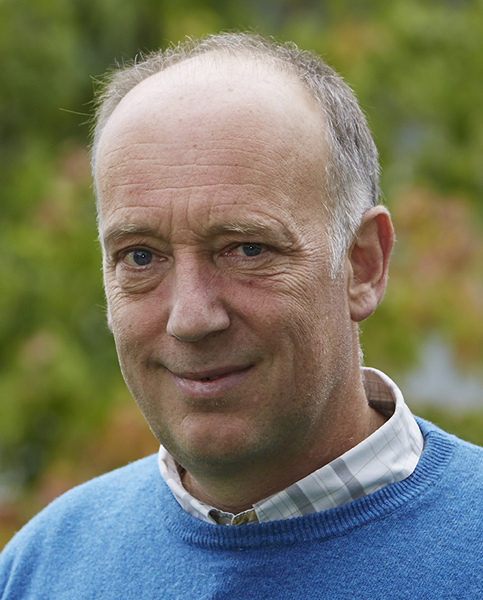 Christoph Müller合作论文数Structural and Computational Biology Unit, European Molecular Biology Laboratory;Genome Biology Unit, European Molecular Biology Laboratory1Gabriela Weber合作论文数1Heinz G. Wittmann合作论文数1Karin Stegen合作论文数1C Lippmann合作论文数1Julia Hoven合作论文数1




