The pink shrimp Penaeus notialis is one of the most important commercial species of the world. In the Caribbean Sea of Colombia, they represent 70 % of the catches in industrial fisheries, but since the 90’s it has shown a significant decrease in its abundances because of overexploitation of the resource. Because there are no studies on the genetic status of their populations in the Colombian Caribbean, the current management strategies for the pink shrimp can be improved with genetic criteria. Hence, the objective of this study was to examine the genetic diversity (Ho, He and Fis), structure population (Fst, AMOVA, Bayesian analysis, DAPC, Mantel test) and the connectivity (assignment analysis) in five localities distributed in the Caribbean Sea of Colombia (Zapatá, Arbolete, Isla Fuerte, Punta Canoa y Manaure). Additionally, we assessed the spatial distribution of size structure by geostatistical analysis to identify possible nursery areas and a relationship with the genetic structure observed. The genetic analyses using seven microsatellites loci, showed low genetic diversity (Ho < 0,35), high genetic potential (He < 0,93), high inbreeding (Fis> 0,6) and the presence of three populations (ФST2, 98 = 0,065; P < 0.001) showing significant adjustment to the isolation-by-distance model (r = 0,78, z = −27,92; p = 0,031). It is discussed how the life cycle of the species, geomorphological variations on the continental shelf and marine currents influence the spatial distribution of size structure and genetic lineages of the pink shrimp, as well as the implications of this type of studies in the sustainable management of this valuable fishing resource.
This work presents updates in the diagnostics systems, magnetohydrodynamics (MHD) calculations and simulations of microwave heating scenarios of the small modular Stellarator of Costa Rica 1 (SCR-1). Similarly, the design of a flexible bolometer and magnetic diagnostics (a set of Mirnov coils, Rogowski coils and two diamagnetic loops) are introduced. Furthermore, new MHD equilibrium calculations for the plasma of the SCR-1 device were performed using the VMEC code including the poloidal cross-section of the magnetic flux surfaces at different toroidal positions, profiles of the rotational transform, magnetic well, magnetic shear and total magnetic field norm. Charged particle orbits in vacuum magnetic field were computed by the magnetic field solver BS-SOLCTRA (Vargas et al. In 27th IAEA Fusion Energy Conference (FEC 2018), 2018. IAEA). A visualization framework was implemented using Paraview (Solano-Piedra et al. In 23rd IAEA Technical Meeting on the Research Using Small Fusion Devices (23rd TM RUSFD), 2017) and compared with magnetic mapping results (Coto-Vílchez et al. In 16th Latin American Workshop on Plasma Physics (LAWPP), 2017, pp. 43–46). Additionally, simulations of microwave heating scenarios were performed by the IPF-FDMC full-wave code. These simulations calculate the conversion of the ordinary waves to extraordinary waves and allow us to identify the location where the conversion takes place. Finally, the microwave heating scenarios for the $330^{\circ }$ toroidal position are presented. The microwave heating scenarios showed that the O–X–B mode conversion is around 12–14 %. It was possible to identify the spatial zone where the conversion takes place (upper hybrid frequency).
We determined size structure, sex ratio, and condition factor for the pink shrimp, Penaeus notialis Perez Farfante, 1967 in the Caribbean coast of Colombia, information essential for the design of management and conservation strategies to ensure a sustainable fishery. Total length (TL; +/- 0.01 mm) ranged from 79.47 to 192.80 mm TL (mean 148.21 +/- 17.75) for females and 79.00-181.83 mm TL (mean 122.52 mm +/- 12.55) for males. Statistically significant differences (P< 0.01) in size and weight (+/- 0.1 mg) between sexes were found year-round; males were smaller and weighed less than females. The sex ratio showed significant differences (P < 0.01) between the total number of females and males per total length class when compared with a 50% sex ratio. The monthly sex ratio showed significant differences between the number of females and males. The weight-length relationship showed positive allometric growth (b = 3.118) for females, whereas negative allometric growth (b = 2.663) was observed for males. The condition factor (K) ranged 0.0002-0.0023 (mean 0.0009 +/- 0.0007) for females and 0.0005-0.2179 (mean 0.0316 +/- 0.0642) for males.
The objective of this study was to assess the patterns in the spatial distribution, size structure, morphometric relationships, and relationships of biomass and size to sampling depth and distance to the coast of Penaeus notialis in the Colombian Caribbean. The biological data were collected on board a shrimp trawler. The females were larger and heavier than the males, which indicated distinct sexual dimorphism in body size. The cephalothorax length at 50% maturity in females was 26.49 mm, and in males, it was 15.13 mm. Relatively high biomass values were found in the southern zone of the study area at depths between 25.6 and 49.3 m and between 3.94 and 7.80 nmi (= 7.29-14.45 km) from the coast. We found a clear spatial structure of biomass and size in relation to depth, so that the fishing effort can be directed to the locations of the adult population.
We determined size structure, sex ratio, and condition factor for the pink shrimp, Penaeus notialisPérez Farfante, 1967 in the Caribbean coast of Colombia, information essential for the design of management and conservation strategies to ensure a sustainable fishery. Total length (TL; ± 0.01 mm) ranged from 79.47 to 192.80 mm TL (mean 148.21 ± 17.75) for females and 79.00–181.83 mm TL (mean 122.52 mm ± 12.55) for males. Statistically significant differences (P < 0.01) in size and weight (± 0.1 mg) between sexes were found year-round; males were smaller and weighed less than females. The sex ratio showed significant differences (P < 0.01) between the total number of females and males per total length class when compared with a 50% sex ratio. The monthly sex ratio showed significant differences between the number of females and males. The weight-length relationship showed positive allometric growth (b = 3.118) for females, whereas negative allometric growth (b = 2.663) was observed for males. The condition factor (K) ranged 0.0002–0.0023 (mean 0.0009 ± 0.0007) for females and 0.0005–0.2179 (mean 0.0316 ± 0.0642) for males.
The variability of spatial and temporal distribution of early stages of the mote sculpin Normanichthys crockeri from the upwelling ecosystem off central Chile was examined using a series of six oceanographic cruises, otolith-based larval growth, and experimental trials. Adults spawned year-round in surface waters near capes and inside bays along central Chile, which reduced offshore advection. Egg densities of 16-788 10 m(-2) were observed. Small larvae (similar to 2.7 mm body length) hatched after a few days and fed endogenously for 6 days. Pre and postflexion larval N. crockeri were retained over the shelf and near the coast and were vertically located in the mixed layer of the water column (from surface to similar to 50 m depth). No evidence of diel vertical migration was detected in larvae during the austral spring and summer seasons. N. crockeri larvae showed linear growth rates of 0.15-0.20 mm day(-1) in the first three months of life during spring and summer. Compared with the reproductive tactics of other small pelagic fishes from the area (Engraulis ringens and Strangomera bentincki), N. crockeri shared the same spawning areas; however larvae showed slower growth rate.
The world’s largest mono-specific fishery, the Peruvian anchovy or anchoveta (Engraulis ringens) fishery, has been the subject of many studies since the 1960s. Details of its relationship with other species have mainly focused on alternations with sardine, Sardinops sagax, and little effort has so far been paid to interactions with other species sharing the same ecosystem. This is the case for Pleuroncodes monodon, the crustacean squat lobster or ’munida’, which has become highly abundant along the Peruvian coast since the mid-1990s. Munida is now an important prey for seabirds, mammals and coastal predatory fish. Knowledge of patterns of distribution and ecological niche of munida is scarce however off Peru. Here we describe and compare spatial patterns of distribution of anchoveta and munida and their ecological niches based on data from 26 acoustic surveys performed along the Peruvian coast between 1998 and 2006. The results indicate that munida and anchoveta share ecological niches but that munida is restricted to the coldest part of the productive cold coastal waters whereas anchoveta do not present any temperature preference over a large range (14–23°C). The recent increase in munida abundance off Peru is concomitant with colder conditions; with their onset munida extended its range from central Chile northwards. Off Peru the very shallow oxycline keeps munida from its usual bottom habitat and has forced it to adopt pelagic behaviour.
The most important pelagic artisanal fishery of the Colombian Caribbean Sea is the Atlantic thread herring (Opisthonema oglinum) and the associated species scaled herring (Harengula jaguana), round sardinella (Sardinella aurita), and scad (Decapterus punctatus). The largest agregations of these small pelagics were found in the La Guajira area, where the local oceanography is modulated by seasonal upwelling intensity. We analysed the associations between the distribution of these small pelagic fishes and the environmental variables. A cumulative frequency method and a Monte Carlo randomization were used to detect associations between fish density and environmental variables. The adults of Atlantic thread herring were found in the upwelling area of La Guajira Peninsula and were associated to waters with temperature and salinity values higher than 25.5 and 36.7 degreesC, respectively. During December, a nursery area Was found in the southern portion of the study area and the juveniles of Atlantic thread herring showed preference for temperatures higher than 27.4 degreesC. Scaled herring was found to be associated with temperatures (>25.7 degreesC) and salinities (>36.8). Scad and round sardinella were also associated to temperatures and salinities higher than 25 and 36.6 degreesC. Our results suggest that the dynamics of the upwelling area may influence the spatial distribution and abundance of small pelagics in the Colombian Caribbean Sea. (C) 2003 Editions scientifiques et medicales Elsevier SAS and Ifremer/IRD/Inra/Cemagref. All rights reserved.
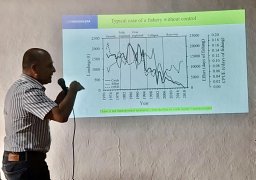 Jorge Paramo合作论文数Grupo de Investigación Ciencia y Tecnología Pesquera Tropical (CITEPT),, Universidad del Magdalena4
 L. A. Araya-Solano合作论文数2A. Koehn-Seemann合作论文数2F. Cerdas合作论文数2J. E. Pérez-Hidalgo合作论文数2
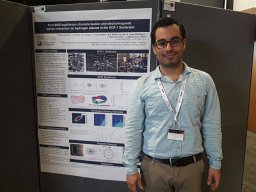 Ricardo Solano-Piedra合作论文数Costa Rica Institute of Technology2Luis Campos-Duarte合作论文数National High Technology Center and Costa Rica Institute of Technology2F. Coto-Vílchez合作论文数2Selvaraj John J合作论文数2
 Daniel Jimenez Cabeza合作论文数2l saenz cruz合作论文数1
 Ivan Vargas-Blanco合作论文数Plasma Lab Fus Energy & Applicat, Costa Rica Inst Technol1a castro合作论文数1martin andersson合作论文数1
 Mark Mulligan合作论文数Department of Geography, School of Global Affairs, Faculty of Social Science & Public Policy, King’s College London1
 Douglas White合作论文数CIAT, Cali, Colombia1Jorge Rubiano合作论文数Centro Internacional de Agricultura Tropical;Universidad Nacional ( UNAL );International Water Management Institute;International Water Management Institute, Universidad Nacional ( UNAL )1Octavio Móron合作论文数1
 Samuel Soto合作论文数1
 Sophie Bertrand合作论文数School of Fisheries, University of Washington1
 Mauricio F. Landaeta合作论文数Laboratorio de Oceanografía Pesquera y Ecología Larval, Departamento de Oceanografía1
 Renato A. Quinones合作论文数university of concepcion1
 Pedro A. Inostroza合作论文数Facultad de Ciencias Naturales y Oceanográficas, Universidad de Concepción1
 Rodrigo Wiff合作论文数Departamento de Oceanografía1
 Leonardo Castro合作论文数1
 Mariano Gutierrez合作论文数1
 Juan Carlos Narvaez Barandica合作论文数Universidad del Magdalena1
 Andrew Farrow合作论文数1
 Glenn Hyman合作论文数International Centre for Tropical Agriculture1
 Arnaud Bertrand合作论文数Aquapôle, Université de Liège1




