We first present detailed measurements of the rounding behavior around the superconducting transition temperature, Tc, of the in-plane electrical conductivity, magnetoconductivity and magnetization, including the low and moderate magnetic field regimes, in a high-quality single crystal and a thin film of the prototypical optimally-doped YBa2Cu3O7-δ (OPT Y-123), in which the inhomogeneity effects are minimized. Then, we present a comparison of these experimental data with the phenomenological Ginzburg–Landau (GL) approach that takes into account the unavoidable contribution of the fluctuating pairs, the only theoretical scenario that at present allows analysis of these roundings at the quantitative level. These analyses demonstrate that the measured rounding effects around Tc may be explained quantitatively and consistently in terms of the GL scenario, even up to the rounding onset temperatures if the quantum localization, associated with the shrinkage of the superconducting wave function, is taken into account. The implications of our results on the pseudogap physics of optimally-doped cuprates are also discussed.
Measurements of the temperature dependence of the in-plane magnetic penetration depth, Delta(ab)(T) = lambda(ab)(0), are presented in the isovalently substituted iron pnictide BaFe2(As1-xPx)(2) near optimal doping (T-c similar to 28K). The data were obtained directly from the shielding magnetic susceptibility of thin single crystals (similar to 20 pm thickness along the crystals c-axis) under magnetic fields parallel to the ab layers. Complications associated to flux penetration were avoided by using fields in the 10(-4) T range, which ensured that the samples were well inside the Meissner region. At low temperatures (T < 0.25T(c)) our data confirm the linear temperature dependence of lambda(ab)(T) observed by using other procedures, and that is consistent with a nodal superconducting order parameter. By using values for lambda(ab)(0) in the literature we obtained the temperature dependence up to T-c of the superfluid density, n(s)(T) proportional to 1/lambda(2)(ab)(T). It is found that samples with slightly different Tc values present a significantly different qualitative behavior of ns(T). (C) 2016 Elsevier B.V. All rights reserved.
We present numerical simulations of the width and shape of the resistance versus temperature transition, i.e., R(T), under zero external magnetic field, in a high-temperature superconducting film with a regular pattern of local variations of critical temperatures, induced, e.g., by means of micro- or nanofunctionalization. To obtain a realistic R(T), we also take into consideration the widening of the transition due to Gaussian and vortex-antivortex fluctuations, plus the effects of the intrinsic inhomogeneity due to the nonstoichiomety of the dopant ions. We focus mainly on square-lattice patterns and show that they may be used to engineer R(T) transitions broader or narrower than the ones of the parent nonstructured film.
We present numerical simulations of the width and shape of the resistance versus temperature transition, i.e., R(T), under zero external magnetic field, in a high-temperature superconducting film with a regular pattern of local variations of critical temperatures, induced, e.g., by means of micro- or nanofunctionalization. To obtain a realistic R(T), we also take into consideration the widening of the transition due to Gaussian and vortex-antivortex fluctuations, plus the effects of the intrinsic inhomogeneity due to the nonstoichiomety of the dopant ions. We focus mainly on square-lattice patterns and show that they may be used to engineer R(T) transitions broader or narrower than the ones of the parent nonstructured film.
The topic of superconductivity in strongly disordered materials has attracted significant attention. These materials appear to be rather promising for fabrication of various nanoscale devices such as bolometers and transition edge sensors of electromagnetic radiation. The vividly debated subject of intrinsic spatial inhomogeneity responsible for the non-Bardeen-Cooper-Schrieffer relation between the superconducting gap and the pairing potential is crucial both for understanding the fundamental issues of superconductivity in highly disordered superconductors, and for the operation of corresponding nanoelectronic devices. Here we report an experimental study of the electron transport properties of narrow NbN nanowires with effective cross sections of the order of the debated inhomogeneity scales. The temperature dependence of the critical current follows the textbook Ginzburg-Landau prediction for the quasi-one-dimensional superconducting channel I c ∼ (1-T/T c)3/2. We find that conventional models based on the the phase slip mechanism provide reasonable fits for the shape of R(T) transitions. Better agreement with R(T) data can be achieved assuming the existence of short 'weak links' with slightly reduced local critical temperature T c. Hence, one may conclude that an 'exotic' intrinsic electronic inhomogeneity either does not exist in our structures, or, if it does exist, it does not affect their resistive state properties, or does not provide any specific impact distinguishable from conventional weak links.
The topic of superconductivity in strongly disordered materials has attracted a significant attention. In particular vivid debates are related to the subject of intrinsic spatial inhomogeneity responsible for non-BCS relation between the superconducting gap and the pairing potential. Here we report experimental study of electron transport properties of narrow NbN nanowires with effective cross sections of the order of the debated inhomogeneity scales. We find that conventional models based on phase slip concept provide reasonable fits for the shape of the R(T) transition curve. Temperature dependence of the critical current follows the text-book Ginzburg-Landau prediction for quasi-one-dimensional superconducting channel Ic (1-T/Tc)^3/2. Hence, one may conclude that the intrinsic electronic inhomogeneity either does not exist in our structures, or, if exist, does not affect their resistive state properties.
We report some of our experimental results about the transition to the normal state of high-temperature superconductors subjected to high current densities and, simultaneously, under external magnetic fields up to 1 T. Our data analysis, which is based on a recently published instability model, show that the quenching may be explained in terms of thermal instabilities due to self-heating favored by the nonlinear nature of the current-voltage characteristics of high-T c superconductors (HTS). In fact, we predict the density current J* at which the samples quench, i.e., jump abrupt to the normal state, with an accuracy around 1%. Beyond its interest from a fundamental point of view, this thermal model opens a practical way to estimate the quenching point thus avoiding the damaging or even burning up of devices in high power applications of HTS.
Due to the paraantiferromagnetic transition of oxygen at 45 K, the contamination with this element may deeply affect measurements performed with high-resolution magnetometers around this temperature. We have studied this spurious effect by measuring with a commercial SQUID-based magnetometer (Quantum Design, model MPMS-XL) the magnetization of granular La1.85Sr0.15CuO4 (LSCO) superconductors by using different sample holders. Our results demonstrate the crucial role played by the O-2 physisorption in the extended surface of the LSCO grains, an effect that may be deeply mitigated by encapsulating the grains into an epoxy resin (EPO-TEK 301). This proceduremay be also useful for high-precision magnetization measurements at low temperatures in other granular or porous materials.
Due to the paraantiferromagnetic transition of oxygen at 45 K, the contamination with this element may deeply affect measurements performed with high-resolution magnetometers around this temperature. We have studied this spurious effect by measuring with a commercial SQUID-based magnetometer (Quantum Design, model MPMS-XL) the magnetization of granular La1.85Sr0.15CuO <sub xmlns:mml="http://www.w3.org/1998/Math/MathML" xmlns:xlink="http://www.w3.org/1999/xlink">4</sub> (LSCO) superconductors by using different sample holders. Our results demonstrate the crucial role played by the O <sub xmlns:mml="http://www.w3.org/1998/Math/MathML" xmlns:xlink="http://www.w3.org/1999/xlink">2</sub> physisorption in the extended surface of the LSCO grains, an effect that may be deeply mitigated by encapsulating the grains into an epoxy resin (EPO-TEK 301). This procedure may be also useful for high-precision magnetization measurements at low temperatures in other granular or porous materials.
The nature of superconducting fluctuation effects in the isovalently substituted iron pnictide BaFe2(As1-xPx)(2) (x approximate to 0.35) is probed through measurements of the magnetization and magnetoconductivity around the superconducting transition. The results, obtained with magnetic fields up to 9 T applied in the two main crystal directions, are consistent with anisotropic Ginzburg-Landau (GL) approaches for finite applied magnetic fields. The analysis allowed us to determine with accuracy the out-of-plane, xi(c) (0), and in-plane, xi(ab) (0), GL coherence lengths. Significant differences are found between the xi(c) (0) values resulting from electrical transport and magnetization data. According to recent theoretical approaches, these differences could be interpreted in terms of the multiband nature of this material. The analysis of data in the low-field region around the transition temperature also suggests that phase fluctuations, although possibly relevant in other Fe-based superconductors, may play a negligible role in this compound.
The interplay between fluctuating Cooper pairs and magnetic impurities in conventional BCS low-Tc superconductors has been studied through measurements of the magnetic field dependence of the fluctuation diamagnetism (FD) above Tc in lanthanum with praseodymium impurities.These measurements provide a crucial confirmation of our previous observation [Europhys.Lett.73 587 (2006)] that in the dilute impurity regime the FD increases almost linearly with the concentration of magnetic impurities.This striking effect is attributed to a variation due to the presence of the fluctuating Cooper pairs of the coupling between magnetic impurities.To describe these results at a phenomenological level, we propose a Gaussian Ginzburg-Landau model for the FD which includes an indirect contribution proportional to both the impurities concentration and the Cooper pairs density.Our approach is able to explain simultaneously the FD increase due to magnetic impurities and its decrease with the application of large magnetic fields.
In the commented work (PRL 109, 187005 (2012)), Rullier-Albenque et al. present measurements of transverse magnetoresistivity above the transition temperature Tc in clean LiFeAs. By analyzing their data, these authors conclude that the conductivity induced by fluctuations follows a two-dimensional (2D) behavior even close to Tc, in spite that for LiFeAs the transverse coherence length ($\xi_c$(0)=1.6 nm) is larger than the Fe-layers spacing (s=0.636 nm), which would rather suggest a three-dimensional (3D) behavior. This striking proposal would have deep implications in the theoretical understanding of the multiband structure of iron pnictides, but it also contrasts with the 3D behavior observed near Tc in the same compound and in other iron pnictides with even smaller $\xi_c$(0)/s ratios. Here we show that the proposal of Rullier et al. could be just an artifact associated to an inadequate subtraction of the normal-state contribution.
We study the diamagnetism induced by thermal fluctuations above the superconducting transition of the iron pnictide Ba(Fe 1 − x ?> Nix)2As2 with different doping levels. The measurements are performed with magnetic fields up to 7 T applied in the two main crystal directions. These data provide double information: first, they confirm at a quantitative level the applicability to these materials of a 3D-anisotropic Ginzburg–Landau approach valid in the finite field regime. Then, they allow us to determine the doping-level dependence of the in-plane coherence length and of the superconducting anisotropy factor, γ. Our results provide a stringent confirmation of the large increase of γ with the doping level, as recently proposed from magnetoresistivity measurements. The implications of the applicability of the model used to a multiband superconductor are discussed.
The superconducting fluctuations well inside the normal state of Fe-based superconductors were experimentally studied through the in-plane paraconductivity in several high-quality optimally-doped BaFe_2-xNi_xAs_2 crystals. These measurements were performed in magnetic fields with amplitudes up to 14 T, and different orientations relative to the crystals c axis (0, 53 and 90 degrees). The results allowed a stringent check of the applicability of a recently proposed Ginzburg-Landau approach for the fluctuation electrical conductivity of 3D anisotropic materials in presence of finite applied magnetic fields.
The temperature dependence of the in-plane magnetic penetration depth lambda(ab) of Ba(Fe1-xNix)(2)As-2 single crystals is determined directly from the shielding magnetic susceptibility, measured in the Meissner region with the field parallel to the ab layers. The doping levels studied cover the underdoped, optimally doped and overdoped regimes. At temperatures below 0.5T(c) a well-defined power-law behavior lambda(ab)(T) - lambda(ab) (0) = AT(n) (with n approximate to 2.5) is observed. At lower temperatures (T < 0.3T(c)) the data are still consistent with n = 2 and A alpha T-c(-3), as predicted by the strong pair-breaking scenario proposed by Gordon et al (2010 Phys. Rev. B 81, 180501(R)). The temperature dependence of the superfluid density rho(s) alpha lambda(-2)(ab) presents a marked positive curvature just below T-c, which is a sign of two-gap superconductivity. The analysis of rho(s) (T) in terms of a two-gap model allowed estimation of parameters like the in-band and inter-band couplings, the relative weight of each band, and their dependence on the doping level. A comparison with rho(s) (T) data obtained by using other techniques in compounds with a similar composition is also presented.
In highly anisotropic cuprate superconductors it is generally accepted that the reversible magnetization vector, M, is essentially perpendicular to the superconducting CuO2 layers in a wide range of crystal orientations with respect to the applied magnetic field, H. In a recent work [J. Mosqueira et al., Phys. Rev. B 84, 134504 (2011)] it is shown, however, that the dependence of M on the H orientation in the reversible mixed state of a high-quality Tl-based cuprate presents a notable deviation from this behavior. Here we extend these measurements to the fluctuation region above Tc, in order to check whether the above mentioned effect is also present.
We present calculations of the electrical behaviour near the Berezinskii–Kosterlitz–Thouless (BKT) vortex–antivortex binding transition of planar type-II superconductors with critical temperatures varying in space according to a random Gaussian distribution. By using a finite-element mesh-circuit analysis we obtain as a function of temperature and intensity the spatial maps of local voltages. These calculations allow us to argument that in these inhomogeneous superconductors the occurrence of a global voltage-current curve V∝I 3 signals with good accuracy the average BKT temperature \(\overline{T}_{\mathrm{BKT}}\) because of the appearance of percolation-like configurations when 50 % of the sample has experienced the vortex–antivortex binding transition. In addition, we also present an effective-medium calculation aimed to obtain the resistance V/I without any finite-element computation. It leads to results in agreement with the finite-element approach except in the close vicinity of \(\overline{T}_{\mathrm{BKT}}\). For instance, for the upper part of the transition both theoretical approaches coincide in all the ohmic region of temperatures, including also the average mean-field temperature \(\overline{T}_{c0}\).
The new results summarized here, including a brief comparison with the paraconductivity, further suggest that the anomalous precursor (above T (c)) diamagnetism recently observed in the underdoped La1.9Sr0.1CuO4 superconductor could be attributed to the presence, in addition to the conventional superconducting pair fluctuations, of T (c)-inhomogeneities with long characteristic lengths associated with chemical disorder.
The magnetization around the superconducting transition was measured in YBa2Cu3O7-delta with magnetic impurities in the CuO2 layers (Cu substituted by Zn or Ni) or between them (Y substituted by Gd or Pr). While some of these impurities have an important effect on the superconducting transition temperature (T-c), the precursor diamagnetism observed above T-c is not appreciably affected. This result contrasts with recent observations in a conventional BCS superconductor (La), in which the precursor diamagnetism was found to increase several orders of magnitude with the addition of a small amount (a few atomic per cent) of Gd or Pr magnetic impurities.
 Félix Vidal合作论文数15
 J. Mosqueira合作论文数Facultad de Física, Universidad de Santiago de Compostela14J. M. Doval合作论文数11
 Manuel V. Ramallo合作论文数Facultad de Física, Universidad de Santiago8
 Daniel Sonora合作论文数7j c verde合作论文数7
 Huiqian Luo (罗会仟)合作论文数Institute of Physics, Chinese Academy of Sciences6J. D. Dancausa合作论文数6C. Carballeira合作论文数4Noelia CotóN合作论文数4Gregory Gol'tsman合作论文数2
 Alexander Korneev合作论文数2Yu. Korneeva合作论文数2Alexander Semenov合作论文数2
 Pavel An合作论文数2Ding Hu合作论文数2
 Shiliang Li (李世亮)合作论文数State Key Lab for Superconductivity, Institute of Physics, Chinese Academy of Sciences;University of Chinese Academy of Sciences2Murphy Andrew合作论文数2Francisco Soto合作论文数2J.A. Veira合作论文数Facultad de Física, Universidad de Santiago de Compostela2
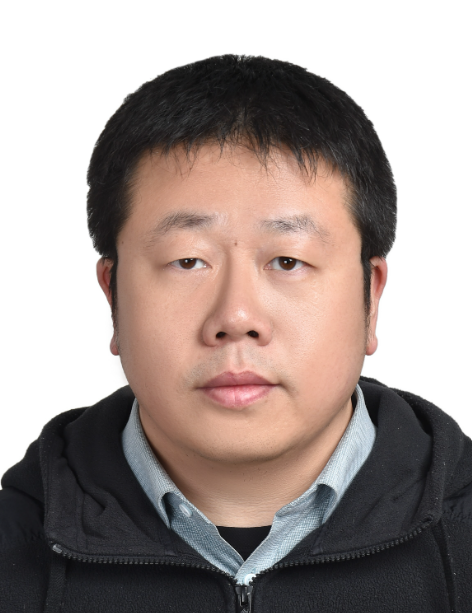 Xingye Lu (鲁兴业)合作论文数Department of Physics, Beijing Normal University2
 Alexey Bezryadin合作论文数Department of Physics, The Grainger College of Engineering, University of Illinois at Urbana-Champaign;Superconductivity Center, University of Illinois at Urbana-Champaign2S. Salem-Sugui合作论文数2
 Konstantin Arutyunov合作论文数Science Center, Nano;Department of Physics;University of Jyvaskyla;NanoScience Center, University of Jyvaskyla2A. D. Alvarenga合作论文数Centro Brasileiro de Pesquisas Fisicas2D. Hu合作论文数1
 Rui Zhang合作论文数Institute of Physics, Chinese Academy of Sciences1
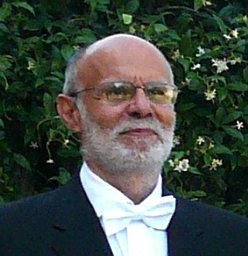 J. Maza合作论文数Dpto. de Fi´sica de la Materia Condensada, U. de Santiago de Compostela1
 Mauricio Ruibal合作论文数Departamento de Fisica da Materia Condensada;Universidade de Santiago de Compostela1
 M. J. Tello合作论文数Facultad de Ciencia y Tecnología, Universidad del País Vasco1
 Genfu Chen (陈根富)合作论文数State Key Lab for Superconductivity, Institute of Physics, Chinese Academy of Sciences;University of Chinese Academy of Sciences1




