KASCADE-Grande is a multi detector setup for the investigation of extensive air showers in the primary 2 energy range of the knee including energies around the so-called second knee. With the data of the 700 . 700 m(2) large Grande array shower core position, shower direction, and the total number of electrons are reconstructed for events with primary energy above 10(16.5) eV. In addition, the experiment consists of different detector setups for measuring mucus at various energy thresholds between 230MeV and 2.4GeV. These informations are used to estimate the muon shower size as well as observables sensitive to differences of hadronic interaction models embedded in shower simulation codes. We report the goals and the status of the different muon measurements at KASCADE-Grande.
Context. The detection of radio pulses from cosmic ray air showers is a potentially powerful new detection mechanism for studying spectrum and composition of ultra high energy cosmic rays that needs to be understood in greater detail. The radiation consists in large part of geosynchrotron radiation. The intensity of this radiation depends, among other factors, on the energy of the primary particle and the angle of the shower axis with respect to the geomagnetic field.Aims. Since the radiation mechanism is based on particle acceleration, the atmospheric electric field can play an important role. Especially inside thunderclouds large electric fields can be present. In this paper we examine the contribution of an electric field to the emission mechanism theoretically and experimentally.Methods. Two mechanisms of amplification of radio emission are considered: the acceleration radiation of the shower particles and the radiation from the current that is produced by ionization electrons moving in the electric field. For both mechanisms analytical estimates are made of their effects on the radio pulse height. We selected lopes data recorded during thunderstorms, periods of heavy cloudiness and periods of cloudless weather. We tested whether the correlations with geomagnetic angle and primary energy vary with atmospheric conditions.Results. We find that during thunderstorms the radio emission can be strongly enhanced. The present data suggests that the observed amplification is caused by acceleration of the shower electrons and positrons. In the near future, extensions of lopes and the construction of LOFAR will help to identify the mechanism in more detail. No amplified pulses were found during periods of cloudless sky or heavy cloudiness, suggesting that the electric field effect for radio air shower measurements can be safely ignored during non-thunderstorm conditions.
The interpretation of extensive air shower measurements often requires a comparison with shower simulations in the atmosphere. These calculations rely on hadronic interaction models which have to extrapolate into kinematical and energy regions not explored by present-day collider experiments. The KASCADE experiment with its large hadron calorimeter and the detector array for the electromagnetic and muonic components provides experimental data to check such interaction models. For the simulations the program CORSIKA is used, which has several hadronic event generators embedded. For high-energy interactions (E-lab greater than or similar to 100 GeV) the models DPMJET, NEXUS, QGSJET and SIBYLL have been used. Low-energy interactions have been treated by GHEISHA and FLUKA. Different hadronic observables are investigated as well as their correlations with the electromagnetic and muonic shower components up to primary energies of about 40 PeV. Although the predictions of the more recent models are to a large extent compatible with the measured data within the range given by proton and iron primary particles, there are still significant differences between the individual models.
LOPES is set up at the location of the KASCADE-Grande extensive air shower experiment in Karlsruhe, Germany and aims to measure and investigate radio pulses from Extensive Air Showers. Data taken during half a year of operation of 10 LOPES antennas (LOPES-10), triggered by showers observed with KASCADE-Grande have been analyzed. We report about results of correlations found of the measured radio signals by LOPES-10 with shower parameters.
The energy spectrum of cosmic rays, following over large energy ranges a simple power law, steepens at energies around 4 PeV. This so‐called knee is believed to be an imprint of corresponding steepenings or even cut‐offs in the energy spectra of single cosmic ray elements, thus implying a change of composition in the range between 1 PeV and 100 PeV. One of the sophisticated experiments aiming at detailed measurements in the knee region is the KASCADE experiment and its successor, KASCADE‐Grande. In the following, existing data on the knee and their limitations are briefly discussed. Concluding, an update on the KASCADE composition analysis is presented.
Abstract LOPES is set up at the location of the KASCADE-Grande extensive air shower experiment in Karlsruhe, Germany and aims to measure
When Ultra High Energy Cosmic Rays (UHECR) interact with particles in the Earth's atmosphere, they produce a shower of secondary particles propagating toward the ground. LOPES-30 is an absolutely calibrated array of 30 dipole antennas investigating the radio emission from these showers in detail and clarifying if the technique is useful for large-scale applications. LOPES-30 is co-located and measures in coincidence with the air shower experiment KASCADE-Grande. Status of LOPES-30 and first measurements are presented.
To investigate the impact of uncertainties in the knowledge of properties of individual hadronic interactions on the development of extensive air showers, the inelastic proton-proton cross section and the elasticity of interactions have been modified within the interaction model QGSJET. Air shower simulations are performed using the CORSIKA code. The influence of the modifications on observables like the number of electrons, muons, and hadrons registered at ground level are investigated. The predictions are compared to measurements of the KASCADE experiment.
KASCADE-Grande is a multi-detector setup to get redundant information on single air shower basis. The information is used to perform multi-parameter analyses to solve the threefold problem of the reconstruction of the unknown primary energy, the primary mass, and to quantify the characteristics of the hadronic interactions in the air-shower development. This contribution discusses the various ways of testing the hadronic interaction mechanisms with data of the original KASCADE experiment and their results, as well as the capabilities in testing the models with the extension of KASCADE, the KASCADE-Grande experiment. Though no hadronic interaction model is fully able to describe the multi-parameter data of KASCADE consistently, the more recent models or improved versions of older models reproduce the data better than a few years ago.
We present the design and first test results of a new FADC-based data acquisition (DAQ) system for the Grande array of the KASCADE-Grande experiment. The original KASCADE experiment at the Forschungszentrum Karlsruhe, Germany, has been extended by 37 detector stations of the former EAS-TOP experiment (Grande array) to provide sensitivity to energies for primary particles from the cosmos up to 10/sup 18/ eV. The new FADC-based DAQ system will improve the quality of the data taken by the Grande array by digitizing the scintillator signals with a 250 MHz sampling rate. The signals of each of the 37 detector stations are continuously recorded using cascaded 12-bit flash analog-to-digital-converters (FADCs) located on custom made digitizer boards at each station. The digitizer boards feature a self-triggering mechanism, initiating the data transmission to the Grande DAQ station using programmable thresholds, a time stamp mechanism and optical data transmission. The control logic is implemented using field programmable gate arrays (FPGAs). Five optical receiver and temporary storage modules receive the data from up to eight stations each (at an approximate rate of 2.5 MB/s per station) and transfer them into the memory of one of five PCs via a customized PCI interface card. Running on a master PC, the data acquisition software searches for coincidences in the time stamps, incorporates triggers generated by the other KASCADE-Grande components and builds air shower events from the data of the individual stations. Completed Grande events will be sent to the central DAQ of KASCADE-Grande at an approximate rate of a few air shower events per second. Two Grande stations have been equipped with the FADC-based data acquisition system this summer (2004) and first data are shown. By the beginning of 2005 completion of the full system is anticipated.
Directional information on air showers from the KASCADE Array and on muons registered in the Muon Tracking Detector (MTD) allow to investigate pseudorapidity and momentum distributions of muons. The possibility to test hadronic interaction models, to study primary mass composition and parameters of hadronic interactions with these distributions is discussed.
A. HAUNGS, W.D. APEL, F. BADEA, L. BAHREN , K. BEKK, A. BERCUCI , M. BERTAINA, P.L. BIERMANN, J. BLUMER , H. BOZDOG, I.M. BRANCUS , M. BRUGGEMANN, P. BUCHHOLZ, S. BUITINK , H. BUTCHER , A. CHIAVASSA, K. DAUMILLER, A.G. DE BRUYN, C.M. DE VOS, F. DI PIERRO, P. DOLL, R. ENGEL, J. ENGLER, H. FALCKE , H. GEMMEKE , P.L. GHIA , H.-J. GILS, R. GLASSTETTER , C. GRUPEN, D. HECK, J.R.HORANDEL , A. HORNEFFER, T. HUEGE , K.-H.KAMPERT , G.W. KANT , H.O. KLAGES, U. KLEIN, Y. KOLOTAEV, Y. KOOPMAN, O. KROMER , J. KUIJPERS , S. LAFEBRE , G. MAIER, H.J. MATHES, H.J. MAYER, J. MILKE, B. MITRICA , C. MORELLO , M. MULLER, G. NAVARRA, S. NEHLS, A. NIGL , R. OBENLAND, J. OEHLSCHLAGER, S. OSTAPCHENKO, S. OVER, H.J. PEPPING , M. PETCU , J. PETROVIC , T. PIEROG, S. PLEWNIA, H. REBEL, A. RISSE , M. ROTH , H. SCHIELER, G. SCHOONDERBEEK, O. SIMA , M. STUMPERT , G. TOMA , G.C. TRINCHERO , H. ULRICH, J.VAN BUREN, W.VAN CAPELLEN , W. WALKOWIAK, A. WEINDL, S. WIJNHOLDS, J. WOCHELE, J. ZABIEROWSKI , J.A. ZENSUS, D. ZIMMERMANN A Institut fur Kernphysik, Forschungszentrum Karlsruhe, Germany B ASTRON Dwingeloo, The Netherlands C NIPNE Bucharest, Romania D Dpt di Fisica Generale dell’Universita Torino, Italy E Max-Planck-Institut fur Radioastronomie, Bonn, Germany F Institut fur Experimentelle Kernphysik, Uni Karlsruhe, Germany, G Fachbereich Physik, Universitat Siegen, Germany H Dpt of Astrophysics, Radboud Uni Nijmegen, The Netherlands I IPE, Forschungszentrum Karlsruhe, Germany J Ist di Fisica dello Spazio Interplanetario INAF, Torino, Italy K Fachbereich Physik, Uni Wuppertal, Germany L Radioastronomisches Institut der Uni Bonn, Germany M Soltan Institute for Nuclear Studies, Lodz, Poland
The KASCADE‐Grande experiment measures extensive air showers induced by cosmic rays in the knee region (with energies between 0.5 PeV and 1 EeV). The principal task of the experiment is to measure precisely the energy and chemical composition of primary cosmic rays to clarify the origin of the knee. The data of the original KASCADE experiment have been used in a composition analysis, which shows the knee is caused by a steepening of the element spectra. The limitations to these conclusions due to the dependence on the high energy hadronic interaction models used in the simulations are also presented.
Lateral distributions for electrons and muons in extensive air showers measured with the array of the KASCADE experiment are compared to results of simulations based on the high-energy hadronic interaction models QGSJet and SIBYLL. It is shown, that the muon distributions are well described by both models. Deviations are found for the electromagnetic component, where both models predict a steeper lateral shape than observed in the data. For both models the observed lateral shapes of the electron component indicate a transition from a light to a more heavy composition of the cosmic ray spectrum above the knee.
Fragestellung: Informationssysteme sind grundlegende Teile jedes Disease Management Programms. Das Forum Qualitätssicherung in der Diabetologie verwendet seit 1998 die Anwendung Healthgate BARS (Benchmarking and Reporting System) für Qualitätsmanagement, die seit 2002 online zur Verfügung steht. Ziel dieser Arbeit war Veränderung des Dateneingabeverhaltens durch den Einsatz der Web-Anwendung sowie Trends in der Häufigkeit der Ausführungen von Abfragen darzustellen.
 J. Wochele合作论文数73HJ Mayer合作论文数73K. Bekk合作论文数73Janusz Zabierowski合作论文数73H. Schieler合作论文数73K. Daumiller合作论文数72D. Heck合作论文数72HJ Mathes合作论文数71H. Ulrich合作论文数71J. Van Buren合作论文数71
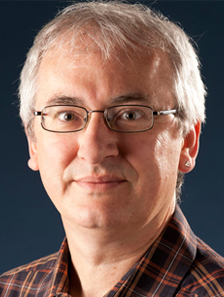 Andreas Haungs合作论文数Institute for Astroparticle Physics, Karlsruhe Institute of Technology;Pierre Auger Observatorium;IceCube-Gen271R. Glasstetter合作论文数71S. Ostapchenko合作论文数70H. Rebel合作论文数70H. Bozdog合作论文数69A. Weindl合作论文数69M. Petcu合作论文数68I. M. Brancus合作论文数68Petra Doll合作论文数68J. Milke合作论文数68
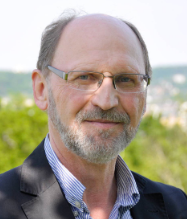 Karl - Heinz Kampert合作论文数Bergische Universitat Wuppertal67R. Obenland合作论文数66W.-D. Apel合作论文数66S. Plewnia合作论文数60Gianni Navarra合作论文数59Yu Kolotaev合作论文数59A. Bercuci合作论文数Institut fur Kernphysik;Forschungszentrum Karlsruhe;Institut fur Kernphysik, Forschungszentrum Karlsruhe59C. Morello合作论文数57
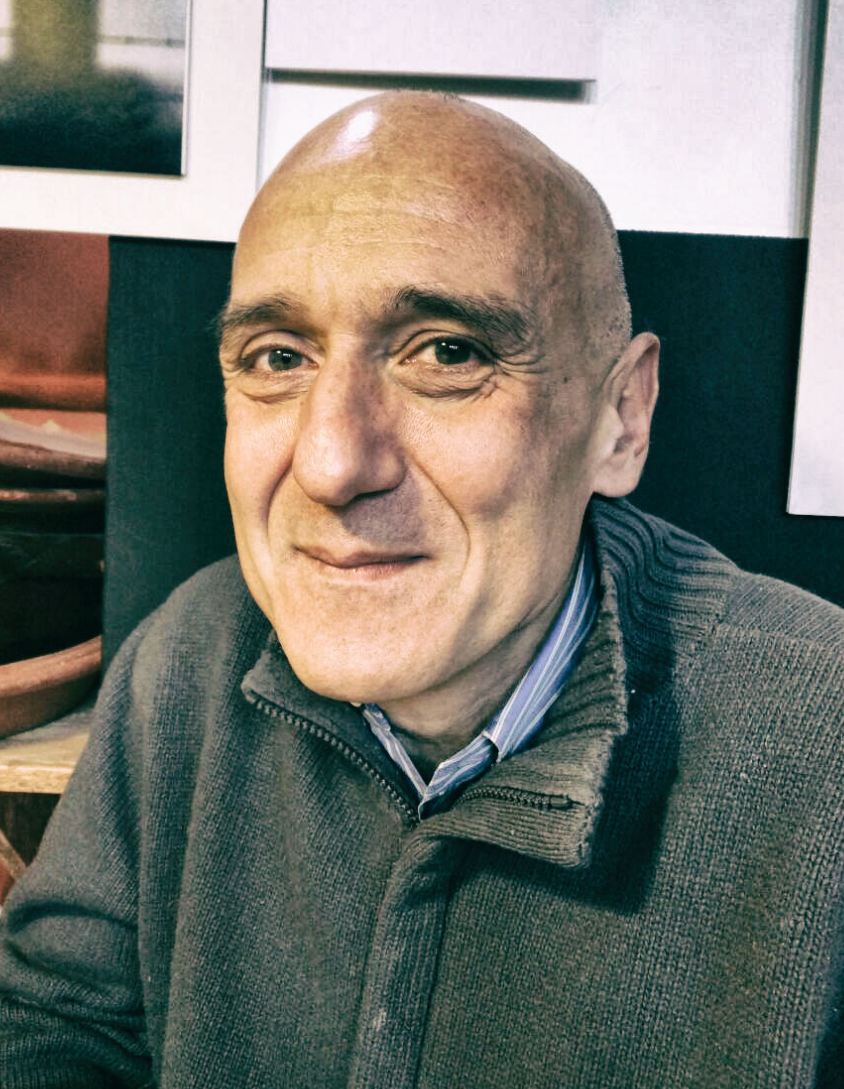 Andrea Chiavassa合作论文数Dipartimento di Fisica, Università degli studi di Torino57
 Gian Carlo Trinchero合作论文数56Piera L. Ghia合作论文数54
 B. Mitrica合作论文数Horia Hulubei Natl Inst Nucl Phys & Engn53S. Over合作论文数52Dirk Zimmermann合作论文数52
 Wolfgang Walkowiak合作论文数Experimental Particle Physics Group, Department of Physics, University of Siegen50F. Badea合作论文数50G. Toma合作论文数49HJ Gils合作论文数48G. Maier合作论文数47
 F. Di Pierro合作论文数47Tanguy Pierog合作论文数47
 Mario Edoardo Bertaina合作论文数Dipartimento di Fisica, Università degli studi di Torino46
 C. Grupen合作论文数Siegen University Department of Physics45Joachim Engler合作论文数45O. Sima合作论文数44j oehlschlager合作论文数40S. Valchierotti合作论文数40
 Markus Roth合作论文数Fachbereich Physik, Technische Universitat Darmstadt40j scholz合作论文数39




