Images from social media can reflect diverse viewpoints, heated arguments, and expressions of creativity --- adding new complexity to search tasks. Researchers working on Content-Based Image Retrieval (CBIR) have traditionally tuned their search algorithms to match filtered results with user search intent. However, we are now bombarded with composite images of unknown origin, authenticity, and even meaning. With such uncertainty, users may not have an initial idea of what the results of a search query should look like. For instance, hidden people, spliced objects, and subtly altered scenes can be difficult for a user to detect initially in a meme image, but may contribute significantly to its composition. We propose a new framework for image retrieval that models object-level regions using image keypoints retrieved from an image index, which are then used to accurately weight small contributing objects within the results, without the need for costly object detection steps. We call this method Needle-Haystack (NH) scoring, and it is optimized for fast matrix operations on CPUs. We show that this method not only performs comparably to state-of-the-art methods in classic CBIR problems, but also outperforms them in fine-grained object- and instance-level retrieval on the Oxford 5K, Paris 6K, Google-Landmarks, and NIST MFC2018 datasets, as well as meme-style imagery from Reddit.
Deriving relationships between images and tracing back their history of modifications are at the core of Multimedia Phylogeny solutions, which aim to combat misinformation through doctored visual media. Nonetheless, most recent image phylogeny solutions cannot properly address cases of forged composite images with multiple donors, an area known as multiple parenting phylogeny (MPP). This paper presents a preliminary undirected graph construction solution for MPP, without any strict assumptions. The algorithm is underpinned by robust image representative keypoints and different geometric consistency checks among matching regions in both images to provide regions of interest for direct comparison. The paper introduces a novel technique to geometrically filter the most promising matches as well as to aid in the shared region localization task. The strength of the approach is corroborated by experiments with real-world cases, with and without image distractors (unrelated cases).
In recent years, software-based face presentation attack detection (PAD) methods have seen a great progress. However, most existing schemes are not able to generalize well in more realistic conditions. The objective of this competition is to evaluate and compare the generalization performances of mobile face PAD techniques under some real-world variations, including unseen input sensors, presentation attack instruments (PAI) and illumination conditions, on a larger scale OULU-NPU dataset using its standard evaluation protocols and metrics. Thirteen teams from academic and industrial institutions across the world participated in this competition. This time typical liveness detection based on physiological signs of life was totally discarded. Instead, every submitted system relies practically on some sort of feature representation extracted from the face and/or background regions using hand-crafted, learned or hybrid descriptors. Interesting results and findings are presented and discussed in this paper.
Departing from traditional digital forensics modeling, which seeks to analyze single objects in isolation, multimedia phylogeny analyzes the evolutionary processes that influence digital objects and collections over time. One of its integral pieces is provenance filtering, which consists of searching a potentially large pool of objects for the most related ones with respect to a given query, in terms of possible ancestors (donors or contributors) and descendants. In this paper, we propose a two-tiered provenance filtering approach to find all the potential images that might have contributed to the creation process of a given query q. In our solution, the first (coarse) tier aims to find the most likely “host” images - the major donor or background - contributing to a composite/doctored image. The search is then refined in the second tier, in which we search for more specific (potentially small) parts of the query that might have been extracted from other images and spliced into the query image. Experimental results with a dataset containing more than a million images show that the two-tiered solution underpinned by the context of the query is highly useful for solving this difficult task.
Face recognition systems based on Convolutional Neural Networks (CNNs) or convolutional architectures currently represent the state of the art, achieving an accuracy comparable to that of humans. Nonetheless, there are two issues that might hinder their adoption on distributed battery-operated devices (e.g., visual sensor nodes, smartphones, and wearable devices). First, convolutional architectures are usually computationally demanding, especially when the depth of the network is increased to maximize accuracy. Second, transmitting the output features produced by a CNN might require a bitrate higher than the one needed for coding the input image. Therefore, in this paper we address the problem of optimizing the energy-rate-accuracy characteristics of a convolutional architecture for face recognition. We carefully profile a CNN implementation on a Raspberry Pi device and optimize the structure of the neural network, achieving a 17-fold speedup without significantly affecting recognition accuracy. Moreover, we propose a coding architecture custom-tailored to features extracted by such model. (C) 2015 Elsevier Inc. All rights reserved.
The ever-increasing number of gadgets being used to create digital content, as well as the easiness in sharing, editing, and republishing this content, brings the problem of dealing with a large amount of digital objects (e.g., images or videos) whose content is very similar. Some issues faced by investigators of digital crimes when analyzing this type of data include finding the original source of a suspect image, and the responsible for first publishing it. It is also challenging to determine how these objects are related to each other. Recent efforts in developing algorithms to find automatically the underlying relationship among groups of digital media objects with similar content have been explored in the multimedia phylogeny field. A tree structure is used to represent the relationship among these objects, inspired by the phylogenetic trees in biology. Discovering whether these objects came from the same source or from different sources is fundamentally a clustering problem: 1) related objects belong to the same cluster (tree) and 2) unrelated objects should fit in different clusters. In this paper, we address the problem of finding these clusters in sets of semantically similar images, prior to tree reconstruction. We propose the combination of manifold learning and spectral clustering approaches, which have been successfully used in different applications embedding the original data into a lower, but meaningful, dimensional space. Experiments with more than 40 000 test cases show that the proposed approach improves the accuracy in finding the correct number of trees in the set, as well as the reconstruction of the phylogeny trees.
In the last few years, the amount of videos distributed online has dramatically increased due to the popularity of media sharing platforms (e.g., YouTube, Vimeo, etc.). However, distributed videos are often edited copies of original content, typically referred to as near duplicates. In this paper, we face the problem of reconstructing a video phylogeny tree, i.e., given a set of near-duplicate videos, we want to reconstruct the relationships between every pair of videos to detect which one generated the others and trace back their evolution history. Solving this problem is of paramount importance when the first published video within a set is sought, e.g., to solve copyright infringement cases or to pinpoint criminal impersonation online. The technique we propose exploits the same rationale of previous works in the field of image and video phylogeny. However, we embed in the commonly used pipeline of operations the possibility of dealing with temporally misaligned and encoded video sequences, thus making the method applicable to user-generated videos shared on online platforms. Results computed on a wide dataset of video sequences highlight the importance of taking care of both coding and misalignment in the reconstruction pipeline.
Nowadays, a significant fraction of the available video content is created by reusing already existing online videos. In these cases, the source video is seldom reused as is. Conversely, it is typically time clipped to extract only a subset of the original frames, and other transformations are commonly applied (e.g., cropping, logo insertion, etc.). In this paper, we analyze a pool of videos related to the same event or topic. We propose a method that aims at automatically reconstructing the content of the original source videos, i.e., the parent sequences, by splicing together sets of near-duplicate shots seemingly extracted from the same parent sequence. The result of the analysis shows how content is reused, thus revealing the intent of content creators, and enables us to reconstruct a parent sequence also when it is no longer available online. In doing so, we make use of a robust-hash algorithm that allows us to detect whether groups of frames are near-duplicates. Based on that, we developed an algorithm to automatically find near-duplicate matchings between multiple parts of multiple sequences. All the near-duplicate parts are finally temporally aligned to reconstruct the parent sequence. The proposed method is validated with both synthetic and real world datasets downloaded from YouTube.
Image phylogeny deals with tracing back parent-child relationships among near duplicates, images that share the same semantic content. This approach results in a visual structure showing the inheritance of semantic content among images, called phylogeny tree. In this paper, we extend upon the image phylogeny's original formulation, which considers that an image may inherit content from only a single parent, to deal with situations whereby an image may inherit it from multiple different parents. Our objective is to find the multiple parenting relationships in a set of images, a problem which we refer to as multiple parenting phylogeny. The proposed solution works by first identifying near-duplicate groups and reconstructing their phylogenies; then among the found groups we determine the one(s) representing the composition images; finally, we detect the parenting relations between those compositions and the source images used to create them.
Nowadays, multimedia objects can be easily modified, shared, and distributed, thus determining the widespread diffusion of multiple near-duplicate versions, i.e., objects obtained applying a set of processing operations to original content. This is the case of images downloaded from sharing platforms, modified (e.g., by performing color correction, splicing, etc.) and re-distributed. The evolution of a group of near-duplicate images (i.e., their phylogeny) is a powerful clue to determine both image authenticity and its origin. For this reason, the forensics community has proposed a set of possible solutions to perform phylogenetic analyses based on image dissimilarity computation. Here, we compare different image dissimilarity metrics, and propose a set of original strategies for image phylogeny tree reconstruction. The validation of the proposed methods is performed on a dataset of image phylogeny trees. Depending on the used evaluation metrics, some approaches are preferable to others according to the results. Hence, an analyst can choose the appropriate method according to its needs.
Automatic face recognition in unconstrained environments is a challenging task. To test current trends in face recognition algorithms, we organized an evaluation on face recognition in mobile environment. This paper presents the results of 8 different participants using two verification metrics. Most submitted algorithms rely on one or more of three types of features: local binary patterns, Gabor wavelet responses including Gabor phases, and color information. The best results are obtained from UNILJ-ALP, which fused several image representations and feature types, and UC-HU, which learns optimal features with a convolutional neural network. Additionally, we assess the usability of the algorithms in mobile devices with limited resources.
As a crucial security problem, anti-spoofing in biometrics, and particularly for the face modality, has achieved great progress in the recent years. Still, new threats arrive inform of better, more realistic and more sophisticated spoofing attacks. The objective of the 2nd Competition on Counter Measures to 2D Face Spoofing Attacks is to challenge researchers to create counter measures effectively detecting a variety of attacks. The submitted propositions are evaluated on the Replay-Attack database and the achieved results are presented in this paper.
Similar to ballistic tests in which we match a gun to its bullets, we can identify a given digital camera that acquired an image under investigation. In this paper, we introduce a method for identifying whether or not an image was captured by a specific digital camera. The method relies on well-known and established noise residual features related to the images under investigation. The novelty of our approach is in the extension of such features considering an “open set” recognition scenario, under which we can not rely on the assumption of full access to all of the potential source cameras. In this case, we model the decision space to take advantage of a few known cameras and carve the decision boundaries to decrease false matches increasing the reliability of image source attribution as an aid for digital forensics in the court of law.
This paper addresses the problem of remote sensing image multi-scale classification by: (i) showing that using multiple scales does improve classification results, but not all scales have the same importance; (ii) showing that image descriptors do not offer the same contribution at all scales, as commonly thought, and some of them are very correlated; (iii) introducing a simple approach to automatically select segmentation scales, descriptors, and classifiers based on correlation and accuracy analysis.
Diabetic retinopathy (DR) is a diabetes development that affects the retina’s blood flow. The effect of DR is the weakening of retina’s vessels, resulting on anything from small hemorrhages to the growth of new blood vessels. If left untreated, DR eventually lead to blindness, and, in fact, this is the leading cause of blindness in persons in the age range of 20 to 74 years in developed countries. One of the most successful means for fighting DR is early diagnosing through the analysis of ocular-fundus images of the human retina. In this paper, we present a new approach to detect retina-related pathologies from ocular-fundus images. Our work is intended for an automatic triage scenario, where patients whose retina is considered not-normal by the system will see a specialist. This implies that automatic screening needs an evaluation criteria that rewards low false negative rates, i.e., we should avoid images incorrectly classified as normal as much as possible. Our solution constructs a visual dictionary of the desired pathology’ important features and classifies whether an ocular-fundus image is normal or a DR candidate. We evaluate the methodology on hard exudates, deep hemorrhages, and microaneurysms, test different parameter configurations, and demonstrate the robustness and reliability of the approach performing cross-data-set validation (using both our own and other publicly available data-sets).
Optimization problems from where no structural information can be obtained arise everyday in many fields of knowledge, increasing the importance of well-performing black-box optimizers. In this paper, we introduce a new approach for global optimization of black-box problems based on the synergistic combination of scaled local searches. By looking farther to the behavior of the problem, the idea is to speed up the search while avoiding it to become locally trapped. The method is fairly compared to other well-performing techniques, showing promising results. A testbed of benchmark problems and image registration problems are considered and the proposed approach outperforms the other algorithms in most cases.
Personal identity verification based on biometrics has received increasing attention since it allows reliable authentication through intrinsic characteristics, such as face, voice, iris, fingerprint, and gait. Particularly, face recognition techniques have been used in a number of applications, such as security surveillance, access control, crime solving, law enforcement, among others. To strengthen the results of verification, biometric systems must be robust against spoofing attempts with photographs or videos, which are two common ways of bypassing a face recognition system. In this paper, we describe an anti-spoofing solution based on a set of low-level feature descriptors capable of distinguishing between 'live' and 'spoof images and videos. The proposed method explores both spatial and temporal information to learn distinctive characteristics between the two classes. Experiments conducted to validate our solution with datasets containing images and videos show results comparable to state-of-the-art approaches.
Content-based image retrieval (CBIR) is a challenging task. Common techniques use only low-level features. However, these solutions can lead to the so-called ‘semantic gap’ problem: images with high feature similarities may be different in terms of user perception. In this paper, our objective is to retrieve images based on color cues which may present some affine transformations. For that, we present CSIR: a new method for comparing images based on discrete distributions of distinctive color and scale image regions. We validate the technique using images with a large range of viewpoints, partial occlusion, changes in illumination, and various domains.
In this paper, we present a new Hybrid Hierarchical Clustering approach for Image Retrieval. Our method combines features from both divisive and agglomerative clustering paradigms in order to yield good-quality clustering solutions with reduced computational cost. We provide several experiments showing that our technique reduces the number of required comparisons to perform a retrieval without significant loss in effectiveness when compared to flat-based solutions.
 Daniel Moreira合作论文数4
 Joel Brogan合作论文数Univ Notre Dame, Dept Comp Sci & Engn, Notre Dame, IN 46556 USA4
 Kevin W. Bowyer合作论文数Department of Computer Science and Engineering, College of Engineering, University of Notre Dame4
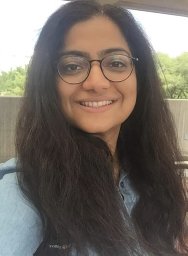 Aparna Bharati合作论文数Dept Comp Sci & Engn, Univ Notre Dame4
 Patrick J. Flynn合作论文数Department of Computer Science & Engineering, College of Engineering, University of Notre Dame;Notre Dame Computer Vision Research Lab, College of Engineering, University of Notre Dame4
 Walter J. Scheirer合作论文数Department of Computer Science and Engineering, University of Notre Dame4
 Allan Pinto合作论文数Institute of Computing, University of Campinas3
 Marco Tagliasacchi合作论文数Microsoft AI3
 Sébastien Marcel合作论文数Idiap Research Institute;University of Lausanne3
 Ricardo Da Silva Torres合作论文数Institute of Computing , University of Campinas , Brazil.3
 Tubaro, S.合作论文数2
 Serkan Kiranyaz合作论文数Electrical Engineering Department, Qatar University2
 Moncef Gabbouj合作论文数Faculty of Information Technology and Communication Sciences, Tampere University2
 Zanoni Dias合作论文数University of Campinas2
 Paolo Bestagini合作论文数Dipartimento di Elettronica, Informazione e Bioingegneria, Politecnico di Milano2
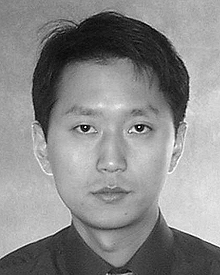 Honglei Zhang合作论文数Ensintek Oy2
 Giovani Chiachia合作论文数Inst Comp, Univ Estadual Campinas2
 Jukka Komulainen合作论文数Center for Machine Vision Research, University of Oulu2
 Daniel González-Jiménez合作论文数Departamento de Teoría de la Señal y Comunicaciones, Universidad de Vigo2
 Filipe De O. Costa合作论文数2
 Fei Peng (彭飞)合作论文数Guangzhou University1Abdelmalik Taleb-Ahmed合作论文数1F Roli合作论文数1
 Fabio A. Faria合作论文数1
 Waltecio Almeida合作论文数1
 Shubham Gupta合作论文数Indian Institute of Technology Delhi1
 Svetlana Volkova合作论文数Vologda State Univ1
 Amir Mohammadi合作论文数Department of Mathematics, Division of Physical Sciences, University of California, San Diego1
 Alberto Oliveira合作论文数University of Campinas1
 Le-Bing Zhang合作论文数School of Computer Science and Electronic Engineering, Hunan University, 410082 Changsha, China1
 Guilherme Folego合作论文数CPQD1
 Azeddine Benlamoudi合作论文数Univ Ouargla, Lab LAGE, Ouargla, Algeria1
 Shruti Bhilare合作论文数Indian Institute of Technology Indore1
 William Dias合作论文数Institute of Computing, University of Campinas1
 Gabriel Bertocco合作论文数Univ Estadual Campinas, Inst Comp, Campinas, SP, Brazil1
 Djamel Samai合作论文数Univ Ouargla, Fac Nouvelles Technol Informat & Commun, Lab Genie Elect, Ouargla 30000, Algeria1
 Luca Bondi合作论文数Polytechnic University of Milan1
 Artur Costa Pazo合作论文数Gradiant Vigo1Sushil Bhattacharjee合作论文数Idiap Research Institute1
 Salah Eddine Bekhouche合作论文数Huawei Finland R&D1
 Ibrahim Ahmad合作论文数1
 Zahid Akhtar合作论文数University of Memphis1
 Silvia Lameri合作论文数1
 Abdenour Hadid合作论文数Sorbonne Centre for Artificial Intelligence, Sorbonne University Abu Dhabi;University of Valenciennes1
 Arjan Kuijper合作论文数Fraunhofer Institute for Computer Graphics Research1
 Mauro Barni合作论文数Laboratory of Telematics and Telecommunications, Department of Information Engineering and Mathematics, University of Siena1
 Jianwei Yang合作论文数Meta SuperIntelligence Lab1
 Zhen Lei (雷震)合作论文数National Laboratory of Pattern Recognition, Institute of Automation, Chinese Academy of Sciences;School of Artificial Intelligence, University of Chinese Academy of Sciences;Centre for Artificial Intelligence and Robotics, Hong Kong Institute of Science & Innovation, Chinese Academy of Sciences1
 Jacques Wainer合作论文数Instituto de Computac;Universidade Estadual de Campinas;Instituto de Computac, Universidade Estadual de Campinas1




