Using a data sample of $$\sqrt{s}=13\,\text {TeV}$$ proton-proton collisions collected by the CMS experiment at the LHC in 2017 and 2018 with an integrated luminosity of $$103\text {~fb}^{-1}$$ , the $$\text {B}^{0}_{\mathrm{s}} \rightarrow \uppsi (\text {2S})\text {K}_\mathrm{S}^{0}$$ and $$\text {B}^{0} \rightarrow \uppsi (\text {2S})\text {K}_\mathrm{S}^{0} \uppi ^+\uppi ^-$$ decays are observed with significances exceeding 5 standard deviations. The resulting branching fraction ratios, measured for the first time, correspond to $${\mathcal {B}}(\text {B}^{0}_{\mathrm{s}} \rightarrow \uppsi (\text {2S})K_\mathrm{S}^{0})/{\mathcal {B}}(\text {B}^{0}\rightarrow \uppsi (\text {2S})K_\mathrm{S}^{0}) = (3.33 \pm 0.69 (\text {stat})\, \pm 0.11\,(\text {syst}) \pm 0.34\,(f_{\mathrm{s}}/f_{\mathrm{d}})) \times 10^{-2}$$ and $${\mathcal {B}}(\text {B}^{0} \rightarrow \uppsi (\text {2S})\text {K}_\mathrm{S}^{0} \uppi ^{+} \uppi ^{-})/ {\mathcal {B}}(\text {B}^{0} \rightarrow \uppsi (\text {2S})\text {K}^{0}_{\mathrm{S}}) = 0.480 \pm 0.013\,(\text {stat}) \pm 0.032\,(\text {syst})$$ , where the last uncertainty in the first ratio is related to the uncertainty in the ratio of production cross sections of $$\hbox {B}^{0}_{\mathrm{s}}$$ and $$\hbox {B}^{0}$$ mesons, $$f_{\mathrm{s}}/f_{\mathrm{d}}$$ .
A combination of searches for top squark pair production using proton-proton collision data at a center-of-mass energy of 13 TeV at the CERN LHC, corresponding to an integrated luminosity of 137 fb(-1) collected by the CMS experiment, is presented. Signatures with at least 2 jets and large missing transverse momentum are categorized into events with 0, 1, or 2 leptons. New results for regions of parameter space where the kinematical properties of top squark pair production and top quark pair production are very similar are presented. Depending on themodel, the combined result excludes a top squarkmass up to 1325 GeV for amassless neutralino, and a neutralinomass up to 700 GeV for a top squarkmass of 1150 GeV. Top squarks with masses from 145 to 295 GeV, for neutralino masses from 0 to 100 GeV, with a mass difference between the top squark and the neutralino in a window of 30 GeV around the mass of the top quark, are excluded for the first time with CMS data. The results of theses searches are also interpreted in an alternative signal model of dark matter production via a spin-0 mediator in association with a top quark pair. Upper limits are set on the cross section for mediator particle masses of up to 420 GeV.
Measurements of differential and double-differential cross sections of top quark pair ($\text{t}\overline{\text{t}}$) production are presented in the lepton+jets channels with a single electron or muon and jets in the final state. The analysis combines for the first time signatures of top quarks with low transverse momentum $p_\text{T}$, where the top quark decay products can be identified as separated jets and isolated leptons, and with high $p_\text{T}$, where the decay products are collimated and overlap. The measurements are based on proton-proton collision data at $\sqrt{s} = $ 13 TeV collected by the CMS experiment at the LHC, corresponding to an integrated luminosity of 137 fb$^{-1}$. The cross sections are presented at the parton and particle levels, where the latter minimizes extrapolations based on theoretical assumptions. Most of the measured differential cross sections are well described by standard model predictions with the exception of some double-differential distributions. The inclusive $\text{t}\overline{\text{t}}$ production cross section is measured to be $\sigma_{\text{t}\overline{\text{t}}} = $ 791 $\pm$ 25 pb, which constitutes the most precise measurement in the lepton+jets channel to date.
The second-order Fourier coefficients (v(2)) characterizing the azimuthal distributions of Y(1S) and Y(2S) mesons produced in PbPb collisions at root s(NN) = 5.02 TeV are studied. The Y mesons are reconstructed in their dimuon decay channel, as measured by the CMS detector. The collected data set corresponds to an integrated luminosity of 1.7 nb(-1). The scalar product method is used to extract the v2 coefficients of the azimuthal distributions. Results are reported for the rapidity range vertical bar y vertical bar < 2.4, in the transverse momentum interval 0 < pT < 50 GeV/c, and in three centrality ranges of 10-30%, 30-50% and 50-90%. In contrast to the J/psi mesons, the measured v(2) values for the Y mesons are found to be consistent with zero. (C) 2021 The Author(s). Published by Elsevier B.V.
A measurement is presented of electroweak (EW) production of a W boson in association with two jets in proton-proton collisions at s = 13 Te . The data sample was recorded by the CMS Collaboration at the LHC and corresponds to an integrated luminosity of 35.9 fb - 1 . The measurement is performed for the l ν jj final state (with l ν indicating a lepton-neutrino pair, and j representing the quarks produced in the hard interaction) in a kinematic region defined by invariant mass m jj \u003e 120 Ge and transverse momenta p T j \u003e 25 Ge . The cross section of the process is measured in the electron and muon channels yielding σ EW ( W jj ) = 6.23 ± 0.12 (stat) ± 0.61 (syst) pb per channel, in agreement with leading-order standard model predictions. The additional hadronic activity of events in a signal-enriched region is studied, and the measurements are compared with predictions. The final state is also used to perform a search for anomalous trilinear gauge couplings. Limits on anomalous trilinear gauge couplings associated with dimension-six operators are given in the framework of an effective field theory. The corresponding 95% confidence level intervals are - 2.3 c W W W / Λ 2 2.5 Te - 2 , - 8.8 c W / Λ 2 16 Te - 2 , and - 45 c B / Λ 2 46 Te - 2 . These results are combined with the CMS EW Zjj analysis, yielding the constraint on the c W W W coupling: - 1.8 c W W W / Λ 2 2.0 Te - 2 .
A search is conducted for a low-mass charged Higgs boson produced in a top quark decay and subsequently decaying into a charm and a strange quark. The data sample was recorded in proton-proton collisions at $\\sqrt{s}=$ 13 TeV by the CMS experiment at the LHC and corresponds to an integrated luminosity of 35.9 fb$^{-1}$. The search is performed in the process of top quark pair production, where one top quark decays to a bottom quark and a charged Higgs boson, and the other to a bottom quark and a W boson. With the W boson decaying to a charged lepton (electron or muon) and a neutrino, the final state comprises an isolated lepton, missing transverse momentum, and at least four jets, of which two are tagged as b jets. To enhance the search sensitivity, one of the jets originating from the charged Higgs boson is required to satisfy a charm tagging selection. No significant excess beyond standard model predictions is found in the dijet invariant mass distribution. An upper limit in the range 1.68-0.25% is set on the branching fraction of the top quark decay to the charged Higgs boson and bottom quark for a charged Higgs boson mass between 80 and 160 GeV.
Anisotropies in the initial energy density distribution of the quark-gluon plasma created in high energy heavy ion collisions lead to anisotropies in the azimuthal distributions of the final-state particles known as collective anisotropic flow. Fourier harmonic decomposition is used to quantify these anisotropies. The higher-order harmonics can be induced by the same order anisotropies (linear response) or by the combined influence of several lower order anisotropies (nonlinear response) in the initial state. The mixed higher-order anisotropic flow and nonlinear response coefficients of charged particles are measured as functions of transverse momentum and centrality in collisions at nucleon-nucleon center-of-mass energies and 5.02 with the CMS detector. The results are compared with viscous hydrodynamic calculations using several different initial conditions, as well as microscopic transport model calculations. None of the models provides a simultaneous description of the mixed higher-order flow harmonics and nonlinear response coefficients.
Events with no charged particles produced between the two leading jets are studied in proton-proton collisions at
Anisotropies in the initial energy density distribution of the quark-gluon plasma created in high energy heavy ion collisions lead to anisotropies in the azimuthal distributions of the final-state particles known as collective anisotropic flow. Fourier harmonic decomposition is used to quantify these anisotropies. The higher-order harmonics can be induced by the same order anisotropies (linear response) or by the combined influence of several lower order anisotropies (nonlinear response) in the initial state. The mixed higher-order anisotropic flow and nonlinear response coefficients of charged particles are measured as functions of transverse momentum and centrality in PbPb collisions at nucleon-nucleon center-of-mass energies $\\sqrt{S}$$_{NN}$=2.76 and 5.02TeV with the CMS detector. The results are compared with viscous hydrodynamic calculations using several different initial conditions, as well as microscopic transport model calculations. None of the models provides a simultaneous description of the mixed higher-order flow harmonics and nonlinear response coefficients.
Abstract Anisotropies in the initial energy density distribution of the quark-gluon plasma created in high energy heavy ion collisions lead to anisotropies in the azimuthal distributions of the final-state particles known as collective anisotropic flow. Fourier harmonic decomposition is used to quantify these anisotropies. The higher-order harmonics can be induced by the same order anisotropies (linear response) or by the combined influence of several lower order anisotropies (nonlinear response) in the initial state. The mixed higher-order anisotropic flow and nonlinear response coefficients of charged particles are measured as functions of transverse momentum and centrality in $$\mathrm {PbPb}$$ PbPb collisions at nucleon-nucleon center-of-mass energies $$\sqrt{\smash [b]{s_{_{\mathrm {NN}}}}} = 2.76$$ sNN=2.76 and 5.02$$\,\text {TeV}$$ TeV with the CMS detector. The results are compared with viscous hydrodynamic calculations using several different initial conditions, as well as microscopic transport model calculations. None of the models provides a simultaneous description of the mixed higher-order flow harmonics and nonlinear response coefficients.
Central exclusive and semiexclusive production of [see pdf] pairs is measured with the CMS detector in proton-proton collisions at the LHC at center-of-mass energies of 5.02 and 13TeV. The theoretical description of these nonperturbative processes, which have not yet been measured in detail at the LHC, poses a significant challenge to models. The two pions are measured and identified in the CMS silicon tracker based on specific energy loss, whereas the absence of other particles is ensured by calorimeter information. The total and differential cross sections of exclusive and semiexclusive central [see pdf] production are measured as functions of invariant mass, transverse momentum, and rapidity of the [see pdf] system in the fiducial region defined as transverse momentum [see pdf] and pseudorapidity [see pdf] . The production cross sections for the four resonant channels , [see pdf] , , and are extracted using a simple model. These results represent the first measurement of this process at the LHC collision energies of 5.02 and 13TeV.
Two related searches for phenomena beyond the standard model (BSM) are performed using events with hadronic jets and significant transverse momentum imbalance. The results are based on a sample of proton-proton collisions at a center-of-mass energy of 13 Te , collected by the CMS experiment at the LHC in 2016-2018 and corresponding to an integrated luminosity of 137 fb - 1 . The first search is inclusive, based on signal regions defined by the hadronic energy in the event, the jet multiplicity, the number of jets identified as originating from bottom quarks, and the value of the kinematic variable M T 2 for events with at least two jets. For events with exactly one jet, the transverse momentum of the jet is used instead. The second search looks in addition for disappearing tracks produced by BSM long-lived charged particles that decay within the volume of the tracking detector. No excess event yield is observed above the predicted standard model background. This is used to constrain a range of BSM models that predict the following: the pair production of gluinos and squarks in the context of supersymmetry models conserving R-parity, with or without intermediate long-lived charginos produced in the decay chain; the resonant production of a colored scalar state decaying to a massive Dirac fermion and a quark; or the pair production of scalar and vector leptoquarks each decaying to a neutrino and a top, bottom, or light-flavor quark. In most of the cases, the results obtained are the most stringent constraints to date.
Anisotropies in the initial energy density distribution of the quark-gluon plasma created in high energy heavy ion collisions lead to anisotropies in the azimuthal distributions of the final-state particles known as collective anisotropic flow. Fourier harmonic decomposition is used to quantify these anisotropies. The higher-order harmonics can be induced by the same order anisotropies (linear response) or by the combined influence of several lower order anisotropies (nonlinear response) in the initial state. The mixed higher-order anisotropic flow and nonlinear response coefficients of charged particles are measured as functions of transverse momentum and centrality in PbPb collisions at nucleon-nucleon center-of-mass energies s NN = 2.76 and 5.02 TeV with the CMS detector. The results are compared with viscous hydrodynamic calculations using several different initial conditions, as well as microscopic transport model calculations. None of the models provides a simultaneous description of the mixed higher-order flow harmonics and nonlinear response coefficients.
AbstractCentral exclusive and semiexclusive production of "Equation missing" pairs is measured with the CMS detector in proton-proton collisions at the LHC at center-of-mass energies of 5.02 and 13TeV. The theoretical description of these nonperturbative processes, which have not yet been measured in detail at the LHC, poses a significant challenge to models. The two pions are measured and identified in the CMS silicon tracker based on specific energy loss, whereas the absence of other particles is ensured by calorimeter information. The total and differential cross sections of exclusive and semiexclusive central "Equation missing" production are measured as functions of invariant mass, transverse momentum, and rapidity of the "Equation missing" system in the fiducial region defined as transverse momentum "Equation missing" and pseudorapidity "Equation missing". The production cross sections for the four resonant channels "Image missing" , "Equation missing", "Image missing" , and "Image missing" are extracted using a simple model. These results represent the first measurement of this process at the LHC collision energies of 5.02 and 13TeV.
Author(s): Cerri, A; Gligorov, VV; Malvezzi, S; Camalich, J Martin; Zupan, J; Akar, S; Alimena, J; Allanach, BC; Altmannshofer, W; Anderlini, L; Archilli, F; Azzi, P; Banerjee, S; Barter, W; Barton, AE; Bauer, M; Belyaev, I; Benson, S; Bettler, M; Bhattacharya, R; Bifani, S; Birnkraut, A; Bishara, F; Blake, T; Blusk, S; Boos, E; Borsato, M; Bozzi, C; Bragagnolo, A; Brod, J; Brodzicka, J; Buras, AJ; Cadamuro, L; Carbone, A; Carena, M; Carmona, A; Cavallo, FR; Celis, A; Cepeda, M; Chahal, GS; Chala, M; Charles, J; Charles, M; Chen, KF; Chobanova, V; Chrzaszcz, M; Ciezarek, G; Cirigliano, V; Ciuchini, M; Cliff, H; Cogan, J; Colangelo, G; Contu, A; Covarelli, R; Cowan, G; Crivellin, A; Du0027Ambrosio, G; Du0027Onofrio, M; Dang, NP; Davis, A; Francisco, OA De Aguiar; Bruyn, K De; Sanctis, U De; Torre, H De la; Dekens, W; Deliot, F; Morte, M Della; Demers, S; Derkach, D; Deschamps, O; Descotes-Genon, S; Dettori, F; Canto, A Di; Dinardo, M; Dini, P; Dordei, F; Dorigo, M; Reis, A dos; Dudko, L; Dufour, L; Durieux, G; Dutta, S; Dziurda, A; Eitschberger, U; Esposito, A | Abstract: Motivated by the success of the flavour physics programme carried out over the last decade at the Large Hadron Collider (LHC), we characterize in detail the physics potential of its High-Luminosity and High-Energy upgrades in this domain of physics. We document the extraordinary breadth of the HL/HE-LHC programme enabled by a putative Upgrade II of the dedicated flavour physics experiment LHCb and the evolution of the established flavour physics role of the ATLAS and CMS general purpose experiments. We connect the dedicated flavour physics programme to studies of the top quark, Higgs boson, and direct high-$p_T$ searches for new particles and force carriers. We discuss the complementarity of their discovery potential for physics beyond the Standard Model, affirming the necessity to fully exploit the LHCu0027s flavour physics potential throughout its upgrade eras.
This Letter reports measurements of differential cross sections for the production of two Z bosons in association with jets in proton-proton collisions at root s = 8 and 13 TeV. The analysis is based on data samples collected at the LHC with the CMS detector, corresponding to integrated luminosities of 19.7 and 35.9 fb(-1) at 8 and 13 TeV, respectively. The measurements are performed in the leptonic decay modes ZZ -> l(+)l(-)l'(+)l'(-), where, l, l' = e, mu The differential cross sections as a function of the jet multiplicity, the transverse momentum p(T), and pseudorapidity of the P-T-leading and subleading jets are presented. In addition, the differential cross sections as a function of variables sensitive to the vector boson scattering, such as the invariant mass of the two P-T-leading jets and their pseudorapidity separation, are reported. The results are compared to theoretical predictions and found in good agreement within the theoretical and experimental uncertainties. (C) 2018 The Author(s). Published by Elsevier B.V.
This report comprises the outcome of five working groups that have studied the physics potential of the high-luminosity phase of the LHC (HL-LHC) and the perspectives for a possible future high-energy LHC (HE-LHC).The working groups covered a broad range of topics: Standard Model measurements, studies of the properties ofthe Higgs boson, searches for phenomena beyond the Standard Model, flavor physics of heavy quarks and leptonsand studies of QCD matter at high density and temperature.The work is prepared as an input to the ongoing process of updating the European Strategy for Particle Physics,a process that will be concluded in May 2020.
 W. H. Smith合作论文数252
 Giuseppe Barbagli合作论文数Istituto Nazionale di Fisica Nucleare250
 Michele Arneodo合作论文数Università del Piemonte Orientale250
 Roberto Carlin合作论文数Dipartimento di Fisica e Astronomia, University of Padua;DESY250B. Bylsma合作论文数245
 Kenneth Long合作论文数Department of Physics, Faculty of Natural Sciences, Imperial College London244
 L. Stanley Durkin合作论文数Department of Physics, College of Arts and Sciences, The Ohio State University237Roberto Sacchi合作论文数226A Solano合作论文数223
 Costas Foudas合作论文数Physics Department, University of Ioannina222T. Y. Ling合作论文数222
 Ulrike Behrens合作论文数Deutsches Elektronen-Synchrotron220Krzysztof Piotrzkowski合作论文数Université catholique de Louvain217
 Robert Klanner合作论文数Department of Physics, Universität Hamburg207
 Dongchul Son合作论文数198
 Elisabetta Gallo合作论文数Deutsches Elektronen-Synchrotron;Universität Hamburg196
 Alexander Tapper合作论文数Department of Physics, Faculty of Natural Sciences, Imperial College London196
 Marta Ruspa合作论文数Università del Piemonte Orientale192
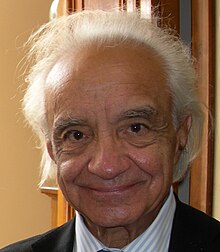 Antonino Zichichi合作论文数University of Bologna187
 Kerstin Borras合作论文数DESY;RWTH Aachen University186G. P. Heath合作论文数185
 Andrea Contin合作论文数182R Mankel合作论文数181D. Notz合作论文数180Henri Kowalski合作论文数179W. Hain合作论文数179
 Christopher Youngman合作论文数179Tobias M. Haas合作论文数178G. Sartorelli合作论文数177A. Bamberger合作论文数177
 Ulrich Schneekloth合作论文数177V Monaco合作论文数176
 Helen Heath合作论文数School of Physics, University of Bristol176
 Peter J. Bussey合作论文数School of Physics & Astronomy, University of Glasgow175Claudia Glasman合作论文数Universidad Autónoma de Madrid175Erich Lohrmann合作论文数175I. Gialas合作论文数174J. E. Cole合作论文数173Don David Reeder合作论文数173E. Hilger合作论文数173
 Tony Doyle合作论文数School of Physics and Astronomy, University of Glasgow172
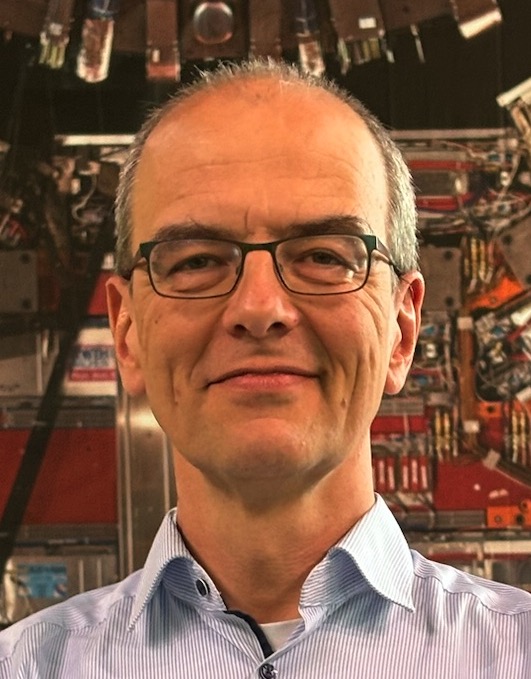 Andreas B. Meyer合作论文数Deutsches Elektronen-Synchrotron;Hamburg University171
 Matthias Kasemann合作论文数Deutsche Elektronen-Synchrotron171D. H. Saxon合作论文数170P. Schleper合作论文数170A. Margotti合作论文数170
 Allen Caldwell合作论文数Max Planck Institute for Physics170B. Musgrave合作论文数170G. Bari合作论文数170




