The nested Extremum Seeking (nES) algorithm is a model-free optimization method that has been shown to converge to a neighborhood of a Nash equilibrium. In this work, we demonstrate that the same nES dynamics can instead be made to converge to a neighborhood of a Stackelberg (leader–follower) equilibrium by imposing a different scaling law on the algorithm's design parameters. For the two–level nested case, using Lie–bracket averaging and singular perturbation arguments, we provide a rigorous stability proof showing semi-global practical asymptotic convergence to a Stackelberg equilibrium under appropriate time-scale separation. The results reveal that equilibrium selection, Nash versus Stackelberg, depends not on modifying the closed-loop dynamics, but on the hierarchical scaling of design parameters and the induced time-scale structure. We demonstrate this effect using a simple quadratic example and the canonical Fish War game. The Stackelberg variant of nES provides a model-free framework for hierarchical optimization in multi-time-scale systems, with potential applications in power grids, networked dynamical systems, and tuning of particle accelerators.
PDE foundation models are typically pretrained on large, diverse corpora of PDE datasets and can be adapted to new settings with limited task-specific data. However, most downstream evaluations focus on forward problems, such as autoregressive rollout prediction. In this work, we study an inverse problem in inertial confinement fusion (ICF): estimating system parameters (inputs) from multi-modal, snapshot-style observations (outputs). Using the open JAG benchmark, which provides hyperspectral X-ray images and scalar observables per simulation, we finetune the PDE foundation model and train a lightweight task-specific head to jointly reconstruct hyperspectral images and regress system parameters. The fine-tuned model achieves accurate hyperspectral reconstruction (test MSE 1.2e-3) and strong parameter-estimation performance (up to R^2=0.995). Data-scaling experiments (5
Reinforcement learning has shown strong performance in robotic manipulation, but learned policies often degrade in performance when test conditions differ from the training distribution. This limitation is especially important in contact-rich tasks such as pushing and pick-and-place, where changes in goals, contact conditions, or robot dynamics can drive the system out-of-distribution at inference time. In this paper, we investigate a hybrid controller that combines reinforcement learning with bounded extremum seeking to improve robustness under such conditions. In the proposed approach, deep deterministic policy gradient (DDPG) policies are trained under standard conditions on the robotic pushing and pick-and-place tasks, and are then combined with bounded ES during deployment. The RL policy provides fast manipulation behavior, while bounded ES ensures robustness of the overall controller to time variations when operating conditions depart from those seen during training. The resulting controller is evaluated under several out-of-distribution settings, including time-varying goals and spatially varying friction patches.
We generalize the Safe Extremum Seeking algorithm to address the minimization of an unknown objective function subject to multiple unknown inequality and equality constraints, relying on recent results of gradient flow systems. These constraints may represent safety or other critical conditions. The proposed ES algorithm functions as a general nonlinear programming tool, offering practical maintenance of all constraints and semiglobal practical asymptotic stability, utilizing a Lyapunov argument on the penalty function and the set-valued Lie derivative. The efficacy of the algorithm is demonstrated on a 2D problem.
We present Assignably Safe Extremum Seeking (ASfES), an algorithm designed to minimize a measured objective function while maintaining a measured metric of safety (a control barrier function or CBF) be positive in a practical sense. We ensure that for trajectories with safe initial conditions, the violation of safety can be made arbitrarily small with appropriately chosen design constants. We also guarantee an assignable “attractivity” rate: from unsafe initial conditions, the trajectories approach the safe set, in the sense of the measured CBF, at a rate no slower than a user-assigned rate. Similarly, from safe initial conditions, the trajectories approach the unsafe set, in the sense of the CBF, no faster than the assigned attractivity rate. The feature of assignable attractivity is not present in the semiglobal version of safe extremum seeking, where the semiglobality of convergence is achieved by slowing the adaptation. We also demonstrate local convergence of the parameter to a neighborhood of the minimum of the objective function constrained to the safe set. The ASfES algorithm and analysis are multivariable, but we also extend the algorithm to a Newton-Based ASfES scheme (NB-ASfES) which we show is only useful in the scalar case. The proven properties of the designs are illustrated through simulation examples.
The nested Extremum Seeking (nES) algorithm is a model-free optimization method for tuning system parameters across multiple objective functions using bounded extremum seeking. Using weak-limit averaging and singular perturbation techniques, we establish a rigorous stability result proving semiglobal practical convergence to a Nash equilibrium. These results suggest that nES provides a principled approach for feedback-based tuning of coupled objectives, including settings which admit a game-theoretic interpretation.
Generative diffusion models are the state-of-the-art generative AI/ML methods for generating accurate representations of high-dimensional objects including high resolution images and videos directly from text-based descriptions and mapping amino acid sequences to 3D protein structures. These models have the potential to be incredibly useful for applications such as non-invasive diagnostics or digital twins for complex dynamic systems. For example, for charged particle beams in particle accelerators, generative diffusion models have been created that act as non-invasive virtual phase space beam diagnostics for the electron beam in the European X-ray FEL [1], multimodal and physics-constrained adaptively guided generative diffusion has been developed for the HiRES compact ultra-fast electron diffraction accelerator at Lawrence Berkeley National Laboratory [2], [3], and a latent diffusion model is being developed for solving an extreme inverse problem of mapping accelerating resonance cavity setting, magnet settings, and vectors of beam monitor readings to the detailed phase space projections of the associated charged particle beams for the LANSCE linear particle accelerator at Los Alamos National Laboratory [4]. This presentation starts with a general overview of and introduction to generative diffusion models and how we are working on incorporating physics constraints and adaptive feedback control within their architectures for time-varying complex dynamic systems [5], [6]. We then present results on a new autoregressive latent diffusion model for predicting the evolution of multiple fields (mass density, pressure, velocity, and magnetic field components) for magnetohydrodynamics. We demonstrate the model's ability to roll out predictions autoregressively based only on initial conditions, quantify the physics preserving abilities of the model, demonstrated methods to build in hard physics constraints. Finally, demonstrating this method's potential to serve as a noninvasive plasma diagnostic, we show how adaptive feedback can be used to make the model more robust based on sparse diagnostics/measurements.
Generative deep learning has recently emerged as a transformational technology for a wide range of tasks, including image generation from user-defined captions, prediction of 3D protein structures directly from DNA sequences, and large language models (LLMs) that can write custom computer code based on user prompts. One major challenge faced by machine learning (ML)- and artificial intelligence (AI)-based tools is that of time-varying systems or systems with distribution shift. ML typically relies on brute-force retraining to readjust learned models when systems change. Extremum seeking (ES) is a model-independent adaptive feedback technique that can be used to stabilize unknown and open-loop unstable time-varying dynamic systems and to optimize their analytically unknown time-varying output functions. ES is model independent and robust to both noise and time variations. This article provides a brief review of several generative deep learning techniques and how they have been combined with ES so that while the generative models act as highly detailed virtual diagnostics of otherwise inaccessible system states, incorporating adaptive feedback within their latent embeddings increases their robustness for use with uncertain and time-varying systems. The approach is demonstrated with applications for time-varying charged particle beams in particle accelerators.
We address the problem of recovering a time-varying 4D distribution from a sparse sequence of 2D projections - analogous to novel-view synthesis from sparse cameras, but applied to the 4D transverse phase space density ρ(x,p_x,y,p_y) of charged particle beams. Direct single shot measurement of this high-dimensional distribution is physically impossible in real particle accelerator systems; only limited 1D or 2D projections are accessible. We propose PhaseFlow4D, a feedback-guided latent diffusion model that reconstructs and tracks the full 4D phase space from incomplete 2D observations alone, with built-in hard physics constraints. Our core technical contribution is a 4D VAE whose decoder generates the full 4D phase space tensor, from which 2D projections are analytically computed and compared against 2D beam measurements. This projection-consistency constraint guarantees physical correctness by construction - not as a soft penalty, but as an architectural prior. An adaptive feedback loop then continuously tunes the conditioning vector of the latent diffusion model to track time-varying distributions online without retraining. We validate on multi-particle simulations of heavy-ion beams at the Facility for Rare Isotope Beams (FRIB), where full physics simulations require ∼6 hours on a 100-core HPC system. PhaseFlow4D achieves accurate 4D reconstructions 11000× faster while faithfully tracking distribution shifts under time-varying source conditions - demonstrating that principled generative reconstruction under incomplete observations transfers robustly beyond visual domains.
A conditionally guided generative latent diffusion process that is trained on a set of experimental processing parameters and their associated resulting electron microscope images of the electrodeposition process is able to interpolate between processing parameters in a physically consistent way. Electrodeposition of rhenium with pulse and pulse-reverse waveforms is used as a model system, and the process is adaptable to other electrodeposition, electropolishing, or corrosion processes. The method is able to extrapolate, predicting estimates of material morphologies for experimental setups unseen in the training data. The results are demonstrated with experimental data.
This work presents a new bidirectional autoregressive latent diffusion approach for predicting the evolution of multiple fields (mass density, pressure, velocity, and magnetic field components) for magnetohydrodynamics. We show that this bidirectional flow can be used as a self-supervised consistency metric for uncertainty and error estimation, which enables the model to estimate test-time uncertainty and error without access to ground truth, by comparing how closely flowing forwards and backwards in time returns to the same predicted fields. We also demonstrate this methods's potential to serve as a non-invasive plasma diagnostic, and show how adaptive feedback can be used to make the model more robust based on sparse diagnostics or limited views/measurements.
Transverse beam parameters in particle accelerators are commonly described using the Twiss parameters, which are experimentally accessible yet inherently limited because they neglect correlations between different transverse coordinates. Such correlations frequently arise from uncompensated cathode magnetic fields or misaligned focusing quadrupoles, affecting beam quality and accelerator performance. To address this limitation, we propose and validate a novel diagnostic method for the complete four-dimensional (4D) transverse beam matrix. Our method involves passing the beam through a beamline comprising both conventional and skew quadrupole magnets, followed by downstream measurements of the resulting two-dimensional (2D) beam profiles. These measurements represent distinct 2D projections of the underlying 4D transverse phase-space distribution. By systematically varying quadrupole strengths, multiple independent projections of the beam phase space are obtained. We reconstruct the original 4D beam matrix from these measured projections using an optimization-based least-square fit, providing fast and robust reconstruction regardless of the specific beamline configuration. Through extensive numerical simulations and realistic particle-tracking studies, we demonstrate the diagnostic's accuracy, robustness, and capability to achieve reconstruction uncertainties smaller than measurement errors, particularly when employing sufficient numbers of quadrupole scans. This method presents a powerful and flexible approach for comprehensive beam characterization and accelerator tuning.
Virtual beam diagnostics relies on computationally intensive beam dynamics simulations where high-dimensional charged particle beams evolve through the accelerator. We propose Latent Evolution Model (LEM), a hybrid machine learning framework with an autoencoder that projects high-dimensional phase spaces into lower-dimensional representations, coupled with transformers to learn temporal dynamics in the latent space. This approach provides a common foundational framework addressing multiple interconnected challenges in beam diagnostics. For forward modeling, a Conditional Variational Autoencoder (CVAE) encodes 15 unique projections of the 6D phase space into a latent representation, while a transformer predicts downstream latent states from upstream inputs. For inverse problems, we address two distinct challenges: (a) predicting upstream phase spaces from downstream observations by utilizing the same CVAE architecture with transformers trained on reversed temporal sequences along with aleatoric uncertainty quantification, and (b) estimating RF settings from the latent space of the trained LEM using a dedicated dense neural network that maps latent representations to RF parameters. For tuning problems, we leverage the trained LEM and RF estimator within a Bayesian optimization framework to determine optimal RF settings that minimize beam loss. This paper summarizes our recent efforts and demonstrates how this unified approach effectively addresses these traditionally separate challenges.
In this paper, we study the use of robust model independent bounded extremum seeking (ES) feedback control to improve the robustness of deep reinforcement learning (DRL) controllers for a class of nonlinear time-varying systems. DRL has the potential to learn from large datasets to quickly control or optimize the outputs of many-parameter systems, but its performance degrades catastrophically when the system model changes rapidly over time. Bounded ES can handle time-varying systems with unknown control directions, but its convergence speed slows down as the number of tuned parameters increases and, like all local adaptive methods, it can get stuck in local minima. We demonstrate that together, DRL and bounded ES result in a hybrid controller whose performance exceeds the sum of its parts with DRL taking advantage of historical data to learn how to quickly control a many-parameter system to a desired setpoint while bounded ES ensures its robustness to time variations. We present a numerical study of a general time-varying system and a combined ES-DRL controller for automatic tuning of the Low Energy Beam Transport section at the Los Alamos Neutron Science Center linear particle accelerator.
Electrodeposition involves many control parameters. Choices of solvent, electrolytes, complexing agents, adsorbents, temperature, and power settings introduce myriad choices in processing conditions. Though many individual chemical and physical processes that influence choices in these processing conditions are understood at some level, the detailed interdependencies are difficult to unravel. Using experience and wealth of past studies, researchers can hypothesize parameters to use when developing deposition methods for new systems. However, trial and error remain integral to the development process, wherein many parameters are varied, and resulting coatings are characterized. Recent revolutionary advances in pulse and pulse-reverse power and electrolyte developments only add to the complexity; controlled current or voltage, on/off/reverse heights and durations alone add many variables. High throughput methods are being developed to more rapidly screen deposition parameters, in which deposition variables are varied and resulting films are characterized by methods including optical microscopy. In some cases in situ characterization methods have been demonstrated and remain in development, but even so, data is sparse given how much uncertainty there is in the time-dependent processing variables. Deep learning methods of various kinds have demonstrated impressive predictions in several fields in recent years. Examples include (1) real-time control of beamline dynamics, in which input parameters from injectors and magnetic lens controls result in downstream images of beam shape, with limited data on intermediate processes and (2) forward prediction of diffraction or microstructure data, among others. In many ways, these examples are very similar to the electrodeposition problem we have outlined: definitive chemistry and physics processes along with input parameters are known, dependencies and time evolution are not, and outcomes are measured downstream in the form of some characterization of output. Previously, we used high throughput trial and error approaches to optimize parameters for rhenium deposition, and input waveforms can be compared to microscopy characterization of the resulting film. Here, we will describe an approach for deep learning using pulse/pulse-reverse deposition parameters and resulting images for this system. Such approaches may enable much more rapid parameter refinement for electrodeposition of many materials.
We introduce a safe extremum-seeking algorithm that achieves the minimization of an unknown objective function while ensuring that an unknown, yet measured, control barrier function (CBF) remains above an arbitrarily small negative value for all time. In other words, "practical safety" is maintained during the entire period of convergence to the constrained extremum. Our design is based on quadratic program (QP) CBF style filters for safety, which is applied in an average and estimated sense. Using nonsmooth analysis tools, we guarantee semiglobal practical asymptotic (SPA) stability of the global constrained optimum, practical convergence to the safe set if starting in a condition violating the CBF, and practical safety for all time-semiglobally-if starting in safe set. The safety result of this article is analogous with modern notions of SPA stability, guaranteeing that, for any small violation of safety, there exist design coefficients that guarantee that such a small violation is not exceeded. This article outlines a set of sufficient conditions on the barrier and objective functions, and by way of a Lyapunov argument, we demonstrate that nonconvex constrained optimization problems can be solved. We present these results in the setting of a static map and a dynamical system. A simulation example illustrates the results.
High energy X-ray diffraction microscopy (HEDM) is a non-destructive characterization technique that enables the study of material evolution under in situ thermo-mechanical conditions. While HEDM provides valuable insights, successful experiments require extensive planning, data collection, and data reduction, making them time-intensive and expensive. Crystal plasticity simulations could improve experimental planning and reduce the time required for experimental data reconstruction, but they are too computationally intensive for real-time experimental feedback. Deep learning models offer the speed needed for real-time feedback that could optimize data collection and data reconstruction while expanding the experimental design space. However, these models are currently limited by the small size of available training datasets. This work develops a surrogate crystal plasticity model using a U-Net architecture with recurrent and recursive connections to predict the evolution of full-field elastic strain tensors in 3D polycrystalline materials—properties directly measured during HEDM experiments. Using a Cu polycrystal as the baseline material, the trained network can make predictions instantaneously, representing a significant step towards real-time crystal plasticity predictions for HEDM experiments and potentially enabling more efficient and adaptive experimental designs. However, training such a 3D network for different materials system is computationally expensive due to its numerous trainable parameters and the cost of generating training data. To address this challenge, we investigate transfer learning techniques that enable the network to predict the evolution of different materials without training from scratch, while using the Cu-trained network as a foundation for expanding the model’s capabilities. The transfer learning approach successfully reduced training time and data requirements while maintaining prediction accuracy for materials with similar microstructures, demonstrating the potential for rapid adaptation to new material systems.
Charged particle dynamics under the influence of electromagnetic fields is a challenging spatiotemporal problem. Many high-performance physics-based simulators for predicting behavior in a charged particle beam are computationally expensive, limiting their utility for solving inverse problems online. The problem of estimating upstream six-dimensional (6D) phase space given downstream measurements of charged particles in an accelerator is an inverse problem of growing importance. This paper introduces a reverse latent evolution model designed for the temporal inversion of forward beam dynamics. In this two-step self-supervised deep learning framework, we utilize a conditional variational autoencoder (CVAE) to project 6D phase space projections of a charged particle beam into a lower-dimensional latent distribution. Subsequently, we autoregressively learn the inverse temporal dynamics in the latent space using a long short-term memory (LSTM) network. The coupled CVAE-LSTM framework can predict 6D phase space projections across all upstream accelerating sections based on single or multiple downstream phase space measurements as inputs. The proposed model also captures the aleatoric uncertainty of the high-dimensional input data within the latent space. This uncertainty, which reflects potential uncertain measurements at a given module, is propagated through the LSTM network to estimate uncertainty bounds for all upstream predictions, demonstrating the robustness of the LSTM network to random perturbations in the input.
Adaptive physics-constrained superresolution diffusion is developed for noninvasive virtual diagnostics of the six-dimensional (6D) phase space density of charged particle beams. An adaptive variational autoencoder embeds initial beam condition images and scalar measurements to a low-dimensional latent space from which a 32^{6} pixel 6D tensor representation of the beam's 6D phase space density is generated. Projecting from a 6D tensor generates physically consistent two-dimensional projections. Physics-guided superresolution diffusion transforms low-resolution images of the 6D density to high resolution 256×256 pixel images. Unsupervised adaptive latent space tuning enables tracking of time-varying beams without knowledge of time-varying initial conditions. The method is demonstrated with experimental data and multiparticle simulations at the HiRES UED. The general approach is applicable to a wide range of complex dynamic systems evolving in high-dimensional phase space. The method is shown to be robust to distribution shift without retraining.
 Miroslav Krstic合作论文数Department of Mechanical and Aerospace Engineering, University of California, San Diego25
 Alan Williams合作论文数10
 Reeju Pokharel合作论文数10
 S. J. Gessner合作论文数Stanford Linear Accelerator Center, Stanford University10
 Daniele Filippetto合作论文数Advanced Light Source Accelerator Physics Division, Berkeley Lab9F Cropp合作论文数Lawrence Berkeley Natl Lab6M. Rautela合作论文数5
 Auralee Edelen合作论文数Natl Accelerator Lab, SLAC5
 Claudio Emma合作论文数Natl Accelerator Lab, SLAC5
 David Scheinker合作论文数Pediatrics Department, Stanford University5
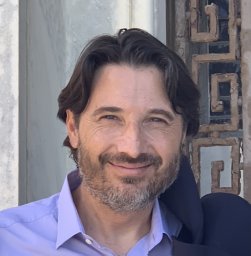 J.-L. Vay合作论文数Lawrence Berkeley National Laboratory4
 Yuri Batygin合作论文数4N. M. Cook合作论文数3Sergio Paiagua合作论文数3Ryan Roussel合作论文数3H. Zhang合作论文数3Charles Taylor合作论文数3Mahindra Rautela合作论文数Indian Institute of Technology Kanpur3E. C. Huang合作论文数Los Alamos Natl Lab3
 Axel Huebl合作论文数Inst. for Radiat. Phys., Helmholtz-Zentrum Dresden-Rossendorf;c;Inst. for Radiat. Phys., Helmholtz-Zentrum Dresden-Rossendorf3
 Remi Lehe合作论文数Accelerator Technology and Applied Physics Division, Lawrence Berkeley National Laboratory3Chengkun Huang合作论文数3Huang Xiaobiao合作论文数SSRL, SLAC National Accelerator Laboratory, 2575 Sand Hill Road, Menlo Park, CA 94025, USA.3
 David L Bruhwiler合作论文数Grumman Corporate Research Center3Ji Qiang (强洁)合作论文数3
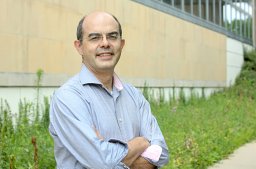 Philippe Piot合作论文数Department of Physics and Northern Illinois Center for Accelerator & Detector Development, Northern Illinois University3
 Stephen R. Niezgoda合作论文数Department of Materials Science and Engineering, Drexel University3
 Daniel Winklehner合作论文数Lawrence Berkeley National Laboratory3
 Juhao Wu (吴居豪)合作论文数SLAC National Accelerator Laboratory3
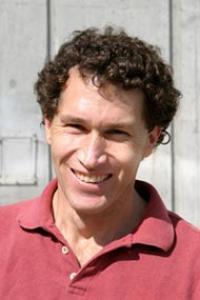 Tor Raubenheimer合作论文数3D. Sagan合作论文数Cornell University3S. Lund合作论文数2W. Mori合作论文数2N. Kuklev合作论文数2Veronique Ziegler合作论文数2P. Torrez合作论文数2
 Ayan Biswas合作论文数University of Delaware2L. Castellano合作论文数2
 Rebecca Ramjiawan合作论文数CERN2
 Simon Hirlander合作论文数Lab Intelligent Data Analyt IDA Lab, Univ Salzburg2M. Prokop合作论文数2F. M. Velotti合作论文数CERN2cristiano fanelli合作论文数2Malachi Schram合作论文数2
 Dan Wang合作论文数Corresponding author.2
 Michael McBride合作论文数Sch Chem & Biomol Engn, Georgia Inst Technol2
 Maxence Thévenet合作论文数Lawrence Berkeley Natl Lab, Berkeley, CA 94720 USA2T. Horn合作论文数Catholic Univ Amer, Washington, DC 20064 USA2A. W. P. Poon合作论文数Lawrence Berkeley National Laboratory2




