Spatio-temporal dynamics of sediment oxygen consumption and its contributions from different benthic faunal groups and their activities are not yet well resolved, especially in the Arctic. Here, we assess total sediment oxygen demand (SOD) by means of incubation techniques in four geomorphological settings of the northwestern Barents Sea during four times of the year. Additionally, we estimate metazoan respiration (i.e. macro- and meiofauna) using allometric relationships and its contributions to SOD, and the bioturbation potential of macrofaunal communities. Seasonally, SOD rates were higher in August-December than in March-May, being particularly high in August at the Atlantic shelf and the margin of the Nansen Basin. Spatially, SOD rates tended to decrease from south to north, especially in early spring. Estimated metazoan respiration remained stable throughout the year and contributed usually >50% to SOD rates, especially at shelf and slope stations. However, its relative contributions to SOD decreased in August, indicating that most of the fluctuations in SOD rates were potentially attributed to non-metazoan respiration. In the adjacent deep Nansen Basin, unexpectedly high summer SOD rates may result from down-slope transport of organic matter from the shelf, sustaining elevated microbial activity in otherwise poor-metazoan sediments. On the Atlantic-influenced shelf, intense bioturbation from dominant macrofaunal taxa, such as Spiochaetopterus typicus, likely amplified microbial oxygen demand. Our findings suggest, with limitations by the methods used, that changes in total organic carbon in sediment have an interaction effect with non-metazoan processes, shaping the seasonal fluctuations in sediment remineralization in the northern Barents Sea. On the other hand, spatial patterns in SOD rates are highly affected by the bioturbating activities of macrofaunal assemblages, with highest influence south of the polar front, most likely shaping non-metazoan processes there as well.
Groundwater is an important, though highly system-dependent, regulator of cryosphere mobility and stability. However, current understanding of these processes is constrained by a scarcity of direct observations due to logistical challenges. Much of the evidence for groundwater–cryosphere coupling therefore derives from numerical modeling and conceptual frameworks. The occurence of offshore groundwater systems along present/past glaciated continental shelves & slopes provides a unique opportunity to constrain the boundary conditions governing the coupling between groundwater and cryospheric processes. This is because the recharge of these offshore groundwater bodies, located several tens to hundreds of meters below seafloor, requires steep hydraulic gradients allowing for robust attribution of flow drivers to changes in cryospheric conditions. In addition, offshore groundwater systems are generally located far from their fluid sources, and thus may respond the first when fluid recharge—for example, ice-sheet basal melt—weakens.Six high-latitude offshore groundwater sites were investigated for sediment and fluid geochemistry: three sites proximal to past glaciation (Lofoten–Vesterålen from the Norwegian Sea, Fifång Bay close to the Stockholm archipelago, and the Gulf of Finland) and three others in the vincinity of modern glaciers/ice caps, submarine permafrost, or mud volcanoes (Tempelfjorden and Hornsund fjords in Svalbard, Victoria and Petermann fjords in northwest Greenland, and Beaufort Sea shelf and slope). Radiocarbon dating of the offshore groundwater suggest recharge events from early Holocene to pre-Holocene. The mixing of other radiocarbon sources in the sediments, such as carbon derived from degradation of particulate organic matter and dissolution of carbonates, complicates the interpretation of the groundwater signal. By comparing radiocarbon results from overlying seawater, organic matter, carbonate, and adjacent meteoric fluid sources (rivers and glacial ice) at these six locations, we discuss the limitations and potential for constraining the residence time of cryosphere-associated offshore groundwater.
Climate change is playing a major role in the current global biodiversity crisis. However, despite climate change being most pronounced in the Arctic, its impacts on biodiversity in this region remains largely unknown. Here, we combined three decades of abundance data from various animal groups (from zooplankton to megafauna) and regions in the European Arctic and Greenland to assess recent changes in biodiversity within Arctic coastal communities. Our results support the "borealization" hypothesis in all regions and provide evidence that marine ecosystems in the North Atlantic Arctic are shifting toward a boreal (i.e. cold temperate) state. Arctic endemic species are generally declining in abundance, while boreal species are increasing. These changes in abundance are associated with an average increase in biodiversity (e.g. species richness), although there are important variations among animal groups. This increase might be transient and the long-term implications of the ongoing changes in Arctic coastal biodiversity on ecosystem functioning and services remain uncertain.
Seep ecosystems connected to subseafloor methane reservoirs are widespread in the Arctic due to factors such as organic material accumulation and an extensive gas hydrate stability zone. Recently, submarine groundwater discharge (SGD) stemming from past glaciation has been identified as an additional factor that can generate Arctic seep systems. Despite seeps having an extended ‘sphere of influence’, links to the surrounding seafloor have not been studied in the Arctic, which is why we investigated the epifaunal megabenthos at the edges of an SGD-derived Arctic seep off northern Norway. Due to local, chemosynthesis-based food production and substrate heterogeneity, Arctic seeps are often local biodiversity hotspots. However, our study revealed that communities at the peripheries of the seep (transition zone/ecotone or ‘chemotone’) are an order of magnitude more diverse and species rich than inside the seep itself. Neither seep nor chemotone contain specialist fauna, and benthic species appear to aggregate differently at Arctic seeps, their peripheries and background, despite not being specifically adapted for any one of the habitats. Through stable isotope analyses, we detected chemosynthetically derived carbon in peripheral animals, suggesting that export beyond the seep is possible. Suspension feeders were numerous and diverse in the chemotone (e.g. thousands of individuals of colonial anemones) as well as in non-seep canyons in the region which brings forth the question of whether high latitude seeps benefit or promote these feeding styles overall as opposed to specific organisms such as corals. The cryosphere of both the past and present can generate seeps which can impact trophic dynamics and species composition well beyond their own boundaries.
Rapid glacier retreat across the Arctic is transforming coastal landscapes and generating a growing number of previously non-existent aquatic habitats. In Svalbard, this process has led to the formation and expansion of coastal lagoons, including a substantial proportion of newly emerged paraglacial systems. Despite their increasing abundance, these environments remain poorly represented in Svalbard research and monitoring programs, and their ecological and biogeochemical significance is only beginning to be recognized. Herein we synthesize current knowledge of Svalbard coastal lagoons, integrating perspectives from geomorphology, hydrology, ecology, and biogeochemistry. We propose that these systems form a developmental continuum, ranging from newly formed, glacier-influenced basins to more stable and biologically structured lagoons. Observations from recently studied lagoon systems indicate strong environmental gradients, spatial heterogeneity and dynamic hydrological conditions that support diverse and evolving biological communities across trophic levels. Emerging evidence suggests that Arctic lagoons may function as biogeochemical reactors, including potential sources of methane, while also acting as accumulation zones for contaminants such as microplastics and persistent organic pollutants. At the same time, their ecological role – as biodiversity hotspots, transitional habitats, or stepping-stones for species redistribution – remains insufficiently understood. We identify key knowledge gaps related to lagoon formation, physical dynamics, ecosystem development, and greenhouse gas fluxes and outline a research roadmap for coordinated interdisciplinary investigations. We argue that Svalbard lagoons represent a rapidly expanding nature type that provides a unique opportunity to study ecosystem development under climate change and should be integrated into future Arctic research and assessment frameworks.
The projected transition of the central Arctic Ocean (CAO) into a warmer, seasonally ice-free ocean requires more knowledge of this environment to predict changes in the structure and dynamics of its ecosystems. We aimed to compare the state and underlying processes of Nansen Basin and Amundsen Basin ecosystems observed in August–September 2021 and assess impacts of Atlantic Water inflow and fresher Transpolar Drift waters, respectively, on these ecosystems. The basins differed in features of sea ice, hydrography, and chemical and biological compositions. The near-slope open water in western Nansen Basin showed a clear fingerprint of warm, saline Atlantic Water, with larger vertical turbulent fluxes facilitating nutrient transport across the pycnocline and supporting larger standing stocks of bacteria, protists, and zooplankton. Pelagic primary production and microbial and faunal stocks decreased northward and into Amundsen Basin, likely due to lower nutrient concentrations, stronger stratification, and reduced light through the more continuous and thicker ice and snow cover in Amundsen Basin, possibly also impacted by seasonally declining light levels. Transpolar Drift signals included lower salinity, stronger stratification, and higher silicate concentrations in Amundsen Basin surface waters. Similarities to earlier observations included the increase in small-sized algae from Nansen Basin into Amundsen Basin and overall low faunal abundances in the CAO, suggesting that overarching patterns remained unchanged over past decades. Examples of species range extensions and notable taxon absences relative to earlier studies, however, could be due to borealization and changes in sea-ice conditions, respectively. Higher density ecosystem sampling and consistent time series are recommended to confirm such conclusions. The distinct basin differences call for a regional approach to future management of the CAO. We especially caution against using the area of strong Atlantic Water inflow in southern Nansen Basin as representative of the entire basin, let alone Amundsen Basin or the CAO.
Arctic fjord sediments store significant amounts of organic matter (OM), contributing to the global carbon cycle, but are increasingly influenced by climate change. This study investigates OM distribution and sources in sediments from 24 stations across three West Spitsbergen fjords (Hornsund, Isfjord, and Kongsfjord-Krossfjord), focusing on relationships with porewater chloride concentrations and stable water isotopes. Freshening of porewater indicated by low chlorinity was detected in Isfjord and Hornsund. In Hornsund and Tempelfjord (Isfjord), water isotope signatures point to a meteoric origin, likely via submarine groundwater discharge (SGD). In contrast, Ekmanfjord (Isfjord) shows isotopic evidence of gas hydrate dissociation as the freshening source. Both Isfjord sites contain OM with low delta C-13(org) < -26.8 parts per thousand) and delta N-15(tot) (< 3.1 parts per thousand) values, which are inconsistent with known OM sources in Svalbard fjords. We propose that carbon released from SGD and gas hydrate dissociation, along with methane oxidation and nitrogen assimilation by methanotrophic microbes, contribute to OM formation. These findings suggest that Arctic fjord sediments may help mitigate climate change by supporting microbial processes that consume methane, a potent greenhouse gas.
Glaciers cover approximately 60% of the Svalbard archipelago, but despite extensive research on Svalbard’s glaciers and their retreat, little is known about the effect of glaciers with different termination points on fjordic benthic communities in the Arctic. Billefjorden, Svalbard, includes bays influenced by runoff from inland glaciers and Nordenskiöldbreen, a glacier that, due to retreat, has split into a marine- and a shore-terminating side since 2017. We investigated the benthic faunal community composition in relation to environmental factors (bottom water temperature and salinity, TOC, percent pelite and sediment pigments) within Billefjorden to examine the effects of inland glaciers, a shore-terminating glacier, and a marine-terminating glacier on benthic communities. Despite their close proximity, the different locations displayed distinct community parameters and environmental conditions. Specifically, the strongly glacier-influenced locations were less diverse and had lower faunal abundance compared to the location with minimal glacier influence, likely due to higher sedimentation rates and lower food availability. The marine-terminating glacier side had a particularly sparse community, likely due to high turbidity and food deprivation. Our results suggest that glaciers and their retreat impact local-scale environmental factors which drive differentiation of benthic communities over small spatial scales within a single fjord system.
We investigate submarine groundwater transmissivity within Svalbard fjord sediments, where offshore freshened groundwater (OFG) was confirmed through analyses of dissolved chloride concentration and water isotope signatures (δ18O and δ2H). The analyses are comprised of physical, mechanical, and chemical attributes of three cores recovered from Tempelfjorden and Hornsund fjords. Multi-Sensor Core Logger (MSCL) analyses provide high-resolution physical characteristics of the sediment cores, including bulk density, p-wave velocity, magnetic susceptibility, and electrical resistivity. These are integrated with X-ray computed tomography (CT) images, acquired with a Geotek rotating X-ray CT system (RXCT), to identify sedimentary facies, which are used to investigate internal core structures. Discrete measurements of grain density and grain size are used to calculate sediment porosity and to estimate the permeability. Our results indicate a heterogeneous sediment matrix with frequent drop stones and ice-rafted debris interlayered with finer-grained materials. We hypothesize that the sediment matrix packaging and configuration is an important control for the sediment permeability and thus for freshened groundwater transmissivity in the sediments of these fjords. This work is not only relevant for characterizing groundwater transmissivity in Svalbard's fjords but also will contribute to ongoing geological modeling efforts. Our findings pave the way for hydrogeological simulations, enhancing our understanding of OFG occurrence, emplacement mechanisms, and OFG volumes over successive glacial cycles.
The efficiency of submarine groundwater discharge (SGD) in transporting solutes into coastal environments during glacial periods remains poorly understood. Moreover, the absence of observational constraints on offshore groundwater emplacement times hinders our understanding of glacial-driven SGD timescales and subsequent solute fluxes. This knowledge gap presents challenges in predicting the impact of ice sheet collapse on critical solute discharge into peripheral oceans. An SGD site with methane seepage offshore northern Norway that experienced drastic changes due to Fennoscandian ice sheet dynamics offers insights into glacial-interglacial transitions and their consequences for offshore groundwater circulation. Radiocarbon (14C) contents of the dissolved inorganic carbon along with chlorinity contents of the upward-advected fluids reveal that the groundwater transit times of the seawater component coincide with the retreat of the Fennoscandian ice sheet from the continental shelf. This suggests that seawater intrusion replaced offshore freshening, flushing the freshened aquifer with seawater. Decelerating groundwater discharge velocities and aquifer salinization as a consequence of glacial unloading allowed the precipitation of authigenic carbonates, sequestering discharged methane. Reduced groundwater advection velocities facilitated the migration of the sulfate-methane transition zone into the marine sediments, while the aquifer salinization likely increased Ca2+ concentrations, promoting carbonate precipitation. Our geochemical evidence conclusively shows that the decreased hydraulic head gradients, coupled with aquifer salinization, mitigated the escape of methane from the subsurface.
Glacier fronts are hotspots of pelagic productivity due to upwelling of nutrient-rich water. As tidewater glaciers retreat into land, this subglacial circulation will disappear and sedimentation from terrestrial runoff will increase, leading to a decrease in pelagic productivity with a decline in the abundance of fish and zooplankton. We used Billefjorden, a high Arctic fjord with a glacier recently transitioned from sea- to land-terminating as a case study to identify spatial differences and small-scale environmental drivers of density and vertical distribution of fish and zooplankton along a gradient of glacier retreat (directly in front of the land-terminating glacier front, a river bay with terrestrial input from land-terminating glaciers further inland and a location with minimal glacial input). We developed a sustainable and efficient protocol to safely sample the glacier front and shallow coastal areas using hydroacoustics and a remote autonomous vehicle combined with oceanographic measurements and baited remote cameras. Over 2 years, pelagic density was lowest at the now land-terminating glacier front and highest at the site with lowest terrestrial input. Temperature, depth, and turbidity explained less than 8% of the variation each. The site with the least glacial input had the most heterogenous bottom habitat due to the presence of kelp forests, and the richer demersal habitat likely contributed to the higher pelagic density. In shallow fjords and areas with hard bottom substrate, it is expected that sea-ice and glacial retreat will promote macroalgal settlement, and we suggest that macroalgal expansion may compensate the loss of tidewater glacier-associated density of fish and zooplankton by the increase of benthic-driven density. Arctic pelagic ecosystems could thus be more resilient to glacier retreat than initially thought, but this is highly dependent on fjord topography, sedimentation rate, and substrate type. Our developed protocol is an efficient non-invasive method to survey shallow coastal areas and glacier fronts in the Arctic.
Interest in the deep Arctic Ocean is rapidly increasing from governments, policy makers, industry, researchers, and conservation groups, accentuated by the growing accessibility of this remote region by surface vessel traffic. In this review, our goal is to provide an updated taxonomic inventory of benthic taxa known to occur in the deep Arctic Ocean and relate this inventory to habitat diversity. To achieve this goal, we collected data for Arctic metazoan deep-sea taxa from open-access databases, information facilities, and non-digitised scientific literature, limiting the collection to the area north of 66°N and below 500 m depth (excluding all shelf seas). Although notable progress has been made in understanding the deep Arctic using novel technologies and infrastructure, this data gathering shows that knowledge of deep-sea benthic Arctic communities remains very limited. Yet, through our compilation of habitat maps, we show that the Arctic contains a high diversity of geomorphological features, including slopes, deep basins, submarine canyons, ridges, and seamounts, as well as chemosynthesis-based and biogenic (biologically engineered) ecosystems. To analyse taxon richness and density, using both morphological and molecular data, we compiled 75,404 faunal records with 2,637 taxa. Phyla with the most records were the Arthropoda (21,405), Annelida (13,763) and Porifera (12,591); phyla with the most documented taxa were the Arthropoda (956), Annelida (566) and Mollusca (351). An overview of the dominant groups inhabiting the different geomorphological features highlights regions in the deep Arctic where data are particularly scarce and increased research efforts are needed, particularly the deep basins of the central Arctic Ocean. This scarcity of deep benthic Arctic biodiversity data creates a bottleneck for developing robust management and conservation measures in a rapidly changing region, leading to a call for international collaboration and shared data to ensure understanding and preservation of these fragile Arctic ecosystems.
A nutrient distribution, such as that of phosphate (PO43-), ammonium (NH4+), nitrate (NO3-), dissolved silica (Si), total dissolved nitrogen (TN), and dissolved organic nitrogen (DON), together with dissolved organic carbon (DOC) and inorganic carbon (DIC), was investigated during a high-melting season in 2021 in the western Spitsbergen fjords (Hornsund, Isfjorden, Kongsfjorden, and Krossfjorden). Both the water column and the pore water were investigated for nutrients and dissolved carbon distribution and gradients. The water column concentrations of most measured parameters, such as PO43-, NH4+, NO3-, Si, and DIC, showed significant changes among fjords and water masses. In addition, pore water gradients of PO43-, NH4+, NO3-, Si, DIC, and DOC revealed significant variability between fjords and are likely substantial sources of the investigated elements for the water column. The reported dataset reflects differences in hydrography and biogeochemical ecosystem functions of the investigated western Spitsbergen fjords and may form the base for further modeling of physical oceanographic and biogeochemical processes within these fjords. All data discussed in this communication are stored in the Zenodo online repository at https://doi.org/10.5281/zenodo.11237340 (Szymczycha et al., 2024).
Vegetated coastal marine ecosystems are projected to expand northwards in the Arctic due to climate change, but the mechanisms for this expansion are complex and nuanced. Macroalgal biomass in the littoral areas of Svalbard has been increasing, but data at the glacier fronts are very scarce. In this study, we use hydroacoustics and video validation from an unmanned surface vehicle to survey macroalgal bed distribution along the coast of a High Arctic fjord (Billefjorden, Svalbard), including river bays and land- and sea- terminating glacier fronts, as well as oceanographic measurements to indicate physical drivers of macroalgal settlement. We found high variation of macroalgal coverage along the fjord coastline, with virtually no macroalgae in the river bays but abundant coverage in areas with little terrestrial runoff. Furthermore, the presence of kelp was found at the land-terminating glacier front which has recently retreated from the sea, which suggests the potential for rapid macroalgal establishment in newly available substrate following glacial retreat. These findings suggest large ecological implications throughout the Arctic, in which macroalgal expansion may lead to significant changes in the underwater coastal landscape and ecosystem. This study shows that the use of remote autonomous vehicles and hydroacoustic mapping with video validation has a high potential for sustainable and efficient ecological monitoring.
Benthic (seafloor) remineralization of organic material determines the fate of carbon in the ocean and its sequestration. Bottom water temperature and labile carbon supply to the seafloor are expected to increase in a warming Arctic and correspondingly, benthic remineralization rates. We provide some of the first experimental data on the response of sediment oxygen demand (SOD), an established proxy for benthic remineralization, to increased temperature and/or food supply across a range of Arctic conditions and regimes. Each factor significantly increased SOD rates (with different degrees of variability); however the largest increases were seen with both factors combined (50% to ten-fold increases), consistently across the four seasons and the spatial gradient covering shelf to deep basin included in our study. This ability of the Arctic benthos to process increased pulses of carbon suggests that increased sedimented carbon under warming conditions is likely to be utilized and processed, not accumulated, impacting carbon storage and decreasing the Arctic’s role as a global carbon sink.
We used high-resolution imagery within a Geographic Information System (GIS), free gas and porewater analyses and animal bulk stable isotope measurements to characterize the biotic and abiotic aspects of the newly discovered Vestbrona Carbonate Field (VCF) seep site on the Norwegian shelf (63°28′N, 6° 31′E, ∿270 m water depth). Free gas was mainly composed of microbial methane. Sediment porewater sulfide concentrations were in the millimolar range and thus high enough to sustain seep chemosymbiotrophic animals. Nonetheless, the VCF lacked chemosymbiotrophic animals despite an abundance of methane-derived carbonate crusts which are formed by the same anaerobic processes that sustain chemosymbiotrophic animals at seeps. Furthermore, none of the sampled taxa, across various trophic guilds exhibited a detectable contribution of chemosynthetically fixed carbon to their diets based on bulk stable isotope values, suggesting a predominantly photosynthetic source of carbon to the VCF seep food web. We link the absence of chemosymbiotrophic animals to highly localized methane flow pathways, which may act as a “shunt-bypass” of the anaerobic oxidation of methane (AOM) and by extension sulfide generation, thus leading to sediment sulfide concentrations that are highly heterogeneous over very short lateral distances, inhibiting the successful colonization of chemosymbiotrophic animals at the VCF seep. Instead, the seep hosted diverse biological communities, consisting of heterotrophic benthic fauna, including long lived taxa, such as soft corals (e.g., Paragorgia arborea ) and stony corals (i.e., Desmophyllum pertusum , formerly known as Lophelia pertusa ). Compared to the surrounding non-seep seafloor, we measured heightened megafaunal density at the seep, which we attribute to increased habitat heterogeneity and the presence of a variety of hard substrates (i.e., methane-derived authigenic carbonates, dropstones and coral rubble), particularly since the most abundant taxa all belonged to the phylum Porifera. Compared to the surrounding non-seep seafloor, marine litter was denser within the VCF seep, which we link to the more variable local topography due to authigenic carbonates, which can rip off parts of bottom trawling nets thereby making the seep act as catchment area for marine litter.
The main goal of CAGE 17-2 AMGG cruise was to study the gas-hydrate-bearing system and methane emission off south and east of Spitsbergen in Storfjordrenna and the northern flank of Olga Basin (named here Olga craters) respectively, and in the West Sentralbanken. We addressed this through a comprehensive scientific program comprising dives with the MISO-Tow Cam adapted to the multicorer frame from UiT-NPI (TowCam/Multicorer, TCM), methane measurements in sediments, water column, and in air, sediment coring (multicorer + gravity corer), water column and sediment biogeochemistry, microbiology, micropaleontology, and bathymetric mapping. Cruise CAGE 17-2 was also hosting this year’s AMGG research school cruise with masters, PhD and post-doc students participating. The areas investigated were: Storfjordrenna, Pingos site (ca 380 m water depth),Northern Flank of Olga Basin (ca 140 m water depth)West Sentralbanken (ca 200 m water depth) We planned the following activities during the CAGE 17-2 cruise: EM 302 Simrad swath bathymetry mapping to identify seabed morphology Mapping of flare distributionsCTD stations at different water depths and in different areas for measurements ofocean water masses characteristics, andwater sampling for water/gas chemistry and microbiology investigations across methane seeps.TCM surveys (video-camera) to image seabed fluid flow expressions, sites of bacteria mats, crusts and gas bubbles.Repeated deployments with TCM to sample surficial and shallow sediments with respect to microbiology, geochemistry, biogeochemistry, and micropaleontology.Gravity corer for studying sediment biogeochemistry, biomarkers, microbiology, and foraminifera.Scrape sampling to collect rocks and crusts.Gas Chromatographer (GC) to measure methane concentration in the water and sediment samples.Flasks Restek, Electro-Polished Miniature Canister (1000 cc) for air samples. Part of the cruise was supported by NPD, Oljedirektoratet. Special thanks to Rune Mattingsdal, NPD. The cruise may be known as: CAGE17_2
We used ancient DNA (aDNA) extraction methods to sequence museum voucher samples of Oligobrachia webbi, a frenulate siboglinid polychaete described from a northern Norwegian fjord over fifty years ago. Our sequencing results indicate a genetic match with the cryptic seep species, Oligobrachia haakonmosbiensis (99% pairwise identity for 574 bp mtCOI fragments). Due to its similarity with O. webbi, the identity of O. haakonmosbiensis has been a matter of debate since its description, which we have now resolved. Furthermore, our results demonstrate that chemosynthesis-based siboglinids, that constitute the bulk of the biomass at Arctic seeps are not seep specialists. Our data on sediment geochemistry and carbon and nitrogen content reveal reduced conditions in fjords/sounds, similar to those at seep systems. Accumulation and decomposition of both terrestrial and marine organic matter results in the buildup of methane and sulfide that apparently can sustain chemosymbiotic fauna. The occurrence of fjords and by extension, highly reducing habitats, could have led to Arctic chemosymbiotic species being relatively generalist with their habitat, as opposed to being seep or vent specialists. Our stable isotope analyses indicate the incorporation of photosynthetically derived carbon in some individuals, which aligns with experiments conducted on frenulates before the discovery of chemosynthesis that demonstrated their ability to take up organic molecules from the surrounding sediment. Since reduced gases in non-seep environments are ultimately sourced from photosynthetic processes, we suggest that the extreme seasonality of the Arctic has resulted in Arctic chemosymbiotic animals seasonally changing their degree of reliance on chemosynthetic partners. Overall, the role of chemosynthesis in Arctic benthos and marine ecosystems and links to photosynthesis may be complex, and more extensive than currently known.
The Barents Sea has been coined 'the Arctic hotspot' of climate change due to the rapidity with which environmental changes are taking place. This transitional domain from Atlantic to Arctic waters is home to highly productive benthic communities. This system strongly fluctuates on a seasonal basis in its sympagic-pelagicbenthic coupling interactions, with potential effects on benthic standing stocks and production. Recent discoveries have questioned the marked seasonality for several high Arctic seafloor communities in coastal waters of Svalbard. Still, the seasonal variability of benthic process in the extensive Barents Sea open shelf remains poorly understood. Therefore, we studied the seasonality of macrofauna communities along a transect in the northwestern Barents Sea comprising two hydrographic domains (Arctic vs. Atlantic Water, across the Polar Front) and three geomorphological settings (shelf, continental slope and abyssal plain). Overall, we did not find strong signs of seasonal variation in taxonomic community structure and functional diversity. However, we found some weak signs of seasonality when examining each station separately, especially at a station close to the Polar Front, with high seasonal fluctuations in abiotic drivers indicating a stronger pelagic-benthic coupling. The lack of seasonality found both at the shelf stations south and north of the Polar Front could be related to organic matter stored in the sediments, reflected in constant levels of total organic carbon in surface sediment across time for all stations. We did observe, as expected, highly spatially structured environmental regimes and macrofauna communities associated to them from shelf to slope and basin locations. Understanding the underlying spatiotemporal mechanisms by which soft-bottom benthic communities are structured along environmental gradients is necessary to predict future impacts of climate change in this area. Our results indicate that short-term climate driven changes in the phenology of pelagic ecosystem components might not be directly reflected in the Arctic benthic system, as seafloor processes seem to be partially decoupled from those in the overlying water.
 Wei-Li Hong (洪伟丽)合作论文数Department of Geosciences, National Taiwan University15
 Aivo Lepland合作论文数Division of Bedrock Geology and Collections, Department of Geology, School of Science, Tallinn University of Technology;Geological Survey of Norway14
 Beata Szymczycha合作论文数Institute of Oceanology, Polish Academy of Sciences10
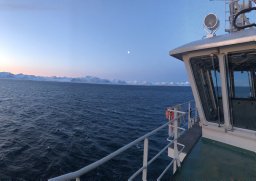 Jochen Knies合作论文数Alfred Wegener Institute for Polar and Marine Research10
 Emmelie Astrom合作论文数Dept Arctic & Marine Biol, UiT Arctic Univ Norway7
 Bodil Bluhm合作论文数University of Alaska Fairbanks School of Fisheries and Ocean Sciences, Institute of Marine Science7
 Stephane Hourdez合作论文数208 Mueller Laboratory, The Pennsylvania State University7
 Paul E. Renaud合作论文数University of North Carolina at Chapel Hill;Institute of Marine Sciences;Morehead City;Institute of Marine Sciences, University of North Carolina at Chapel Hill7
 Michael L. Carroll合作论文数Norwegian Institute for Water Research7
 JoLynn Carroll合作论文数6
 Anette Wold合作论文数6Miriam Marquardt合作论文数6
 Eric Jorda Molina合作论文数5
 Charles Fisher合作论文数Department of Biology, Eberly College of Science, Pennsylvania State University5
 Henning Reiss合作论文数Department for Marine Research, Senckenberg Institute5
 Anna Vader合作论文数Departments of Biotechnology;Institute of Medical Biology;University of Tromsø;Institute of Medical Biology, University of Tromsø5Christine Gawinski合作论文数4Magdalena Diak合作论文数4
 Marc J Silberberger合作论文数Polish Acad Sci, Inst Oceanol4
 George Luther合作论文数School of Marine Science & Policy, College of Earth, Ocean & Environment, University of Delaware;Department of Chemistry and Biochemistry, University of Delaware4Silvia Hess合作论文数Institute of Geology and Paleontology, Kiel University4
 Tine Lander Rasmussen合作论文数Department of Geosciences, UiT The Arctic University of Norway;Centre for Arctic Gas Hydrate, Environment and Climate4
 Janne E. Søreide合作论文数Norwegian College of Fishery Science, University of Tromsø4Seyed Reza Saghravani合作论文数3Sophie ten Hietbrink合作论文数3
 Yasemin V. Bodur合作论文数3Thaise Ricardo de Freitas合作论文数3Robynne Nowicki合作论文数3
 Siv Nam Khang Hoff合作论文数3Michael Ernst Bottcher合作论文数3
 Cheshtaa Chitkara合作论文数3
 Konrad Klint Karl Karlsson合作论文数Dept Arctic Biol, Univ Ctr Svalbard3P. Makuch合作论文数3
 Simone Sauer合作论文数CAGE Ctr Arctic Gas Hydrate Environm & Climate, UiT The Arctic Univ Norway3Aleksandra Winogradow合作论文数3
 Elizabeth Jones合作论文数3
 Karine Olu合作论文数3Erin L. Becker合作论文数Biology Department, Pennsylvannia State University3
 William G Ambrose合作论文数Ambrose Ocean Sciences3
 Karol Kulinski合作论文数Polish Academy of Sciences Institute of Oceanology3
 Melissa Chierici合作论文数Institute of Ocean Sciences, Centre for Ocean Climate Chemistry, P.O. Box 6000, 9860 West Saanich Road, Sidney, British Columbia, Canada V8L 4B23Agneta Fransson合作论文数Climate Change Research Project, National Institute for Environmental Studies3Matteus Lindgren合作论文数2Angela Stippkugel合作论文数2
 Marti Amargant Arumi合作论文数2Elizabeth L. Podowski合作论文数2Griselda Anglada Ortiz合作论文数2Snorre Flo合作论文数2
 Catia M. E. Von Ahn合作论文数2




