The use of NMR spectroscopy to study the structures and dynamics of membrane systems is described. The principal nuclei used are 1H, 2H, 13C and 31P. Both oriented and nonoriented systems can be investigated. In addition, peptides and proteins embedded in membranes can be studied.
How molecules convert light energy to perform a specific transformation is a fundamental question in photophysics. Ultrafast spectroscopy reveals the kinetics associated with electronic energy flow, but little is known about how absorbed photon energy drives nuclear motion. Here we used ultrabroadband transient absorption spectroscopy to monitor coherent vibrational energy flow after photoexcitation of the retinal chromophore. In the proton pump bacteriorhodopsin, we observed coherent activation of hydrogen-out-of-plane wagging and backbone torsional modes that were replaced by unreactive coordinates in the solution environment, concomitant with a deactivation of the reactive relaxation pathway.
 Clemens Glaubitz合作论文数Department of Biochemistry, University of Oxford26
 Derek Marsh合作论文数Max Planck Institute for Biophysical Chemistry24
 Gerhard Gröbner合作论文数Department of Chemistry, Umeå University18Williamson Ptf.合作论文数15
 Peter J Judge合作论文数Department of Biochemistry, University of Oxford15
 Boyan Bonev合作论文数School of Life Sciences, Faculty of Medicine and Health Sciences, The University of Nottingham13Pjr Spooner合作论文数11Juan Francisco Bada Juarez合作论文数10
 Wolfgang Fischer合作论文数Affimed10Peter J F Henderson合作论文数Faculty of Biological Sciences, University of Leeds9J. Vinals合作论文数8Paul J.R. Spooner合作论文数8Teresa J T Pinheiro合作论文数7
 Anne S. Ulrich合作论文数Department of Molecular Biophysics, Institute of Biological Interfaces, Karlsruhe Institute of Technology;Institute of Organic Chemistry, Karlsruhe Institute of Technology7G Groebner合作论文数6PF KNOWLES合作论文数6
 Isabel Moraes合作论文数Department of Life Sciences, Imperial College London;Membrane Protein Laboratory, Diamond Light Source;Research Complex at Harwell Rutherford Appleton Laboratory, Harwell Science and Innovation Campus, Didcot OX11 0FA, UK.;Research Complex at Harwell Rutherford Appleton Laboratory, Imperial College London6Ian J. Burnett合作论文数6Jf Ryan合作论文数5Ahmed Z合作论文数5Francisco J. Barrantes合作论文数5Brigitte Sternberg合作论文数5Danny Axford合作论文数5Jude A. Watts合作论文数5Andrzej A. Duralski合作论文数4Andrew M Taylor合作论文数4David a Middleton合作论文数4
 Keith Miller合作论文数Mass General Research Institute, Massachusetts General Hospital;Department of Anaesthesia, Harvard Medical School4Rankin S E合作论文数4
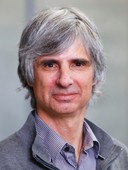 Beat H. Meier合作论文数Department of Chemistry and Applied Biosciences, ETH Zurich4
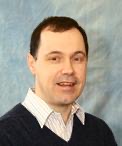 Mark Smith合作论文数Department of Physics, University of Warwick;University of Southampton4Frank Sixl合作论文数4Gregory Choi合作论文数4Igor D. Volotovski合作论文数4
 José Alfredo Gomes Arêas合作论文数Universidade de São Paulo junto ao Dep. de Nutrição da Faculdade de Saúde Pública4
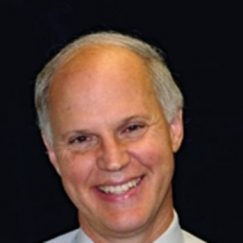 Philip Yeagle合作论文数Department of Molecular and Cell Biology, College of Liberal Arts and Sciences, University of Connecticut4S. Bains合作论文数4Richard B. Herbert合作论文数4S. L. Grage合作论文数3LI HORVATH合作论文数3Aj Mason合作论文数3X. Zhao合作论文数3David G. Reid合作论文数3de Planque Mrr.合作论文数3timothy hadingham合作论文数3
 Vincent Lemaitre合作论文数Faculty of Science, Université catholique de Louvain;Institut De Recherche En Mathématique Et Physique, Université Catholique De Louvain, Université catholique de Louvain3P Gale合作论文数3Mason J合作论文数3Maarten P. Heyn合作论文数3




