A summary is not available for this content so a preview has been provided. As you have access to this content, a full PDF is available via the ‘Save PDF’ action button.
A summary is not available for this content so a preview has been provided. As you have access to this content, a full PDF is available via the ‘Save PDF’ action button.
The intrinsic time structure of hadronic showers influences the timing capability and the required integration time of hadronic calorimeters in particle physics experiments, and depends on the active medium and on the absorber of the calorimeter. With the CALICE T3B experiment, a setup of 15 small plastic scintillator tiles read out with Silicon Photomultipliers, the time structure of showers is measured on a statistical basis with high spatial and temporal resolution in sampling calorimeters with tungsten and steel absorbers. The results are compared to GEANT4 (version 9.4 patch 03) simulations with different hadronic physics models. These comparisons demonstrate the importance of using high precision treatment of low-energy neutrons for tungsten absorbers, while an overall good agreement between data and simulations for all considered models is observed for steel.
There is no 3 per cent illiquidity premium in private equity, according to research by CEM Benchmarking. A cost drag on private assets cancels out the returns of investing in private equity and real estate for those investors that outsource to external providers, the research finds. CEM Benchmarking, which has a database of 354 pension funds from all over the globe with assets of about $7 trillion, looked at the benchmark and investment returns of those investors in private equity and real estate from 1995 to 2010.
The preponderance of matter over antimatter in the early Universe, the dynamics of the supernova bursts that produced the heavy elements necessary for life and whether protons eventually decay --- these mysteries at the forefront of particle physics and astrophysics are key to understanding the early evolution of our Universe, its current state and its eventual fate. The Long-Baseline Neutrino Experiment (LBNE) represents an extensively developed plan for a world-class experiment dedicated to addressing these questions. LBNE is conceived around three central components: (1) a new, high-intensity neutrino source generated from a megawatt-class proton accelerator at Fermi National Accelerator Laboratory, (2) a near neutrino detector just downstream of the source, and (3) a massive liquid argon time-projection chamber deployed as a far detector deep underground at the Sanford Underground Research Facility. This facility, located at the site of the former Homestake Mine in Lead, South Dakota, is approximately 1,300 km from the neutrino source at Fermilab -- a distance (baseline) that delivers optimal sensitivity to neutrino charge-parity symmetry violation and mass ordering effects. This ambitious yet cost-effective design incorporates scalability and flexibility and can accommodate a variety of upgrades and contributions. With its exceptional combination of experimental configuration, technical capabilities, and potential for transformative discoveries, LBNE promises to be a vital facility for the field of particle physics worldwide, providing physicists from around the globe with opportunities to collaborate in a twenty to thirty year program of exciting science. In this document we provide a comprehensive overview of LBNE's scientific objectives, its place in the landscape of neutrino physics worldwide, the technologies it will incorporate and the capabilities it will possess.
We investigate the three dimensional substructure of hadronic showers in the CAL-ICE scintillator-steel hadronic calorimeter. The high granularity of the detector is used to find track segments of minimum ionising particles within hadronic showers, providing sensitivity to the spatial structure and the details of secondary particle production in hadronic cascades. The multiplicity, length and angular distribution of identified track segments are compared to GEANT4 simulations with several different shower models. Track segments also provide the possibility for in-situ calibration of highly granular calorimeters.
An area known as the 81-10 pad within the footprint of the Y-12 National Security Complex, suspected to be heavily contaminated with mercury, was slated for characterization in support of a Federal Facilities Agreement (FFA) milestone to be accomplished by September 30, 2012. A full remedial design report (RDR) required the soil in Exposure Unit -9 (EU-9) to be fully characterized for a number of contaminates of concern including mercury. The goal of this characterization effort was to determine what soil, if any, would need to be removed for the protection of industrial workers and impacts to the surface and ground water. Funding for this project was made available using buy-back scope under the American Recovery and Reinvestment Act (ARRA). The EU-9 soil unit involved 3 different classifications which were determined as follows: Class 1: Known to have been impacted, contamination is likely; Class 2: Suspected to have been impacted, contamination is unknown; Class 3: Area not known to have been impacted, contamination unlikely. Due to various sampling and analysis events since the 1980's, significant mercury contamination was expected under the concrete pad of an area known as 81-10. Mercury contamination outside of the boundary of this pad within themore » EU-9 footprint was not known and therefore an original planned estimate of 1,461 cubic meters of material were expected to be heavily contaminated with mercury requiring removal, treatment and disposal. Through the use of a highly effective nature and extent sampling and analysis design that involved a hybrid of statistically-based and judgmental sampling, the actual remedial contour requiring removal was approximately 717 cubic meters, roughly 12% of the original estimate. This characterization approach was executed in full compliance with the Record of Decision (ROD) [1] documents that were agreed upon by the U.S. Department of Energy, Environmental Protection Agency and Tennessee Department of Environment and Conservation. In addition, the RDR was completed ahead of the FFA milestone date of September 30, 2012. (authors)« less
We report on the results of an extensive R&}D program aimed at the evaluation of Thick-Gas Electron Multipliers (THGEM) as potential active elements for Digital Hadron Calorimetry (DHCAL). Results are presented on efficiency, pad multiplicity and discharge probability of a 10x10 cm2 prototype detector with 1 cm2 readout pads. The detector is comprised of single- or double-THGEM multipliers coupled to the pad electrode either directly or via a resistive anode. Investigations employing standard discrete electronics and the KPiX readout system have been carried out both under laboratory conditions and with muons and pions at the CERN RD51 test beam. For detectors having a charge-induction gap, it has been shown that even a ~ 6 mm thick single-THGEM detector reached detection efficiencies above 95%, with pad-hit multiplicity of 1.1?1.2 per event; discharge probabilities were of the order of 10?6-10?5 sparks/trigger, depending on the detector structure and gain. Preliminary beam tests with a WELL hole-structure, closed by a resistive anode, yielded discharge probabilities of < 2x10?6 for an efficiency of ~ 95%. Methods are presented to reduce charge-spread and pad multiplicity with resistive anodes. The new method showed good prospects for further evaluation of very thin THGEM-based detectors as potential active elements for DHCAL, with competitive performances, simplicity and robustness. Further developments are in course.
 J. Yu合作论文数9
 Andrew Brandt合作论文数Department of Physics, College of Science, The University of Texas at Arlington9M. Sosebee合作论文数8
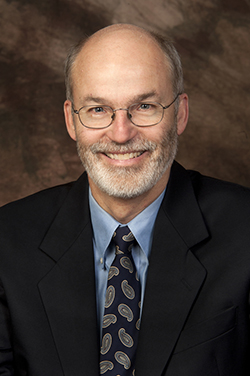 Gerald C. Blazey合作论文数Department of Physics, College of Liberal Arts and Sciences, Northern Illinois University8
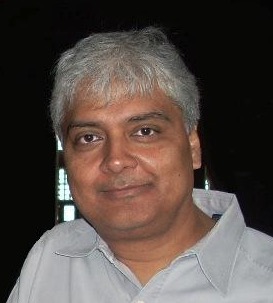 Kaushik De合作论文数Department of Physics, College of Science, Univeristy of Texas at Arlington8
 Vipin Bhatnagar合作论文数Department of Physics, Panjab University7Alexander S. Dyshkant合作论文数7
 Heidi M. Schellman合作论文数Department of Physics, College of Science, Oregon State University7
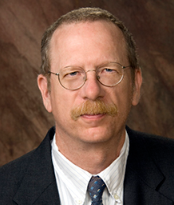 David Hedin合作论文数Department of Physics, College of Liberal Arts and Sciences, Northern Illinois University7Daniel Edmunds合作论文数Department of Physics and Astronomy, Michigan State University7
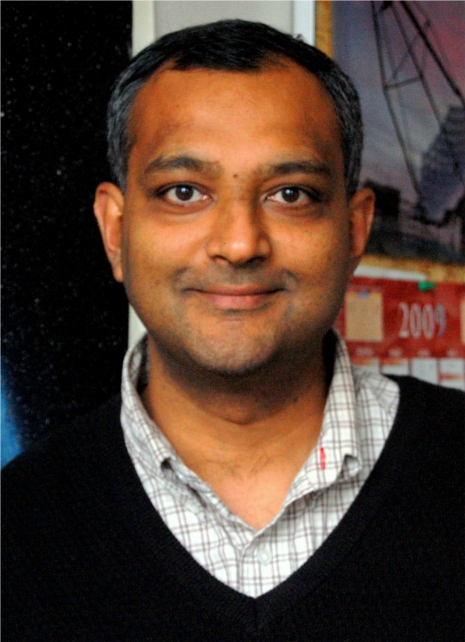 Dhiman Chakraborty合作论文数Department of Physics, Northern Illinois University7
 Valery N Evdokimov合作论文数Institute for High Energy Physics6RK Shivpuri合作论文数6
 James T Linnemann合作论文数Department of Physics and Astronomy, College of Natural Science, Michigan State University6J. Warchol合作论文数6W. E. Cooper合作论文数6P. Gutierrez合作论文数6H. Eugene Fisk合作论文数Fermilab6
 a ross合作论文数Fermi National Accelerator Laboratory6
 Stuart Fuess合作论文数Scientific Computing Division, Fermi National Accelerator Laboratory6T. Ferbel合作论文数6
 Elizaveta K. Shabalina合作论文数University of Gottingen6S. Snyder合作论文数6M. Merkin合作论文数6
 Nirmalya Parua合作论文数Bank of America6
 René Luna-García合作论文数Centro de Investigación en Computación, Instituto Politécnico Nacional6Boris Yu Baldin合作论文数6
 Robert L. McCarthy合作论文数Department of Physics and Astronomy, College of Arts and Sciences, Stony Brook University6Herbert B. Greenlee合作论文数Fermilab6
 John Ellison合作论文数Department of Physics and Astronomy, University of California, Riverside6H. Thomas Diehl合作论文数Fermilab6
 Randal Ruchti合作论文数Department of Physics and Astronomy, College of Science, University of Notre Dame6
 Dmitri Denisov合作论文数Brookhaven National Laboratory6Roger M Partridge合作论文数6
 Susan K Blessing合作论文数Department of Physics, College of Arts & Sciences, Florida State University6A. Ito合作论文数6
 John Hauptman合作论文数Department of Physics and Astronomy, College of Liberal Arts and Sciences, Iowa State University6J. Kohli合作论文数6
 Horst D Wahl合作论文数6D. E. Karmanov合作论文数6
 Chandrashekhara M. Bhat合作论文数Fermi National Accelerator Laboratory6Hans M. Gregersen合作论文数Department of Forest Resources;University of Minnesota;Department of Forest Resources, University of Minnesota6
 Anna Goussiou合作论文数Department of Physics, University of Washington6
 Michael Diesburg合作论文数Fermi National Accelerator Laboratory5V. Gavrilov合作论文数5
 Paul Rubinov合作论文数Fermilab5
 Philip Michael Tuts合作论文数Department of Physics, Columbia University5
 Daniel Wicke合作论文数Ritzenhoefer & Company5D. Zieminska合作论文数5




