Speaker identification (SID) technology aims to determine whether the speech in a recording of an unknown speaker matches that of speaker known to the SID system. If the unknown speaker comes from a community that is underrepresented in the SID training data (e.g., accent), the SID model is more likely to confuse the unknown speaker for other speakers in that speaker community: group-level characteristics are mistaken for individual identifiers (all speakers with that accent seem like the same speaker to SID). Previous solutions include reweighting training data to create balance across speaker groups. While effective, such solutions are insufficient because they require foreknowledge of all potential speaker groups to be tested. The present study seeks a solution by first understanding how group-level characteristics are represented in SID models, focusing on dialect diversity within first-language English speakers. We hypothesize that filter properties (e.g. vowel formants) are more heavily represented in SID models than other uniquely-identifying spectral components. Preliminary results show that speaker clusters based on vowel measures alone are dissimilar to clusters formed by the SID model representations (embeddings) extracted from the same recordings—except for certain underrepresented accents (African American Language), suggesting SID representations of speech differ by speaker group.
Text-to-speech technologies are evolving quickly towards realistic-sounding human-like voices. As this technology improves, so does the opportunity for malpractice in speaker identification (SID) via spoofing, the process of impersonating a voice biometric via synthesis. More data typically equates to a more realistic voice model, which poses an issue for well-known subjects, such as politicians and celebrities, who have vast amounts of multimedia available online. Detection of synthetic speech has relied on signal processing techniques that focus on the generation of new acoustic features and train deep learning models to detect when an audio file has been manipulated through the characterization of unnatural changes or artifacts. However, these techniques do not use any information from the speaker they are evaluating. This paper proposes to incorporate information from the speaker-of-interest (SoI) into the models to avoid specific spoofing attacks for certain vulnerable people. The wealth of data for well-known people can also be used to train a speaker-specific spoofing detector with a higher level of accuracy than a speaker-independent model. The paper proposes a new xResNet-PLDA system and compares it to three different baseline systems: a state-of-the-art speaker identification system, an xResNet system trained to discriminate between bona fide and fake speech, and a speaker identification system in which the PLDA and calibration models were trained with bona fide and fake speech. We evaluated the systems in two different scenarios — a cross-validation scenario and a hold-out scenario — with three different databases. We show how the proposed system outperforms dramatically the baseline systems in each scenario and for each database. Finally, we show how using a small amount of the SoI’s speech to adapt global calibration parameters improves the performance of the system, especially in unseen conditions.
The present work proposes a method for estimating confidence in speaker identification scores in the time domain. The moti-vation for this work comes from forensic fingerprinting, where confidence in a captured fingerprint’s capacity to successfully identify its source is determined by the clarity of the print, but, crucially, this clarity may not be consistent across the print. Hicklin et al. [1] propose a standard for assessing confidence in different regions of a fingerprint based on this clarity, allowing for nuanced analysis of fingerprint biometric information. Speech audio poses a similar problem for speaker identification (SID), where there may be variability in the reliability of the scores output by the SID system for different time segments of an audio sample. Here we evaluate acoustic characteristics that can be directly measured from audio to evaluate SID score reliability over time segments of equal length. 1
Spoken language recognition (SLR) refers to the automatic process used to determine the language present in a speech sample. SLR is an important task in its own right, for example, as a tool to analyze or categorize large amounts of multi-lingual data. Further, it is also an essential tool for selecting downstream applications in a work flow, for example, to chose appropriate speech recognition or machine translation models. SLR systems are usually composed of two stages, one where an embedding representing the audio sample is extracted and a second one which computes the final scores for each language. In this work, we approach the SLR task as a detection problem and implement the second stage as a probabilistic linear discriminant analysis (PLDA) model. We show that discriminative training of the PLDA parameters gives large gains with respect to the usual generative training. Further, we propose a novel hierarchical approach where two PLDA models are trained, one to generate scores for clusters of highly-related languages and a second one to generate scores conditional to each cluster. The final language detection scores are computed as a combination of these two sets of scores. The complete model is trained discriminatively to optimize a cross-entropy objective. We show that this hierarchical approach consistently outperforms the non-hierarchical one for detection of highly related languages, in many cases by large margins. We train our systems on a collection of datasets including over 100 languages, and test them both on matched and mismatched conditions, showing that the gains are robust to condition mismatch.
Recent advances in artificial speech and audio technologies have improved the abilities of deep-fake operators to falsify media and spread malicious misinformation. Anyone with limited coding skills can use freely available speech synthesis tools to create convincing simulations of influential speakers’ voices with the malicious intent to distort the original message. With the latest technology, malicious operators do not have to generate an entire audio clip; instead, they can insert a partial manipulation or a segment of synthetic speech into a genuine audio recording to change the entire context and meaning of the original message. Detecting these insertions is especially challenging because partially manipulated audio can more easily avoid synthetic speech detectors than entirely fake messages can. This paper describes a potential synthetic speech detection system based on the x-ResNet architecture with a probabilistic linear discriminant analysis (PLDA) backend. Experimental results suggest that the PLDA backend results in a 25% average error reduction among partially synthesized datasets over a non-PLDA baseline.
Embodiments of the disclosed technologies include finding content of interest in an RF spectrum by automatically scanning the RF spectrum; detecting, in a range of frequencies of the RF spectrum that includes one or more undefined channels, a candidate RF segment; where the candidate RF segment includes a frequency-bound time segment of electromagnetic energy; executing a machine learning-based process to determine, for the candidate RF segment, signal characterization data indicative of one or more of: a frequency range, a modulation type, a timestamp; using the signal characterization data to determine whether audio contained in the candidate RF segment corresponds to a search criterion; in response to determining that the candidate RF segment corresponds to the search criterion, outputting, through an electronic device, data indicative of the candidate RF segment; where the data indicative of the candidate RF segment is output in a real-time time interval after the candidate RF segment is detected.
In early 2019, the VOiCES from a Distance Challenge 2019 was held to foster research in the areas of speaker recognition and automatic speech recognition (ASR), with a special focus on single-channel distant/far-field audio under various noisy conditions. The challenge was based on the VOiCES corpus collected in real reverberant environments. This paper provides details of the challenge and analysis of evaluation results for the speaker recognition task. For the speaker recognition task, a total of 21 international research organizations from academia and industry participated in the challenge and submitted 58 valid systems. We report an in-depth analysis of system performance of the top-performing systems for the task of speaker recognition broken down by multiple factors such as the room acoustics, microphone type, distractor type, and microphone location. We also discuss the remaining challenges in far-field speaker recognition and suggest directions for future research.
We propose an active learning approach for the unsupervised normalization of vector representations of speech, such as speaker embeddings, currently in widespread use for speaker recognition systems. We demonstrate that the traditionally used mean for normalization of speaker embeddings prior to probabilistic linear discriminant analysis (PLDA) is suboptimal when the evaluation conditions do not match the training conditions. Using an unlabeled sample of target-domain data, we show that the proposed adaptive mean normalization (AMN) technique is extremely effective for improving discrimination and calibration performance, by up to 26% and 65% relative over out-of-the-box system performance. These benchmarks were performed on four distinctly different datasets for a thorough analysis of AMN robustness. Most notably, for a range of data conditions, AMN enabled the use of a calibration model trained on data mismatched to the conditions being evaluated. The approach was found to be effective when using as few as thirty-two unlabeled samples of target-domain data.
In this work, we assess the impact of vocal effort on discrimination and calibration performance of a state-of-the-art speaker recognition system. We analyze three levels of vocal effort (low, normal, and high) from the SRI-FRTIV corpus. We use a deep neural network (DNN) speaker embeddings system with probabilistic linear discriminant analysis (PLDA) and find that vocal effort variation significantly degrades system performance. We apply both mixture PLDA (mix-PLDA) and trial-based calibration with condition PLDA similarity (TBC-CPLDA) to improve system robustness. Our proposed approaches resulted in 18% and 33% relative improvement in discrimination and calibration performance respectively on the SRI-FRTIV corpus.
The "VOiCES from a Distance Challenge 2019" is designed to foster research in the area of speaker recognition and automatic speech recognition (ASR) with the special focus on single channel distant/far-field audio, under noisy conditions. The main objectives of this challenge are to: (i) benchmark state-of-the-art technology in the area of speaker recognition and automatic speech recognition (ASR), (ii) support the development of new ideas and technologies in speaker recognition and ASR, (iii) support new research groups entering the field of distant/far-field speech processing, and (iv) provide a new, publicly available dataset to the community that exhibits realistic distance characteristics.
In this paper, we analyze and assess the impact of critical metadata factors on the calibration performance of speaker recognition systems. In particular, we study the effect of duration, distance, language, and gender by using a variety of datasets and systematically varying the conditions in the evaluation and calibration sets. For all experiments, the system is based on i-vectors and a probabilistic linear discriminant analysis (PLDA) back-end and linear calibration. We measure system performance in terms of calibration loss. Our experiments reveal (i) a large degradation when the duration used for calibration is significantly different from that in the evaluation set; (ii) no significant degradation when a different gender is used for calibration than for evaluation; (iii) a large degradation when microphone distance is significantly different between the sets; and (iv) a small loss for closely related languages and languages with shared vocabulary. This analysis will be beneficial in the development of speaker recognition systems for use in unseen environments and for forensic speaker recognition analysts when selecting relevant population data.
Deep neural network (DNN)-based speaker embeddings have resulted in new, state-of-the-art text-independent speaker recognition technology. However, very limited effort has been made to understand DNN speaker embeddings. In this study, our aim is analyzing the behavior of the speaker recognition systems based on speaker embeddings toward different front-end features, including the standard Mel frequency cepstral coefficients (MFCC), as well as power normalized cepstral coefficients (PNCC), and perceptual linear prediction (PLP). Using a speaker recognition system based on DNN speaker embeddings and probabilistic linear discriminant analysis (PLDA), we compared different approaches to leveraging complementary information using score-, embeddings-, and feature-level combination. We report our results for Speakers in the Wild (SITW) and NIST SRE 2016 datasets. We found that first and second embeddings layers are complementary in nature. By applying score and embedding-level fusion we demonstrate relative improvements in equal error rate of 17% on NIST SRE 2016 and 10% on SITW over the baseline system.
This article focuses on speaker recognition using speech acquired using a single distant or far-field microphone in an indoors environment. This study differs from the majority of speaker recognition research, which focuses on speech acquisition over short distances, such as when using a telephone handset or mobile device or far-field microphone arrays, for which beamforming can enhance distant speech signals. We use two large-scale corpora collected by retransmitting speech data in reverberant environments with multiple microphones placed at different distances. We first characterize three different speaker recognition systems ranging from a traditional universal background model (UBM) i-vector system to a state-of-the-art deep neural network (DNN) speaker embedding system with a probabilistic linear discriminant analysis (PLDA) back-end. We then assess the impact of microphone distance and placement, background noise, and loudspeaker orientation on the performance of speaker recognition system for distant speech data. We observe that the recently introduced DNN speaker embedding based systems are far more robust compared to i-vector based systems, providing a significant relative improvement of upto 54% over the baseline UBM i-vector system, and 45.5% over prior DNN-based speaker recognition technology.
The output scores of most of the speaker recognition systems are not directly interpretable as stand-alone values. For this reason, a calibration step is usually performed on the scores to convert them into proper likelihood ratios, which have a clear probabilistic interpretation. The standard calibration approach transforms the system scores using a linear function trained using data selected to closely match the evaluation conditions. This selection, though, is not feasible when the evaluation conditions are unknown. In previous work, we proposed a calibration approach for this scenario called trial-based calibration (TBC). TBC trains a separate calibration model for each test trial using data that is dynamically selected from a candidate training set to match the conditions of the trial. In this work, we extend the TBC method, proposing: 1) a new similarity metric for selecting training data that result in significant gains over the one proposed in the original work; 2) a new option that enables the system to reject a trial when not enough matched data are available for training the calibration model; and 3) the use of regularization to improve the robustness of the calibration models trained for each trial. We test the proposed algorithms on a development set composed of several conditions and on the Federal Bureau of Investigation multi-condition speaker recognition dataset, and we demonstrate that the proposed approach reduces calibration loss to values close to 0 for most of the conditions when matched calibration data are available for selection, and that it can reject most of the trials for which relevant calibration data are unavailable.
The speakers in the room (SITR) corpus is a collaboration between Lab41 and SRI International, designed to be a freely available data set for speech and acoustics research in noisy room conditions. The main focus of the corpus is on distant microphone collection in a series of four rooms of different sizes and configurations. There are both foreground speech and background adversarial sounds, played through high-quality speakers in each room to create multiple, realistic acoustic environments. The foreground speech is played from a randomly rotating speaker to emulate head motion. Foreground speech consists of files from LibriVox audio collections and the background distractor sounds will consist of babble, music, HVAC, TV/radio, dogs, vehicles, and weather sounds drawn from the MUSAN collection. Each room has multiple sessions to exhaustively cover the background foreground combinations, and the audio is collected with twelve different microphones (omnidirectional lavalier, studio cardioid, and piezoelectric) placed strategically around the room. The resulting data set was designed to enable acoustic research on event detection, background detection, source separation, speech enhancement, source distance, sound localization, as well as speech research on speaker recognition, speech activity detection, speech recognition, and language recognition.
An audio file analyzer computing system includes technologies to, among other things, localize audio events of interest (such as speakers of interest) within an audio file that includes multiple different classes (e.g., different speakers) of audio. The illustrative audio file analyzer computing system uses a seed segment to perform a semi-supervised diarization of the audio file. The seed segment is pre-selected, such as by a human person using an interactive graphical user interface.
This paper introduces the Voices Obscured in Complex Environmental Settings (VOiCES) corpus, a freely available dataset under Creative Commons BY 4.0. This dataset will promote speech and signal processing research of speech recorded by far-field microphones in noisy room conditions. Publicly available speech corpora are mostly composed of isolated speech at close-range microphony. A typical approach to better represent realistic scenarios, is to convolve clean speech with noise and simulated room response for model training. Despite these efforts, model performance degrades when tested against uncurated speech in natural conditions. For this corpus, audio was recorded in furnished rooms with background noise played in conjunction with foreground speech selected from the Libri-Speech corpus. Multiple sessions were recorded in each room to accommodate for all foreground speech-background noise combinations. Audio was recorded using twelve microphones placed throughout the room, resulting in 120 hours of audio per microphone. This work is a multi-organizational effort led by SRI International and Lab41 with the intent to push forward state-of-the-art distant microphone approaches in signal processing and speech recognition.
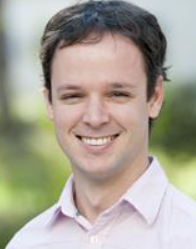 Mitchell McLaren合作论文数Speech Technology and Research Laboratory, SRI International31
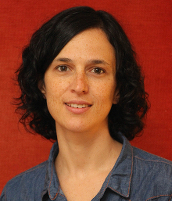 Luciana Ferrer合作论文数Computer Science Institute, University of Buenos Aires18
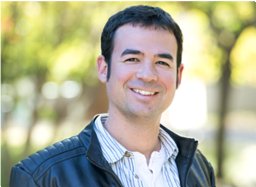 Diego Castán合作论文数15
 Martin Graciarena合作论文数11
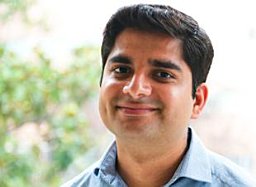 Mahesh Kumar Nandwana合作论文数9Allen R. Stauffer合作论文数7Colleen Richey合作论文数5Yun Lei合作论文数Xmotors.ai5
 Nicolas Scheffer合作论文数Meta5
 Harry Bratt合作论文数Speech Technology and Research Laboratory, SRI International5
 Julien Van Hout合作论文数4Chris Cobo-Kroenke合作论文数3Sarah Bakst合作论文数Commun. Sci. and Disord., Univ. of Wisconsin–Madison, 1500 Highland Ave., Madison, WI 53705,3
 John Murray合作论文数3Mark C. Huggins合作论文数3
 Md Hafizur Rahman合作论文数Florida Atlantic University3
 Brett Y. Smolenski合作论文数3Andre Stauffer合作论文数3Brandon Battles合作论文数2Zeb Armstrong合作论文数2Cory Stephenson合作论文数Intel2
 Gamble Paul合作论文数2Barrios M合作论文数2
 Wen Wang合作论文数Tongyi Speech Lab, DAMO Academy, Alibaba Group2Allen Stauffer合作论文数2
 Horacio Franco合作论文数Laboratory of Speech Technology and Research, SRI International2Edward J. Cupples合作论文数2J. Brian Burns合作论文数2
 Karl S. Ni合作论文数2M. Carlin合作论文数1B. Pokiness合作论文数1M. Linderman合作论文数1GEORGE CHRISTOPHER合作论文数1Honza Cernocky合作论文数1Todd Stavish合作论文数1María Auxiliadora Barrios合作论文数1
 Jennifer Jenson合作论文数Department of Language and Literacy Education, Faculty of Education, The University of British Columbia1
 Brian Stasak合作论文数University of New South Wales1
 Alicia Lozano-Diez合作论文数1Chris Bartels合作论文数1Lomnitz M合作论文数Kent State University1
 Robert C. Bolles合作论文数Artificial Intelligence Center at SRI International1Nick Taylor合作论文数York University1
 David M. Harris合作论文数Department of Forest Resources, Utah State University1
 David A. Van Leeuwen合作论文数TNO Human Factors1M. Leonard合作论文数1
 Pavel Matejka合作论文数Základní škola a Střední škola CoLibri;Phonexia1
 Sébastien Marcel合作论文数Idiap Research Institute;University of Lausanne1




