Humans are experts in understanding others' intention. This capacity is essential to interact and collaborate with others. Thus, providing a robot with this capacity is a key improvement for further developments in socially interactive robotics. This work exploits a mirroring scenario between aa caregiver and a robot to develop an intention inference capacity without providing a priori knowledge to the robot. A sensory-motor architecture is used to learn autonomously associations between the robot's internal states and its perception.
 Laura Cohen合作论文数Inst. des Syst. Intelligents et de Robot., Univ. Pierre et Marie Curie;c;Inst. des Syst. Intelligents et de Robot., Univ. Pierre et Marie Curie1
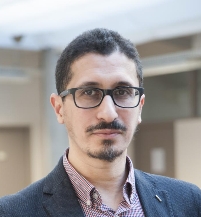 Mohamed Chetouani合作论文数Institut des Systemes Intelligents et de Robotique, Université Pierre et Marie Curie;Département Universitaire D’enseignement et de Formation En Orthophonie, Faculté de Médecine, Université Pierre et Marie Curie;Sorbonne Université1
 Sofiane Boucenna合作论文数centre national de la recherche scientifique1




