Household climate risk in Madagascar reflects the interaction of hazard exposure, perceived risk, and structural capacity to prepare for shocks. As climate variability and extremes intensify across tropical smallholder regions, understanding how these dimensions align at the household level becomes increasingly important. This study examines these dynamics in two contrasting regions, cyclone-exposed Sava and drought-prone Atsimo Andrefana. Using data from 245 stratified households, we integrate a composite Exposure Index, perceived likelihood and severity measures, and a multidimensional Shock Readiness Index capturing assets, credit access, and financial buffers. Results show a decoupling between exposure, perceived risk, and readiness. In Sava, households report higher exposure and perceived risk but lower readiness, associated with limited credit access, liquidity constraints, and specialized crop-based livelihoods. In contrast, households in Atsimo Andrefana perceive lower risk yet demonstrate comparatively higher readiness, supported by diversified livelihoods and convertible livestock assets. These patterns indicate a perception–readiness gap in which heightened awareness does not translate into preparedness under binding structural constraints. Early warning access shows limited association with readiness, suggesting that information alone has limited influence where response options are constrained. By integrating perceived risk with structural preparedness, the study clarifies why preparedness does not systematically track exposure in climate-exposed rural systems. In the context of ongoing global climate change, the findings suggest that strengthening structural capacity through improved financial access, livelihood diversification, and institutional support will be critical to narrowing preparedness gaps in smallholder regions beyond Madagascar.
This article advances discussions of the impact of historical and political contexts on value chain governance and value chain performance, through comparison and elaboration of two recent interdisciplinary reports on beef value chains in Eswatini and Zimbabwe, countries that share important geographical, cultural and economic features. The article reviews literature on policies governing meat export from Southern Africa to Europe and their impacts, and on concepts of governance and power in value chains. It then sets out evidence from the two studies and other sources on a) a shared history of settler colonialism and its different impacts on the two countries in terms of land tenure, agrarian structures and governance; and b) the multifunctionality of cattle in both countries which includes cultural values and multiple use values such as draft power and manure, affecting smallholder behaviour within value chains. Value chains in the two countries are placed in three categories by their degrees of vertical coordination: reputation-based spot markets in communal areas, a more formal but still reputation-based domestic market (these two value chains are found in both countries), and an export market (found only in Eswatini). Horizontal coordination in all these value chains is limited. A variety of risks related to weaknesses in horizontal and vertical coordination are identified. The legacy of settler colonialism, and different responses to it, have greatly impacted the governance and performance of the two value chains. Conclusions are drawn on future policy towards livestock value chains in Southern Africa, and the greater integration of historical and contextual factors in the analysis of value chains and their governance.
The resilience capacity of smallholder households is one of the main drivers of their ability to continue to farm and make investments in the fragile dryland regions. This paper aims to assess the resilience profile of smallholder farmers in the face of climate change and the factors influencing it in three dryland sub-regions of Senegal, namely, Louga, Kaffrine, and Thies. We developed a composite index of climate resilience (CICR) using data on farmers' perceptions of climate variability and their perceived ability to withstand, adapt, and bounce back in the event of climatic shocks. Drought, strong winds, and soil fertility decline because of climate change emerged as the main climate hazards impacting smallholder farming systems. The CICR value ranged from −2 for the most vulnerable households to +2 for the most resilient households. On average, all the households were found to be vulnerable, with an average CICR value of −0.2. The LOUGA region was the most vulnerable, with an average CICR value of −0.36, followed by THIES (-0.2). The KAFFRINE region was relatively less vulnerable, with a CICR value of −0.1. Ordered logit model estimates show that the chances of improving CICR decrease with the increase of the household head's age until 59 years. Access to training on climate-smart agricultural (CSA) practices and climate information appeared to have the potential to increase by 171% the chance of the household improving its resilience status. Analysis also shows that one more woman working off-farm or in-home gardening has the potential to multiply by four times the chances of households being more resilient. This highlights the importance of empowering women to enhance household resilience to climate change. The off-farm revenue increased the chance to improve the resilience status of the farm household by 62% and the receipt of transfer revenue by 50%. This study provides a robust method for quantifying resilience or wellbeing and its drivers and enriches our understanding of the resilience ability of farmers to climate change in a West African context. It can be useful in designing effective adaptation interventions and improving the overall wellbeing of smallholder farmers.
The momentum in sub-Saharan low-income countries is leading to diversifying their funding sources to cover large infrastructure expenditures. This situation meets the expectations of international investors who are still willing to explore new opportunities. Recent access to the Eurobond market by these new players has resulted in the growing substitution of traditional concessional loans by market ones in countries with low-debt portfolios. Thus, a new sustainability approach is required to include risk premiums and potentially versatile investor behaviors. First, we use a theoretical model to show that in a context of low international interest rates, debtor countries can continue to stabilize their level of debt either through budget deficit, if it remains below a given sustainability threshold, or through budget surplus in a downturn context (high-interest rates and spreads). Second, the versatile behavior of investors could be challenging. Third, global liquidity greatly influences the debt dynamics of SSA countries so it matters more for bond spreads than domestic factors. As our empirical study shows that the current debt situation of sub-Saharan African low-income countries increasingly involved in the Eurobond market remains under control. To avoid the worst-case scenario, strong institutions should be a priority, along with appropriate management tools and methods of debt monitoring to cope with all potential vulnerability caused by undesirable side effects of such unstable behaviors.
Food loss is a critical issue in Africa and is mostly limited to quantity loss. Economic losses are likely to be larger but widely ignored. Regarding ruminant-related losses, the optimal harvest point remains difficult to identify. Focusing on Sahelian (agro)pastoral systems with stakeholders operating in a shock-prone environment, our paper explains how critical the actor behaviours are and addresses economic losses on live-animal transactions while fully integrating market behaviors which, should be incorporated in the analysis. Mitigation costs being illusory in such contexts, our findings pioneer a loss reduction approach supported by an appropriate optimization program tested on primary data collected from 202 (agro)pastoral households in Senegal.
Food loss is a critical issue in Africa, but investigation has mainly been limited to quantity loss. Economic losses are likely to be more significant but are widely ignored. Regarding ruminant-related losses, it remains challenging to identify the optimal harvest point. Focusing on Sahelian agropastoral systems, where stakeholders operate in a shock-prone environment, our paper explains how critical actor behaviour is, and it addresses economic losses on live-animal transactions while integrating market behaviours into the analysis. Loss elimination being illusory in such a context, our findings pioneer a loss reduction approach that is supported by an appropriate optimisation programme tested on primary data collected from 202 agropastoral households in Senegal.
The impacts of climate change on agricultural systems in West Africa have been analyzed extensively. However, few studies have focused on livestock systems. Using export data for the period 1996–2017 and climate data for two major cattle suppliers (Mali and Burkina Faso) and one net importer (Côte d’Ivoire) in West Africa, we estimated a gravity model of temperature and cattle trade. Our study provides findings on the impacts of climate change on cattle supply. Indeed, we found that climate shocks in some major Sahel cattle-exporting countries, i.e., Mali and Burkina Faso, can affect the supply of a coastal import country, such as Côte d’Ivoire. Specifically, the study supports findings that a temperature increase in the Sudanian region of the Sahel induces a significant decrease in cattle trade flows. We found, as an example, that a 0.3 °C global increase in temperature could decrease cattle trade flow by 25
Despite large volumes of cattle stocks in the Sahel, most exports of cattle products remain as live animal sales rather than meat. However, there is increased interest amongst donors and governments to increase value-added exports of beef. In this paper, we provide results from a simulation analysis that explores the prospective competitiveness and benefits of exporting beef from Burkina Faso to Ghana rather than live animals. The paper reviews trading patterns in live animals along the corridor and meat imports from overseas destinations to Ghana. Model results highlight limited competitiveness of the main products demanded in destination markets (offals). Market segmentation strategies, infrastructure development, and animal productivity all generate marginal improvements in competitiveness, but not enough to compete with third-country supplies. Only specific, largely external macroeconomic conditions provide for significant improvements in competitiveness. The paper further reveals the relatively modest employment gains associated with increased exports of meat in lieu of live animals. The analysis suggests a re-think on large-scale investments in downstream functions in the value chain, instead illustrating the fundamental role of upstream investments in productivity, animal health, and collective action to promote greater market integration between pastoralists and formal sector buyers.
PPR remains a major challenge to smallholder farmers in Mali. To understand the drivers of low adoption of vaccination by farmers, we analyzed the socio-economic factors influencing farmer WTV during and in the absence of vaccination campaigns. Given that the costs associated with vaccination are largely borne by farmers, we assessed factors that associated with farmer willingness to pay (WTP) more than the current price (150 XOF per dose) by considering two attributes of improvement of the vaccines empirically highlighted as potential leverage points for intervention: access of farmers to vaccines (reducing the distance to the vaccine) and availability of information about the quality of the vaccine (introducing a vaccine viability detector). Data were collected in Mopti and Sikasso regions from 304 producers. Overall (n = 304), 89 percent of respondents vaccinated their herds during official vaccination campaigns. They are associated with receiving information on the campaign calendar more quickly if information is relayed at places of worship and if they have an awareness of the benefits of vaccination, including the protection of third parties. Only 39 percent of respondents vaccinate outside vaccination campaigns. They are positively linked to the credibility of private veterinarians and a recognition of the vital importance of vaccines but are negatively associated with ignorance of vaccination needs and concern about vaccine side-effects. Both distance-effects and quality-tracker effects are associated with farmer willingness to pay more than the current vaccine prices. Farmers practicing semi-intensive production systems are willing to pay 20 percent more than the current vaccine prices, as are users who believe in the beneficial effects of vaccination, users who consider the prices of vaccines as fair, and those who believe that some vaccines are more important than others. Factors that discourage producers from vaccinating or from paying more for vaccination would be more effectively managed with better communication on vaccine benefits through targeted information dissemination campaigns by Malian authorities. Greater price transparency throughout the vaccine production and deployment chain is critical, while timely availability of vaccine tested for viability would increase the willingness to vaccinate while improving access.
Water scarcity is a global issue that disproportionately affects small-scale farmers in low- and middle-income countries (LMICs). Through geospatial analysis, we estimated that less than 37% of small-scale farms probably have irrigation in water scarce regions across LMICs, compared with 42% of non-small-scale farms. Through a literature synthesis assisted by machine learning, we then systematically mapped the existing research for on-farm interventions that improve the incomes or yields of small-scale farmers in water scarce regions. We mapped over 888 on-farm interventions used to combat water scarcity from 560 publications and showed a research bias towards yields rather than livelihoods. We found gaps in evidence for many commonly proposed solutions, including livestock management, digital technology and solutions to protect natural resources at the farm-level, such as buffer strips. Our findings can be used to set a funding agenda for research on the geographies that are most at risk of water scarcity and the interventions that most lack evidence.
Evidence-based livestock policies are needed to raise rural incomes and improve dietary diversity in low-income countries where the majority of populations depend on livestock for their livelihoods. Yet these contexts exhibit unique challenges on both information supply and demand sides, which widen the gaps between research and policy-making. This paper reviews the constraints to evidence-based policy-making and identifies knowledge areas most suitable for building a persuasive narrative that capture the attention of busy decision-makers. These promising spaces for production of new data and methods focus on livestock contribution to the economy, trade, food security and resilience. The examples discussed show the potential of current and future research for leveraging synergistic interests from multiple actors and improving livestock policy interventions.
This dataset was created for the Ceres2030 Team 6, who conducted a semi-automatic systematic review of over 18,000 articles. The goal was to identify solutions for small farms to adapt to climate change - we focused on water scarce environments. This analysis is under review at the academic journal Nature Sustainability. A link to the article will be provided once published. The manuscript's current citation is:Ricciardi, V., Wane, A., Singh Sidhu, B., Goode, C., Solomon, D., McCullough, E., Diekmann, F., Porciello, J., Jain, M., Randall, N., Mehrabi, Z.Evidence synthesis: Funding research for small-scale farmers in water scarce regions to achieve SDG 2.3. In Review. Nature Sustainability.We use manually coded abstracts to build a natural language processing (NLP) model to include or exclude abstracts to our study. A deep learning model was developed using Bidirectional Encoder Representations from Transformers (BERT) and a cross entropy function to classify abstracts. This model performed better than other classifiers (e.g., optimized support vector machine (SVM) and naive bayes) across accuracy, precision, and recall metrics. This dataset is the predicted results.This dataset is an input file for use in:https://github.com/vinnyricciardi/Ricciardi_etal_2020_ceres/blob/master/full_text_analysis.RThe data filename referred to in the code is: Validation Survey_February 17, 2020_12.13.csv
The livestock sector contributes around 14.5 percent of total anthropogenic greenhouse gas (GHG) emissions. Developing mitigation strategies is a serious challenge, especially if we anticipate a rapid growth in the consumption of animal products in Low-Income (LI) and Lower Middle-Income (LMI) countries. Across the planet, livestock systems are highly diverse and the livestock sector offers many possibilities for carbon sinking that can help to reduce emissions. In particular, carbon sequestration in grasslands, rangelands and feed crop fields and manure recycling are crucial in the assessment of the carbon efficiency of livestock value chains. Supporting sustainable livestock production systems, together with sustainable animal product market chains and consumption, requires the completion of GHG inventories based on landscape carbon balances.
Credit rationing remains a major concern for livestock value chain stakeholders in particular for smallholders for who poor access to credit is one of the principal constraints to sustain their activities. Until present-day, the mismatch between credit supply and demand is usually tackled in Sub-Saharan Africa through the intrinsic attributes of credit applicants and very little or never through the prism of the unavoidable multifaceted livestock risk management in view to move forward to an enabling environment. This is the approach adopted in this paper, focused on Senegal livestock risk assessment and management as well as on thorough literature review, secondary data analysis, interviews with public and private corporations and national and international research institutions working in livestock sector. After identification, quantification, impact assessment and prioritization of multifaceted livestock risks, we demonstrate how risk management contributes to the emergence of an enabling environment and stimulate access to credit. (Resume d'auteur)
Sahelian pastoralists use mobility, diversification, and even pluriactivity as main adaptation strategies to the asymmetrical distribution of multifaceted resources. Complex relations vis-à-vis this risky environment hide slowing transitions from a traditional inward-looking to an outward-looking economy, which is characterised by increasing use of a remunerated workforce. The growing commodification of the economy of Sahelian pastoralists could generate new forms of uncertainty. The authors of this paper use a principal-agent model to analyse the remunerated workforce and demonstrate the mixed results of this strategy in the context of structural risk in the Sahel. The authors then highlight the conditions under which trust and reputation are developed to stabilise employment relations and better cope with and/or mitigate various shocks.
Many research and development institutions advocate the integration of economic sectors to markets to benefit from them and reduce poverty. This is not so simple for Sahelian pastoralists living in uncertainty and absence of contingent markets. Sahelian pastoralists use livestock markets but these markets don't systematically influence their production and marketing decisions. Based on the case of Senegalese Sahel, we use a spatial panel model to estimate the magnitude impacts of spatial and time factors on pastoral income generation. Then, we extent discussions to show that Sahelian livestock keepers alternate homo oeconomicus and bounded behaviours vis-a-vis the markets that they know well even if markets don't know much about them-and that is one reason it can be hard for a real structural transition. The problems of pastoral marketing systems are still examined from the perspectives of infrastructure buildings while it is also necessary to reduce transaction costs and information asymmetry to boost livestock marketing. (Resume d'auteur)
This study analyzes the Laiterie Du Berger (LDB)' s milk supply chain and its contribution to strengthening the food security and socioeconomic resources of Senegalese Sahelian pastoral households. Porter's value chain model is used to characterize the innovations introduced by the LDB dairy in its milk inbound logistics and supplier relationships. A socioeconomic food security index and qualitative data are used to assess the dairy's supply chain's contribution to strengthen smallholder households' livelihoods. Data for this research were obtained through individual surveys, focus groups and in- depth interviews of LDB managers and milk suppliers. Results show that milk income contributes significantly to household food security. Suppliers who stabilize their dairy income between rainy and dry seasons, diversify income sources and have larger herds are more likely to remain food secure. The LDB innovations contribute by helping herders access biophysical and economic resources, leading to better livestock feed and household food security.
Le present rapport porte sur la vulnerabilite climatique et environnementale des systemes agro-pastoraux dans le centre ouest du Tchad. Ce rapport repond a l'engagement du FIDA d'assurer la resilience climatique des beneficiaires des investissements du FIDA. Dans le cadre de son nouveau cycle d'investissement (FIDA10), la question de la vulnerabilite des populations rurales face au changement climatique doit etre au coeur des nouvelles actions protees dans les annees a venir. Les ressources allouees au Tchad dans le cadre IFAD10 appuieront un nouveau projet d'investissement a Kanem, Bar El Gazal, Hadjer Lamis, Batha et Guera conformement au programme strategique conjoint Tchad-FIDA. Ce projet sera concu courant 2017. Compte tenu du manque d'informations detaillees et adaptees sur les impacts du changement climatique dans la zone cible, le FIDA a sollicite une expertise du CIRAD afin de conduire une analyse climatique et environnementale pour informer sa conception de projet a venir. Le nouvel investissement du FIDA visera l'agro‐pastoralisme et les chaines de valeur des legumes, de la viande et des fourrages afin de sortir les petits exploitants de la pauvrete, en leur fournissant des moyens de subsistance plus rentables et plus durables. Ces investissements doivent aussi englober la resilience climatique et l'amelioration de la securite alimentaire et nutritionnelle. Dans la zone cible, le betail et les systemes agro-pastoraux sont importants. Les tendances passees et actuelles mettent l'accent sur la vulnerabilite elevee de ces systemes aux phenomenes climatiques extremes et progressifs et devrait augmenter dans un proche avenir. L'objectif du rapport est donc de connaitre la principale vulnerabilite des moyens de subsistance des zones cibles (production, population, chaines de valeur, etc.) au climat actuel et futur est d'une importance capitale pour concevoir un projet avec une plus grande probabilite de succes et une durabilite accrue. Les principales conclusions du rapport sont : -Une legere augmentation des pluies se constate depuis les annees 2010 et devrait se poursuivre dans les annees 2030‐2050 avec une augmentation des temperatures de 1 a 2°c. -L'occupation du sol montre une plus forte mise en culture avec une degradation rapide des espaces de savanes due a la predation anthropique. -L'agriculture devient une pratique dominante, liee a l'evolution et a la pression demographique, provoquant de nombreux conflits avec les pasteurs. -L'agro-pastoralisme est un mode de production plus vulnerable au changement climatique a cause de la sedentarisation des troupeaux. -Les systemes d'elevage pastoral et nomade qui s'adaptent mieux au changement climatique grâce aux differents regimes de mobilite a securiser par des politiques foncieres adequates. -L'insecurite alimentaire varie fortement d'une annee sur l'autre en fonction des pluies et des recoltes, l'elevage apporte des rentrees financieres quand l'agriculture offre des produits pour l'autoconsommation. Ainsi developper l'elevage permet de diminuer les risques des aleas extremes, developper l'agriculture permet depasser les seuils de survie dans les menages. Pour ameliorer concomitamment ces deux systemes de production, un developpement integrant une approche de preservation ecologique des milieux en vue d'une plus grande resilience climatique des paysages agro‐pastoraux et pastoraux est a repenser. (Resume d'auteur)
 Toure Ibra合作论文数24
 Veronique Ancey合作论文数21
 Alexandre Ickowicz合作论文数CIRAD-EMVT, ISRA-LNERV20
 amadou tamsir diop合作论文数10Aliou Diouf Mballo合作论文数8
 Issa Garba合作论文数8Samba Ndiobène Kâ合作论文数4
 Astou Diao Camara合作论文数PPZS, Isra LNERV4
 Christian Corniaux合作论文数4
 Babacar Sene合作论文数4
 Pierre J. Gerber合作论文数4Nelly Njiru合作论文数3issa atte合作论文数3
 Duteurtre Guillaume合作论文数3
 Grégoire Leclerc合作论文数Centre de Coopération Internationale en Recherche Agronomique pour le Développement (CIRAD) Montpellier3m saley合作论文数2Amadou Abdoulaye Fall合作论文数2bernard toutain合作论文数2simon piers simpkin合作论文数2
 Balsher Singh Sidhu合作论文数Inst Resources Environm & Sustainabil, Univ British Columbia2
 Jean-Daniel Cesaro合作论文数Global Agenda for Sustainable Livestock “Restoring value to grassland” network, FAO2
 Divya Solomon合作论文数Univ Michigan2
 Zia Mehrabi合作论文数Department of Environmental Studies, College of Arts and Sciences, University of Colorado Boulder2
 Nicola Randall合作论文数Dept Agr & Environm, Harper Adams Univ2
 Mamadou Yauck合作论文数Dept Epidemiol Biostat & Occupat Hlth, McGill Univ2
 Vincent Ricciardi合作论文数Inst Resources Environm & Sustainabil, Univ British Columbia2
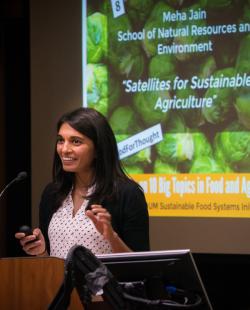 Meha Jain合作论文数School for Environment and Sustainability, University of Michigan-Ann Arbor2
 Michel Dione合作论文数2Jean-Joseph Cadilhon合作论文数2
 Jaron Porciello合作论文数2
 Ellen Mccullough合作论文数Agricultural Development Division2
 Florian Diekmann合作论文数2
 Magda Rich合作论文数U.S. International Trade Commission2Paul Ndiaye合作论文数1
 Jeremy Bouyer合作论文数1
 Abdou Fall合作论文数1Cees de Haan合作论文数1Michael Morris合作论文数1Frederic Ham合作论文数1
 Samir Messad合作论文数1Mbargou Lo合作论文数1Michel Krah合作论文数1Aminata Konaté合作论文数1stephen p d alessandro合作论文数1stephen paul dalessandro合作论文数1omonlola nadine worou合作论文数1
 Prosper Houessionon合作论文数Int Crops Res Inst Semi Arid Trop, CGIAR Res Program Climate Change Agr & Food Secur1René Poccard合作论文数CIRAD Selmet, NAPT Embrapa1Valerie C Valerio合作论文数1




