Collaborative learning in K-12 classrooms creates deeply engaging problem-solving experiences for students. This involves rich, multimodal interactions, such as speech, gaze, and gesture, that can provide insight into how collaborative learning unfolds and contributes to effective learning and engagement. However, analyzing these interactions is challenging, as it typically requires manual processing of complex multimodal data, making the task labor-intensive and time-consuming. Multimodal classroom video question-answering holds significant potential for addressing these challenges by automatically capturing and interpreting collaborative problem-solving behaviors. In this paper, we present a multimodal classroom video question-answering framework that analyzes and automatically answers questions on videos of students’ collaborative problem-solving communication and interactions in K-12 classrooms. The video question-answering framework leverages large language model code generation capabilities to analyze classroom videos of students’ collaborative problem solving and spoken language dialogue by dynamically composing Python programs that call expert models including audio-visual grounding, speech recognition, text analysis, gaze tracking, object detection, and moment localization. Results of evaluations demonstrate that the framework significantly outperforms competitive baselines (i.e., ViperGPT, VideoChat2) according to semantics-based automated metrics along multiple types of student engagement and according to an automated video-based evaluation method we introduce. Furthermore, the results suggest that the video question-answering framework accurately analyzes student collaborative problem solving in classrooms.
ControlNets are widely used for adding spatial control to text-to-image diffusion models. However, when it comes to controllable video generation, ControlNets cannot be directly integrated into new backbones due to feature space mismatches, and training ControlNets for new backbones can be a significant burden for many users. Furthermore, applying ControlNets independently to different frames can not effectively maintain object temporal consistency. To address these challenges, we introduce Ctrl-Adapter, an efficient and versatile framework that adds diverse controls to any image/video diffusion models through the adaptation of pretrained ControlNets. Ctrl-Adapter offers strong and diverse capabilities, including image and video control, sparse-frame video control, fine-grained patch-level multi-condition control, zero-shot adaptation to unseen conditions, and supports a variety of downstream tasks beyond spatial control, including video editing, video style transfer, and text-guided motion control. With six diverse U-Net/DiT-based image/video diffusion models (SDXL, PixArt-α, I2VGen-XL, SVD, Latte, Hotshot-XL), Ctrl-Adapter matches the performance of pretrained ControlNets on COCO and achieves the state-of-the-art on DAVIS 2017 with significantly lower computation (< 10 GPU hours).
We present MIRACLE, a system for online, interpretable visual concept and video action recognition. Through a chat interface, users query the recognition system with an uploaded image or video. For images, MIRACLE returns concept predictions from its structured knowledge base, justifying its predictions with heatmaps and natural language-based attribute detections. For videos, MIRACLE predicts an action and justifies its prediction with time varying entity-entity relations. With its ability to learn new concepts in an online, few-shot manner and its support of dynamic changes to its knowledge base, MIRACLE represents a step forward in interpretable multimodal learning systems.
Text-to-image (T2I) generation has seen significant growth over the past few years. Despite this, there has been little work on generating diagrams with T2I models. A diagram is a symbolic/schematic representation that explains information using structurally rich and spatially complex visualizations (e.g., a dense combination of related objects, text labels, directional arrows/lines, etc.). Existing state-of-the-art T2I models often fail at diagram generation because they lack fine-grained object layout control when many objects are densely connected via complex relations such as arrows/lines, and also often fail to render comprehensible text labels. To address this gap, we present DiagrammerGPT, a novel two-stage text-to-diagram generation framework leveraging the layout guidance capabilities of LLMs to generate more accurate diagrams. In the first stage, we use LLMs to generate and iteratively refine 'diagram plans' (in a planner-auditor feedback loop). In the second stage, we use a diagram generator, DiagramGLIGEN, and a text label rendering module to generate diagrams (with clear text labels) following the diagram plans. To benchmark the text-to-diagram generation task, we introduce AI2D-Caption, a densely annotated diagram dataset built on top of the AI2D dataset. We show that our DiagrammerGPT framework produces more accurate diagrams, outperforming existing T2I models. We also provide comprehensive analysis, including open-domain diagram generation, multi-platform vector graphic diagram generation, human-in-the-loop editing, and multimodal planner/auditor LLMs.
Recent SOTA approaches for embodied learning via interaction directly employ large language models (LLMs) as agents to determine the next steps in an environment. Due to their world knowledge and reasoning capabilities, LLM agents achieve stronger performance than previous smaller agents based on reinforcement learning (RL); however, frequently calling LLMs is slow and expensive. Instead of directly employing LLMs as agents, can we use LLMs' reasoning capabilities to adaptively create training environments to help smaller embodied RL agents learn useful skills that they are weak at? We propose EnvGen, a novel framework to address this question. First, we prompt an LLM to generate training environments that allow agents to quickly learn different tasks in parallel. Concretely, the LLM is given the task description and simulator objectives that the agents should learn and is then asked to generate a set of environment configurations (e.g., different terrains, items given to agents, etc.). Next, we train a small RL agent in a mixture of the original and LLM-generated environments. Then, we enable the LLM to continuously adapt the generated environments to progressively improve the skills that the agent is weak at, by providing feedback to the LLM in the form of the agent's performance. We demonstrate the usefulness of EnvGen with comprehensive experiments in Crafter and Heist environments. We find that a small RL agent trained with EnvGen can outperform SOTA methods, including a GPT-4 agent, and learns long-horizon tasks significantly faster. We show qualitatively how the LLM adapts training environments to help improve RL agents' weaker skills over time. Additionally, EnvGen is substantially more efficient as it only uses a small number of LLM calls (e.g., 4 in total), whereas LLM agents require thousands of LLM calls. Lastly, we present detailed ablation studies for our design choices.
Recent text-to-video (T2V) generation methods have seen significant advancements. However, the majority of these works focus on producing short video clips of a single event (i.e., single-scene videos). Meanwhile, recent large language models (LLMs) have demonstrated their capability in generating layouts and programs to control downstream visual modules. This prompts an important question: can we leverage the knowledge embedded in these LLMs for temporally consistent long video generation? In this paper, we propose VideoDirectorGPT, a novel framework for consistent multi-scene video generation that uses the knowledge of LLMs for video content planning and grounded video generation. Specifically, given a single text prompt, we first ask our video planner LLM (GPT-4) to expand it into a 'video plan', which includes the scene descriptions, the entities with their respective layouts, the background for each scene, and consistency groupings of the entities. Next, guided by this video plan, our video generator, named Layout2Vid, has explicit control over spatial layouts and can maintain temporal consistency of entities across multiple scenes, while being trained only with image-level annotations. Our experiments demonstrate that our proposed VideoDirectorGPT framework substantially improves layout and movement control in both single- and multi-scene video generation and can generate multi-scene videos with consistency, while achieving competitive performance with SOTAs in open-domain single-scene T2V generation. Detailed ablation studies, including dynamic adjustment of layout control strength with an LLM and video generation with user-provided images, confirm the effectiveness of each component of our framework and its future potential.
Recently, DALL-E [45], a multimodal transformer language model, and its variants including diffusion models have shown high-quality text-to-image generation capabilities. However, despite the realistic image generation results, there has not been a detailed analysis of how to evaluate such models. In this work, we investigate the visual reasoning capabilities and social biases of different text-to-image models, covering both multimodal transformer language models and diffusion models. First, we measure three visual reasoning skills: object recognition, object counting, and spatial relation understanding. For this, we propose PaintSkills, a compositional diagnostic evaluation dataset that measures these skills. Despite the high-fidelity image generation capability, a large gap exists between the performance of recent models and the upper bound accuracy in object counting and spatial relation understanding skills. Second, we assess the gender and skin tone biases by measuring the gender/skin tone distribution of generated images across various professions and attributes. We demonstrate that recent text-to-image generation models learn specific biases about gender and skin tone from web image-text pairs. We hope our work will help guide future progress in improving text-to-image generation models on visual reasoning skills and learning socially unbiased representations. 1
As large language models have demonstrated impressive performance in many domains, recent works have adopted language models (LMs) as controllers of visual modules for vision-and-language tasks. While existing work focuses on equipping LMs with visual understanding, we propose two novel interpretable/explainable visual programming frameworks for text-to-image (T2I) generation and evaluation. First, we introduce VPGen, an interpretable step-by-step T2I generation framework that decomposes T2I generation into three steps: object/count generation, layout generation, and image generation. We employ an LM to handle the first two steps (object/count generation and layout generation), by finetuning it on text-layout pairs. Our step-by-step T2I generation framework provides stronger spatial control than end-to-end models, the dominant approach for this task. Furthermore, we leverage the world knowledge of pretrained LMs, overcoming the limitation of previous layout-guided T2I works that can only handle predefined object classes. We demonstrate that our VPGen has improved control in counts/spatial relations/scales of objects than state-of-the-art T2I generation models. Second, we introduce VPEval, an interpretable and explainable evaluation framework for T2I generation based on visual programming. Unlike previous T2I evaluations with a single scoring model that is accurate in some skills but unreliable in others, VPEval produces evaluation programs that invoke a set of visual modules that are experts in different skills, and also provides visual+textual explanations of the evaluation results. Our analysis shows that VPEval provides a more human-correlated evaluation for skill-specific and open-ended prompts than widely used single model-based evaluation. We hope that our work encourages future progress on interpretable/explainable generation and evaluation for T2I models.
There is growing interest in searching for information from large video corpora. Prior works have studied relevant tasks, such as text-based video retrieval, moment retrieval, video summarization, and video captioning in isolation, without an end-to-end setup that can jointly search from video corpora and generate summaries. Such an end-to-end setup would allow for many interesting applications, e.g., a text-based search that finds a relevant video from a video corpus, extracts the most relevant moment from that video, and segments the moment into important steps with captions. To address this, we present the HIREST (HIerarchical REtrieval and STep-captioning) dataset and propose a new benchmark that covers hierarchical information retrieval and visual/textual stepwise summarization from an instructional video corpus. Hirest consists of 3.4K text-video pairs from an instructional video dataset, where 1.1 K videos have annotations of moment spans relevant to text query and breakdown of each moment into key instruction steps with caption and timestamps (totaling 8.6K step captions). Our hierarchical benchmark consists of video retrieval, moment retrieval, and two novel moment segmentation and step captioning tasks. In moment segmentation, models break down a video moment into instruction steps and identify start-end boundaries. In step captioning, models generate a textual summary for each step. We also present starting point task-specific and end-to-end joint baseline models for our new benchmark. While the baseline models show some promising results, there still exists large room for future improvement by the community. 1 1 code and data: https://github.com/j-min/HiREST
As large language models have demonstrated impressive performance in many domains, recent works have adopted language models (LMs) as controllers of visual modules for vision-and-language tasks. While existing work focuses on equipping LMs with visual understanding, we propose two novel interpretable/explainable visual programming frameworks for text-to-image (T2I) generation and evaluation. First, we introduce VPGen, an interpretable step-by-step T2I generation framework that decomposes T2I generation into three steps: object/count generation, layout generation, and image generation. We employ an LM to handle the first two steps (object/count generation and layout generation), by finetuning it on text-layout pairs. Our step-by-step T2I generation framework provides stronger spatial control than end-to-end models, the dominant approach for this task. Furthermore, we leverage the world knowledge of pretrained LMs, overcoming the limitation of previous layout-guided T2I works that can only handle predefined object classes. We demonstrate that our VPGen has improved control in counts/spatial relations/scales of objects than state-of-the-art T2I generation models. Second, we introduce VPEval, an interpretable and explainable evaluation framework for T2I generation based on visual programming. Unlike previous T2I evaluations with a single scoring model that is accurate in some skills but unreliable in others, VPEval produces evaluation programs that invoke a set of visual modules that are experts in different skills, and also provides visual+textual explanations of the evaluation results. Our analysis shows that VPEval provides a more human-correlated evaluation for skill-specific and open-ended prompts than widely used single model-based evaluation. We hope that our work encourages future progress on interpretable/explainable generation and evaluation for T2I models.
As humans, we can modify our assumptions about a scene by imagining alternative objects or concepts in our minds. For example, we can easily anticipate the implications of the sun being overcast by rain clouds (e.g., the street will get wet) and accordingly prepare for that. In this paper, we introduce a new task/dataset called Commonsense Reasoning for Counterfactual Scene Imagination (CoSIm) which is designed to evaluate the ability of AI systems to reason about scene change imagination. In this task/dataset, models are given an image and an initial question-response pair about the image. Next, a counterfactual imagined scene change (in textual form) is applied, and the model has to predict the new response to the initial question based on this scene change. We collect 3.5K high-quality and challenging data instances, with each instance consisting of an image, a commonsense question with a response, a description of a counterfactual change, a new response to the question, and three distractor responses. Our dataset contains various complex scene change types (such as object addition/removal/state change, event description, environment change, etc.) that require models to imagine many different scenarios and reason about the changed scenes. We present a baseline model based on a vision-language Transformer (i.e., LXMERT) and ablation studies. Through human evaluation, we demonstrate a large human-model performance gap, suggesting room for promising future work on this challenging counterfactual, scene imagination task. Our code and dataset are publicly available at: https://github.com/hyounghk/CoSIm
Interest in physical therapy and individual exercises such as yoga/dance has increased alongside the well-being trend, and people globally enjoy such exercises at home/office via video streaming platforms. However, such exercises are hard to follow without expert guidance. Even if experts can help, it is almost impossible to give personalized feedback to every trainee remotely. Thus, automated pose correction systems are required more than ever, and we introduce a new captioning dataset named FixMyPose to address this need. We collect natural language descriptions of correcting a “current” pose to look like a “target” pose. To support a multilingual setup, we collect descriptions in both English and Hindi. The collected descriptions have interesting linguistic properties such as egocentric relations to the environment objects, analogous references, etc., requiring an understanding of spatial relations and commonsense knowledge about postures. Further, to avoid ML biases, we maintain a balance across characters with diverse demographics, who perform a variety of movements in several interior environments (e.g., homes, offices). From our FixMyPose dataset, we introduce two tasks: the pose-correctional-captioning task and its reverse, the target-pose-retrieval task. During the correctional-captioning task, models must generate the descriptions of how to move from the current to the target pose image, whereas in the retrieval task, models should select the correct target pose given the initial pose and the correctional description. We present strong cross-attention baseline models (uni/multimodal, RL, multilingual) and also show that our baselines are competitive with other models when evaluated on other image-difference datasets. We also propose new task-specific metrics (object-match, body-part-match, direction-match) and conduct human evaluation for more reliable evaluation, and we demonstrate a large human-model performance gap suggesting room for promising future work. Finally, to verify the sim-to-real transfer of our FixMyPose dataset, we collect a set of real images and show promising performance on these images. Data and code are available: https://fixmypose-unc.github.io.
For embodied agents, navigation is an important ability but not an isolated goal. Agents are also expected to perform specific tasks after reaching the target location, such as picking up objects and assembling them into a particular arrangement. We combine Vision-andLanguage Navigation, assembling of collected objects, and object referring expression comprehension, to create a novel joint navigation-and-assembly task, named ARRAMON. During this task, the agent (similar to a PokeMON GO player) is asked to find and collect different target objects one-by-one by navigating based on natural language (English) instructions in a complex, realistic outdoor environment, but then also ARRAnge the collected objects part-by-part in an egocentric grid-layout environment. To support this task, we implement a 3D dynamic environment simulator and collect a dataset with human-written navigation and assembling instructions, and the corresponding ground truth trajectories. We also filter the collected instructions via a verification stage, leading to a total of 7.7K task instances (30.8K instructions and paths). We present results for several baseline models (integrated and biased) and metrics (nDTW, CTC, rPOD, and PTC), and the large model-human performance gap demonstrates that our task is challenging and presents a wide scope for future work.
 Mohit Bansal合作论文数Multimodal Understanding, Reasoning, and Generation for Language Lab, Department of Computer Science, College of Arts and Sciences, University of North Carolina at Chapel Hill13
 Jaemin Cho合作论文数MURGe-Lab, University of North Carolina at Chapel Hill8
 Han Lin合作论文数Multimodal Understanding, Reasoning, and Generation for Language Lab, University of North Carolina at Chapel Hill;Meta4
 Hyounghun Kim合作论文数MURGe-Lab3
 Graham H Burri合作论文数Univ N Carolina, Dept Comp Sci, Chapel Hill, NC 27515 USA2
 Elias Stengel-Eskin合作论文数Multimodal Understanding, Reasoning, and Generation for Language Lab, University of North Carolina, Chapel Hill2Yao Xiao合作论文数1Raunak Sinha合作论文数1Xuanming Zhang合作论文数1Khanh Duy Nguyen合作论文数1Satwik Kottur合作论文数1
 Michal Shlapentokh-Rothman合作论文数University of Illinois at Urbana-Champaign1
 Ansel Blume合作论文数University of Illinois Urbana-Champaign1
 Xiaomeng Jin合作论文数University of Illinois at Urbana-Champaign1
 Jeonghwan Kim合作论文数BLENDER Lab, University of Illinois, Urbana-Champaign1Mankeerat Sidhu合作论文数1
 Utkarsh Mall合作论文数Columbia University;Facebook AI Research1Dan Carpenter合作论文数Department of Computer Science, North Carolina State University1
 Yangyi Chen合作论文数University of Illinois Urbana-Champaign1
 Shoubin Yu (喻守彬)合作论文数MURGe-Lab, The University of North Carolina at Chapel Hill;Google DeepMind1
 Nanyun (Violet) Peng (彭楠赟)合作论文数Department of Computer Science, Samueli School of Engineering, University of California, Los Angeles1
 Xilun Chen合作论文数Fundamental AI Research, Meta1
 Da Yin合作论文数Computer Science Department, University of California, Los Angeles;AI2 Mosaic Team1
 Jiateng Liu (刘嘉腾)合作论文数Siebel School of Computing and Data Science, University of Illinois Urbana-Champaign1
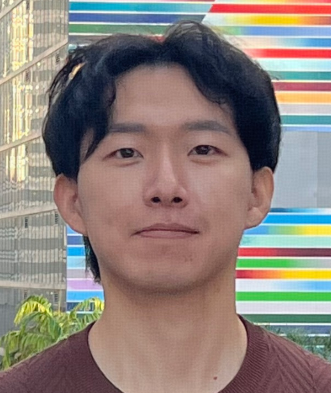 Jaehong Yoon合作论文数College of Computing and Data Science, Nanyang Technological University1
 Derek Hoiem合作论文数Department of Electrical & Computer Engineering, The Grainger College of Engineering, University of Illinois at Urbana-Champaign;Reconstruct Inc1
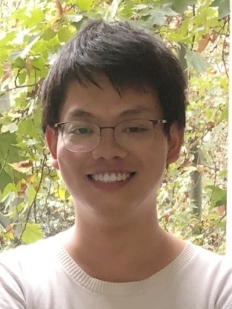 Zhen Zhu合作论文数University of Illinois at Urbana-Champaign1
 Hao Tan (谭昊)合作论文数Adobe1
 Zhou Yu (俞舟)合作论文数Department of Computer Science, Fu Foundation School of Engineering and Applied Science, Columbia University;Arklex AI;South Park Commons1
 James Lester合作论文数Department of Computer Science, North Carolina State University;Center for Educational Informatics, North Carolina State University1
 Heng Ji (季姮)合作论文数Siebel School of Computing and Data Science, The Grainger College of Engineering, University of Illinois at Urbana-Champaign1
 Zhenhailong Wang (王镇海龙)合作论文数Blender Lab, University of Illinois Urbana-Champaign1
 Yashar Mehdad合作论文数Airbnb1Camille Cobb合作论文数1
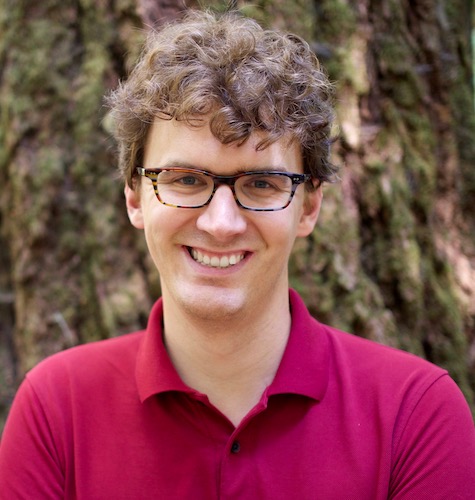 Carl Vondrick合作论文数Department of Computer Science, The Fu Foundation School of Engineering and Applied Science, Columbia University;The Data Science Institute, Columbia University;Apple1
 Lydia Chilton (高雅丽)合作论文数Computer Science Department, The Fu Foundation School of Engineering and Applied Science, Columbia University;Stealth AI Startup1
 Vivian Liu合作论文数Autodesk Research;Columbia University1
 Karrie Karahalios合作论文数Media Lab, Massachusetts Institute of Technology1
 Barlas Oğuz合作论文数Meta AI1
 Wook-Hee Min合作论文数Software Labs, Samsung Electronics CO., LTD.1
 Kuan-Hao Huang合作论文数Department of Computer Science and Engineering, Texas A&M University1
 Kai-Wei Chang合作论文数Department of Computer Science, Samueli School of Engineering, University of California, Los Angeles1
 Albert Wu合作论文数University of California, Los Angeles1




