We discuss aspects of the quantum Lyapunov exponent λL in theories with an exactly marginal SYK-like random interaction, where λL can be computed as a continuous function of the interaction strength 𝒥 . In 1d, we prove a conjecture from [1] which states that at small 𝒥 , λL can be found by considering a specific limit of the four-point function in the decoupled theory. We then provide additional evidence for the 2d version of this conjecture by discussing new examples of Lyapunov exponents which can be computed at weak coupling.
We compute observables in the interacting rank-one 6D N=(2,0) superconformal field theory (SCFT) at large R-charge. We focus on correlators involving Φn, namely symmetric products of the bottom component of the supermultiplet containing the stress tensor. By using the moduli space effective action and methods from the large-charge expansion, we compute the operator product expansion coefficients ⟨ΦnΦmΦn+m⟩ in an expansion in 1/n. The coefficients of the expansion are only partially determined from the 6D perspective, but we manage to fix them order-by-order in 1/n numerically by utilizing the 6D/2D correspondence. This is made possible by the fact that this 6D observable can be extracted in 2D from a specific double-scaling limit of the vacuum Virasoro block, which can be efficiently computed numerically. We also extend the computation to higher-rank SCFTs, and discuss various applications of our results to 6D as well as 2D. Published by the American Physical Society 2025
Abstract Conformal field theories that exhibit spontaneous breaking of conformal symmetry (a moduli space of vacua) must satisfy a set of bootstrap constraints, involving the usual data (scaling dimensions and OPE coefficients) as well as new data such as the spectrum of asymptotic states in the broken vacuum and form factors. The simplest bootstrap equation arises by expanding a two-point function of local operators in two channels, at short distance using the OPE and at large distance using the EFT in the broken vacuum. We illustrate this equation in what is arguably the simplest perturbative model that exhibits conformal symmetry breaking, namely the real ABC model in d = 4 − ϵ dimensions. We investigate the convergence properties of the bootstrap equation and check explicitly many of the non-trivial relations that it imposes on theory data.
Abstract It was recently shown that 3d N $$ \mathcal{N} $$ = 1 supersymmetric Wess-Zumino models can be studied in the ϵ-expansion by analytically continuing the number of fermionic degrees of freedom to be half-integer. In this work we study the extension of this strategy to gauge theories. We consider U(1) gauge theories with N g neutral Majorana fermions χ a , N f charge-1 bosons ϕ i and N f × N g charge-1 Dirac fermions ψ ia in the d = 4 − 2ϵ expansion. Analytically continuing to N g = 1 2 $$ \frac{1}{2} $$ schematically matches the Lagrangian and matter content of 3d N $$ \mathcal{N} $$ = 1 SQED, and we check whether this match can be made rigorous. We compute anomalous dimensions of χ a up to two loops and of meson operators up to one loop at the fixed points, and compare to expectations from SUSY. While we find obstructions to SUSY at small N f , at large N f the observables approach the expected values at a SUSY fixed point. This may allow for checks of 3d N $$ \mathcal{N} $$ = 1 IR dualities between gauge theories.
Noninvertible symmetries in quantum field theory (QFT) generalize the familiar product rule of groups to a more general fusion rule. In many cases, gauged versions of these symmetries can be regarded as dual descriptions of invertible gauge symmetries. One may ask: are there any other types of noninvertible gauge symmetries? In theories with gravity we find a new form of noninvertible gauge symmetry that emerges in the limit of fundamental, tensionless strings. These stringy noninvertible gauge symmetries appear in standard examples such as non-Abelian orbifolds. Moving away from the tensionless limit always breaks these symmetries. We also find that both the conventional form of noninvertible gauge symmetries and these stringy generalizations are realized in AdS/CFT. Although generically broken, approximate noninvertible symmetries have implications for swampland constraints: in certain cases they can be used to prove the existence of towers of states related to the distance conjecture, and can sometimes explain the existence of slightly subextremal states which fill in the gaps in the sublattice weak gravity conjecture.
It was recently shown that 3d 𝒩 = 1 supersymmetric Wess-Zumino models can be studied in the ϵ-expansion by analytically continuing the number of fermionic degrees of freedom to be half-integer. In this work we study the extension of this strategy to gauge theories. We consider U(1) gauge theories with Ng neutral Majorana fermions χa, Nf charge-1 bosons ϕi and Nf × Ng charge-1 Dirac fermions ψia in the d = 4 − 2ϵ expansion. Analytically continuing to Ng = 1/2 schematically matches the Lagrangian and matter content of 3d 𝒩 = 1 SQED, and we check whether this match can be made rigorous. We compute anomalous dimensions of χa up to two loops and of meson operators up to one loop at the fixed points, and compare to expectations from SUSY. While we find obstructions to SUSY at small Nf, at large Nf the observables approach the expected values at a SUSY fixed point. This may allow for checks of 3d 𝒩 = 1 IR dualities between gauge theories.
Using the large-charge expansion, we prove a necessary condition for a CFT to exhibit conformal symmetry breaking, under the assumption that a continuous global symmetry is also broken on the moduli space: there must be a tower of charged local operators whose scaling dimensions are asymptotically linear in the charge. In supersymmetric theories with a continuous R-symmetry and a holomorphic moduli space, the existence of such a tower of operators follows trivially from a BPS condition: their scaling dimensions are then exactly linear in the R-charge. We illustrate the more general statement in several examples of three-dimensional 𝒩 = 1 CFTs, where the leading linear behavior receives nontrivial corrections. By considering a suitable scaling limit, we also relate the spectrum of states with large charge on the cylinder (isomorphic to local operators) to the spectrum of massive particles on the moduli space.
Non-invertible symmetries in quantum field theory (QFT) generalize the familiar product rule of groups to a more general fusion rule. In many cases, gauged versions of these symmetries can be regarded as dual descriptions of invertible gauge symmetries. One may ask: are there any other types of non-invertible gauge symmetries? In theories with gravity we find a new form of non-invertible gauge symmetry that emerges in the limit of fundamental, tensionless strings. These stringy non-invertible gauge symmetries appear in standard examples such as non-abelian orbifolds. Moving away from the tensionless limit always breaks these symmetries. We also find that both the conventional form of non-invertible gauge symmetries and these stringy generalizations are realized in AdS/CFT. Although generically broken, approximate non-invertible symmetries have implications for Swampland constraints: in certain cases they can be used to prove the existence of towers of states related to the Distance Conjecture, and can sometimes explain the existence of slightly sub-extremal states which fill in the gaps in the sublattice Weak Gravity Conjecture.
Motivated by the weak gravity conjecture, arXiv:2108.04594 conjectured that in any CFT, the minimal operator dimension at fixed charge is a convex function of the charge. In this letter we construct a counterexample to this convexity conjecture, which is a clockwork-like model with some modifications to make it a weakly-coupled CFT. We also discuss further possible applications of this model and some modified versions of the conjecture which are not ruled out by the counterexample.
We argue that for any single-trace operator in 𝒩 = 4 SYM theory there is a large twist double-scaling limit in which the Feynman graphs have an iterative structure. Such structure can be recast using a graph-building operator. Generically, this operator mixes between single trace operators with different scaling limits. The mixing captures both the finite coupling spectrum and corrections away from the large twist limit. We first consider a class of short operators with gluons and fermions for which such mixing problems do not arise, and derive their finite coupling spectra. We then focus on a class of long operators with gluons that do mix. We invert their graph-building operator and prove its integrability. The picture that emerges from this work opens the door to a systematic expansion of 𝒩 = 4 SYM theory around the large twist limit.
We study the Lyapunov exponent λ_L in quantum field theories with spacetime-independent disorder interactions. Generically λ_L can only be computed at isolated points in parameter space, and little is known about the way in which chaos grows as we deform the theory away from weak coupling. In this paper we describe families of theories in which the disorder coupling is an exactly marginal deformation, allowing us to follow λ_L from weak to strong coupling. We find surprising behaviors in some cases, including a discontinuous transition into chaos. We also derive self-consistency equations for the two- and four-point functions for products of N nontrivial CFTs deformed by disorder at leading order in 1/N.
We study the quantum Lyapunov exponent $λ_L$ in theories with spacetime-independent disorder. We first derive self-consistency equations for the two- and four-point functions for products of $N$ models coupled by disorder at large $N$, generalizing the equations appearing in SYK-like models. We then study families of theories in which the disorder coupling is an exactly marginal deformation, allowing us to follow $λ_L$ from weak to strong coupling. We find interesting behaviors, including a discontinuous transition into chaos, mimicking classical KAM theory.
Motivated by the Weak Gravity Conjecture in the context of holography in AdS, it has been proposed that operators charged under global symmetries in CFTs, in three dimensions or higher, should satisfy certain convexity properties on their spectrum. A key element of this proposal is the charge at which convexity must appear, which was proposed to never be parametrically large. In this paper, we develop this constraint in the context of multiple Abelian global symmetries. We propose the statement that the convex directions in the multi-dimensional charge space should generate a sub-lattice of the total lattice of charged operators, such that the index of this sub-lattice cannot be made parametrically large. In the special case of two-dimensional CFTs, the index can be made parametrically large, which we prove by an explicit example. However, we also prove that in two dimensions there always exist convex directions generating a sub-lattice with an index bounded by the current levels of the global symmetry. Therefore, in two dimensions, the conjecture should be slightly modified to account for the current levels, and then it can be proven. In more than two dimensions, we show that the index of the sub-lattice generated by marginally convex charge vectors associated to BPS operators only, can be made parametrically large. However, we do not find evidence for parametric delay in convexity once all operators are considered.
We construct a map between a class of codes over F4 and a family of non-rational Narain CFTs. This construction is complementary to a recently introduced relation between quantum stabilizer codes and a class of rational Narain theories. From the modular bootstrap point of view we formulate a polynomial ansatz for the partition function which reduces modular invariance to a handful of algebraic easy-to-solve constraints. For certain small values of central charge our construction yields optimal theories, i.e. those with the largest value of the spectral gap.
Abstract We study the transition between phases at large R-charge on a conformal manifold. These phases are characterized by the behaviour of the lowest operator dimension ∆(QR) for fixed and large R-charge QR. We focus, as an example, on the D = 3, $$ \mathcal{N} $$ N = 2 Wess-Zumino model with cubic superpotential $$ W= XYZ+\frac{\tau }{6}\left({X}^3+{Y}^3+{Z}^3\right) $$ W = XYZ + τ 6 X 3 + Y 3 + Z 3 , and compute ∆(QR, τ) using the ϵ-expansion in three interesting limits. In two of these limits the (leading order) result turns out to be$$ \Delta \left({Q}_{R,\tau}\right)=\left\{\begin{array}{ll}\left(\mathrm{BPS}\;\mathrm{bound}\right)\left[1+O\left(\epsilon {\left|\tau \right|}^2{Q}_R\right)\right],& {Q}_R\ll \left\{\frac{1}{\epsilon },\kern0.5em \frac{1}{\epsilon {\left|\tau \right|}^2}\right\}\\ {}\frac{9}{8}{\left(\frac{\epsilon {\left|\tau \right|}^2}{2+{\left|\tau \right|}^2}\right)}^{\frac{1}{D-1}}{Q}_R^{\frac{D}{D-1}}\left[1+O\left({\left(\epsilon {\left|\tau \right|}^2{Q}_R\right)}^{-\frac{2}{D-1}}\right)\right],& {Q}_R\gg \left\{\begin{array}{ll}\frac{1}{\epsilon },& \frac{1}{\epsilon {\left|\tau \right|}^2}\end{array}\right\}\end{array}\right. $$ Δ Q R , τ = BPS bound 1 + O ϵ τ 2 Q R , Q R ≪ 1 ϵ 1 ϵ τ 2 9 8 ϵ τ 2 2 + τ 2 1 D − 1 Q R D D − 1 1 + O ϵ τ 2 Q R − 2 D − 1 , Q R ≫ 1 ϵ , 1 ϵ τ 2 which leads us to the double-scaling parameter, ϵ|τ|2QR, which interpolates between the “near-BPS phase” (∆(Q) ∼ Q) and the “superfluid phase” (∆(Q) ∼ QD/(D−1)) at large R-charge. This smooth transition, happening near τ = 0, is a large-R-charge manifestation of the existence of a moduli space and an infinite chiral ring at τ = 0. We also argue that this behavior can be extended to three dimensions with minimal modifications, and so we conclude that ∆(QR, τ) experiences a smooth transition around QR ∼ 1/|τ|2. Additionally, we find a first-order phase transition for ∆(QR, τ) as a function of τ, as a consequence of the duality of the model. We also comment on the applicability of our result down to small R-charge.
We study the large N phase diagram of an asymptotically free UV completion of 𝒩 = 1 SU( N ) super-Yang-Mills-Chern-Simons theory coupled to a single massive fundamental scalar multiplet with a quartic superpotential coupling. We compute the effective superpotential at small gauge coupling λ ≡ N/k , and combine this with previous results in the literature to obtain the full phase diagram in this regime. We find that tuning the UV parameters allows us to reach various phases and fixed points of Chern-Simons theory that were recently discovered using large N techniques, as well as new phases that characterize the Yang-Mills theory. We also conjecture the form of the phase diagram for general values of λ and for finite N .
We consider the sphere free energy F ( b ; m I ) in 𝒩 = 6 ABJ(M) theory deformed by both three real masses m I and the squashing parameter b , which has been computed in terms of an N dimensional matrix model integral using supersymmetric localization. We show that setting m_3=ib-b^-1/2 relates F ( b ; m I ) to the round sphere free energy, which implies infinite relations between m I and b derivatives of F ( b ; m I ) evaluated at m I = 0 and b = 1. For 𝒩 = 8 ABJ(M) theory, these relations fix all fourth order and some fifth order derivatives in terms of derivatives of m 1 , m 2 , which were previously computed to all orders in 1 /N using the Fermi gas method. This allows us to compute ∂_b^4F|_b=1. and ∂_b^5F|_b=1. to all orders in 1 /N , which we precisely match to a recent prediction to sub-leading order in 1 /N from the holographically dual AdS 4 bulk theory.
We construct a map between a class of codes over F4 and a family of non-rational Narain CFTs. This construction is complementary to a recently introduced relation between quantum stabilizer codes and a class of rational Narain theories. From the modular bootstrap point of view we formulate a polynomial ansatz for the partition function which reduces modular invariance to a handful of algebraic easy-to-solve constraints. For certain small values of central charge our construction yields optimal theories, i.e. those with the largest value of the spectral gap.
A bstract We study “vacuum crossing”, which occurs when the vacua of a theory are exchanged as we vary some periodic parameter θ in a closed loop. We show that vacuum crossing is a useful non-perturbative tool to study strongly-coupled quantum field theories, since finding vacuum crossing in a weakly-coupled regime of the theory can lead to nontrivial consequences in the strongly-coupled regime. We start by discussing a mechanism where vacuum crossing occurs due to an anomaly, and then discuss some applications of vacuum crossing in general. In particular, we argue that vacuum crossing can be used to check IR dualities and to look for emergent IR symmetries.
We show that exactly marginal operators of Supersymmetric Conformal Field Theories (SCFTs) with four supercharges cannot obtain a vacuum expectation value at a generic point on the conformal manifold. Exactly marginal operators are therefore nilpotent in the chiral ring. This allows us to associate an integer to the conformal manifold, which we call the nilpotency index of the conformal manifold. We discuss several examples in diverse dimensions where we demonstrate these facts and compute the nilpotency index.
 Changha Choi合作论文数Kavli Inst Theoret Phys, Univ Calif Santa Barbara5
 Martin Rocek合作论文数C.N. Yang Institute for Theoretical Physics, Stony Brook University5Kalloor Rohit R.合作论文数3
 Jonathan J. Heckman合作论文数Department of Physics and Astronomy, School of Arts & Sciences, University of Pennsylvania3
 Zohar Komargodski合作论文数Simons Center for Geometry and Physics, Stony Brook University3m p montero合作论文数2
 Masataka Watanabe合作论文数2Jacob McNamara合作论文数2Navot Silberstein合作论文数2
 Gabriel Cuomo合作论文数SUNY Stony Brook, CN Yang Inst Theoret Phys2
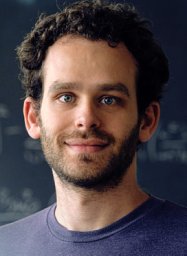 Shai M. Chester合作论文数Dept Particle Phys & Astrophys, Weizmann Inst Sci2
 Erez Y. Urbach合作论文数Dept Particle Phys & Astrophys, Weizmann Inst Sci2Irene Valenzuela合作论文数CERN2
 Cumrun Vafa合作论文数Department of Physics, Harvard University2
 Anatoly Dymarsky合作论文数School of Natural Sciences;Institute for Advanced Study;Institute for Advanced Study, School of Natural Sciences2
 Micha Berkooz合作论文数Department ofParticle Physics & Astrophysics, Faculty of Physics, Weizmann Institute of Science2
 Leonardo Rastelli合作论文数Center for Theoretical Physics, Massachusetts Institute of Technology2Gwenaël Ferrando合作论文数1Elior Urisman合作论文数1gilad weiss合作论文数1
 Xinan Zhou (周稀楠)合作论文数Kavli Institute for Theoretical Sciences, University of Chinese Academy of Sciences1Vladimir Bashmakov合作论文数1Tal Sheaffer合作论文数1
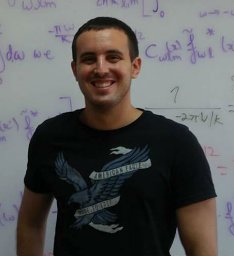 Orr Sela合作论文数University of California1
 Thorngren Ryan合作论文数University of California1
 Shlomo S. Razamat合作论文数Department of Physics;Israel Institute of Technology;Department of Physics, Israel Institute of Technology1Amit Sever合作论文数1
 Jaume Gomis合作论文数Perimeter Institute for Theoretica, Physics Waterloo/Department of Physics and Astronomy, University of Waterloo1
 Eran Palti合作论文数Department of Physics and Astronomy;University of Sussex;Department of Physics and Astronomy, University of Sussex1
 Ofer Aharony合作论文数Theoretical High Energy Physics Group, Department of Particle Physics and Astrophysics, Faculty of Physics, Weizmann Institute of Science1




