The present paper describes the design and development of three different Blended Wing Body (BWB) Aircraft with Distributed Propulsion for the purpose of deployment on Mars. This set of aircraft are nicknamed the Martian Aerial Reconnaissance Vehicle for Intraplanetary Navigation (MARVIN) models. These design concepts are tailored for payload flight with instruments with the purpose of environment surveying. The three different aircrafts are for three different weight classes: less than 500 lbs, 500-5000 lbs, and 5000-50,000 lbs. The aircrafts must follow a set of requirements to be able to conduct environmental surveys and for survivability on Mars. Details of this paper include mission profile, concept sketch iterations, empty weight and fuel fraction estimation, takeoff weight calculations, as well as CAD models of the aircraft and CFD analysis. CFD analysis determines the lift and drag values for each aircraft, generates velocity and pressure plots, tests various dimensions, and compares BWB to traditional aircraft.
Given the importance of growth hacking for the long-term success of businesses and the lack of empirical research, we draw on dynamic capability theory to propose a model that explicates how and when entrepreneurial leadership leads to growth hacking adoption in the startup context. Two studies were conducted to test the proposed model. Specifically, in Study 1, we developed a 15-item scale (five dimensions) of growth hacking adoption based on 207 responses from the owners of various startups in Morocco. Study 2 was based on time-lagged data from 305 owners of startups in China. Our results reveal that entrepreneurial leadership positively impacts growth hacking adoption directly and via big data capability and organizational learning ambidexterity. Further, leader conscientiousness moderates the effects of entrepreneurial leadership on big data capability. We provide actionable insights for owners/managers of start-ups to foster learning ambidexterity and drive growth hacking.
Using attachment theory, we developed a model of destination attachment, empathy, prosocial motivation, self- transcendence, and intentions to participate in a digitally-enabled crowdfunding campaign (DECC). Specifically, this study examined the direct and indirect (via empathy and prosocial motivation) association between destination attachment and foreign tourists' intention to participate in DECC. The current study also tested the moderating role of the self-transcendence. The results revealed a positive association between destination attachment and intention to participate in DECC. Furthermore, destination attachment positively influences intentions to participate in DECC through empathy and prosocial motivation that act as serial mediators of the destination attachment-DECC link. The study also revealed that tourists' sense of self-transcendence significantly moderates the effect of destination attachment on empathy. Our study offers important implications for policymakers who intend to restore various tourist destinations.
Based on the Conservation of Resources theory, we propose a positive relationship between managerial latitude and salespeople’s adaptive-selling behavior. We also propose salesperson perceived control as a relevant mediator and salesperson work centrality as an important boundary condition. Using time-lagged (three rounds, two months apart) data from 321 sales manager-employee dyads, the present work shows that managerial latitude positively influences adaptive selling, both directly and indirectly, via salesperson perceived control. Furthermore, our findings demonstrate that salesperson work centrality functions as a moderator of the direct association between managerial latitude and perceived control, as well as in the indirect link between managerial latitude and adaptive selling. The present study carries several important practical implications for organizations operating in different service and manufacturing sectors.
In this paper, we delve into the experiences of 60 English as a Second Language (ESL) undergraduate learners who actively participated in distinct multimodal instructional units within their writing curriculum. Drawing upon a qualitative analysis encompassing design interviews, written reflections, and video observations, this research elucidates the principal themes that emerged from the learners' perspectives related to the potential of Digital Multimodal Composition (DMC) in the ESL context. These themes encompassed the exceptional opportunities afforded by this approach, which included the capacity to conceptualise ideas through the incorporation of visuals and auditory elements, the ability to communicate in novel and inventive manners, the platform it provided for the authentic expression of personal identities, and its effectiveness in the contextualising topic within their learning journey. Furthermore, this research highlights the primary challenges and constraints voiced by the learners, which encompassed a gamut of technical issues and the quest for the most suitable mode of expression within the multimodal framework. Leveraging these insights, the study culminates in a discussion of implications for both research and practice, particularly about the integration of digital multimodal composition in the multilingual classroom setting.
The present study examines the role of death anxiety as an important mechanism underlying the relationship between fear of Covid-19 and hotel frontline employees’ (FLEs) sense of work alienation. Importantly, the study proposes FLEs’ intrinsic spirituality as being a relevant boundary condition. Results, based on time-lagged survey data (three rounds, 2 weeks apart) from 203 FLEs in 91 hotels and analyzed using structural equation modeling, reveal that death anxiety mediates the association between fear of Covid-19 and work alienation. In addition, FLEs’ intrinsic spirituality moderates the direct relationship between fear of Covid-19 and death anxiety and the indirect relationship between fear of Covid-19 and work alienation, such that the relationships are weak when intrinsic spirituality is high (vs. low). The study offers several important suggestions that can help hospitality managers address FLEs’ sense of work alienation during traumatic conditions. Highlights Death anxiety mediates the relationship between fear of Covid-19 and work alienation. Intrinsic spirituality moderates the link between fear of Covid-19 and death anxiety. Intrinsic spirituality moderates the indirect fear of Covid-19-work alienation link. The findings can help hotel managers address FLEs’ sense of work alienation.
This study investigates the role of spiritual leadership in shaping salesperson adaptive-selling behavior, a crucial factor for enhancing customer satisfaction and loyalty. Despite its significance, research on the leadership-adaptive selling link remains limited. Grounded in the conservation of resources theory, this study predicts that spiritual leadership is positively associated with adaptive selling. The present work also examines the mediating and moderating roles of salesperson trait resilience and salesperson political skill, respectively. Our results based on data from 505 supervisor-salesperson dyads corroborated our predictions. Specifically, the results reveal that spiritual leadership positively impacts adaptive selling directly and via resilience. Further, our findings illustrate that salespeople high on political skill benefit more from spiritual leadership to enhance their resilience and adaptive selling. This study provides actionable insights for managers to foster their salespeople’s resilience and promote adaptive selling to improve organizational effectiveness.
In this paper, the design and development of Unmanned Aerial System (UAS) by a team of interdisciplinary undergraduate students is discussed.The on-going project spans over the period of several years.In this working paper, the research goals are discussed, student participations and task breakdown are highlighted.The key emphasis is on the value of this project-based course offered to undergraduate students at all levels and engineering disciplines.Dissemination plan, student tasks and schedules, and student perspectives are discussed.Learning objectives and assessment are reviewed.Student perspectives and the value of this research-based course are highlighted.Additionally, some results obtained from this research are examined.
Background: Protein energy malnutrition (PEM) is mainly due to inadequate intake of food both in quantity and quality. Serum magnesium level can be detected to identify magnesium deficiency in malnourished children. Low magnesium level in these children is associated with illness and death. Objective: To determine the serum magnesium level in protein energy malnourished children who are under the age of 5 years. Study Design: Prospective Cross Sectional study. Setting: The Pediatric department, civil hospital, Karachi. Study period: From July to December 2021. Material and Methods: Total 245 patients of both genders with moderate and severe malnutrition were included. Venous samples were sent to laboratory and a centrifuge machine was used to separate the serum, which was maintained at a temperature of 20°C for serum magnesium test. Atomic Absorption Spectrophotometer was used to measure serum magnesium levels. Descriptive statistics were applied. Frequency and percentage was calculated. Stratification was done using chi square test and p-value ≤0.05 was considered as significant. Results: Total 156 male and 89 female patients were included in the study. Mean age was 26.63±15.17 months. Mean duration of malnutrition was 11.74±4.86 months. Mean mid upper arm circumference (MUAC) was 11.66±0.76 cm. Serum magnesium level was 1.78±0.22 mg/dl. Overall 180 (73.5%) have moderate PEM. Conclusion: Study showed low serum concentration of magnesium in children with PEM. Keywords: Serum Magnesium Level, Protein Energy Malnutrition, Children Under 5 Years.
Acknowledging the permeability of boundaries between work and family domains, a few studies have shown that stressors in employees’ family domain (e.g., family ostracism) influence their outcomes in the work domain. However, one of the important questions that have been left unaddressed so far in the literature including service literature is: Do stressors from leaders’ family domain, such as feelings of being ostracized affect their work role and followers’ work-related outcomes? Thus, the present study foregrounds how and when leader family ostracism influences FLE service recovery performance in the service context. Data (328 responses) collected from three sources revealed that leader family ostracism was positively associated with laissez-faire leadership, which in turn negatively affected FLE service recovery performance. The study also showed that leader political skill acted as an important boundary condition of the relationship between leader family ostracism and laissez-faire leadership, as well as the indirect negative association between leader family ostracism and FLE service recovery performance. Other than theoretical contributions, this study offers several imperative practical implications that can help service managers compensate for their lack of resources from the family domain and mitigate related destructive outcomes at work.
Digital advancements and disruptive technologies play a key role in transforming inefficient business models. The advent of blockchain technology is improving business operations and providing innovative solutions to organizations on various contemporary issues. This chapter critically reviews the marketing, supply chain management, and blockchain literature and analyzes how businesses can benefit from a blockchain-driven supply chain. We also discuss the application of blockchain technology in marketing and how it could disrupt the marketing mix and processes. We understand that a blockchain-driven supply chain can help marketers in forecasting customer demands, enhances the traceability and transparency of transactions, improve customer trust, and reduce transaction risks. Finally, we discuss limitations and future research directions.
PurposeUsing the conservation of resources (COR) theory, the present study aims to examine the role of participative leadership in frontline service employees (FLEs)' service recovery performance. The present study also tests FLEs' role breadth self-efficacy (RBSE) as a theoretically relevant mediator and FLE trait mindfulness as an important moderator.Design/methodology/approachData were collected using time-lagged (three rounds, two weeks apart) from two sources (193 FLEs and 772 customers, who experienced a service failure). Structural equation modeling (Mplus, 8.6) was employed to analyze the data.FindingsThe results revealed that participative leadership was positively associated with FLEs service recovery performance, both directly and indirectly, via RBSE. The results also showed that FLE trait mindfulness moderated the link of participative leadership with RBSE and the indirect association of participative leadership with service recovery performance, via RBSE.Practical implicationsThis study suggests that organizational leaders who exhibit participative leadership behavior are valuable for organizations. By demonstrating such behaviors, they boost FLEs' RBSE, which in turn improves their service recovery performance.Originality/valueThe present work makes important contributions to the literature on service recovery performance by foregrounding two important yet overlooked antecedents (participative leadership and RBSE) of FLE service recovery performance. The present work also contributes to the nascent literature on the antecedents and outcomes of RBSE in service contexts.
This article attempted to analyze the success stories of students at the tertiary level in an ESL context during the COVID-19 remote learning mode. This paper provided a meta-analysis of the narrative analysis using Polanyi’s framework (Polanyi, 1981). I argued that these success stories provided data to evaluate the conversational narrative framework on structural components and this meta-analysis highlighted the problems as well as the potentials of Polanyi’s conversational narrative model of analysis in the field of narratology. Data revealed that such evaluation of a conversational narrative’s non-Story world clauses offered critical insights as Polanyi delineated in her model.
Given the importance of adaptive selling for customer satisfaction and customer loyalty and the scarcity of research on the role of leadership in shaping salespeople’s adaptive-selling behavior, building mainly on the conservation of resources theory, the present study proposes that spiritual leadership is positively associated with salesperson adaptive-selling behavior, directly and indirectly, via salesperson resilience. Furthermore, we hypothesize salesperson political skill as a boundary condition of the direct relationship between spiritual leadership and salesperson resilience and the indirect relationship between spiritual leadership and adaptive selling. Our results, based on time-lagged and two-source survey data collected from 505 supervisor-salesperson dyads, support the proposed relationships. Our findings offer several important practical suggestions that can help managers develop appropriate interventions for improving salespeople’s resilience and encourage them to engage in adaptive-selling behaviors.
This study was conducted to evaluate the teaching assessment practices of public Secondary schools’ English teachers in Secondary in Punjab Pakistan. The classroom assessment practices, and Skills (CAPS) questionnaire was used to collect data from 89 Secondary teachers in the Sahiwal district. The study inquired how much, teachers agreed and have a consensus with the factors regarding “Beliefs on assessment” to what extent these factors are related and what are the areas of assessment and evaluation in which teachers believe that they are capable, skilful, and expert? Results also determined that predominantly teachers use old traditional assessment skills, and they mostly use those skills about which they think they are skilled. The study suggests more training and workshops give knowledge about assessment as well as skills to be applied in the practical classroom. Keywords: Assessment in Language Education, Classroom Assessment Practices, English Language Assessment.
Autonomy is an idea originated from that the enlightenment movement and different philosophers viewed it with their perceptions over centuries. Communitarianism is a broad social philosophy which is contrasting with individualism and liberalism in all fields including educational ends. This paper following literature review as research methodology gives the viewpoint of some communitarian and feminist theorists about educational aims and how it is distinct from liberal theory and also counts on personal opinion right through. The middle line progress is advocated that the communitarian educational sighting suppressed individualities but the ‘atomic individual’ trend without communal considerations is also not that could be supported, and combined procession should be devised to approach including autonomy as an aim of education. Keywords: Communitarianism, Aim of Education, Educational Social Philosophy.
 Craig A. Chin合作论文数Florida International University11
 Mir M. Atiqullah合作论文数Department of Mechanical Engineering;Polytechnic State University;Department of Mechanical Engineering, Polytechnic State University9
 Muhammad Usman合作论文数8beth stutzmann合作论文数6Bernice Nuhfer-Halten合作论文数5
 Rajnish Singh合作论文数5
 Abrar Ajmal合作论文数5
 Loraine Lowder合作论文数Kennesaw State University5Donna Colebeck合作论文数4
 Munazza Saeed合作论文数FAST Sch Management, Natl Univ Comp & Emerging Sci4parth kumar合作论文数3Tien Yee合作论文数Civil & Environm Engn Dept, Kennesaw State Univ3
 Ayse Tekes合作论文数Kennesaw State University3
 Fauzia Janjua合作论文数2Christopher D. Roper合作论文数2beth n stutzman合作论文数2Warisha Ikhlaq合作论文数2Niko Giannakakos合作论文数2
 Muhammad Aamir Shafique Khan合作论文数2
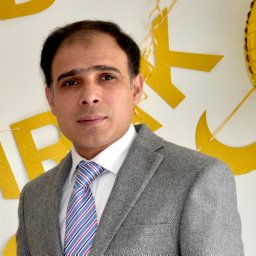 Malik Imran Ahmad合作论文数Warwick Business Sch2
 Keshav Raj Acharya合作论文数Dept Math, Embry Riddle Aeronaut Univ2Syed Anwer Hasnain合作论文数2
 Shoaib Shafique合作论文数2
 Inam Ullah Khan合作论文数2
 Moazzam Ali合作论文数Dept Management Sci, COMSATS Univ Islamabad2
 Shaker Bani-Melhem合作论文数Dept Management, Univ Sharjah2
 Muhammad Rashid Naeem合作论文数Sch. of Software Eng., Chongqing Univ.;c;Sch. of Software Eng., Chongqing Univ.2
 Memon, A.A.合作论文数Sch. of Software Eng., Chongqing Univ.;c;Sch. of Software Eng., Chongqing Univ.2
 Abdullah Trefa M合作论文数University of Exeter Medical School , Exeter Devon , UK.2
 M A Karim合作论文数Department of Microbiology;University of Dhaka;Department of Microbiology, University of Dhaka2
 David Carl Ison合作论文数College of Aeronautics, Embry-Riddle Aeronautical University - Worldwide2
 Waheed Akhtar合作论文数School of Biological Sciences, University of the Punjab2
 Paul G. Winyard合作论文数Bone and Joint Research Unit, St. Bartholomew’s and The Royal London School of Medicine and Dentistry2
 Tristan T. Utschig合作论文数Lewis-Clark State College;Division of Natural Science;Division of Natural Science, Lewis-Clark State College2Jacqueline L. Whatmore合作论文数Pharmaceutical Sciences Institute, Aston University2Mohammed S. Mayeed合作论文数2
 Brent A. Terwilliger合作论文数College of Aeronautics, Embry-Riddle Aeronautical University - Worldwide2
 Christina R. Scherrer合作论文数(Special Issue on Healthcare Engineering)2
 Jennifer Vandenbussche合作论文数jvandenb@spsu.edu2
 Daniel R. Ferreira合作论文数Department of Civil and Environmental Engineering, University of Connecticut2
 Ayaz Ahmed合作论文数Dalian Medical University, Dalian Medical University2Shaista Ehsan合作论文数1Habib Qaiser合作论文数1
 Anthony Coppola合作论文数1
 Muhammad Armughan Ali合作论文数1Alexander Bryant合作论文数1Samir Noujaim合作论文数1Muhammad Rafique合作论文数1




