A stable hydrogel beads based on the Porphyridium cruentum polysaccharide in combination with chitosan and a trivalent ion, Al3+ or Fe3+ were synthesized for the first time. Comparisons of the FTIR results for the beads obtained with Fe3+ with the spectra of neat polysaccharides or the spectrum of the complex formed from chitosan and Fe3+ showed changes in the infrared bands that reflect physical interactions among the components between the oxygen on the COO− within the Porphyridium polysaccharide and between the NH2 groups within chitosan and Fe3+. XPS analysis of the beads showed that the typical bonds of each polysaccharide component were observed on the bead’s surface and that Fe-Oxides were formed. SEM analysis showed that bead morphology was characterized by a non-porous, smooth surface. In addition, viscosity showed extremely high viscosity at low shear rates, indicating a highly structured, viscoelastic soft solid. Rheological frequency sweeps further demonstrated that G′ ≫ G″ across the entire frequency range, confirming the hydrogel comprised a predominantly elastic, solid-like network that remains stable over time. Methylene blue sorption experiments revealed that equilibrium was reached after approximately 45 min, with a maximum sorption yield of 86
Transition metals are among the main pollutants found in industrial wastewater and can be removed by adsorbing them on biological supports. The treatment of aqueous solutions containing lanthanides and other representative transition metal ions by adsorption, using polysaccharide hydrogel beads of kappa (K) and iota (I) from the carrageenan group, was examined. In general, I shows higher adsorption efficiency for lanthanides than K (similar to up to 2 fold) due to the larger amount of ester sulfate groups on I. Furthermore, when comparing the different cations used as crosslinkers, their hydration radius, charge, and the type of anion influence the sorption yield. In general, the sorption yields of Ru3+/Rh3+ are higher (up to 2.2 fold) than those of the various lanthanides, whereas the sorption yields of Cu2+/Fe3+ are lower. The FTIR analysis supported the hypothesis of chemical adsorption and shows that while the lanthanide ions are adsorbed via both ester sulfate and hydroxyl groups, the adsorption of Ru3+ and Rh3+ occurs mainly via the hydroxyl groups. The TGA analysis shows that the adsorption of the transition metals reduces the thermal stability of the I. The new adsorbents show high potential for the sorption of a variety of heavy metal ions.
Adsorption has been found to be highly effective for removing heavy metals from polluted industrial wastewater. Adsorbents of biological origin, such as negatively charged polysaccharides, e.g., alginate and carrageenan, have attracted a lot of attention recently. In this study, these three polysaccharides were used to adsorb different heavy metal ions from aqueous solutions. The results showed that the sorption yields of various lanthanides with the kappa and iota carrageenan were similar, though the sorption yields of the iota beads were higher. Also, the iota and the kappa beads had higher sorption yields for Ru3+ and Rh3+ than they did for the lanthanides. In general, the presence of light metal ions in the solution affected the sorption yields of the heavy metal ions, depending on the type and concentration of the light metal ions. All three polysaccharides were also capable of adsorbing mixtures of lanthanides and heavy metal ions. In binary solutions that contained both lanthanide ions (Ce3+ or Eu3+) and transition heavy metal ions (Ru3+ or Rh3+), differences in sorption yields were observed, with all polysaccharides exhibiting higher selectivity for Ru3+ and Rh3+. Finally, FTIR, SEM/EDS, and TGA analyses confirmed that all metal ions were adsorbed onto both types of carrageenan.
An ammonium tagged Hoveyda-Grubbs-type catalyst, i.e., FixCat, was non-covalently heterogenized for the first time in a λ−carrageenan xerogel via ion-exchange, which was confirmed by FTIR, SEM-EDS and TGA analyses. The new heterogeneous catalyst, i.e., λ−FixCat, was successfully employed in ring-closing metathesis using representative olefins in several solvents without leaching of the complex. The best catalytic performances were detected in the nonpolar solvents hexane and toluene. The activity of λ−FixCat was shown to be superior in toluene in terms of catalyst reusability, as it was easily separated from the reaction mixture, and it was successfully recycled five times. This study is part of our ongoing efforts to demonstrate the applicability of natural polysaccharides as supports for various catalysts.
Electricity storage in utility-scale batteries has been proven to be a mature commercial technical solution to help with circumvention of the stochastic nature of solar irradiation. However, these renewable energy projects are not an exception regarding social acceptability. Thus, the integration of the social component can help in the deployment of renewable electricity sources. We chose here a case study of the decarbonization benefits derived from the combination of solar PV and utility-scale batteries in the state of Israel. Although there are plenty of solar resources, solar PV electricity production in the state of Israel is still relatively low plus zero electricity storage capacity. In this sense, the state of Israel has a unique social challenge that can push the deployment of renewable energies backed up by utility-scale batteries, by supplying "Kosher electricity" for ultra-orthodox (UO) Jews. These strict communities avoid contact with electrical devices during the Sabbath due to religious beliefs and use diesel generators instead to avoid other Jews from working during the day. The results obtained show that providing all the Kosher electricity for the 1.28 million UO individuals demands a storage capacity from 18 to 24 times the world's largest installed utility-scale battery (450 MWh) but can reduce up from 188 to 474 kton of CO2 on a yearly basis. This solution can have a positive social acceptance and the acceleration of the country's solar revolution. However, the quantified size of such a task represents as much as 5-15% of the potential utility-scale market size by 2030, therefore revealed to be gigantic.
In recent decades, renewable and biodegradable polysaccharide-based hydrogels have enjoyed wide applicability among them also as adsorbents for heavy metal removal from wastewaters. Herein we prepared hydrogel beads from iota and kappa carrageenans using a variety of salts as crosslinkers, that were tested for the first time in europium ion (Eu 3+ ) sorption from an aqueous solution as representative lanthanide. The type of the salt, and especially the valance and the hydrated radius of the cation, were found to dictate hydrogel bead formation and structure and, therefore, the Eu 3+ sorption yield. The results of ATR-FTIR, SEM and TGA analyses to characterize the iota carrageenan hydrogel beads that were prepared with alkali cations, before and after interaction with Eu 3+ , indicate that the adsorbent prepared with LiCl was much stiffer and more stable than those prepared with NaCl or KCl. The iota carrageenan beads that were prepared with LiCl were also reused 5 times while exhibiting high adsorption capacities.
Renewable and biodegradable polysaccharides attract attention as environmentally friendly adsorbents for the removal of heavy metals from wastewater. One such group, is carrageenan, of which were recently successfully employed to adsorb representative lanthanide and actinide ions. Herein, iota-carrageenan-based hydrogels were used to adsorb europium ions (Eu3+) from water solutions, followed by desorption of the ions from the hydrogel beads and recycling of the beads three times. It was found that sorption yields from a 500 mg/L Eu3+ ion solution with beads that were prepared with 1 or 2 wt/v% aqueous solution of iota-carrageenan with CaCl2 (0.5 M) reached maximum sorption yield of 50% and 65%, correspondingly, after 1 h. In addition, the sorption kinetics followed the pseudo second-order model controlled by chemisorption. Desorption yields in the first cycle using NaNO3 (1 M) with both preparations were 57% and 74%, respectively. The sorption yields increased during the second and third cycles and were efficient in the overall pH range. Cryo-SEM, SEM, SEM-EDS and TGA analyses verified the adsorption and desorption of Eu3+ ions to and from the iota beads and that the Ca2+ ions that initially crosslinked the hydrogel were replaced during the cycles by Eu3+ or Na+ ions. In addition, the beads were stable and easily reusable for several sorption/desorption cycles. Furthermore, after sorption, the beads were characterised by a porous structure, such that beads prepared with a 2 wt/v% aqueous solution of iota-carrageenan yielded a more porous, ordered structure, and after desorption, the bead textures became even more porous. GRAPHICAL ABSTRACT
Polysaccharides derived from natural sources have been offered as environment friendly sorbents for the adsorption of heavy metals. We present a simple technique to remove uranyl ions from aqueous solutions by using representative polysaccharides. The adsorption efficiency of UO22+ decreased in the following order: xanthan gum > kappa > iota/guar gum, for instance, the efficiencies after sorption of 30 min with 500 mg per L uranyl acetate and 0.03 g of the corresponding polysaccharide were: 89.7%, 85.2%, 79.1% and 77.1%. Lowering the acidity in the system decreased the sorption efficiency with all the polysaccharides, and reducing the ratio between the amount of uranyl ions and the amount of polysaccharide increased the sorption efficiencies, e.g., using 500 mg per L uranyl acetate and 0.05 g of the corresponding polysaccharide (xanthan gum, kappa, iota, guar gum) yielded after 30 min sorption efficiencies of 94.3%, 91.5%, 89.0% and 87.7%, respectively. FTIR, SEM-EDS and TGA analyses verified the presence of uranium in the polysaccharides and showed that the uranyl ions were interacting with the different functional groups. Moreover, the addition of uranyl ions to the polysaccharides caused a sharp decrease in viscometry measurements. In addition, the measurements showed that the addition of uranyl lowered both modules, G ' and G '', and made the solution more liquid.
Europium, discharged during different industrial processes, can cause different health effects as well as damage to ecosystems. Thus, developing effective recovery and recycling of Eu3+ is an urgent task. For the first time, we examined the relation between the ester sulfate content of red algae-produced polysaccharides and their Eu3+ adsorption capacities. Eu3+ was successfully adsorbed from aqueous solutions by four representative red algal polysaccharides, each with a different ester sulfate content in its backbone. We demonstrated that the sulfate content of each carrageenan form determines its adsorption performance, proving that the bioactivity was positively correlated with the sulfate content of the carrageenan forms in the order λ > κ > i. Furthermore, decreasing the solution pH and/or increasing the Eu3+/polysaccharide ratio decreased the sorption yields of all three of the polysaccharides. The sorption yield of the extracellular polysaccharide derived from the red algae Porphyridium cruentum matched that of λ at pH 5 due to Eu3+ sorption to both negatively functional groups, the ester sulfate and carboxylic, but its yields were lower under more acidic conditions due to protonation of the carboxylic groups. The results of ATR-FTIR, EDS–SEM, and TGA analyses to characterize the adsorbents after the interactions with Eu3+ indicate that europium was adsorbed to all of the polysaccharides. ATR-FTIR spectra showed that the Eu3+ binds to the carrageenan forms mainly via their ester sulfate groups and to the red algae polysaccharide via its uronic acid residues. These findings can be applied in selective adsorption strategies achieved by fine-tuning the polysaccharides’ ester-sulfate contents.
Renewable and biodegradable polysaccharides have attracted interest for their wide applicability, among them their use as sorbents for heavy metal ions. Their high sorption capacity is due mainly to the acidic groups that populate the polysaccharide backbone, for example, carboxylic groups in alginate and sulfate ester groups in the iota and lambda carrageenans. In this study, these three polysaccharides were employed, alone or in different mixtures, to recover different heavy metal ions from aqueous solutions. All three polysaccharides were capable of adsorbing Eu3+, Sm3+, Er3+, or UO22+ and their mixtures, findings that were also confirmed using XPS, TGA, and FTIR analyses. In addition, the highest sorption yields of all the metal ions were obtained using alginate, alone or in mixtures. While the alginate with carboxylic and hydroxyl groups adsorbed different ions with the same selectivity, carrageenans with sulfate ester and hydroxyl groups exhibited higher adsorption selectivity for lanthanides than for uranyl, indicating that the activity of the sulfate ester groups toward trivalent and smaller ions was higher.
Palladium acetate that was heterogenized together with triphenylphosphine trisulfonate ligand on renewable polysaccharides was employed in the aerobic oxidation of benzyl alcohol in three representative solvents-hexane, ethyl acetate, and ethanol. Solvent polarity was found to affect the reaction rate, as both the solubility of benzyl alcohol and oxygen depend on the nature of the solvent. The conversion rate was decreased in the order of hexane > ethanol > ethyl acetate (conversion rates in the presence of the heterogenized iota-based catalyst after 24 h of reaction were 38, 20, and 15%, respectively). In addition, the nature of the polysaccharide, that is, the type and numbers of functional groups on its backbone, also affected the reaction rate, where xanthan gum yielded the highest conversion rate of 58% in hexane. Finally, though hexane was found to be the preferred solvent for the heterogeneous system, catalytic performance in hexane decreased during recycling while in ethanol it increased due to the formation of palladium nanoparticles. To reveal the structural changes undergone by the catalyst during the reaction, several techniques were used, including energy dispersive X-ray spectrometry-scanning electronic microscopy, X-ray photoelectron spectroscopy, Transition electronic microscopy, and thermal gravimetric analysis. This simple and straightforward heterogenization procedure can be also used for immobilization of different other metal complexes in variety of organic reactions.
The use of algae cell-wall polysaccharides to adsorb heavy metals from wastewaters has motivated a lot of work in the field. Though these molecules possess properties that seem to render them applicable as metal adsorbents, their full potential has yet to be realized. To that end, we developed a simple and straightforward technique to remove europium ions from aqueous solutions by using three representative polysaccharides: guar gum, xanthan gum and iota-carrageenan. The sorption yield increased in correlation with the acidity of the functional groups on these representative polysaccharides. A comparison of the Fourier-transform infrared spectra of the guar gum/ xanthan gum/iota-carrageenan hydrogels formed following the europium adsorption to that of pristine poly-saccharides indicated that they comprised different transmission bands, suggesting that europium ion adsorption occurs via interactions with the functional groups on the polysaccharides. Furthermore, scanning electron mi-croscopy of iota-carrageenan hydrogel confirming that the europium was adsorbed to the iota-carrageenan and the europium:sulfur ratio of about 2.8:1 suggest that europium was linked to similar to 3 ester sulfate groups by inter/ intramolecular forces via the oxygen atom. In addition, X-ray photoelectron analysis showed that the ratio of the peaks Eu+2/Eu+3 in iota-carrageenan hydrogel were markedly intensified relative to its respective ratio in Eu (NO3)(3 center dot)6H(2)O.
Immobilization of Pd(OAc)2(TPPTS)2 in various renewable polysaccharides hydrogels, yielded heterogeneous catalysts that were successfully used, for the first time, in the aerobic oxidation of benzylic alcohol. The new catalysts were easily removed from the reaction mixture and recycled with some loss of activity. Among all tested polysaccharides, iota-carrageenan was found to be the most suitable support, using calcium chloride as a gelation agent.
The search for selective heterogeneous catalysts for the aerobic oxidation of alcohols to ketones and aldehydes has drawn much attention in the last decade. To that end, different palladium-based catalysts have been proposed that use various organic and inorganic supports. In addition, supports that originate from a biological and renewable source that is also nontoxic and biodegradable were found to be superior. We heterogenized palladium chloride or acetate complexes with triphenylphosphine trisulfonate on iota-carrageenan xerogel by simple mixing of the complex and the polysaccharide in water. The resulting polysaccharide-catalyst mixture then underwent deep freeze and lyophilization, after which the catalyst was characterized by TEM, XPS and SEM-EDS and tested in aerobic oxidation. The new heterogeneous catalysts were successfully used for the first time in the aerobic oxidation of benzylic alcohols. Moreover, they were easily removed from the reaction mixture and recycled, yielding an increase in activity with each subsequent reuse. As determined by TEM and XPS, the reduction in palladium and the formation of nanoparticles during the reaction in ethanol yielded more active species and, therefore, higher conversion rates. A SEM-EDS analysis indicated that the palladium was thoroughly dispersed in the xerogel catalysts. Moreover, the xerogel catalyst was observed to undergo a structural change during the reaction. To conclude, the new heterogeneous catalyst was prepared by a simple and straightforward method that used a non-toxic, renewable and biodegradable support to yield an active, selective and recyclable heterogeneous system.
The Monetarized Footprint Index (MFI) of paprika powder grown in either Israel or India and packed in plastic jars or bags in Israel was obtained from land, water and carbon footprints under a life-cycle perspective. It was found that although the shipment distance of the paprika powder from India to Israel is relevant, a high demand for irrigation water in Israel plus the fact of the water's source from a relevant carbon footprint reverse-osmosis desalination process led to higher footprints of the Israeli products cultivated and packed there compared to India. In addition, packaging in jars required much more PET compared to bags. Thus, the growth of the pepper in India and the use of PET bags instead of jars was the best scenario, yielding MFI of 0.51 €•kg−1. Moreover, considering the difference in cost-of-living and environmental performance between the two countries led to significant differences between the normalized MFI values of the Israeli and the Indian-sourced product. For example, normalizing the MFI based on the Gross Domestic Product per capita gives results which reveal that all the scenarios have similar scaled normalized values (167±17). In contrast, the use of Big Mac Index and Environmental Performance Index for normalization highlights the scenario of growth of the pepper in India and use of PET bags as the clear best performer.
RhCl3 was heterogenized into an iota-carrageenan polysaccharide support, and the effect of various reactor configurations on catalyst performance in a Suzuki cross-coupling reaction was studied. It was found that performing the reaction in a high-volume, well-agitated, mechanically mixed high volume reactor, or circulating the reaction mixture through the catalyst, which was placed in a tabular reactor, yielded higher product yields in comparison to magnetically stirring or shaking. In addition, the catalyst was also successfully recycled in all the systems. Moreover, the reaction solution in each reactor configuration did not contain any traces of rhodium, while elemental composition of the iota-based rhodium catalyst, ἰ-RhCl3, following the first and the second cycle in the glass tubular reactor was similar to the fresh ἰ-RhCl3 catalyst, demonstrating the high xerogel stability.
In the heterogeneous catalyst i-Pd(OAc)2(TPPTS)2, Pd(II) was reduced to Pd(0) by using different alcohol solvents, and the catalyst’s activity was studied in the aerobic oxidation of benzyl alcohol. We studied the effects of the impregnation time in ethanol as a solvent and the use of various alcoholic solvents on the size of palladium nanoparticles. We found that the reduction of palladium by the various alcohols yielded palladium nanoparticles that were active in the aerobic oxidation of benzyl alcohol. As determined by DLS, TEM, and zeta potential analyses, both the impregnation time in ethanol and the type of alcohol used were observed to affect nanoparticle formation, particle size distribution, and agglomeration, as well as the conversion rate. The palladium nanoparticles’ hydrodynamic diameter sizes obtained during the 24 h of impregnation time were in the range of 10–200 nm. However, following 24 h of impregnation in ethanol the nanoparticles tended to form aggregates. The conversion rates of all the primary alcohols were similar, while for secondary alcohol, in which the hydrogen of the hydroxyl is less acidic and there is steric hindrance, the conversion was the lowest. Performing the oxidation using the solvent 1-propanol yielded smaller nanoparticles with narrower distributions in comparison to the reaction that was observed when using the ethanol solvent. On the other hand, the relatively high particle size distribution in 1-hexanol yielded agglomerates.
RhCl3 was heterogenized into renewable polysaccharide supports, and the effect of polysaccharide type on the new catalyst performances in a Suzuki cross-coupling reaction was studied. The conversion of the fresh iota carrageenan heterogeneous system (i-RhCl3), was found to be the highest, whereas it was lower than the conversion of its homogeneous analogue. In addition, the i-RhCl3 (catalyst loading of 6.5 wt) was proven to be efficient heterogeneous catalyst that was easily recycled, whereas the conversion was increased in the first and second cycles. Scanning electronic microscopy (SEM) combining Energy dispersive X-ray spectrometry and Surface analysis by X-ray photoelectron spectroscopy were performed, confirming that RhCl3 was embedded within the i-carrageenan. The Fourier-transform infrared spectrometry of the heterogeneous i-RhCl3 catalyst was compared to that of the native polysaccharide, and no new bands were detected. Nonetheless, a comparison of SEM image of i-carrageenan with and without RhCl3, as well as rheological measurements of the aqueous solution of i with and without RhCl3, indicated the incorporation of the polysaccharide with the RhCl3.
Several industrial processes, such as desalination or neutralization, generate brines defined as concentrated solutions of salts in water, usually NaCl, typically discharged in the vicinities of the desalination plant or factory. To reduce the environmental impact and promote the valorization of the wasted resources, alternatives must be sought. Among sustainable alternatives for the recovery of brines, the possibility of using Electrodialysis with Bipolar Membranes (EDBM) is of interest, because it allows recovering brines as useful acids and bases. This review focuses on the discussion of the technical aspects of the EDBM as a means to treat streams rich in NaCl from reverse osmosis desalination and industrial processes in order to complete the direct delivery of chemicals for self-supply. The main environmental issues associated with desalination brine disposal are presented. The state-of-the-art of valorization of brines by EDBM to acids and bases is completed. This work concludes with an in-depth discussion of the technical, techno-economic and economic barriers that prevent the widespread use of EDBM technology.
 Dorith Tavor合作论文数Green Processes Center, Sami Shamoon College of Engineering50
 Oshrat Levy-Ontman合作论文数Department of Biotechnology Engineering, Ben-Gurion University of the Negev24Christina Dlugy合作论文数21
 Shlomo Mark合作论文数Sami Shamoon College of Engineering, Negev Monte Carlo Research Center15
 M. Herskowitz合作论文数10
 Miron V. Landau合作论文数Department of Chemical Engineering, Ben-Gurion University of the Negev10Ofra Paz Tal合作论文数8
 Yoram Shotland合作论文数Department of Chemical Engineering, Shamoon College of Engineering, Beer Sheva, Israel7Shimona Geresh合作论文数7
 Jacobs Pierre合作论文数Department of Microbial and Molecular Systems, KU Leuven6Ifj Vankelecom合作论文数5P. Madhusudhan Rao合作论文数5
 Antonio Dominguez-Ramos合作论文数Departamento de Ingeniería Química y Química Inorgánica, Universidad de Cantabria5Sivan Leviev合作论文数4Eliraz Stamker合作论文数4
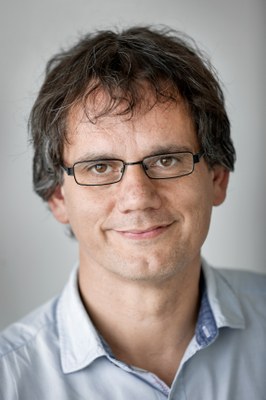 Ivo Vankelecom合作论文数Department of Microbial and Molecular Systems, Catholic University of Leuven;Faculty of Bio-Science Engineering, Catholic University of Leuven4raquel ibanez mendizabal合作论文数3Patrick M. Martin合作论文数3Chanan Yanay合作论文数3Marta Herrero-Gonzalez合作论文数Dipartamento di Ingeniería, Università degli Studi di Palermo3Janine Blumenfeld合作论文数3
 Moshe Gottlieb合作论文数Department of Chemical Engineering, University of Massachusetts3
 Ofira Ayalon合作论文数Natural Resource and Environmental Research Center, University of Haifa3
 Kfir Ben-Harush合作论文数Blechner Center for Industrial Catalysis and Process Development, Ben-Gurion University of the Negev3C. Dlugy合作论文数3Leonid Vradman合作论文数3
 Angel Irabien合作论文数Departamento de Ingenierias Quimica y Biomolecular, Universidad de Cantabria3Shira Biton合作论文数2ido gefen合作论文数2Eric Pierschel合作论文数2Daniel Madar合作论文数2A.M. Shapira-Tchelet合作论文数2Nisim Haddad合作论文数2Eyal Tzur合作论文数College of Engineering, SCE – Sami Shamoon2
 Michael Schermann合作论文数Lehrstuhl für Wirtschaftsinformatik;Fakultät für Informatik;Technische Universität München;Fakultät für Informatik, Technische Universität München2Chrstina Dlugy合作论文数2
 Helmut Krcmar合作论文数School of Management, Technical University of Munich;Faculty of Informatics, Technical University of Munich2
 Emanuela Calcio Gaudino合作论文数1Shira Nirenberg合作论文数1Tatiana Orzehovsky合作论文数1Alex Snezhko合作论文数1
 Laura Orio合作论文数1
 Paul Wilson合作论文数1
 Orna Raviv合作论文数Nat Resources & Environm Res Ctr, Univ Haifa1Schwartz Jeremy R合作论文数1
 Giancarlo Cravotto合作论文数Department of Drug Science and Technology, University of Turin1
 Shimon Vega合作论文数Department of Chemical Physics, Weizmann Institute of Science1
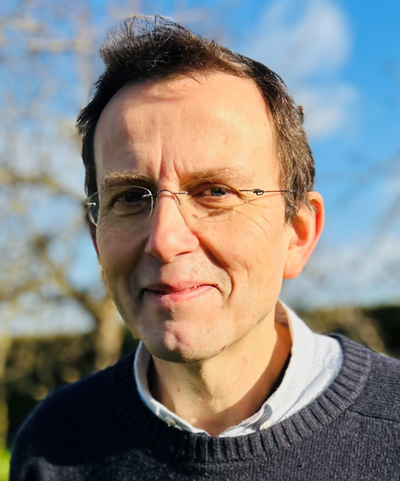 Dirk De Vos合作论文数Department of Microbial and Molecular Systems, Katholieke Universiteit Leuven;Faculty of Bioscience Engineering, Katholieke Universiteit Leuven1




