Humanitarian engineering (HE) courses which involve travel have been offered at US universities for many years. When implemented thoughtfully these courses have the potential to have a significant impact on both community and student learning outcomes. At The Ohio State University, a multi-year human centered design approach was implemented across these courses with the intention of centering the community's wants, expectations, and voices. However, ensuring positive community impact can be challenging. One significant challenge is project continuity and maintaining relationships with the community throughout the year. To help address this, a partnership between HE courses which involve field experiences and a two-semester engineering capstone course, the Global Capstone Design Sequence, was established. Results from this collaboration have shown positive impacts on the relationship with the community, improved quality of student project work, an increase in student motivation, and gains in student intercultural competency. This paper documents the structure of this partnership and the lessons learned. Additionally, to assess the impact of this partnership on student intercultural competence, an analysis of Intercultural Development Inventory (IDI) scores is performed. The overarching aim of this paper is to continue to shift HE centric programs and projects towards parity in community and student outcomes.
Emissions and fuel economy certification testing for vehicles is carried out on a chassis dynamometer using standard test procedures. The vehicle coastdown method (SAE J2263) used to experimentally measure the road load of a vehicle for certification testing is a time-consuming procedure considering the high number of distinct variants of a vehicle family produced by an automaker today. Moreover, test-to-test repeatability is compromised by environmental conditions: wind, pressure, temperature, track surface condition, etc., while vehicle shape, driveline type, transmission type, etc. are some factors that lead to vehicle-to-vehicle variation. Controlled lab tests are employed to determine individual road load components: tire rolling resistance (SAE J2452), aerodynamic drag (wind tunnels), and driveline parasitic loss (dynamometer in a driveline friction measurement lab). These individual components are added to obtain a road load model to be applied on a chassis dynamometer. However, lab-tested quantities may not account for environmental noise factors and qualitative vehicle characteristics leading to a significant residual road load between the track-tested and lab-tested road loads. Regression modeling techniques are explored for estimating this residual road load and the challenges are discussed. Additionally, a technique is developed to choose feature selection metrics using simulation of multivariate non-gaussian continuous and discrete data having similar statistical properties as the data obtained from automotive road tests. Using the selected features, two regularized regression techniques are experimented with. The first technique models the residual road load power, while the second technique models a polynomial relationship between vehicle speed and residual road load.
This is a Work in Progress (WIP) paper. An inclusive classroom environment is one in which all aspects of the classroom, such as the curriculum, faculty to student interactions, student to student interactions, etc. are purposefully designed to promote the intellectual, social, emotional and physical growth of all students [9]. While inclusive teaching practices improve the learning experience of women and under-represented minorities (URM), it can be beneficial for all students. It has been well-documented that women and other minority groups continue to be underrepresented in engineering majors in the undergraduate level [1]. A National Science Foundation (NSF) report observed that "there is the possibility that the curriculum itself is a barrier to underrepresented groups" [5]. Increasing the participation and success of all students is critical to the field of engineering for several reasons [6]: ○ Maintaining the current engineering workforce will become more difficult if all segments of the population are not invited to participate and persist in engineering. ○ A team of problem solvers with cognitively diverse approaches to solve a problem will outperform a team of the cognitively best (but homogeneous) problem solvers [4]. ○ Diversity and inclusion brings increased creativity, better problem-solving abilities, and thus better products. This can result in increased profitability. Targeted programs such as Women in Engineering (WiE) and Minority Engineering Programs (MEP) may foster a supportive environment but do not directly influence the college culture and institutional structure as a whole. Additionally, students may still face difficult or disparate environments in classroom settings and beyond where they interact with majority students [2]. While many programs and initiatives exist to educate faculty about the importance of creating an inclusive classroom environment, data collected at The Ohio State University (OSU) shows that engineering faculty participation in diversity and inclusion activities focusing on pedagogy is limited thereby leading to limited impact. At OSU, an initiative was undertaken to increase faculty participation in pedagogical diversity and inclusion activities. A multi-pronged approach developed under the aegis of a centralized teaching and learning center (TLC) was undertaken to meet these objectives: 1. Creation of a detailed cited resource with information on how to make the classroom a more inclusive environment. 2. Implementation of a workshop for faculty in the College of Engineering (COE) during regular faculty meetings. 3. Discussion sessions with engineering faculty teaching project-based courses. 4. Implementation of informal lunch sessions to encourage sharing of strategies that work. This paper documents the work that has been done thus far as part of this initiative and the plans for the future. This paper will be presented as a lightning talk.
Women and other minoritized groups experience an unwelcoming environment in higher education [1] [2] [3] [4] [5]. This is particularly acute in Science, Technology, Engineering and Math (STEM) fields, where students have reported experiencing both explicit and subtle biased behaviors by faculty, administrators and fellow students [6] [7]. The behaviors include stereotypical comments about women and other minoritized students' abilities, micro-aggressions, sexist humor, etc. Studies have shown that such behavior can lead to negative cognitive effects which in turn can affect student retention and graduation rates [8]. The aim of this paper is to document the progression and results of efforts undertaken at X university to make the climate more welcoming for minoritized students in the College of Engineering (COE) by offering a course that encourages ally development. Ally development involves training people in the dominant social group and helping them understand the inequities placed on those in the minority [9] [10]. This is especially crucial to have in engineering, where on average, the percent of women receiving a bachelor's degree in the United States is 20.9 percent. Similarly the percent of Hispanic students receiving a bachelor's degree in the United States is 11.4%, Black/African American students 4.2%, Native American .3%, and Hawaiian/Pacific Islander .2% [11]. The ally development, based on the framework created by Broido [12] hypothesizes that engaging students from the dominant group as allies to promote equity in engineering is an innovative strategy for creating a positive climate for minoritized students – and, in turn, ALL students, a factor that influences their retention and graduation rates [13] [14]. The initiative started as an informal cohort in 2015-2016 – training students who identify as men to be allies for other students. This cohort met weekly to learn about power, privilege, bias, and microaggressions. The participants then developed and implemented outreach activities in the university community. Taking the positive aspects of the cohort, a semester-long course was developed and offered every semester for undergraduate men students around the cohort concepts – with a primary focus on gender equity. Shortly thereafter a complementary class for students who identify as women was developed with similar topics as well as additions including confidence and empowerment. In Autumn 2018 the men and women's courses were rebranded as "Inclusive Leadership" courses with topics including personal brand, strengths, values, identity, power, privilege, bias, and microaggressions. The focus extended beyond gender to include race, sexual orientation, physical ability, and other categories of social identity. Gender non-binary students had the opportunity to choose between either of the two courses. In Autumn 2019, the courses' enrolled students were limited to new first year engineering students who self-selected to take part in a pilot "Inclusive Leadership Cohort". Students in this cohort took the Inclusive Leadership course concurrently with the first two required engineering courses in their first two semesters at X university. Due to COVID, in Autumn 2020, the courses went back to being open to all undergraduate engineering students. Finally, for the Spring of 2021, a single course offered to all genders will be offered for the first time. This paper documents the perceived impact on the students who took the courses, lessons learned in each stage of the initiative, and initial progress on the first co-ed Inclusive Leadership course to be offered in Spring 2021.
Oscillatory Failure Case (OFC) is a characteristic sinusoidal fault that propagates through control surfaces and actuator servo loops of commercial aircrafts that originates from spurious sensor measurements and actuator commands. The goal of this work is to detect such faults of unknown amplitudes and frequencies in the presence of turbulence. The fault detection scheme employs a graph-theoretic approach that uses a structural model of the aircraft's longitudinal dynamics and the servo actuators to determine residuals for OFC fault detection and isolation. A smooth controller reconfiguration strategy is proposed to switch between a nominal control law and a degraded alternate control law which utilizes sensor measurement feedback as well as virtual sensors from a digital model of longitudinal cruising dynamics without affecting the controller structure and feedback loops.
Accurately forecasting the energy consumption profile of a vehicle is a key requirement of many growing research areas such as horizon based energy management and eco-routing. However, the energy consumption rate of a vehicle depends on many factors making it very difficult to estimate. Many of these factors such as traffic light timing, traffic congestion and weather, change from day to day and trip to trip. While real time traffic information and traffic light timing schedules can be used to help predict the effect of the first two factors, the impact of weather cannot be as easily predicted based on a weather report. Depending on the topology of the route including other vehicles on the road, the local wind speed relative to a vehicle can differ greatly from a predicted bulk wind speed. The effect of precipitation is also difficult to predict because it depends on the amount falling and the amount accumulated on the road.In this paper it is first shown that energy consumption prediction errors due to un-modeled effects, including most notably weather, exhibit a high amount of trip-to-trip variation and a smaller amount of variation within a trip. Next, it is demonstrated that moderate wind speeds have an observable effect on energy consumption and this effect varies based on the direction of travel and wind direction. This analysis also illustrates the challenges in predicting the effect of wind speed and precipitation on energy consumption based on a weather forecast. Finally, a case is made for future research involving the use of current and recent data from a large population of vehicles to provide a more accurate energy consumption profile by reducing the prediction errors due to un-modeled effects.
Understanding energy use is critical. Although simulation is valuable, such models are simplified abstractions of actual energy systems. The authors present an energy system multimodel implemented with the Language and Platform Independent Steering (LAPIS) computational steering API. They present an adaptable framework for the integration and development of multimodel simulations. This framework enables independent development of component simulations, limits coordination overhead between developers, and allows modularity and flexibility in the overall multimodel simulation. Use case studies demonstrate the capabilities of the multimodel energy system simulation and LAPIS.
Her areas of expertise include strategic planning, gender equity and women's
Students being un-or under-prepared with the sociotechnical skillsets to approach community-engaged engineering courses can be detrimental to both student motivation and community outcomes. At X University (X), community-engaged engineering courses have been offered as stand-alones, leading several instructors to identify student lack of preparedness as a concern for relationships with community partners and effective course design. Although X had offered a Humanitarian Engineering (HE) Minor for a decade, there appeared to be a critical knowledge gap and instructors across multiple departments gathered to address this concern. Students seeking the HE minor are required to participate in at least one community-engaged engineering course. Therefore, the initial step towards providing the structure for students gain relevant community-engagement skills and knowledge was to reassess the learning objectives of the HE Minor. The resulting list was edited and refined through discussion amongst faculty teaching HE courses and was then reviewed by additional faculty and staff at X and external collaborators within the HE landscape. The resultant learning objectives served as the basis for collaboratively identifying the mission, vision, and student outcomes that would guide the restructuring of the HE minor. An introductory Humanitarian Engineering course was developed and incorporated focusing on sociotechnical skills and fostering student self-awareness regarding their positionality in colonial contexts and power dynamics as it related to community-engaged design work. Transferable learnings from this experience are how to a) collectively identify the vision and student outcomes for a program that spans departments and institutions and b) structure a scaffolded minor program to support student development as community-engaged practitioners. The next steps are to assess student outcomes using the intercultural development inventory (IDI) as students progress through the HE minor and to continue to create opportunities aligned with the program mission, vision, and student outcomes identified through this process.
Programs aimed at community engagement efforts at X University have been offered since the early 2000's, which aimed at providing engineering students opportunities to use their technical skills with international engagement. While immensely popular with students and marketing pamphlets, a recent concentrated effort within the community-engaged engineering courses has been undertaken to shift away from models that solely focus on delivery of technological solutions. Which often failed to integrate complex contextual elements into the pedagogical course design and resultant student centric design process. Our course design shifted towards holistic and ethical engagement highlighting the programmatic shift from "service learning" to "community engaged learning" and challenging students to reflect on their motivations and positionality as individuals and engineers. This shift aimed to forge international and local partnerships that focus on community engagement and student learning through intensive planning, the establishment of trust, and values-centered relationships. Through utilization of human centered design theory and establishment of long-term partnerships that reposition student centric engagement courses have shifted to partnership structure that acknowledges strengths and limitations and centered value to each stakeholder. While models like this exist across the community development landscape there are challenges on how to integrate this into engineering course dynamics. Numerous researchers and academic folks have identified these challenges, but a critical gap still exists with the application of said "best practices". This paper aims to highlights the success and challenges seen throughout this transition when these concepts are put into practice to build effective partnerships at the local and international level. The overarching aim of this work is to share a proposed process of engagement for others interested in offering community engaged learning opportunities.
In 2015, 57% of all undergraduate degrees were awarded to women, but in engineering that number was only 19.9%.Despite efforts to attract and retain women to STEM majors, that number has been essentially stagnant since 2006.Some suggest that this inactivity may in part be due to the way women and female students perceive engineering.Research has shown that one of the reasons women may identify a preference for medicine and the biological sciences over engineering, may be due to perceptions of engineering being less 'peopleoriented' and having less value to society in general.Other research indicates that women tend to value altruism and social rewards higher than their male peers.Findings show that increased demonstration of the societal role of engineering can help increase participation of female students.Existing data gives reason to believe that enrollment and retention of female students at X University may be linked to certain perceptions about a particular major or profession.Perceptions of a major being human-centric and enabling an individual to make a difference were shown to be significant factors among those identified in a research study.Literature will be presented to show the connection between humanitarian efforts undertaken in an engineering context, and the impact that it has had on female student participation.This paper will attempt to shows the trends of female enrollment and retention among various majors at X University, and compare them to programs, organizations and projects which have a humanitarian aspect.It is important that engineering colleges across the nation make a concerted effort to invest in promoting the humanitarian aspects of engineering.Communication focusing on reminding students that the STEM majors can contribute to society can be a valuable tool to help recruit and retain female students.
 Giorgio Rizzoni合作论文数Department of Mechanical And Aerospace Engineering, College of Engineering, The Ohio State University4
 Lisa Abrams合作论文数3Steven Nozaki合作论文数2
 Fabio Ingrosso合作论文数1Lauren Corrigan合作论文数1Harrison B. Smith合作论文数Earth Life Sci Inst, Tokyo Inst Technol1
 Amy Kramer合作论文数Dept Engn Educ, Ohio State Univ1
 Matthew Roberts合作论文数Australian Infectious Diseases Research Centre, Faculty of Science, The University of Queensland1
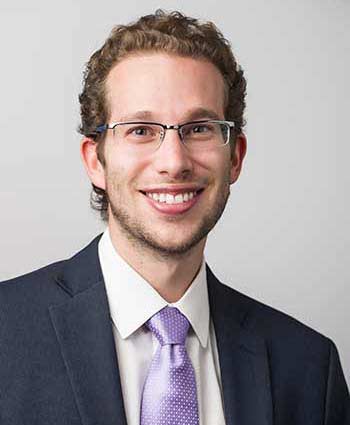 Matteo Muratori合作论文数National Renewable Energy Laboratory1
 Ashok Krishnamurthy合作论文数Department of Computer Science, College of Arts and Sciences, The University of North Carolina at Chapel Hill1
 Benjamin J Yurkovich合作论文数1Amy Pielow合作论文数1
 Ramteen Sioshansi合作论文数Department of Integrated Systems Engineering, College of Engineering, The Ohio State University1




