Identification of bacterial protein-protein interactions and predicting the structures of these complexes could aid in the understanding of pathogenicity mechanisms and developing treatments for infectious diseases. Here we developed RoseTTAFold2-Lite, a rapid deep learning model that leverages residue-residue coevolution and protein structure prediction to systematically identify and structurally characterize protein-protein interactions at the proteome-wide scale. Using this pipeline, we searched through 78 million pairs of proteins across 19 human bacterial pathogens and identified 1,923 confidently predicted complexes involving essential genes and 256 involving virulence factors. Many of these complexes were not previously known; we experimentally tested 12 such predictions, and half of them were validated. The predicted interactions span core metabolic and virulence pathways ranging from post-transcriptional modification to acid neutralization to outer-membrane machinery and should contribute to our understanding of the biology of these important pathogens and the design of drugs to combat them.
Despite progress in designing protein-binding proteins, the shape matching of designs to targets is lower than in many native protein complexes, and design efforts have failed for the tumor necrosis factor receptor 1 (TNFR1) and other protein targets with relatively flat and polar surfaces. We hypothesized that free diffusion from random noise could generate shape-matched binders for challenging targets and tested this approach on TNFR1. We obtain designs with low picomolar affinity whose specificity can be completely switched to other family members using partial diffusion. Designs function as antagonists or as superagonists when presented at higher valency for OX40 and 4-1BB. The ability to design high-affinity and high-specificity antagonists and agonists for pharmacologically important targets in silico presages a coming era in protein design in which binders are made by computation rather than immunization or random screening approaches.
Identification of bacterial protein-protein interactions and predicting the structures of the complexes could aid in the understanding of pathogenicity mechanisms and developing treatments for infectious diseases. Here, we developed a deep learning-based pipeline that leverages residue-residue coevolution and protein structure prediction to systematically identify and structurally characterize protein-protein interactions at the proteome-wide scale. Using this pipeline, we searched through 78 million pairs of proteins across 19 human bacterial pathogens and identified 1923 confidently predicted complexes involving essential genes and 256 involving virulence factors. Many of these complexes were not previously known; we experimentally tested 12 such predictions, and half of them were validated. The predicted interactions span core metabolic and virulence pathways ranging from post-transcriptional modification to acid neutralization to outer membrane machinery and should contribute to our understanding of the biology of these important pathogens and the design of drugs to combat them.
Protein-protein interactions play critical roles in biology, but despite decades of effort, the structures of many eukaryotic protein complexes are unknown, and there are likely many interactions that have not yet been identified. Here, we take advantage of recent advances in proteome-wide amino acid coevolution analysis and deep-learning-based structure modeling to systematically identify and build accurate models of core eukaryotic protein complexes, as represented within the Saccharomyces cerevisiae proteome. We use a combination of RoseTTAFold and AlphaFold to screen through paired multiple sequence alignments for 8.3 million pairs of S. cerevisiae proteins and build models for strongly predicted protein assemblies with two to five components. Comparison to existing interaction and structural data suggests that these predictions are likely to be quite accurate. We provide structure models spanning almost all key processes in Eukaryotic cells for 104 protein assemblies which have not been previously identified, and 608 which have not been structurally characterized. One-sentence summary We take advantage of recent advances in proteome-wide amino acid coevolution analysis and deep-learning-based structure modeling to systematically identify and build accurate models of core eukaryotic protein complexes.
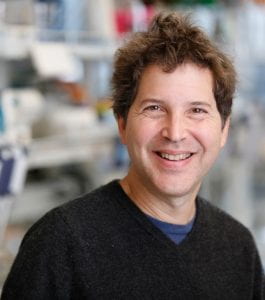 David Baker合作论文数Institute for Protein Design, University of Washington;Department of Biochemistry, University of Washington4
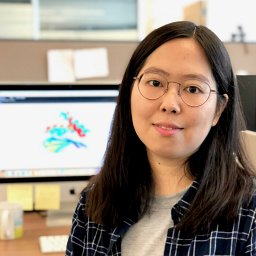 Minkyung Baek合作论文数Department of Life Sciences, Seoul National University3
 Jing Zhang合作论文数Harold C. Simmons Comprehensive Cancer Center, University of Texas Southwestern Medical Center3
 Jimin Pei合作论文数Department of Biophysics, Howard Hughes Medical Institute, University of Texas Southwestern Medical Center;Department of Biochemistry, Howard Hughes Medical Institute, University of Texas Southwestern Medical Center3
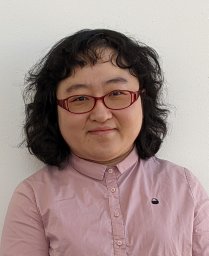 Qian Cong合作论文数3
 Ian R Humphreys合作论文数Centre for Molecular Microbiology and Infection, Imperial College of Science, Technology and Medicine3
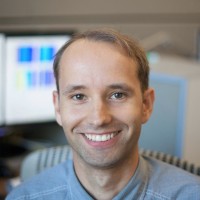 Ivan Anishchenko合作论文数Vilya3
 Catherine A. Tower合作论文数2
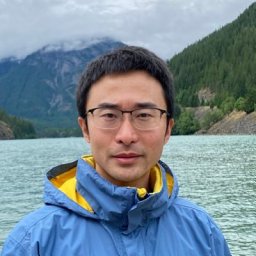 Yaxi Wang合作论文数Department of Biochemistry and Biophysics, Texas A&M University2Thulasi Warrier合作论文数2
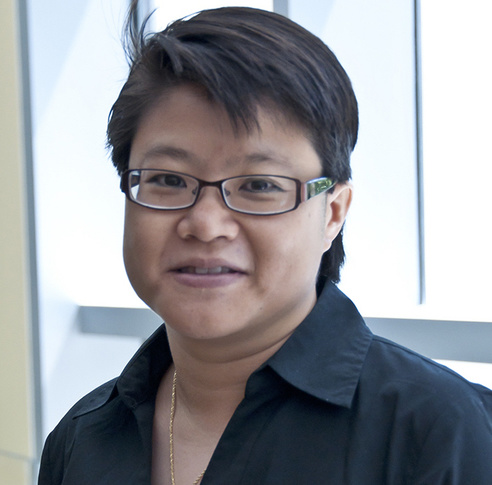 Deborah Tan Hung合作论文数Department of Genetics, Division of Medical Sciences, Harvard Medical School;Department of Molecular Biology, Massachusetts General Hospital2S. Brook Peterson合作论文数Department of Microbiology, University of Washington2
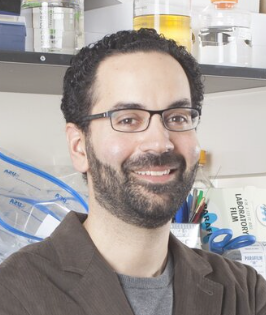 Joseph Mougous合作论文数Howard Hughes Medical Institute, University of Washington2Mariana Garcia Sanchez合作论文数1Daniel J. Barrero合作论文数1
 Elizabeth A Miller合作论文数1Brian Koepnick合作论文数1
 Travis J Ness合作论文数Dept Chem, Wayne State Univ1Viktoriya G Stancheva合作论文数1
 Buwei Huang合作论文数1Green Ahn合作论文数Dept Pharmacol & Pharmaceut Sci, Univ Southern Calif1Saket R Bagde合作论文数1
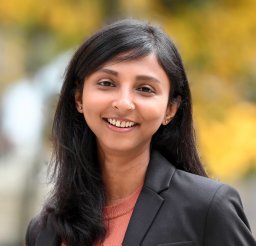 Upasana Roy合作论文数Dept Biochem & Mol Biophys, Columbia Univ1Alex Kang合作论文数1Brian Coventry合作论文数Univ Washington, Dept Biochem, Seattle, WA 98195 USA1Asim K Bera合作论文数Univ Washington, Dept Biochem, Seattle, WA 98195 USA1
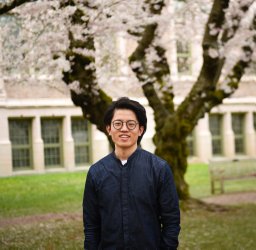 Wei Chen合作论文数Department of Biochemistry, University of Washington, Seattle, WA, USA1Zhi Zheng合作论文数1
 Kaixian Liu合作论文数Biology, Johns Hopkins University1
 Robert J. Ragotte合作论文数Department of Biochemistry, University of Oxford1
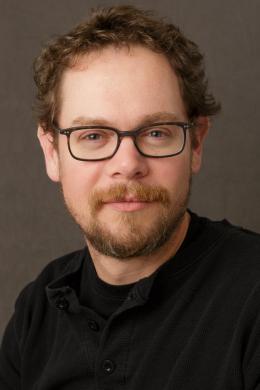 Eric C. Greene合作论文数Vagelos College of Physicians and Surgeons, Columbia University1
 Xiao-Han Li合作论文数1
 Chris Fromme合作论文数The Fromme Lab, Weill Institute for Cell and Molecular Biology, Department of Molecular Biology and Genetics, College of Agriculture and Life Sciences, Cornell University1Goreshnik Inna合作论文数1
 Wei Yang合作论文数1Szakal Barnabas合作论文数1
 Banjade Sudeep合作论文数Howard Hughes Medical Institute, University of Texas Southwestern Medical Center1
 Scott Neal Keeney合作论文数Howard Hughes Medical Institute, Memorial Sloan Kettering Cancer Center1Caroline Kisker合作论文数1Israel S. Fernández合作论文数Departamento de Ciencia de Proteínas, Centro de Investigaciones Biológicas-CSIC1
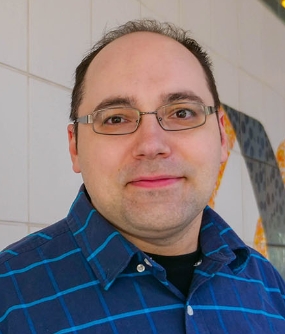 Sergey Ovchinnikov合作论文数Department of Biology, Massachusetts Institute of Technology1
 Dana Branzei合作论文数Istituto Fondazione di Oncologia Molecolare1
 Sue Biggins合作论文数Fred Hutch1Tamara L. Hendrickson合作论文数1
 Jochen Kuper合作论文数Institute for Structural Biology, University of Wuerzburg1
 Jose Rizo-Rey合作论文数Rizo Lab, Department of Biophysics, University of Texas Southwestern Medical Center;Department of Pharmacology, University of Texas Southwestern Medical Center;Department of Biochemistry, University of Texas Southwestern Medical Center1




