Supplementary Glioma Gene Mutations from A Hypermutation Phenotype and Somatic MSH6 Mutations in Recurrent Human Malignant Gliomas after Alkylator Chemotherapy
Supplementary Information from A Hypermutation Phenotype and Somatic MSH6 Mutations in Recurrent Human Malignant Gliomas after Alkylator Chemotherapy
Idiopathic congenital nystagmus is characterized by involuntary, periodic, predominantly horizontal oscillations of both eyes. We identified 22 mutations in FRMD7 in 26 families with X-linked idiopathic congenital nystagmus. Screening of 42 singleton cases of idiopathic congenital nystagmus (28 male, 14 females) yielded three mutations (7%). We found restricted expression of FRMD7 in human embryonic brain and developing neural retina, suggesting a specific role in the control of eye movement and gaze stability.
The panel of 60 human cancer cell lines (the NCI-60) assembled by the National Cancer Institute for anticancer drug discovery is a widely used resource. The NCI-60 has been characterized pharmacologically and at the molecular level more extensively than any other set of cell lines. However, no systematic mutation analysis of genes causally implicated in oncogenesis has been reported. This study reports the sequence analysis of 24 known cancer genes in the NCI-60 and an assessment of 4 of the 24 genes for homozygous deletions. One hundred thirty-seven oncogenic mutations were identified in 14 (APC, BRAF, CDKN2, CTNNB1, HRAS, KRAS, NRAS, SMAD4, PIK3CA, PTEN, RB1, STK11, TP53, and VHL) of the 24 genes. All lines have at least one mutation among the cancer genes examined, with most lines (73%) having more than one. Identification of those cancer genes mutated in the NCI-60, in combination with pharmacologic and molecular profiles of the cells, will allow for more informed interpretation of anticancer agent screening and will enhance the use of the NCI-60 cell lines for molecularly targeted screens.
An activating point mutation in codon 12 of the HRAS gene was the first somatic point mutation identified in a human cancer and established the role of somatic mutations as the common driver of oncogenesis. Since then, there have been over 11,000 mutations in the three RAS (HRAS, KRAS and NRAS) genes in codons 12, 13 and 61 reported in the literature. We report here the identification of recurrent somatic missense mutations at alanine 146, a highly conserved residue in the guanine nucleotide binding domain. In two independent series of colorectal cancers from Hong Kong and the United States we detected KRAS A146 mutations in 7/126 and 2/94 cases, respectively, giving a combined frequency of 4%. We also detected KRAS A146 mutations in 2/40 (5%) colorectal cell lines, including the NCI-60 colorectal cancer line HCC2998. Codon 146 mutations thus are likely to make an equal or greater contribution to colorectal cancer than codon 61 mutations (4.2% in our combined series, 1% in the literature). Lung adenocarcinomas and large cell carcinomas did not show codon 146 mutations. We did, however, identify a KRAS A146 mutation in the ML-2 acute myeloid leukemia cell line and an NRAS A146 mutation in the NALM-6 B-cell acute lymphoblastic leukemia line, suggesting that the contribution of codon 146 mutations is not entirely restricted to colorectal cancers or to KRAS.
We examined the coding sequence of 518 protein kinases, ∼1.3 Mb of DNA per sample, in 25 breast cancers. In many tumors, we detected no somatic mutations. But a few had numerous somatic mutations with distinctive patterns indicative of either a mutator phenotype or a past exposure.
The protein-kinase family is the most frequently mutated gene family found in human cancer and faulty kinase enzymes are being investigated as promising targets for the design of antitumour therapies. We have sequenced the gene encoding the transmembrane protein tyrosine kinase ERBB2 (also known as HER2 or Neu) from 120 primary lung tumours and identified 4% that have mutations within the kinase domain; in the adenocarcinoma subtype of lung cancer, 10% of cases had mutations. ERBB2 inhibitors, which have so far proved to be ineffective in treating lung cancer, should now be clinically re-evaluated in the specific subset of patients with lung cancer whose tumours carry ERBB2 mutations.
Cancers arise owing to the accumulation of mutations in critical genes that alter normal programmes of cell proliferation, differentiation and death. As the first stage of a systematic genome-wide screen for these genes, we have prioritized for analysis signalling pathways in which at least one gene is mutated in human cancer. The RAS–RAF–MEK–ERK–MAP kinase pathway mediates cellular responses to growth signals 1 . RAS is mutated to an oncogenic form in about 15% of human cancer. The three RAF genes code for cytoplasmic serine/threonine kinases that are regulated by binding RAS 1 , 2 , 3 . Here we report BRAF somatic missense mutations in 66% of malignant melanomas and at lower frequency in a wide range of human cancers. All mutations are within the kinase domain, with a single substitution (V599E) accounting for 80%. Mutated BRAF proteins have elevated kinase activity and are transforming in NIH3T3 cells. Furthermore, RAS function is not required for the growth of cancer cell lines with the V599E mutation. As BRAF is a serine/threonine kinase that is commonly activated by somatic point mutation in human cancer, it may provide new therapeutic opportunities in malignant melanoma.
 Stevens Claire H合作论文数9
 Andy Futreal合作论文数Department of Genomic Medicine, Division of Cancer Medicine, The University of Texas MD Anderson Cancer Center9
 Mike Stratton合作论文数Wellcome Sanger Institute, Genome Research Limited9
 Sarah Elizabeth Medland合作论文数QIMR Berghofer Medical Research Institute;School of Psychology, University of Queensland;Translational Research Institute, University of Queensland9
 Sarah O'Meara合作论文数8Jon W. Teague合作论文数Cancer Genome Project, Wellcome Trust Sanger Institute8Richard Wooster合作论文数8
 Philip J. Stephens合作论文数Dornsife College of Letters, Arts and Sciences, University of Southern California7Helen Davies合作论文数7
 Christopher A. Hunter合作论文数School of Veterinary Medicine, University of Pennsylvania;Penn Institute for Immunology, University of Pennsylvania6
 Graham Bignell合作论文数Wellcome Sanger Institute6
 Simon Forbes合作论文数Wellcome Trust Sanger Institute6Ed Dicks合作论文数6Raffaella Smith合作论文数6
 Kristian Alexander Gray合作论文数6Menzies Andrew合作论文数5Greenman Chris D合作论文数5
 Keiran Martin Raine合作论文数5Jennifer Varian合作论文数5Kelly Halliday合作论文数5Janet Perry合作论文数5
 Richard Lugg合作论文数5Rebecca Shepherd合作论文数5Calli Tofts合作论文数5Alexandra Small合作论文数5Vivienne Kosmidou合作论文数5Sara Widaa合作论文数5Sofie West合作论文数5Katy Hills合作论文数5
 Adam Butler合作论文数From the Cancer Genome Project, Wellcome Trust Sanger Institute5Lisa Brackenbury合作论文数5Robert Petty合作论文数4Rachel Harrison合作论文数4
 Jennifer Cole合作论文数The Department of Anthropology, The University of Chicago4
 David T. Jones合作论文数Bioinformatics Group, Department of Computer Science, University College London4
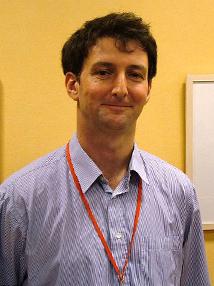 Andrew Nicholson合作论文数Royal Brompton Hospital;National Heart & Lung Institute, Faculty of Medicine, Imperial College London4Siu Tsan Yuen合作论文数4
 Jody Clements合作论文数HHMI Janelia Farm Res Campus4Helen Solomon合作论文数4
 Leung Suet Yi (梁雪兒)合作论文数Department of Pathology, School of Clinical Medicine, The University of Hong Kong;Hereditary Gastrointestinal Cancer Genetic Diagnosis Laboratory;Department of Pathology, Queen Mary Hospital4Gemma Buck合作论文数4Tim Avis合作论文数4Andy Jenkinson合作论文数3Syd Barthorpe合作论文数3Andy Yates合作论文数3
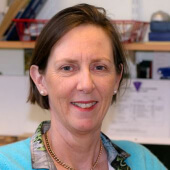 Adrienne Flanagan合作论文数London Sarcoma Service;Department of Pathology, Cancer Institute, University College London;National Institute for Health Research3
 Colin Cooper合作论文数Norwich Medical School, University of East Anglia;South of England Prostate Cancer Research Collaborative Centre, National Cancer Research Institute3
 David R. Jones合作论文数Department of Surgery, Memorial Sloan-Kettering Cancer Center3
 David N. Louis合作论文数Department of Pathology, Massachusetts General Hospital;Mass General Research Institute, Massachusetts General Hospital;Department of Pathology, Brigham and Women's Hospital;Harvard Medical School3




