SenSync tackles key challenges in RFID-based differential sensing systems, including temporal misalignment, phase ambiguity, and environmental sensitivity. Traditional techniques are limited by sequential data processing, which introduces time shifts, and arbitrary phase jumps injected by commercial RFID readers, which obscure accurate differential measurements. These issues, compounded by multipath effects and dynamic environments, hinder the deployment of robust RFID sensing systems at scale. To address these challenges, we propose innovative algorithms and signal processing techniques to align and interpret time-shifted data from multiple ICs. Our approach mitigates the effects of temporal misalignment and phase ambiguity, ensuring reliable differential sensing in real-world applications. By improving data alignment and robustness, we accelerate the sensory resolution by 5 x. Furthermore, we developed a user interface capable of automatically detecting sensors within the system's field of operation and displaying their readings in real-time, demonstrating the practical applicability and versatility of our proposed solution.
Designing model architectures requires decisions such as selecting operators (e.g., attention, convolution) and configurations (e.g., depth, width). However, evaluating the impact of these decisions on model quality requires costly pretraining, limiting architectural investigation. Inspired by how new software is built on existing code, we ask: can new architecture designs be studied using pretrained models? To this end, we present *grafting*, a simple approach for editing pretrained diffusion transformers (DiTs) to materialize new architectures under small compute budgets. Informed by our analysis of activation behavior and attention locality, we construct a testbed based on the DiT-XL/2 design to study the impact of grafting on model quality. Using this testbed, we develop a family of hybrid designs via grafting: replacing softmax attention with gated convolution, local attention, and linear attention, and replacing MLPs with variable expansion ratio and convolutional variants. Notably, many hybrid designs achieve good quality (FID: 2.38–2.64 vs. 2.27 for DiT-XL/2) using $<2$% pretraining compute. We then graft a text-to-image model (PixArt-$\Sigma$), achieving a 1.43$\times$ speedup with less than a 2% drop in GenEval score. Finally, we present a case study that restructures DiT-XL/2 by converting every pair of sequential transformer blocks into parallel blocks via grafting. This reduces model depth by 2$\times$ and yields better quality (FID: 2.77) than other models of comparable depth. Together, we show that new diffusion model designs can be explored by grafting pretrained DiTs, with edits ranging from operator replacement to architecture restructuring. Code and grafted models: https://grafting.stanford.edu.
The ability to leverage heterogeneous robotic experience from different robots and tasks to quickly master novel skills and embodiments has the potential to transform robot learning. Inspired by recent advances in foundation models for vision and language, we propose a multi-embodiment, multi-task generalist agent for robotic manipulation. This agent, named RoboCat, is a visual goal-conditioned decision transformer capable of consuming action-labelled visual experience. This data spans a large repertoire of motor control skills from simulated and real robotic arms with varying sets of observations and actions. With RoboCat, we demonstrate the ability to generalise to new tasks and robots, both zero-shot as well as through adaptation using only 100-1000 examples for the target task. We also show how a trained model itself can be used to generate data for subsequent training iterations, thus providing a basic building block for an autonomous improvement loop. We investigate the agent's capabilities, with large-scale evaluations both in simulation and on three different real robot embodiments. We find that as we grow and diversify its training data, RoboCat not only shows signs of cross-task transfer, but also becomes more efficient at adapting to new tasks.
General-purpose robots need a deep understanding of the physical world, advanced reasoning, and general and dexterous control. This report introduces the latest generation of the Gemini Robotics model family: Gemini Robotics 1.5, a multi-embodiment Vision-Language-Action (VLA) model, and Gemini Robotics-ER 1.5, a state-of-the-art Embodied Reasoning (ER) model. We are bringing together three major innovations. First, Gemini Robotics 1.5 features a novel architecture and a Motion Transfer (MT) mechanism, which enables it to learn from heterogeneous, multi-embodiment robot data and makes the VLA more general. Second, Gemini Robotics 1.5 interleaves actions with a multi-level internal reasoning process in natural language. This enables the robot to "think before acting" and notably improves its ability to decompose and execute complex, multi-step tasks, and also makes the robot's behavior more interpretable to the user. Third, Gemini Robotics-ER 1.5 establishes a new state-of-the-art for embodied reasoning, i.e., for reasoning capabilities that are critical for robots, such as visual and spatial understanding, task planning, and progress estimation. Together, this family of models takes us a step towards an era of physical agents-enabling robots to perceive, think and then act so they can solve complex multi-step tasks.
The rapid proliferation of devices and increasing data traffic in cellular networks necessitate advanced solutions to meet these escalating demands. Massive MIMO (Multiple Input Multiple Output) technology offers a promising approach, significantly enhancing throughput, coverage, and spatial multiplexing. Despite its advantages, Massive MIMO systems often lack flexible software controls over hardware, limiting their ability to optimize operational expenditure (OpEx) by reducing power consumption while maintaining performance. Current software-controlled methods, such as antenna muting combined with digital beamforming and hybrid beamforming, have notable limitations. Antenna muting struggles to maintain throughput and coverage, while hybrid beamforming faces hardware constraints that restrict scalability and future-proofing. This work presents PhaseMO, a versatile approach that adapts to varying network loads. PhaseMO effectively reduces power consumption in low-load scenarios without sacrificing coverage and overcomes the hardware limitations of hybrid beamforming, offering a scalable and future-proof solution. We will show that PhaseMO can achieve up to 30% improvement in energy efficiency while avoiding about 10% coverage reduction and a 5dB increase in UE transmit power.
Diffusion models are successful for synthesizing high-quality videos but are limited to generating short clips (e.g., 2-10 seconds). Synthesizing sustained footage (e.g. over minutes) still remains an open research question. In this paper, we propose MALT Diffusion (using Memory-Augmented Latent Transformers), a new diffusion model specialized for long video generation. MALT Diffusion (or just MALT) handles long videos by subdividing them into short segments and doing segment-level autoregressive generation. To achieve this, we first propose recurrent attention layers that encode multiple segments into a compact memory latent vector; by maintaining this memory vector over time, MALT is able to condition on it and continuously generate new footage based on a long temporal context. We also present several training techniques that enable the model to generate frames over a long horizon with consistent quality and minimal degradation. We validate the effectiveness of MALT through experiments on long video benchmarks. We first perform extensive analysis of MALT in long-contextual understanding capability and stability using popular long video benchmarks. For example, MALT achieves an FVD score of 220.4 on 128-frame video generation on UCF-101, outperforming the previous state-of-the-art of 648.4. Finally, we explore MALT's capabilities in a text-to-video generation setting and show that it can produce long videos compared with recent techniques for long text-to-video generation.
While RFID has expanded to passive sensing, its adoption is limited by constrained range and challenges like data sparsity, temporal misalignment, phase ambiguity, and environmental interference. We introduce TuneTag, a passive sensing platform featuring a custom tag with a novel impedance-matched antenna for improved precision and range, alongside a low-complexity algorithm compatible with commercial RFID readers and ICs. This algorithm corrects timing and phase inconsistencies, enabling robust differential sensing. Our evaluations demonstrate that TuneTag achieves a 5x improvement in sensing accuracy, a 2.4x extended range, and reduces latency to sub-second levels, yielding a 5x improvement in response time over State of the Art systems. The system features a graphical user interface (GUI) for near real-time sensor output display. We developed an Augmented Reality (AR) smartphone app that detects sensors and overlays live camera feeds with real-time data.
In the past decade, $>$1 Gsps ADCs have become commonplace and are used in many modern 5G base station chips. A major driving force behind this adoption is the benefits of digital up/down-conversion and improved digital filtering. Recent works have also advocated for utilizing this high sampling bandwidth to fit-in multiple MIMO streams, and reduce the number of ADCs required to build MIMO base-stations. This can potentially reduce the cost of Massive MIMO RUs, since ADCs are the most expensive electronics in the base-station radio chain. However, these recent works do not model the necessary decimation filters that exist in the signal path of these high sampling rate ADCs. We show in this short paper that because of the decimation filters, there can be introduction of cross-talks which can hinder the performance of these shared ADC interfaces. We simulate the shared ADC interface with Matlab 5G toolbox for uplink MIMO, and show that these cross-talks can be mitigated by performing MMSE equalization atop the PUSCH estimated channels.
We introduce SIGAR, a Sensor Integration Gateway using Augmented Reality, which combines RFID-based passive sensing with AR for real-time visualization. Using batteryless, wireless RFID sensors, SIGAR eliminates the need for power sources, enabling sustainable and cost-effective monitoring. A mobile app automatically detects sensors within the camera's field of view and overlays realtime sensory data onto the physical environment. Demonstrated through applications like force, soil moisture and light sensing, SIGAR provides intuitive, context-aware insights for environmental monitoring, inventory management, and more. This fusion of AR and passive sensing bridges digital and physical worlds, offering scalable, low-power IoT solutions.
While Large Language Models (LLMs) are the dominant models for generative tasks in language, they do not perform as well as diffusion models on image and video generation. To effectively use LLMs for visual generation, one crucial component is the visual tokenizer that maps pixel-space inputs to discrete tokens appropriate for LLM learning. In this paper, we introduce MAGVIT-v2, a video tokenizer designed to generate concise and expressive tokens for both videos and images using a common token vocabulary. Equipped with this new tokenizer, we show that LLMs outperform diffusion models on standard image and video generation benchmarks including ImageNet and Kinetics. In addition, we demonstrate that our tokenizer surpasses the previously top-performing video tokenizer on two more tasks: (1) video compression comparable to the next-generation video codec (VCC) according to human evaluations, and (2) learning effective representations for action recognition tasks.
Training diffusion models for audiovisual sequences allows for a range of generation tasks by learning conditional distributions of various input-output combinations of the two modalities. Nevertheless, this strategy often requires training a separate model for each task which is expensive. Here, we propose a novel training approach to effectively learn arbitrary conditional distributions in the audiovisual space. Our key contribution lies in how we parameterize the diffusion timestep in the forward diffusion process. Instead of the standard fixed diffusion timestep, we propose applying variable diffusion timesteps across the temporal dimension and across modalities of the inputs. This formulation offers flexibility to introduce variable noise levels for various portions of the input, hence the term mixture of noise levels. We propose a transformer-based audiovisual latent diffusion model and show that it can be trained in a task-agnostic fashion using our approach to enable a variety of audiovisual generation tasks at inference time. Experiments demonstrate the versatility of our method in tackling cross-modal and multimodal interpolation tasks in the audiovisual space. Notably, our proposed approach surpasses baselines in generating temporally and perceptually consistent samples conditioned on the input. Project page: neurips13025.github.io
Large, high-capacity models trained on diverse datasets have shown remarkable successes on efficiently tackling downstream applications. In domains from NLP to Computer Vision, this has led to a consolidation of pretrained models, with general pretrained backbones serving as a starting point for many applications. Can such a consolidation happen in robotics? Conventionally, robotic learning methods train a separate model for every application, every robot, and even every environment. Can we instead train "generalist" X-robot policy that can be adapted efficiently to new robots, tasks, and environments? In this paper, we provide datasets in standardized data formats and models to make it possible to explore this possibility in the context of robotic manipulation, alongside experimental results that provide an example of effective X-robot policies. We assemble a dataset from 22 different robots collected through a collaboration between 21 institutions, demonstrating 527 skills ( 160266 tasks). We show that a high-capacity model trained on this data, which we call RT-X, exhibits positive transfer and improves the capabilities of multiple robots by leveraging experience from other platforms. The project website is robotics-transformer-x.github.io.
We present W.A.L.T, a diffusion transformer for photorealistic video generation from text prompts. Our approach has two key design decisions. First, we use a causal encoder to jointly compress images and videos within a unified latent space, enabling training and generation across modalities. Second, for memory and training efficiency, we use a window attention architecture tailored for joint spatial and spatiotemporal generative modeling. Taken together these design decisions enable us to achieve state-of-the-art performance on established video (UCF-101 and Kinetics-600) and image (ImageNet) generation benchmarks without using classifier free guidance. Finally, we also train a cascade of three models for the task of text-to-video generation consisting of a base latent video diffusion model, and two video super-resolution diffusion models to generate videos of 512 x 896 resolution at 8 frames per second.
We present VideoPoet, a language model capable of synthesizing high-quality video, with matching audio, from a large variety of conditioning signals. VideoPoet employs a decoder-only transformer architecture that processes multimodal inputs -- including images, videos, text, and audio. The training protocol follows that of Large Language Models (LLMs), consisting of two stages: pretraining and task-specific adaptation. During pretraining, VideoPoet incorporates a mixture of multimodal generative objectives within an autoregressive Transformer framework. The pretrained LLM serves as a foundation that can be adapted for a range of video generation tasks. We present empirical results demonstrating the model's state-of-the-art capabilities in zero-shot video generation, specifically highlighting VideoPoet's ability to generate high-fidelity motions. Project page: http://sites.research.google/videopoet/
Sensors enable us to digitally capture stimuli like moisture, light, and force. Despite their low cost, reliability, and scalability, the lack of widespread adoption of IoT has hindered the realization of true ubiquitous sensing. A likely reason is that the current sensor platforms are bulky due to the batteries and complex electronics needed to interface sensors communication systems. In this work, we present a fully-passive, miniaturized, flexible form factor sensor interface titled ZenseTag that uses minimal electronics to read and communicate analog sensor data, directly at radio frequencies (RF). We exploit the fundamental principle of resonance, where a sensor's terminal impedance becomes most sensitive to the measured stimulus at its resonant frequency. This enables ZenseTag to read out the sensor variation using only energy harvested from wireless signals. We demonstrate its implementation with a 15x10mm flexible PCB that connects sensors to a printed antenna and passive RFID ICs, enabling near real-time readout through a performant GUI-enabled software. We showcase ZenseTag's versatility by interfacing commercial force, soil moisture and photodiode sensors [1--3]. Further, we motivate dedicated application studies for these sensors.
We present HourVideo, a benchmark dataset for hour-long video-language understanding. Our dataset consists of a novel task suite comprising summarization, perception (recall, tracking), visual reasoning (spatial, temporal, predictive, causal, counterfactual), and navigation (room-to-room, object retrieval) tasks. HourVideo includes 500 manually curated egocentric videos from the Ego4D dataset, spanning durations of 20 to 120 minutes, and features 12,976 high-quality, five-way multiple-choice questions. Benchmarking results reveal that multimodal models, including GPT-4 and LLaVA-NeXT, achieve marginal improvements over random chance. In stark contrast, human experts significantly outperform the state-of-the-art long-context multimodal model, Gemini Pro 1.5 (85.0 capabilities. Our benchmark, evaluation toolkit, prompts, and documentation are available at https://hourvideo.stanford.edu
Connectivity on-the-go has been one of the most impressive technological achievements in the 2010s decade. However, multiple studies show that this has come at an expense of increased carbon footprint, that also rivals the entire aviation sector's carbon footprint. The two major contributors of this increased footprint are (a) smartphone batteries which affect the embodied footprint and (b) base-stations that occupy ever-increasing energy footprint to provide the last mile wireless connectivity to smartphones. The root-cause of both these turn out to be the same, which is communicating over the last-mile lossy wireless medium. We show in this paper, titled DensQuer, how base-station densification, which is to replace a single larger base-station with multiple smaller ones, reduces the effect of the last-mile wireless, and in effect conquers both these adverse sources of increased carbon footprint. Backed by a open-source ray-tracing computation framework (Sionna), we show how a strategic densification strategy can minimize the number of required smaller base-stations to practically achievable numbers, which lead to about 3x power-savings in the base-station network. Also, DensQuer is able to also reduce the required deployment height of base-stations to as low as 15m, that makes the smaller cells easily deployable on trees/street poles instead of requiring a dedicated tower. Further, by utilizing newly introduced hardware power rails in Google Pixel 7a and above phones, we also show that this strategic densified network leads to reduction in mobile transmit power by 10-15 dB, leading to about 3x reduction in total cellular power consumption, and about 50
Large, high-capacity models trained on diverse datasets have shown remarkable successes on efficiently tackling downstream applications. In domains from NLP to Computer Vision, this has led to a consolidation of pretrained models, with general pretrained backbones serving as a starting point for many applications. Can such a consolidation happen in robotics? Conventionally, robotic learning methods train a separate model for every application, every robot, and even every environment. Can we instead train "generalist" X-robot policy that can be adapted efficiently to new robots, tasks, and environments? In this paper, we provide datasets in standardized data formats and models to make it possible to explore this possibility in the context of robotic manipulation, alongside experimental results that provide an example of effective X-robot policies. We assemble a dataset from 22 different robots collected through a collaboration between 21 institutions, demonstrating 527 skills (160266 tasks). We show that a high-capacity model trained on this data, which we call RT-X, exhibits positive transfer and improves the capabilities of multiple robots by leveraging experience from other platforms. The project website is robotics-transformer-x.github.io.
 Dinesh Bharadia合作论文数Department of Electrical and Computer Engineering, Jacobs School of Engineering, University of California, San Diego;Department of Computer Science and Engineering, University of California, San Diego16
 Fei-Fei Li (李飛飛)合作论文数Computer Science Department, Stanford University;Human-Centered AI Institute, Stanford University15
 Cedric Girerd合作论文数FEMTO-ST Institute, University Bourgogne Franche-Comté, CNRS, Besançon, France6
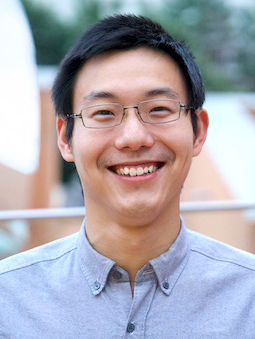 Jiajun Wu (吴佳俊)合作论文数Computer Science Department, Stanford University6
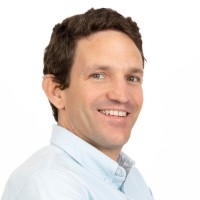 José Lezama合作论文数Deepmind5
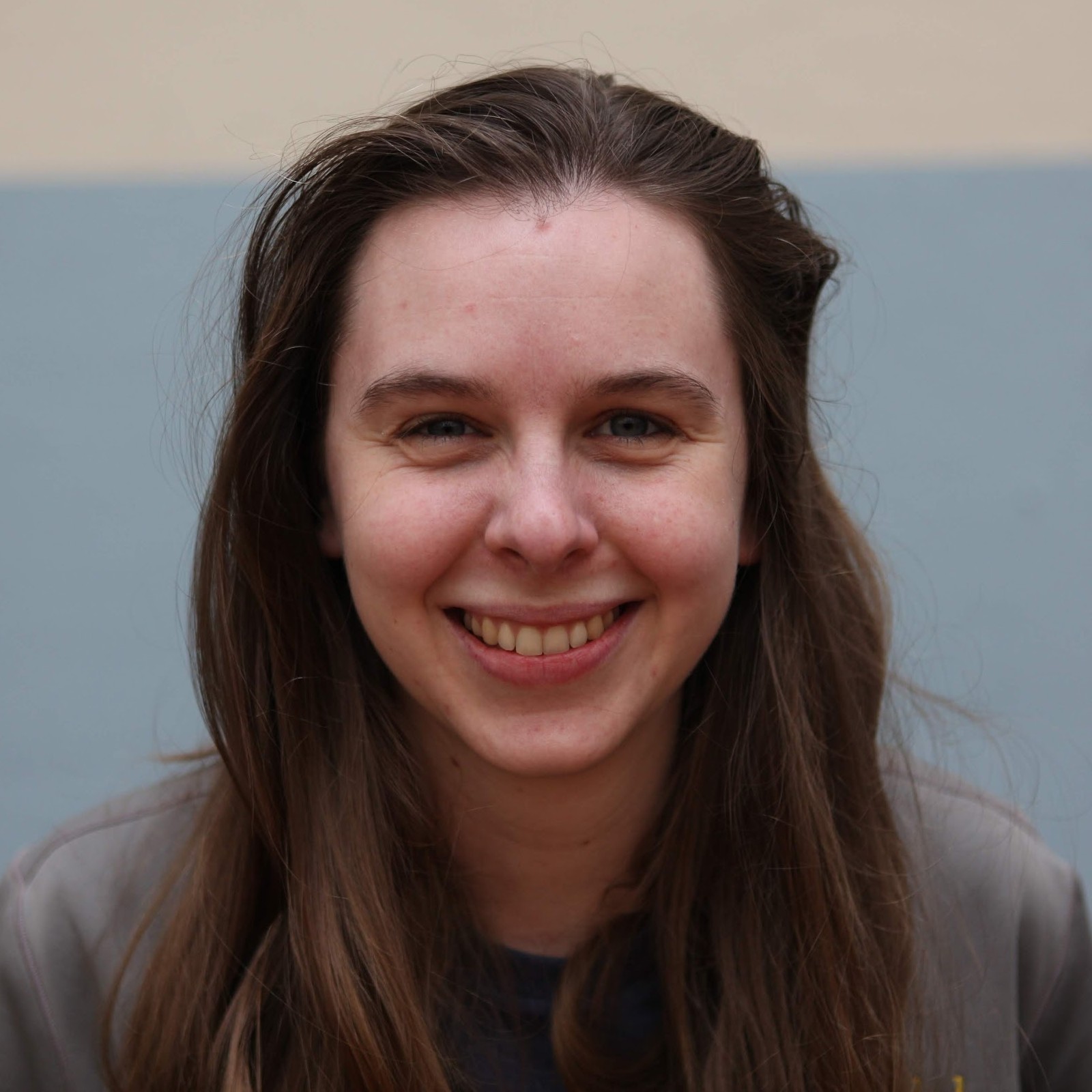 Coline Devin合作论文数Berkeley Artificial Intelligence Research, University of California, Berkeley5
 Todor Davchev合作论文数School of Informatics, University of Edinburgh5
 Nicolas Heess合作论文数Google DeepMind5
 Anthony Brohan合作论文数Google Deepmind4
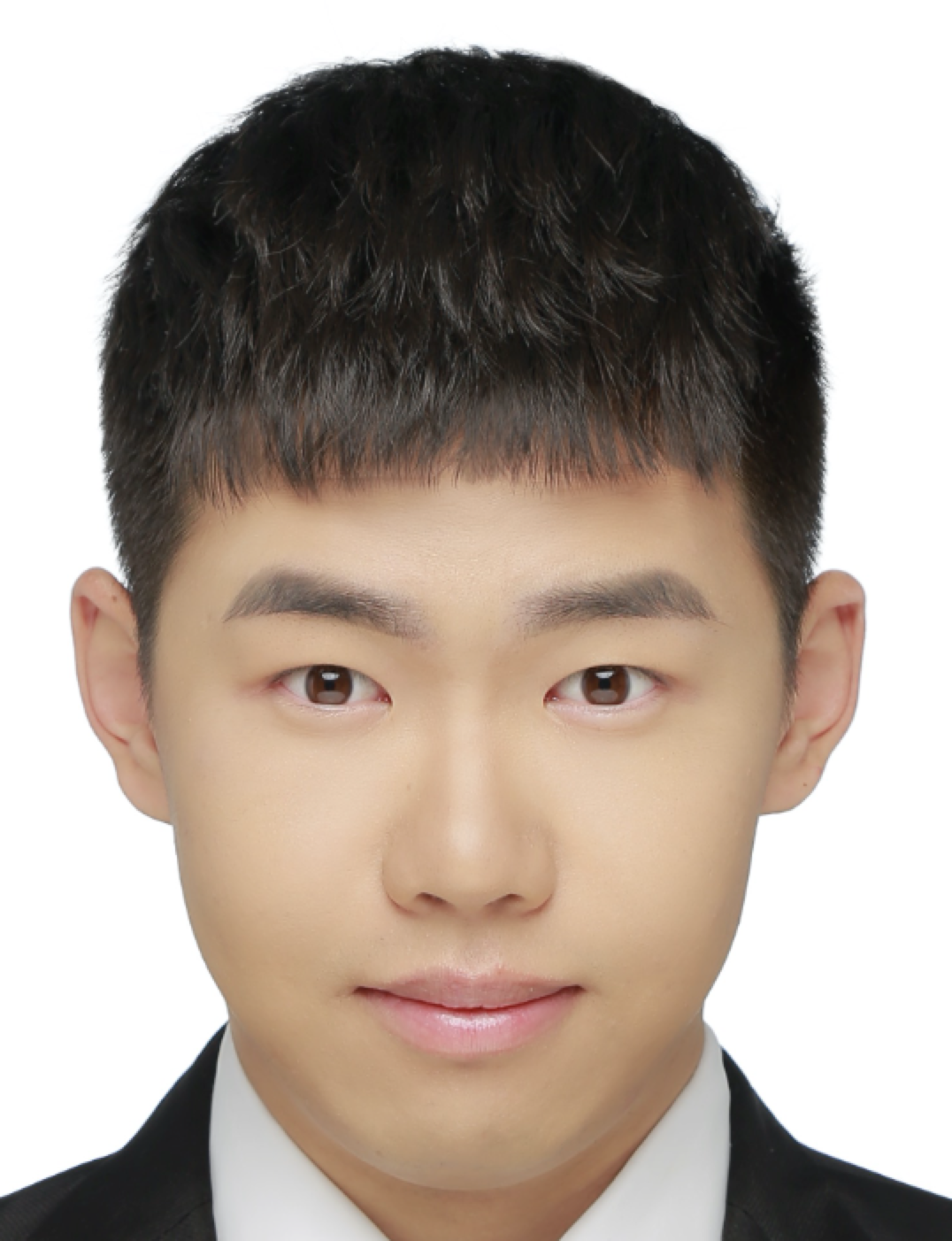 Lijun Yu (于力军)合作论文数Google DeepMind4
 Keerthana Gopalakrishnan合作论文数Google Deepmind4
 Tania Morimoto合作论文数Department of Mechanical and Aerospace Engineering, Jacobs School of Engineering, University of California, San Diego4
 Norman Di Palo合作论文数4
 Isabel Leal合作论文数4
 Chuyuan Fu合作论文数Google DeepMind4
 Jacky Liang合作论文数Google DeepMind4
 Sudeep Dasari合作论文数Google DeepMind4
 Bewley, A.合作论文数Sch. of Electr. Eng. & Comput. Sci., Queensland Univ. of Technol.;c;Sch. of Electr. Eng. & Comput. Sci., Queensland Univ. of Technol.4
 Yunfan Jiang合作论文数Stanford University4
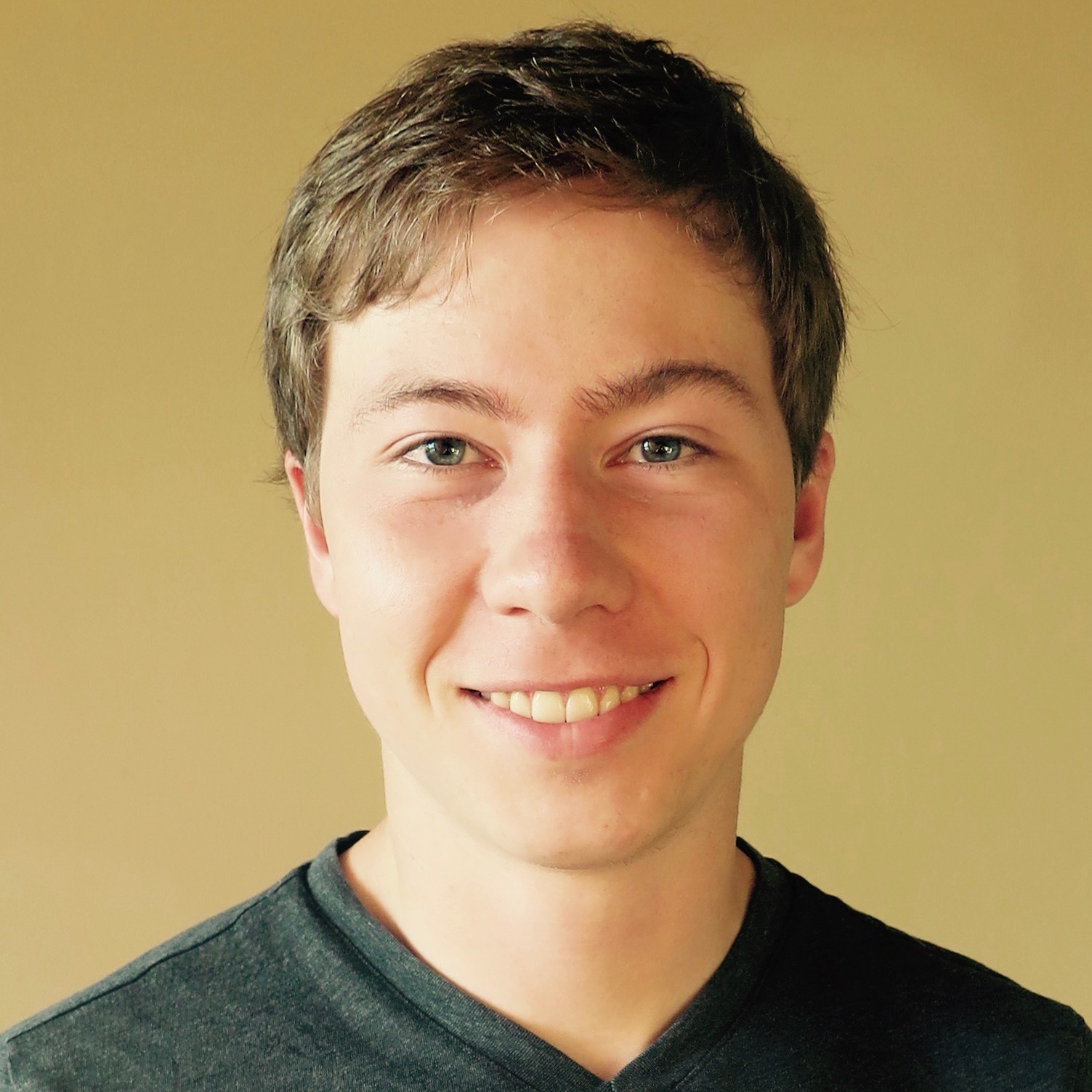 Justin Johnson合作论文数World Labs4
 Dmitry Kalashnikov合作论文数Google DeepMind4
 Irfan Essa合作论文数School of Interactive Computing, College of Computing, Georgia Institute of Technology;Interdisciplinary Research Center for Machine Learning, Georgia Institute of Technology;Google Inc.4
 Lu Jiang合作论文数Apple4
 Linxi Jim Fan合作论文数NVIDIA4
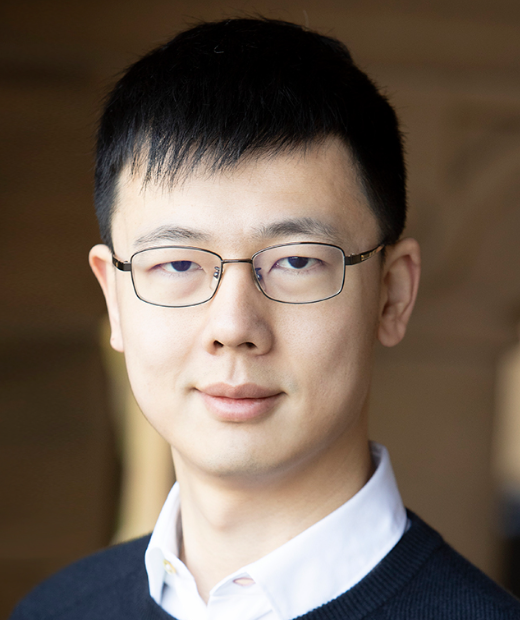 Yuke Zhu (朱玉可)合作论文数Department of Computer Science, College of Natural Sciences, The University of Texas at Austin;NVIDIA4
 Jasmine Hsu合作论文数Google4
 Ashwin Balakrishna合作论文数Toyota Research Institute4Adel Heidari合作论文数3Thomas Lampe合作论文数Google DeepMind3Zhuo Xu (许倬)合作论文数3Zichen Zhang合作论文数3Yongqiang Dou合作论文数3
 Peng Xu合作论文数Google DeepMind3Shayaun Bashar合作论文数3Guanzhi Wang合作论文数3
 Xi Chen合作论文数Google Research3Daegue Park合作论文数3
 Meera Hahn合作论文数3Kenneth Oslund合作论文数Google Brain, Mountain View, CA3
 Ayzaan Wahid合作论文数Google DeepMind3
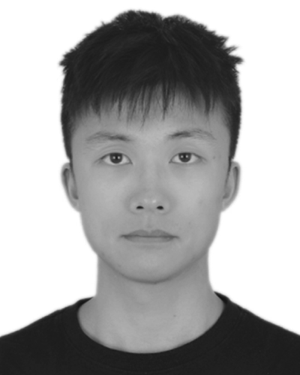 Qiming Zhang合作论文数3
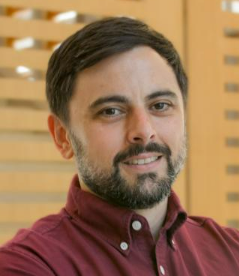 Roberto Martín-Martín合作论文数Department of Computer Science, College of Natural Sciences, The University of Texas at Austin3
 pannag raghunath sanketi合作论文数Robotics at Google3
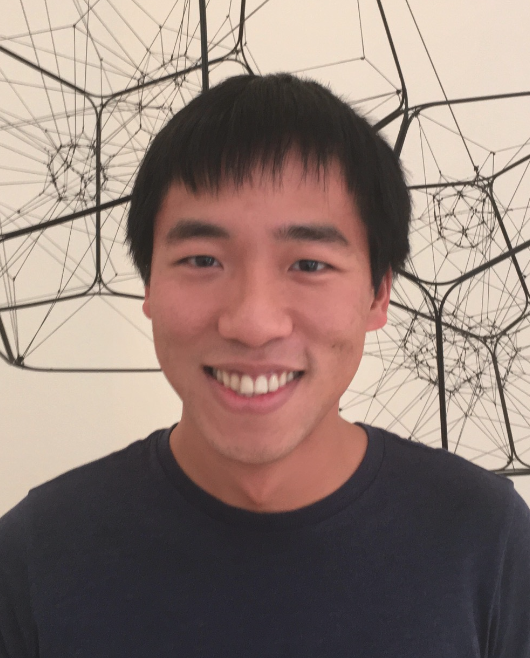 Alex X. Lee合作论文数Google DeepMind3
 Jonathan Tompson合作论文数Google3
 David Ross合作论文数Google DeepMind;Google3
 Xiuye Gu合作论文数Google Research3
 Oliver Groth合作论文数DeepMind3
 Kanishka Rao合作论文数Google DeepMind3




