Background: We aimed to evaluate Safinamide as add-on therapy, improving motor symptoms as well as patients' quality of life. This study was specifically designed to investigate the efficacy of safinamide maintained without escalating the dose of levodopa and dopamine agonist during the treatment period.
Human action-recognition systems enhance public safety by detecting abnormal behavior autonomously. RGB sensors commonly used in such systems capture personal information of subjects and, as a result, run the risk of potential privacy leakage. On the other hand, privacy-safe alternatives, such as depth or thermal sensors exhibit poorer performance because they lack the semantic context provided by RGB sensors. Moreover, the data availability of privacy-safe alternatives is significantly lower than RGB sensors. To address these problems, we explore effective cross-modality distillation methods in this paper, aiming to distill the knowledge of context-rich large-scale pre-trained RGB-based models into privacy-safe depth-based models. Based on extensive experiments on multiple architectures and benchmark datasets, We propose an effective method for training privacy-safe depth-based action-recognition models via cross-modality distillation: cross-modality mixing distillation. This approach improves both the performance and efficiency by enabling interaction between depth and RGB modalities through a linear combination of their features. By utilizing the proposed cross-modal mixing distillation approach, we achieve state-of-the-art accuracy in two depth-based action recognition benchmarks. The code and the pre-trained models will be available upon publication.
Alkali post‐deposition treatment (PDT) of Cu(In,Ga)Se2 (CIGS) film is an effective approach to obtain high‐efficiency CIGS solar cells. Herein, a low‐cost and scalable surface passivation process is reported when the potassium iodide (KI) alkali source is employed instead of the conventional potassium fluoride (KF). CIGS surface is modified by spin‐coating of KI solution and subsequent annealing at 350 °C in a Se atmosphere. With the KI PDT, the cell efficiency is enhanced by almost 20% due to the increase of shunt resistance and the lowering of reverse saturation current. To clarify the origin of the efficiency enhancement, the chemical state and electronic structure at the CIGS surface are investigated. The KI PDT yields a valence band lowering by 0.18 eV at the CIGS/CdS interface, leading to the suppression of the interface recombination. This is possible by Cu depletion and Cu cation reduction at the CIGS surface after KI treatment. The developed process may be considered an upcoming alternative alkali PDT for CIGS absorbers. The results provide the knowledge base for further optimization of the interface properties to form high‐quality heterojunction in the CIGS solar cells.
In this work, Ni@C was successfully fabricated using a one-step metal wire explosion method and employed as a bifunctional catalyst material for electrodes in an electrolyzer connected to a CIGS-sub module for continuous hydrogen production.
Abstract Human gaze information has been widely used in various areas, such as medical diagnosis and human–computer interactions (HCI). This study proposes a head pose‐free 3D gaze estimation method using a deep convolutional neural network (DCNN). To infer gaze direction, only a small grayscale image is required without any special devices such as an infrared (IR) illuminator and RGBD sensor. A domain adaptation method to reduce the feature gap between real and synthetic image data is also proposed here. Moreover, a novel synthetic dataset (SynFace) that contains head poses, gaze directions, and facial landmarks is established and released. The proposed method outperforms state‐of‐the‐art methods and achieves a mean error of less than 4○.
Even though above 22% efficiencies have been reported in Cd-free Cu(In,Ga)Se2 (CIGS) solar cell with Zn-containing buffers, the efficiencies with Zn-containing buffers, in general, are well below 20%. One of the reasons is Zn diffusion from the Zn-containing buffer layer to CIGS film during buffer growth. To avoid the degradation, it is necessary to prevent the diffusion of Zn atoms from Zn-containing buffer to CIGS film. For the purpose, we characterized an In2Se3 film as a possible diffusion barrier layer because In2Se3 has no Zn component. It was found that an In2Se3 layer grown at 300°C was very effective in preventing Zn diffusion from a Zn-containing buffer. Also, the In2Se3 had a large potential barrier in the valence band at the In2Se3/CIGS interface. Therefore, In2Se3 passivation has the potential to achieve a super-high efficiency in CIGS solar cells that employ Cd-free ALD processed buffers containing Zn.
An appropriate Ga slope is required in Cu(In,Ga)Se-2 (CIGS) film to enhance the cell performance of CIGS thinfilm solar cells. In the conventional three-stage-co-evaporation process, the Ga slope was obtained by controlling Ga/In flux during deposition process. However, in two-step process, where a precursor was deposited first and then annealed in a Se environment for mass production, the desirable Ga slope was not achievable with the Ga/In flux control. We observed that the Ga/(Ga + In) ratio was nearly flat in CIGS film for Se-rich precursor and the ratio was nearly zero at surface and very high on bottom side of CISG film for Se-deficient precursor. We were able to generate a CIGS film with a Ga non-zero Ga surface and desired slope in the bulk by devising a precursor with Se-rich layer on top and Se-deficient layer on bottom, resulting in the enhancement of Cell performance.
By introducing ZnS between Cu(In, Ga)(S,Se)(2) (CIGS) and the CdS, we greatly improved the photoelectrochemical (PEC) performance of the CIGS photocathode for hydrogen evolution. Chemical and structural analysis reveals that the enhanced performance is due to additional band bending driven by in-diffusion of Zn into the CIGS and suppression of nonradiative recombination. The improved onset potential of CIGS photocathode was exploited by building a tandem device with a perovskite absorber for bias-free water splitting. A PEC device with a solar-to-hydrogen conversion efficiency exceeding 9% (the highest among PEC cells including a CIGS photocathode) with a stable operation of 6.5 h is demonstrated.
Na2S as a new alkaline source for the PDT process enables CIGS cell with enhanced efficiency of 19.2% by eliminating InCu antisites along with VCu defects.
Driver inattention is one of the main causes of traffic accidents. To avoid such accidents, advanced driver assistance system that passively monitors the driver's activities is needed. In this paper, we present a novel method to estimate a head pose from a monocular camera. The proposed algorithm is based on multi-task learning deep neural network that uses a small grayscale image. The network jointly detects multi-view faces and estimates head pose even under poor environment conditions such as illumination change, vibration, large pose change, and occlusion. We also propose a multi-task learning method that does not bias on a specific task with different datasets. Moreover, in order to fertilize training dataset, we establish and release the RCVFace dataset that has accurate head poses. The proposed framework outperforms state-of-the-art approaches quantitatively and qualitatively with an average head pose mean error of less than 4 in real-time. The algorithm applies to driver monitoring system that is crucial for driver safety. (C) 2018 Published by Elsevier B.V.
The photoelectrochemical (PEC) properties of a Cu(In,Ga)Se 2 (CIGS) photocathode covered with reduced graphene oxide (rGO) as a catalyst binder for solar‐driven hydrogen evolution are reported. Chemically reduced rGO with various concentrations is deposited as an adhesive interlayer between CIGS/CdS and Pt. PEC characteristics of the CIGS/CdS/rGO/Pt are improved compared to the photocathode without rGO due to enhancement of charge transfer via efficient lateral distribution of photogenerated electrons by conductive rGO to the Pt. More importantly, the introduction of rGO to the CIGS photocathode significantly enhances the PEC stability; in the absence of rGO, a rapid loss of PEC stability is observed in 2.5 h, while the optimal rGO increases the PEC stability of the CIGS photocathode for more than 7 h. Chemical and structural characterizations show that the loss of the Pt catalyst is one of the main reasons for the lack of long‐term PEC stability; the introduction of rGO, which acts as a binder to the Pt catalysts by providing anchoring sites in the rGO, results in complete conservation of the Pt and hence much enhanced stability. Multiple functionality of rGO as an adhesive interlayer, an efficient charge transport layer, a diffusion barrier, and protection layer is demonstrated.
We report a novel Cd-free ZnTiO buffer layer deposited by atomic layer deposition for Cu(In,Ga)Se2 (CIGS) solar cells. Wet pretreatments of the CIGS absorbers with NH4OH, H2O, and/or aqueous solution of Cd2+ ions were explored to improve the quality of the CIGS/ZnTiO interface, and their effects on the chemical state of the absorber and the final performance of Cd-free CIGS devices were investigated. X-ray photoelectron spectroscopy (XPS) analysis revealed that the aqueous solution etched away sodium compounds accumulated on the CIGS surface, which was found to be detrimental for solar cell operation. Wet treatment with NH4OH solution led to a reduced photocurrent, which was attributed to the thinning (or removal) of an ordered vacancy compound (OVC) layer on the CIGS surface as evidenced by an increased Cu XPS peak intensity after the NH4OH treatment. However, the addition of Cd2+ ions to the NH4OH aqueous solution suppressed the etching of the OVC by NH4OH, explaining why such a negative effect of NH4OH is not present in the conventional chemical bath deposition of CdS. The band alignment at the CIGS/ZnTiO interface was quantified using XPS depth profile measurements. A small cliff-like conduction band offset of -0.11 eV was identified at the interface, which indicates room for further improvement of efficiency of the CIGS/ZnTiO solar cells once the band alignment is altered to a slight spike by inserting a passivation layer with a higher conduction band edge than ZnTiO. Combination of the small cliff conduction band offset at the interface, removal of the Na compound via water, and surface doping by Cd ions allowed the application of ZnTiO buffer to CIGS treated with Cd solutions, exhibiting an efficiency of 80% compared to that of a reference CIGS solar cell treated with the CdS.
 Liudmila Larina合作论文数Department of Materials Science and Engineering, Korea Advanced Institute of Science and Technology29
 Jae Ho Yun合作论文数Institute for Energy Materials and Devices, Korea Institute of Energy Technology;Department of Energy Engineering, Korea Institute of Energy Technology24
 Dong-Hyeop Shin合作论文数20
 Robert Huggins合作论文数Materials Science & Engineering Department, Stanford University17
 Kyung Hoon Yoon合作论文数Photovoltaics Research Group, Korea Institute of Energy Research17R. Beyers合作论文数16
 Ki Hyun Yoon合作论文数Department of Ceramic Engineering, Yonsei University15
 R. B. V. Chalapathy合作论文数15
 Ji Hye Kim合作论文数Dept Radiol, Sungkyunkwan Univ13Hwa Sung Rhee合作论文数13Vy Lee合作论文数12
 Youngmin Shin合作论文数12
 Turgut M. Gür合作论文数Department of Materials Science and Engineering, Stanford University12Kyung Min Ahn合作论文数12Suncheul Kim合作论文数11Seung Tae Kim合作论文数11
 Chang-Soo Kim合作论文数Department of Chemical Engineering and Applied Chemistry, Chungnam National University11
 In So Kweon合作论文数Robotics and Computer Vision Lab, School of Electrical Engineering, Korea Advanced Institute of Science and Technology11Jin Hyung Ahn合作论文数11
 young min ko合作论文数10
 Essam A. Al-Ammar合作论文数Electrical Engineering Department;College of Engineering;King Saud University;College of Engineering, King Saud University10Jinsoo Song合作论文数10byung wook han合作论文数9Jeong No Lee合作论文数9Yang Hwi Cho合作论文数9Yong Woo Choi合作论文数9Doo Youl Lee合作论文数9Sr Lee合作论文数8nikolay tsvetkov合作论文数8Gwang Sun Jung合作论文数8
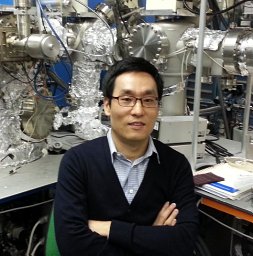 Byungha Shin合作论文数School of Engineering and Applied Sciences, Harvard8Sang Won Kang合作论文数8
 Seung Hee Kwon合作论文数Department of Civil and Environmental Engineering, Myongji University8jong tae baek合作论文数7JS Song合作论文数7Seung-Mo Kang合作论文数7
 Hyuk Sang Kwon合作论文数Department of Materials Science and Engineering, Korea Advanced Institute of Science and Technology7Oleg Shevaleevskiy合作论文数7Ho Bin Im合作论文数7
 Ung Lee合作论文数6s k kim合作论文数6
 Dae-Gyu Moon合作论文数6Do Hyung Park合作论文数6Sung Chan Park合作论文数6k p roche合作论文数5J. E. Vazquez合作论文数5M. L. Ramirez合作论文数5Hye Yong Chu合作论文数ETRI5
 Gilyong Chung合作论文数5




