Colorful woody plants are highly valued for their ornamental qualities, and are commonly used in garden landscape design. We previously cultivated several ornamental poplar varieties from bud mutants of Populus sp. Linn. '2025' (ZL2025), each with different leaf colors. Based on transcriptome data from these varieties with varying anthocyanin pigmentation, we identified and named an R2R3-MYB gene, PdMYB113. The mRNA of PdMYB113 accumulated in the leaves of the red-leaf mutants 'QHY' and 'LHY', but barely expressed in the leaves of 'ZL2025'. The anthocyanin biosynthesis genes were upregulated, resulting in high levels of red anthocyanins (particularly Peonidin-3-O-rutinoside, Cyanidin-3-O-rutinoside, and Cyanidin-3-O-glucoside) in both OE-PdMYB113 tobacco and poplar plants. This upregulation caused a color change in the tissues from green to red or dark purple. Yeast one-hybrid and luciferase assays demonstrated that PdMYB113 activates the expression of anthocyanin biosynthesis genes, including the early anthocyanin biosynthetic gene PdCHS and the late anthocynin biosynthetic gene PdANS. Consequently, PdMYB113 is identified as a key regulator of red coloration in poplar. Additionally, PdMYB113 does not dwarf transgenic plants under normal lighting conditions. This study elucidates the regulatory mechanisms of color change in ZL2025 and highlights a crucial gene for breeding new varieties of woody plants.
The J-TEXT capability is enhanced compared to two years ago with several upgrades of its diagnostics and the increase of electron cyclotron resonance heating (ECRH) power to 1 MW. With the application of electron cyclotron wave (ECW), the ECW assisted plasma startup is achieved; the tearing mode is suppressed; the toroidal injection of 300 kW ECW drives around 24 kA current; fast electrons are generated with toroidal injected ECW and the runaway current conversion efficiency increases with ECRH power. The mode coupling between 2/1 and 3/1 modes are extensively studied. The coupled 2/1 and 3/1 modes usually lead to major disruption. Their coupling can be either suppressed or avoided by external resonant magnetic perturbation fields and hence avoids the major disruption. It is also found that the 2/1 threshold of external field is significantly reduced by a pre-excited 3/1 mode, which can be either a locked island or an external kink mode. The disruption control is studied by developing prediction methods capable of cross tokamak application and by new mitigation methods, such as the biased electrode or electromagnetic pellet injector. The high-density operation and related disruptions are studied from various aspects. Approaching the density limit, the collapse of the edge shear layer is observed and such collapse can be prevented by applying edge biasing, leading to an increased density limit. The density limit is also observed to increase, if the plasma is operated in the poloidal divertor configuration or the plasma purity is increased by increasing the pre-filled gas pressure or ECRH power during the start-up phase.
Crop yield and quality are significantly affected by carbon partitioning between the source and sink tissues and organs, a biological process that requires the functions of cell wall invertases (CWINs). However, the nucleotide diversity, key polymorphism site and tuber trait association of cell wall invertase in potato are still unknown. In this work, the genomic sequences of potato StCWIN1 gene from 155 accessions were amplified, and nucleotide diversities and natural variations associated with tuber traits were estimated. A total number of 456 variants in StCWIN1 , including 389 single nucleotide polymorphisms (SNPs) and 67 insertions and deletions (indels), were identified. After quality controlled and filtered, 66 variants were found to be significantly associated with different tuber traits, with 5 of them were closely associated with dry matter. Among the 5 variants, one SNP, which constituted a linkage disequilibrium block with other adjacent 6 SNPs, formed the allelic marker allele - T . Based on this SNP (G/T) designated as SNP00075, a KASP marker was developed to distinguish allelic variation among potato genotypes for tuber starch content (SC) and dry matter (DM). Association analysis between StCWIN1 allelic variation and agronomic traits demonstrated that accessions possessing allele - T had higher SC (17.1%) and DM (22.9%) than those possessing allele - G (13.6% SC and 19.5% DM), indicating that Allele - T was a favorable allelic variation in StCWIN1 . Our findings suggest that the KASP marker may be used for the molecular marker-assisted breeding of new potato varieties with improved tuber weight and yield, and the favorable allelic variation allele - T has a great potential in increasing tuber yield through improving the transport of sucrose from source to sink in crop plants.
Phenylcoumaran benzylic ether reductase (PCBER) in the phenylpropane metabolic pathway plays a crucial role in controlling plant growth and development. However, its biological function in response to abiotic stress in perennial trees is still largely obscure. In this work, a phenylcoumaran benzylic ether reductase gene, PtPCBER, isolated from poplar was overexpressed in poplar. The growth and salt resistance of transgenic plants were investigated, and the possible regulatory mechanism of PtPCBER in response to abiotic stresses was verified. PtPCBER was constitutively expressed in various tissues and organs with a predominant expression in xylems. Overexpression of PtPCBER augmented the salt and oxidative stress tolerance of transgenic poplar plants. The increased salt tolerance was associated with a relatively lower chlorphyll loss and Na+ accumulation, and a higher antioxidant enzyme activity and stress gene expression, in the leaves of transgenic plants. Further metabolomic analyses revealed that overexpression of PtPCBER cut down the accumulation of coniferyl alcohols and lignans which function in the reactive oxygen species (ROS) scavenging pathway to alleviate the damage caused by oxidative stress in the leaves of transgenic plants. Taken together, our results suggest that PtPCBER has an important function in plant response to salt stress, and it could be used as an ideal candidate gene for the genetic engineering of woody plants with enhance resistance to multiple abiotic stresses through improving the scavenging capacity of ROS.
Poplar, a woody perennial model, is a common and widespread tree genus. We cultivated two red leaf poplar varieties from bud mutation of Populus sp. Linn. '2025' (also known as Zhonglin 2025, L2025 for shot): Populus deltoides varieties with bright red leaves (LHY) and completely red leaves (QHY). After measuring total contents of flavonoid, anthocyanin, chlorophyll and carotenoid metabolites, a liquid chromatography-electrospray ionization-tandem mass spectrometry system was used for the relative quantification of widely targeted metabolites in leaves of three poplar varieties. A total of 210 flavonoid metabolites (89 flavones, 40 flavonols, 25 flavanones, 18 anthocyanins, 16 isoflavones, 7 dihydroflavonols, 7 chalcones, 5 proanthocyanidins and 3 other flavonoid metabolites) were identified. Compared with L2025, 48 and 8 flavonoids were more and less abundant, respectively, in LHY, whereas 51 and 9 flavonoids were more and less abundant in QHY, respectively. On the basis of a comprehensive analysis of the metabolic network, gene expression levels were analyzed by deep sequencing to screen for potential reference genes for the red leaves. Most phenylpropanoid biosynthesis pathway-involved genes were differentially expressed among the examined varieties. Gene expression analysis also revealed several potential anthocyanin biosynthesis regulators including three MYB genes. The study results provide new insights into poplar flavonoid metabolites and represent the theoretical basis for future studies on leaf coloration in this model tree species.
Compared to flower color and red leaf mutants, the mechanism of yellow leaf formation in woody plants is more complicated and less understood. Poplars are common and widely distributed perennial trees. Here, we obtained a golden leaf mutant poplar variety (JHY) and compared it with its original green leaf poplar (Populus sp. Linn. '2025') in terms of phenotype, pigment content, the transcriptomes and metabolomes. Through transcriptome sequencing, we found that the chlorophyll degradation genes, and the genes in anthocyanin metabolism in JHY were up-regulated compared to L2025 and the carotenoid synthesis genes were down-regulated. Further based on HPLC-ESI-MS/MS technology, 16 differentially expressed anthocyanins were identified, 14 reddish anthocyanins of which were significantly up-regulated. According to these results, we proposed a coloring mechanism of JHY based on the RGB color mode. The yellow color of carotenoids and the red color of anthocyanins overlay each other, combined with a reduction in chlorophyll, turning the leaves golden. This study systematic analyzes the causes of golden leaf formation through the omics integration approach, which will provide reference for the breeding of golden leaf trees.
以彩叶楝树新品种'美人'当年生幼嫩茎段为试材,采用组织培养方法,研究了不同浓度的6-BA、IBA及NAA对彩叶楝树组培快繁的影响,以期建立彩叶楝树的高效组培快繁体系.结果 表明:外植体经1g·L-1的多菌灵消毒10 min和300 mg·L-1的羧苄青霉素消毒5 min后,再用0.2%氯化汞消毒15 min,灭菌效果较好,污染率只有32%.不定芽增殖的适宜培养基为MS+6-BA 0.3 mg·L-1 +IBA 0.20 mg·L-1,增殖系数为4.76;而1/2MS+IBA 0.10 mg·L-1+NAA 0.05 mg·L-1为试管苗生根较理想的配方,生根率可达90.8%;试管苗移栽适宜的基质为草碳∶珍珠岩=2∶1,成活率可达90%.该研究建立了一套完善的彩叶楝树新品种组培快繁体系,对其种植资源保护、新品种繁育、推广及遗传改良有着重要的理论指导意义和实践应用价值.
‘炫红杨’是从‘中红杨’中选出的芽变彩叶杨树品种.雄性无飞絮,叶片颜色从萌芽期的鲜红色逐步变为落叶期的橙红色或橙黄色.生长季节其叶柄、叶脉、干茎、新梢始终鲜红色.通过扦插或嫁接繁殖,栽培管理简单,可用作华北地区园林景观美化及花海营造.
Past work has introduced that the neoclassical polarization drift of the passing ion is in the same direction as that of the trapped ion. Here, based on the model of single particle motion, our analytical results indicate that the neoclassical polarization drifts of the trapped and passing ions are in the opposite directions without collision considered. This work is helpful to easily understand the previous expression of the collisionless neoclassical polarization current based on the kinetic theories, which is only a small quantity of order O(ε3/2) compared to that in the banana collision regime.
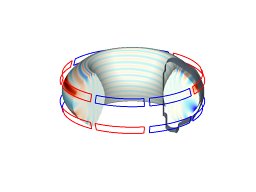
Recent J-TEXT research has highlighted the significance of the role that non-axisymmetric magnetic perturbations, so called three-dimensional (3D) magnetic perturbation (MP) fields, play in a fundamentally 2D concept, i.e. tokamaks. This paper presents the J-TEXT results achieved over the last two years, especially on the impacts of 3D MP fields on magnetohydrodynamic instabilities, plasma disruptions and plasma turbulence transport. On J-TEXT, the resonant MP (RMP) system, capable of providing either a static or a high frequency (up to 8 kHz) rotating RMP field, has been upgraded by adding a new set of 12 in-vessel saddle coils. The shattered pellet injection system was built in J-TEXT in the spring of 2018. The new capabilities advance J-TEXT to be at the forefront of international magnetic fusion facilities, allowing flexible study of 3D effects and disruption mitigation in a tokamak. The fast rotating RMP field has been successfully applied for avoidance of mode locking and the prevention of plasma disruption. A new control strategy, which applies pulsed RMP to the tearing mode only during the accelerating phase region, was proved by nonlinear numerical modelling to be efficient in accelerating mode rotation and even completely suppresses the mode. Remarkably, the rotating tearing mode was completely suppressed by the electrode biasing. The impacts of 3D magnetic topology on the turbulence has been investigated on J-TEXT. It is found that the fluctuations of electron density, electron temperature and plasma potential can be significantly modulated by the island structure, and a larger fluctuation level appears at the X-point of islands. The suppression of runaway electrons during disruptions is essential to the operation of ITER, and it has been reached by utilizing the 3D magnetic perturbations on J-TEXT. This may provide an alternative mechanism of runaway suppression for large-scale tokamaks and ITER.
"金红杨"良种编号:S-SV-PD-010-2016;品种权人:商丘市中兴苗木种植有限公司;品种权号:20150083;授权日期:2015年9月14日;良种编号:(豫)S-SV-PD-010-2016,是欧美杨"中红杨"芽变品种.该品种雄性无飞絮,叶片颜色从发芽期的鲜红色逐步变为橘红色、金黄色,下部叶片变为黄绿色,落叶期变为桔红色.生长季节,其叶柄、叶脉、干茎、新梢始终为紫红色,色泽亮丽.
'Meiren'is a new colored bud mutation cultivar selected from Melia azedarach seedlings. The cultivar shows a straight trunk and rounded crown with bright yellow leaves. It can be used for garden and street greening in M. azedarach living zone.
The loss of bootstrap current inside magnetic island plays a dominant role in driving the neoclassical tearing mode (NTM) instability in tokamak plasmas. In this work, we investigate the finite-banana-width (FBW) effect on the profile of ion bootstrap current in the island vicinity via an analytical approach. The results show that even if the pressure gradient vanishes inside the island, the ion bootstrap current can partly survive due to the FBW effect. The efficiency of the FBW effect is higher when the island width becomes smaller. Nevertheless, even when the island width is comparable to the ion FBW, the unperturbed ion bootstrap current inside the island cannot be largely recovered by the FBW effect, and thus the current loss still exists. This suggests that FBW effect alone cannot dramatically reduce the ion bootstrap current drive on NTMs.
A dispersion relation is derived for the stability of the resistive wall mode (RWM), which includes both the resistive layer damping physics and the toroidal precession drift resonance damping from energetic ions in tokamak plasmas. The dispersion relation is numerically solved for a model plasma, for the purpose of systematic investigation of the RWM stability in multi-dimensional plasma parameter space including the plasma resistivity, the radial location of the resistive wall, as well as the toroidal flow velocity. It is found that the toroidal favorable average curvature in the resistive layer contributes a significant stabilization of the RWM. This stabilization is further enhanced by adding the drift kinetic contribution from energetic ions. Furthermore, two traditionally assumed inner layer models are considered and compared in the dispersion relation, resulting in different predictions for the stability of the RWM.
In tokamak plasma fueling, supersonic molecule beam injection (SMBI) with a higher fueling efficiency and a deeper penetration depth than the traditional gas puffing method has been developed and widely applied to many tokamak devices. It is crucial to study the transport dynamics of SMBI to improve its fueling efficiency, especially in the high confinement regime. A new one-dimensional (1D) code of TPSMBI has also been developed recently based on a six-field SMBI model in cylindrical coordinate. It couples plasma density and heat radial transport equations together with neutral density transport equations for both molecules and atoms and momentum radial transport equations for molecules. The dominant particle collisional interactions between plasmas and neutrals, such as molecule dissociation, atom ionization and charge-exchange effects, are included in the model. The code is verified to be correct with analytical solutions and also benchmarked well with the trans-neut module of BOUT++ code. Time-dependent radial transport dynamics and mean profile evolution are studied during SMBI with the TPSMBI code in both slab and cylindrical coordinates. Along the SMBI path, plasma density increases due to particle fuelling, while plasma temperature decreases due to heat cooling. Being different from slab coordinate, the curvature effect leads to larger front densities of molecule and atom during SMBI in cylindrical coordinate simulation.
The enhanced transport of passing energetic ions (PEIs) in presence of the resonant interactions with a rotating magnetic island is investigated within the drift kinetic framework. When the island rotation plays a role in the resonant interaction, we find that the velocities of PEIs satisfy a constraint relation of resonant flux surface in phase space. The resonant flux surfaces overlap with the magnetic flux surfaces in real space. A new transport channel responsible for the PEIs moving across the magnetic flux surfaces, i.e., continuously overlapping, is found. Two kinds of radial motions can be induced by the surface overlapping: one arises from the coupling between the resonance and the collision with the background plasma and the other from not completely overlapping of the two surfaces. The two radial motions and the symmetry-breaking induced radial motion constitute the total radial motion. When the pitch-angle scattering rate is very weak, the surface-shear induced transport is dominant. Only a small increase in the collision rate can significantly influence the total transport.
The neoclassical polarization current, which can be generated by a time-dependent electric field resulting from magnetic island rotation, is believed to play an important role in the initial stage of the neoclassical tearing mode (NTM) evolution in tokamak plasmas. In the previous analytical description of the neoclassical polarization current contribution to the evolution of NTMs in the limit of low collision frequency (νii≪εω, νii is ion collision frequency, ε is the inverse aspect ratio, and ω is the island propagation frequency in the plasma rest frame), the width of magnetic islands has been assumed to be much larger than the finite-banana-width (FBW) of the trapped ions in order to solve the drift-kinetic equation of ions by using the perturbation method. In this paper, we introduce a new analytical approach to investigate the neoclassical polarization current contribution to the NTM evolution without the assumption of the large island width by solving the drift-kinetic equation in a so-called ion-banana-center coordinate system. The results show that, when the island width is comparable to the FBW of the thermal ion, the neoclassical polarization current term in the equation of the NTM evolution is much smaller than the previous analytical expression but matches well with the empirical anticipation commonly adopted in experiments.
The transport of passing energetic ions (EIs) in presence of the resonant interaction with a rotating magnetic island is studied within the frame of drift kinetics. The phase-space structure of the drift island induced by the resonances is first presented. New transport channels responsible for the transport of EIs are discovered when the drift island of phase space couples with the magnetic island in real space. When the pitch-angle scattering rate is very weak, the resonance-induced transport is dominant. Only a small increase in the collision rate can significantly influence the total transport.
In the previous analytical description of the neoclassical polarization current effect on the neoclassical tearing modes(NTMs),it is usually assumed that the magnetic island is much larger than the finite-ion-banana-width(FBW).This assumption is questionable when the experimentally observed seed island width of the NTMs is comparable to the FBW.We introduce a simple and direct theoretical method to investigate the FBW effect on the neoclassical polarization contribution to the NTM evolution in collisional plasmas.The results show that,the FBW effect can strongly modify the neoclassical polarization current profile near the island separatrix,and thus weaken its probably stabilizing effect on the NTMs.
 Jiaqi Dong (董家齐)合作论文数Southwestern Institute of Physics8
 YongXing Long (龙永兴)合作论文数6Xiangjun CHENG (程相军)合作论文数4Hongpeng Qu合作论文数4ZhenZhu Fu (符真珠)合作论文数4
 Hechen Zhang (张和臣)合作论文数4Xiaodong Peng (彭晓东)合作论文数4Yiming Jiao (焦一鸣)合作论文数4
 Jinjia Cao合作论文数3Feng Wang合作论文数3ZongZe Mou (牟宗泽)合作论文数3XiaoYu Dong (董晓宇)合作论文数3
 G. Z. Hao合作论文数Southwestern Institute of Physics, Southwestern Institute of Physics China3
 Min Xu (许敏)合作论文数核工业西南物理研究院3
 Jinhuan Chen (陈金焕)合作论文数College of Biological Sciences and Technology, Beijing Forestry University3Qianqian Li合作论文数3Bingren Shi合作论文数3Qingdi Gao (高庆弟)合作论文数3x m qiu合作论文数2
 Kaijun Zhao (赵开君)合作论文数2Hanhui Li合作论文数2Anshu Liang合作论文数2Guoyao Fan合作论文数2Ce Deng合作论文数2Jiaolong Dong合作论文数2Xiehang Ren合作论文数2
 Nengchao Wang (王能超)合作论文数School of Electrical and Electronic Engineering, Huazhong University of Science and Technology2Shupei Rao合作论文数2Shiyi Peng合作论文数2Yuru Tian (田玉如)合作论文数2Fan Gu合作论文数2Zhigang Hao合作论文数2Jinyu Xiong合作论文数2Cheng Fa-yin (程发银)合作论文数2Yilun Zhu合作论文数2Zhaosu Wang合作论文数2
 Chuliang Wang合作论文数2Shaodong Jiao合作论文数2Mingxiang Huang合作论文数2
 Yan Wei合作论文数2W. Guo合作论文数2S. Zhou合作论文数2Yue Peng (岳鹏)合作论文数2Qiong Li合作论文数2Kehong Dong合作论文数2
 Kenneth Gentle合作论文数Department of Physics, College of Natural Sciences, The University of Texas at Austin2Calvin Domier合作论文数2J. Q. Xu合作论文数2
 Dongliang Han合作论文数Int Joint Res Lab Magnet Confinement Fus & Plasma, Huazhong Univ Sci & Technol2




