Reinforcement learning from human feedback (RLHF) with reward models has advanced alignment of generative models to human aesthetic and perceptual preferences. However, jointly optimizing multiple rewards often incurs an alignment tax—improving one dimension while degrading others. To address this, we introduce two complementary methods: MapReduce LoRA and Reward-aware Token Embedding (RaTE). MapReduce LoRA trains preference-specific LoRA experts in parallel and iteratively merges them to refine a shared base model; RaTE learns reward-specific token embeddings that compose at inference for flexible preference control. Experiments on Text-to-Image generation (Stable Diffusion 3.5 Medium and FLUX.1-dev) show improvements of 36.1%, 4.6%, and 55.7%, and 32.7%, 4.3%, and 67.1% on GenEval, PickScore, and OCR, respectively. On Text-to-Video generation (HunyuanVideo), visual and motion quality improve by 48.1% and 90.0%, respectively. Our framework sets a new state-of-the-art multi-preference alignment recipe across modalities.
Although recent advances in visual generation have been remarkable, most existing architectures still depend on distinct encoders for images and text. This separation constrains diffusion models' ability to perform cross-modal reasoning and knowledge transfer. Prior attempts to bridge this gap often use the last layer information from VLM, employ multiple visual encoders, or train large unified models jointly for text and image generation, which demands substantial computational resources and large-scale data, limiting its accessibility.We present UniFusion, a diffusion-based generative model conditioned on a frozen large vision-language model (VLM) that serves as a unified multimodal encoder. At the core of UniFusion is the Layerwise Attention Pooling (LAP) mechanism that extracts both high level semantics and low level details from text and visual tokens of a frozen VLM to condition a diffusion generative model. We demonstrate that LAP outperforms other shallow fusion architectures on text-image alignment for generation and faithful transfer of visual information from VLM to the diffusion model which is key for editing. We propose VLM-Enabled Rewriting Injection with Flexibile Inference (VERIFI), which conditions a diffusion transformer (DiT) only on the text tokens generated by the VLM during in-model prompt rewriting. VERIFI combines the alignment of the conditioning distribution with the VLM's reasoning capabilities for increased capabilities and flexibility at inference. In addition, finetuning on editing task not only improves text-image alignment for generation, indicative of cross-modality knowledge transfer, but also exhibits tremendous generalization capabilities. Our model when trained on single image editing, zero-shot generalizes to multiple image references further motivating the unified encoder design of UniFusion.
Training data is at the core of any successful text-to-image models. The quality and descriptiveness of image text are crucial to a model's performance. Given the noisiness and inconsistency in web-scraped datasets, recent works shifted towards synthetic training captions. While this setup is generally believed to produce more capable models, current literature does not provide any insights into its design choices. This study closes this gap by systematically investigating how different synthetic captioning strategies impact the downstream performance of text-to-image models. Our experiments demonstrate that dense, high-quality captions enhance text alignment but may introduce trade-offs in output aesthetics and diversity. Conversely, captions of randomized lengths yield balanced improvements across aesthetics and alignment without compromising sample diversity. We also demonstrate that varying caption distributions introduce significant shifts in the output bias of a trained model. Our findings underscore the importance of caption design in achieving optimal model performance and provide practical insights for more effective training data strategies in text-to-image generation.
CLIP revolutes vision-language pretraining by using contrastive learning on paired web data. However, the sheer size of these pretrained models makes full-model finetuning exceedingly costly. One common solution is the “adapter”, which finetunes a few additional parameters while freezing the backbone. It harnesses the heavy-duty backbone while offering a light finetuning for small downstream tasks. This synergy prompts us to explore the potential of augmenting large-scale backbones with traditional machine learning techniques. Often employed in traditional fields and overlooked in the large-scale era, these techniques could provide valuable enhancements. Herein, we delve into the “adapter ensembles” in the realm of large-scale pretrained vision-language models. We begin with a proof-of-concept study to establish the efficacy of combining multiple adapters. We then present extensive evidence showing these ensembles excel in a variety of settings, particularly when employing a Multi-Scale Attention (MSA) approach thoughtfully integrated into the ensemble framework. We further incorporate the LoRA to mitigate the additional parameter burden. We focus on vision-language retrieval, using different backbones under constraints of minimal data, parameters, and finetuning budgets. This research paves the way for a synergistic blend of traditional, yet effective, strategies with modern large-scale networks.
As Diffusion Models have shown promising performance, a lot of efforts have been made to improve the controllability of Diffusion Models. However, how to train Diffusion Models to have the disentangled latent spaces and how to naturally incorporate the disentangled conditions during the sampling process have been underexplored. In this paper, we present a training framework for feature disentanglement of Diffusion Models (FDiff). We further propose two sampling methods that can boost the realism of our Diffusion Models and also enhance the controllability. Concisely, we train Diffusion Models conditioned on two latent features, a spatial content mask, and a flattened style embedding. We rely on the inductive bias of the denoising process of Diffusion Models to encode pose/layout information in the content feature and semantic/style information in the style feature. Regarding the sampling methods, we first generalize Composable Diffusion Models (GCDM) by breaking the conditional independence assumption to allow for some dependence between conditional inputs, which is shown to be effective in realistic generation in our experiments. Second, we propose timestep-dependent weight scheduling for content and style features to further improve the performance. We also observe better controllability of our proposed methods compared to existing methods in image manipulation and image translation.
As Diffusion Models have shown remarkable capabilities in generating images, the controllability of Diffusion Models has received much attention. However, there is still room for improvement of controllability in some aspects, such as feature disentanglement of Diffusion Models for extended editability and composing multiple conditions naturally. In this paper, we present three methods that can be used in either training or sampling to enhance the controllability of Diffusion Models. Concisely, we train Diffusion Models conditioned on two latent codes, a spatial content mask, and a flattened style embedding. We rely on the inductive bias of the progressive denoising process of Diffusion Models to encode pose/layout information in the spatial structure mask and semantic/style information in the style code. We also propose two generic sampling techniques for improving controllability. First, we extend Composable Diffusion Models to allow for some dependence between conditional inputs, to improve the quality of generations while also providing control over the amount of guidance from each condition and their joint distribution. Second, we propose timestep-dependent weight scheduling for content and style latents to further improve the translations. We observe better controllability compared to existing methods and show that with our proposed methods, Diffusion Models can be used for effective image manipulation and image translation.
As Diffusion Models have shown promising performance, a lot of efforts have been made to improve the controllability of Diffusion Models. However, how to train Diffusion Models to have the disentangled latent spaces and how to naturally incorporate the disentangled conditions during the sampling process have been underexplored. In this paper, we present a training framework for disentangling the latent spaces of Diffusion Models. We further propose two sampling methods that can boost the realism of our Diffusion Models and also enhance the controllability. Concisely, we train Diffusion Models conditioned on two latent features, a spatial content mask, and a flattened style embedding. We rely on the inductive bias of the denoising process of Diffusion Models to encode pose/layout information in the content feature and semantic/style information in the style feature. Regarding the sampling methods, we first extend Composable Diffusion Models by breaking the conditional independence assumption to allow for some dependence between conditional inputs, which is shown to be effective in realistic generation in our experiments. Second, we propose timestep-dependent weight scheduling for content and style features to further improve the performance. We also observe better controllability of our proposed methods compared to existing methods in image manipulation and image translation.
Denoising Diffusion models have shown remarkable performance in generating diverse, high quality images from text. Numerous techniques have been proposed on top of or in alignment with models like Stable Diffusion and Imagen that generate images directly from text. A lesser explored approach is DALLE-2's two step process comprising a Diffusion Prior that generates a CLIP image embedding from text and a Diffusion Decoder that generates an image from a CLIP image embedding. We explore the capabilities of the Diffusion Prior and the advantages of an intermediate CLIP representation. We observe that Diffusion Prior can be used in a memory and compute efficient way to constrain the generation to a specific domain without altering the larger Diffusion Decoder. Moreover, we show that the Diffusion Prior can be trained with additional conditional information such as color histogram to further control the generation. We show quantitatively and qualitatively that the proposed approaches perform better than prompt engineering for domain specific generation and existing baselines for color conditioned generation. We believe that our observations and results will instigate further research into the diffusion prior and uncover more of its capabilities.
Generative models have been widely studied in computer vision. Recently, diffusion models have drawn substantial attention due to the high quality of their generated images. A key desired property of image generative models is the ability to disentangle different attributes, which should enable modification towards a style without changing the semantic content, and the modification parameters should generalize to different images. Previous studies have found that generative adversarial networks (GANs) are inherently endowed with such disentanglement capability, so they can perform disentangled image editing without re-training or fine-tuning the network. In this work, we explore whether diffusion models are also inherently equipped with such a capability. Our finding is that for stable diffusion models, by partially changing the input text embedding from a neutral description (e.g., "a photo of person") to one with style (e.g., "a photo of person with smile") while fixing all the Gaussian random noises introduced during the denoising process, the generated images can be modified towards the target style without changing the semantic content. Based on this finding, we further propose a simple, light-weight image editing algorithm where the mixing weights of the two text embeddings are optimized for style matching and content preservation. This entire process only involves optimizing over around 50 parameters and does not fine-tune the diffusion model itself. Experiments show that the proposed method can modify a wide range of attributes, with the performance outperforming diffusion-model-based image-editing algorithms that require fine-tuning. The optimized weights generalize well to different images. Our code is publicly available at https://github.com/UCSB-NLP-Chang/DiffusionDisentanglement.
Diffusion models have shown remarkable capabilities in generating high quality and creative images conditioned on text. An interesting application of such models is structure preserving text guided image editing. Existing approaches rely on text conditioned diffusion models such as Stable Diffusion or Imagen and require compute intensive optimization of text embeddings or fine-tuning the model weights for text guided image editing. We explore text guided image editing with a Hybrid Diffusion Model (HDM) architecture similar to DALLE-2. Our architecture consists of a diffusion prior model that generates CLIP image embedding conditioned on a text prompt and a custom Latent Diffusion Model trained to generate images conditioned on CLIP image embedding. We discover that the diffusion prior model can be used to perform text guided conceptual edits on the CLIP image embedding space without any finetuning or optimization. We combine this with structure preserving edits on the image decoder using existing approaches such as reverse DDIM to perform text guided image editing. Our approach, PRedItOR does not require additional inputs, fine-tuning, optimization or objectives and shows on par or better results than baselines qualitatively and quantitatively. We provide further analysis and understanding of the diffusion prior model and believe this opens up new possibilities in diffusion models research.
Denoising Diffusion models have shown remarkable capabilities in generating realistic, high-quality and diverse images. However, the extent of controllability during generation is underexplored. Inspired by techniques based on GAN latent space for image manipulation, we train a diffusion model conditioned on two latent codes, a spatial content mask and a flattened style embedding. We rely on the inductive bias of the progressive denoising process of diffusion models to encode pose/layout information in the spatial structure mask and semantic/style information in the style code. We propose two generic sampling techniques for improving controllability. We extend composable diffusion models to allow for some dependence between conditional inputs, to improve the quality of generations while also providing control over the amount of guidance from each latent code and their joint distribution. We also propose timestep dependent weight scheduling for content and style latents to further improve the translations. We observe better controllability compared to existing methods and show that without explicit training objectives, diffusion models can be used for effective image manipulation and image translation.
We present StyleBabel, a unique open access dataset of natural language captions and free-form tags describing the artistic style of over 135K digital artworks, collected via a novel participatory method from experts studying at specialist art and design schools. StyleBabel was collected via an iterative method, inspired by `Grounded Theory': a qualitative approach that enables annotation while co-evolving a shared language for fine-grained artistic style attribute description. We demonstrate several downstream tasks for StyleBabel, adapting the recent ALADIN architecture for fine-grained style similarity, to train cross-modal embeddings for: 1) free-form tag generation; 2) natural language description of artistic style; 3) fine-grained text search of style. To do so, we extend ALADIN with recent advances in Visual Transformer (ViT) and cross-modal representation learning, achieving a state of the art accuracy in fine-grained style retrieval.
eCommerce Information Retrieval (IR) is receiving increasing attention in the academic literature and is an essential component of some of the world's largest web sites (e.g. Airbnb, Alibaba, Amazon, eBay, Facebook, Flipkart, Lowe's, Taobao, and Target). SIGIR has for several years seen sponsorship from eCommerce organisations, reflecting the importance of IR research to them. The purpose of this workshop is (1) to bring together researchers and practitioners of eCommerce IR to discuss topics unique to it, (2) to determine how to use eCommerce's unique combination of free text, structured data, and customer behavioral data to improve search relevance, and (3) to examine how to build datasets and evaluate algorithms in this domain. Since eCommerce customers often do not know exactly what they want to buy (i.e. navigational and spearfishing queries are rare), recommendations are valuable for inspiration and serendipitous discovery as well as basket building. The theme of this year's eCommerce IR workshop is Bridging IR Metrics and Business Metrics and Multi-objective Optimization. The workshop includes papers on this topic as well as a panel focused on this area (see Section 3). In addition, Farfetch is sponsoring a recommendation challenge focused on outfit completion: as part of the event, Farfetch will release to the research community a novel, large dataset containing multi-modal information and extensive labels curated by fashion experts. The data challenge reflects themes from prior SIGIR workshops in 2017, 2018, 2019, 2020, 2021.
Sequential recommenders aim to capture users' dynamic interests from their historical action sequences, but remain challenging due to data sparsity issues, as well as the noisy and complex relationships among items in a sequence. Several approaches have sought to alleviate these issues using side-information , such as item content (e.g., images), action types (e.g., click, purchase). While useful, we argue one of the main contextual signals is largely ignored-namely users' queries . When users browse and consume products (e.g., music, movies), their sequential interactions are usually a combination of queries, clicks (etc.). Most interaction datasets discard queries, and corresponding methods simply model sequential behaviors over items and thus ignore this critical context of user interactions. In this work, we argue that user queries should be an important contextual cue for sequential recommendation. First, we propose a new query-aware sequential recommendation setting, i.e. incorpo- rating explicit user queries to model users' intent. Next, we propose a model, namely Query-SeqRec , to (1) incorporate query information into user behavior sequences; and (2) improve model generalization ability using query-item co-occurrence information. Last, we demonstrate the effectiveness of incorporating query features in sequential recommendation on three datasets. 1
Modern image captioning models are usually trained with text similarity objectives. However, since reference captions in public datasets often describe the most salient common objects, models trained with text similarity objectives tend to ignore specific and detailed aspects of an image that distinguish it from others. Toward more descriptive and distinctive caption generation, we propose using CLIP, a multimodal encoder trained on huge image-text pairs from web, to calculate multimodal similarity and use it as a reward function. We also propose a simple finetuning strategy of the CLIP text encoder to improve grammar that does not require extra text annotation. This completely eliminates the need for reference captions during the reward computation. To comprehensively evaluate descriptive captions, we introduce FineCapEval, a new dataset for caption evaluation with fine-grained criteria: overall, background, object, relations. In our experiments on text-to-image retrieval and FineCapEval, the proposed CLIP-guided model generates more distinctive captions than the CIDEr-optimized model. We also show that our unsupervised grammar finetuning of the CLIP text encoder alleviates the degeneration problem of the naive CLIP reward. Lastly, we show human analysis where the annotators strongly prefer the CLIP reward to the CIDEr and MLE objectives according to various criteria. Code and Data: https://github.com/j-min/CLIP-Caption-Reward
Cross language-image modality retrieval in E-commerce is a fundamental problem for product search, recommendation, and marketing services. Extensive efforts have been made to conquer the cross-modal retrieval problem in the general domain. When it comes to E-commerce, a com-mon practice is to adopt the pretrained model and finetune on E-commerce data. Despite its simplicity, the performance is sub-optimal due to overlooking the uniqueness of E-commerce multimodal data. A few recent efforts [10], [72] have shown significant improvements over generic methods with customized designs for handling product images. Unfortunately, to the best of our knowledge, no existing method has addressed the unique challenges in the e-commerce language. This work studies the outstanding one, where it has a large collection of special meaning entities, e.g., "Di s s e l (brand)", "Top (category)", "relaxed (fit)" in the fashion clothing business. By formulating such out-of-distribution finetuning process in the Causal Inference paradigm, we view the erroneous semantics of these special entities as confounders to cause the retrieval failure. To rectify these semantics for aligning with e-commerce do-main knowledge, we propose an intervention-based entity-aware contrastive learning framework with two modules, i.e., the Confounding Entity Selection Module and Entity-Aware Learning Module. Our method achieves competitive performance on the E-commerce benchmark Fashion-Gen. Particularly, in top-1 accuracy (R@l), we observe 10.3% and 10.5% relative improvements over the closest baseline in image-to-text and text-to-image retrievals, respectively.
Recently, self-attentive models have shown promise in sequential recommendation, given their potential to capture user long-term preferences and short-term dynamics simultaneously. Despite their success, we argue that self-attention modules, as a non-local operator, often fail to capture short-term user dynamics accurately due to a lack of inductive local bias. To examine our hypothesis, we conduct an analytical experiment on controlled 'short-term' scenarios. We observe a significant performance gap between self-attentive recommenders with and without local constraints, which implies that short-term user dynamics are not sufficiently learned by existing self-attentive recommenders. Motivated by this observation, we propose a simple framework, (Locker) for self-attentive recommenders in a plug-and-play fashion. By combining the proposed local encoders with existing global attention heads, Locker enhances short-term user dynamics modeling, while retaining the long-term semantics captured by standard self-attentive encoders. We investigate Locker with five different local methods, outperforming state-of-the-art self-attentive recom- menders on three datasets by 17.19% (NDCG@20) on average.
We develop an approach to learning visual representations that embraces multimodal data, driven by a combination of intra- and inter-modal similarity preservation objectives. Unlike existing visual pre-training methods, which solve a proxy prediction task in a single domain, our method exploits intrinsic data properties within each modality and semantic information from cross-modal correlation simultaneously, hence improving the quality of learned visual representations. By including multimodal training in a unified framework with different types of contrastive losses, our method can learn more powerful and generic visual features. We first train our model on COCO and evaluate the learned visual representations on various downstream tasks including image classification, object detection, and instance segmentation. For example, the visual representations pre-trained on COCO by our method achieve state-of-the-art top-1 validation accuracy of 55.3% on ImageNet classification, under the common transfer protocol. We also evaluate our method on the large-scale Stock images dataset and show its effectiveness on multi-label image tagging, and cross-modal retrieval tasks.
Personalization is essential for enhancing the customer experience in retrieval tasks. In this paper, we develop a novel method CA-GCN for personalized image retrieval in the Adobe Stock image system. The proposed method CA-GCN leverages user behavior data in a Graph Convolutional Neural Network (GCN) model to learn user and image embeddings simultaneously. Standard GCN performs poorly on sparse user-image interaction graphs due to the limited knowledge gain from less representative neighbors. To address this challenge, we propose to augment the sparse user-image interaction data by considering the similarities among images. Specifically, we detect clusters of similar images and introduce a set of hidden super-nodes in the graph to represent clusters. We show that such an augmented graph structure can significantly improve the retrieval performance on real-world data collected from Adobe Stock service. In particular, when testing the proposed method on real users' stock image retrieval sessions, we get promoted average click position from 70 to 51.
Language identification is a well-known task for natural language documents. In this paper we explore search query language identification which is usually the first task before any other query understanding. Without loss of generalization, we run our experiments on the Adobe Stock search engine. Even though the domain is relatively generic because Adobe Stock queries cover a broad range of objects and concepts, out-of-the-box language identifiers do not perform well due to the extremely short text found in queries. Unlike other well-studied supervised approaches for this task, we examine a practical approach for the cold start problem for automatically getting large-scale query-language pairs for training. We describe the process of creating weak-labeled training data and then human-annotated evaluation data for the search query language identification task. The effectiveness of this technique is demonstrated by training a gradient boosting model for language classification given a query. We out-perform the open domain text model baselines by a large margin.
 Zhe Lin合作论文数Imagination Lab, Adobe Research8
 Midhun Harikumar合作论文数6
 Hareesh Ravi合作论文数Electron. & Commun. Eng., Indraprastha Inst. of Inf. Technol.;c;Electron. & Commun. Eng., Indraprastha Inst. of Inf. Technol.6
 Handong Zhao合作论文数Adobe6
 Vinh Ngoc Khuc合作论文数The, Ohio State University5
 Pranav Aggarwal合作论文数Univ Southern Calif4
 Wonwoong Cho合作论文数Purdue University4
 David I. Inouye合作论文数Elmore Family School of Electrical and Computer Engineering, Purdue University4
 Krishna Kumar Singh合作论文数Adobe Research4
 Jingwan Lu合作论文数Adobe Research4
 Qiaosong Wang (王乔松)合作论文数Coupang3
 Tong Yu合作论文数Adobe Research3
 Fan Yang (杨帆)合作论文数AIQ3Baldo Faieta合作论文数Synthetron3
 Robinson Piramuthu合作论文数Amazon3
 Manuel Brack合作论文数Deutsches Forschungszentrum für Künstliche Intelligenz;Machine Learning Lab, Computer Science Department, Technischen Universität Darmstadt2Sachin Kelkar合作论文数2
 Naveen Marri合作论文数School of Informatics, Computing and Engineering, Indiana University2Ashish Joglekar合作论文数2
 Zhankui He (何占魁)合作论文数Google DeepMind2
 Zhaowen Wang合作论文数Adobe2
 Tracy Holloway King合作论文数Palo Alto Research Center2
 Jiuxiang Gu (顾久祥)合作论文数Document Intelligence Lab, Adobe Research2Shaunak Vaidya合作论文数2
 Trung H. Bui合作论文数Adobe Research2
 Julian Mcauley合作论文数Department of Computer Science & Engineering, Jacobs School of Engineering, University of California, San Diego;NICTA2T. L. Prasanna Venkatesan合作论文数1Bhavesh Shah合作论文数1Thomas Burris合作论文数1
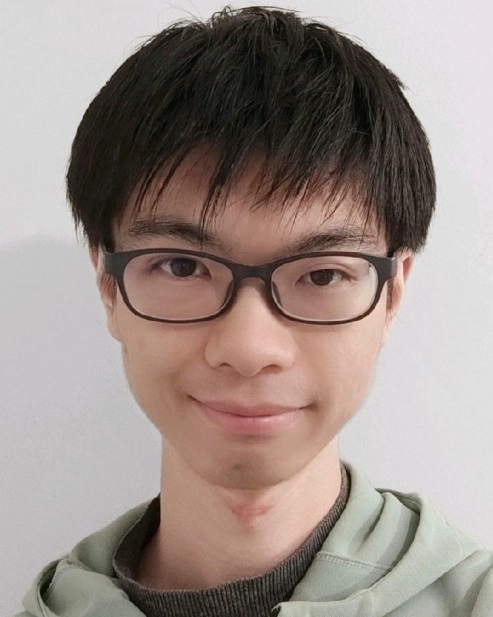 Zhifan Ye合作论文数School of Computer Science, Georgia Institute of Technology;NVIDIA1Jo Briggs合作论文数1
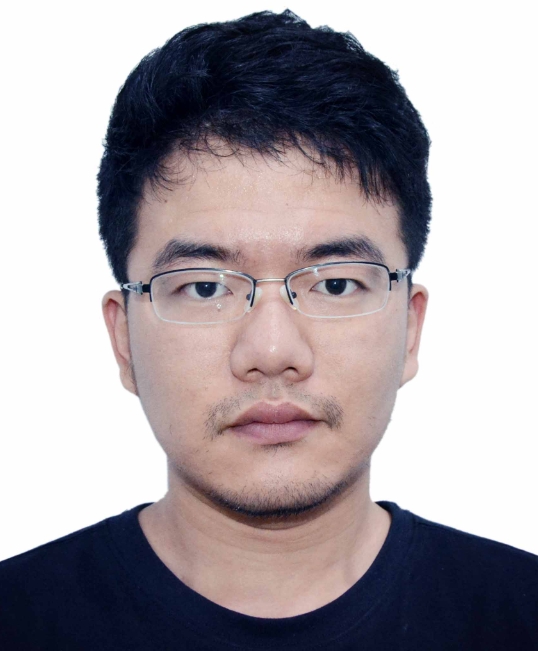 Yue Bai合作论文数Synergetic Media Learning Lab, Northeastern University1Karl J. Cama合作论文数1Ali Aminian合作论文数1Alex Filipkowski合作论文数1
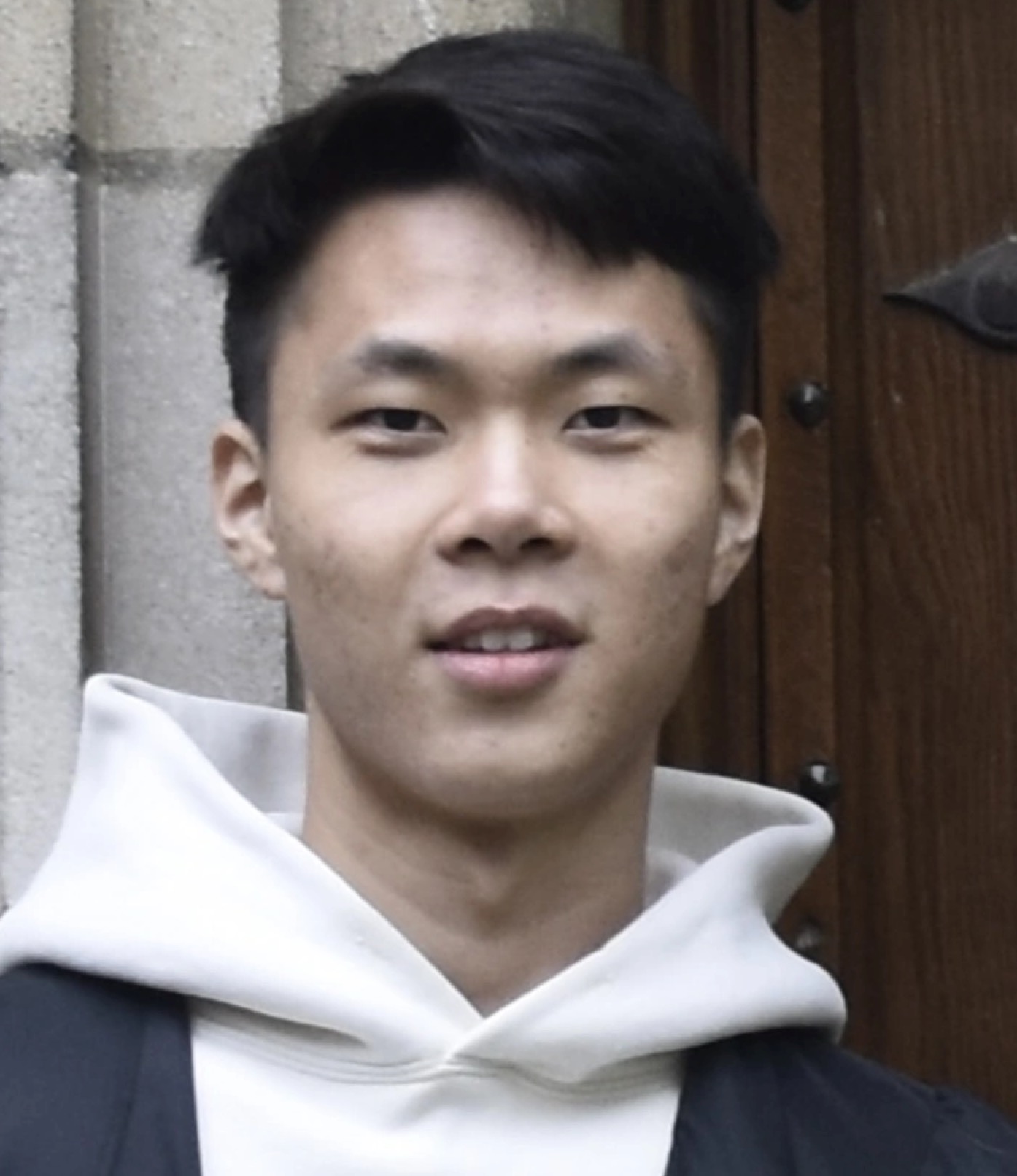 Yujian Liu合作论文数University of California, Santa Barbara1Malavika Ramprasad合作论文数1Sarah Saber合作论文数1Alvin Ghouas合作论文数1Purvak Lapsiya合作论文数1Ananth Chakravarthy合作论文数1
 Felix Friedrich合作论文数1animesh kopekar合作论文数1
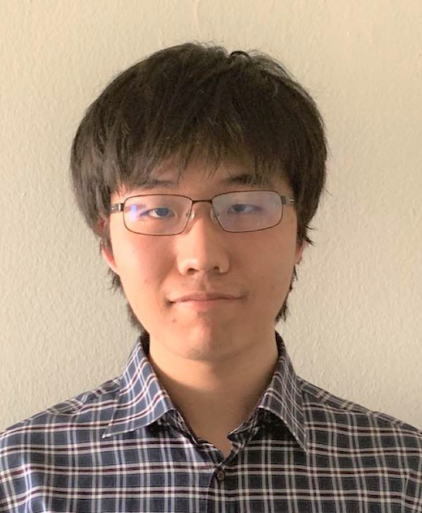 Qiucheng Wu合作论文数TikTok1
 Patrick Schramowski合作论文数1manish karani合作论文数1Aashish Kumar Misraa合作论文数Electronics Engineering Department, Sardar Vallabhbhai National Institute of Technology (SVNIT1Leon Stein合作论文数eBay Inc., San Jose, CA, USA1Yury Bubnov合作论文数eBay Inc., San Jose, CA, USA1




