OBJECTIVE:This study aimed to determine whether alignment correction by high tibial osteotomy (HTO) can change the biologic intraarticular microenvironment of osteoarthritic (OA) knees.METHODS:Synovial tissue (ST) and fluid (SF) were collected from the affected knees of 31 OA patients during initial HTO and plate removal surgeries. Changes in gene expression in ST were investigated by microarray and real-time polymerase chain reaction (PCR). ST specimens were also evaluated histologically using synovitis scores and immunofluorescence staining to determine macrophage polarity. Cytokines and chemokines in SF were analyzed by enzyme-linked immunosorbent assays. The mechanism of macrophage polarization was investigated in human peripheral blood mononuclear cell-derived macrophages and fibroblast-like synoviocytes (FLS) stimulated with cartilage fragments. We also evaluated Spearman correlations between Knee Injury and Osteoarthritis Outcome scores (KOOS) and macrophage-related gene expression.RESULTS:The microarray results indicated down-regulated inflammatory genes and pathways. Real-time PCR determined that genes expressing proinflammatory IL1B and IL6 were down-regulated and M2 macrophage-related IL1RA, IL10, CCL18, and CD206 were up-regulated. Histologic findings revealed attenuated synovitis scores and a shift from M1 to M2 macrophages. Interleukin-1β (IL-1β) concentrations in SF decreased after HTO. Cartilage fragments were responsible for M1 macrophage polarization and proinflammatory gene and protein expression in macrophages, whereas cartilage fragments up-regulated only IL-6 protein in FLS. Postoperative KOOS positively correlated with the expression of the M2-related genes CCL18 and CD206.CONCLUSION:Correction of lower limb alignment with HTO attenuated synovial inflammation and changed macrophage polarization from M1 to M2, suggesting an improved intraarticular environment in knee OA.
BACKGROUND:Established assessment tools for patients with rheumatoid arthritis (RA), including disease activity scores (DASs), disease activity indexes (DAIs), visual analog scales (VASs), and health assessment questionnaires (HAQs), are widely used. However, comparative associations between joint involvement and disease status assessment tools have rarely been investigated.METHODS:We included a dataset of 4016 patients from a large RA cohort from 2012 to 2019. The tenderness and swelling of each joint were counted as a symptom, with 70 and 68 affected joints throughout the body, respectively. The relative contribution of various joints to the disease status assessment tools, VAS scores, and functional disability indexes was analyzed using multiple regression analysis.RESULTS:The wrist showed the most significant contribution overall, especially in DASs and VASs, while the metacarpophalangeal and proximal interphalangeal joints made significant contributions to DASs and DAIs, but not to VASs and HAQs. The shoulder and the elbow significantly contributed to HAQs, but only the shoulder did to the VASs. The knee universally contributed to all of the tools, but the ankle played a minor but important role in most assessment tools, especially in HAQs. Similar but different contribution ratios were found between the sets of DASs, DAIs, VASs, or HAQs.CONCLUSIONS:Each joint makes a unique contribution to these assessment tools. The improvement or aggravation of symptoms in each joint affects the assessment tools in different manners.
Hexylthiophene-conjugated boron-dibenzopyrromethenes with benzo[1,3,2]oxazaborinine rings, 1, that absorb near-infrared light with relatively high molecular extinction coefficients have been synthesized. The incorporation of 3-hexylthiophene-conjugated dye 1a at a blend ratio of 5 wt % into a polymeric solar cell based on a P3HT/indene-C(70) bisadduct (IC(70)BA) bulk heterojunction structure improved power conversion efficiency from 3.7 to 4.3%. The present work suggests that well-defined near-infrared absorbing BODIPY analogues can potentially be used as photosensitizers in polymeric solar cells.
AbstractChemInform is a weekly Abstracting Service, delivering concise information at a glance that was extracted from about 200 leading journals. To access a ChemInform Abstract of an article which was published elsewhere, please select a “Full Text” option. The original article is trackable via the “References” option.
This paper presents a review of our reported theoretical studies that we performed to identify experimental spectroscopic data (NMR, Raman, IR, and ESR), find applications that utilize transport property (hole and electron), design the environmental field effect around a molecule (polymer and crystal), and to elucidate nonlinear response properties. Moreover, new results on thermal stability and reaction in crystalline state are also included. We put emphasis on how theoretical studies on photochromic systems contributed to an understanding of the experimental data on a molecular level.
Phenol blue (PB) is a primary skeletal structure part of indoaniline dyes and well-known as a solvatochromic dye. It has been recently observed by pump-probe (PP) transient absorption measurements that PB shows ultrafast ground state recovery within a few hundred femtoseconds after photoexcitation. In this work, the ultrafast photochemical reaction mechanism of PB has been investigated using direct ab initio (CASSCF) nonadiabatic molecular dynamics with the trajectory surface hopping (TSH) method. The swarm of trajectories starting from the S1 Franck-Condon (FC) point has mostly shown surface hops (nonadiabatic transitions) from the S1 state to the S0 state at 110-120 fs in the vicinity of an S1/S0 conical intersection and after decay to the S0 state bifurcated into two (Reverse and Forward) directions with almost the same branching ratio and reached the vicinity of the S0 minimum energy point at 200-300 fs, which is in good agreement with the fast time component of the ground state recovery in the PP measurements. After reaching the vicinity of the S0 minimum energy point, the trajectories showed a coherent vibration of bending motion between quinoneimine and aniline rings with a low frequency of 43 cm-1, which presumably corresponds to a coherently photoexcitation-induced vibrational mode with a low frequency recently observed by the PP measurements.
The mechanism of ultrafast photochemical ring-opening reaction of 1,3-cyclohexadiene (CHD), which has been inferred based on CASPT2//CASSCF(6,6) calculations of potential energy surfaces (PESs) by Garavelli et. al. (J. Phys. Chem. A, 105, 4458-4469 (2001)), has not been fully understood. The unsolved problem is that within the framework of the CASPT2//CASSCF(6,6) method the S-1/S-0 conical intersection (CI) is located too far from a pericyclic minimum of the S-1 state (S(1)pmin) for the photochemical ring-opening reaction of CHD to proceed to produce cZc-1,3,5-hexatriene (cZc-HT) on a ultrafast time scale of around 200 fs. In this study, it has been shown that the PESs obtained by the CASPT2//CASPT2 calculations give a reasonable explanation to why the photochemical ring-opening reation of CHD proceeds on the ultrafast time scale. The most important and remarkable feature of the CASPT2//CASPT2 PESs is that both energetic and structural distances between the S(1)pmin and the S-1/S-0 CI, both of which have structures largely breaking from C-2 symmetry, are small enough for a nonadiabatic transition to occur in the vicinity of the S(1)pmin.
Photochromic diarylethene derivatives, 1,2-bis(2-methyl-5-phenyl-3-thienyl)perfluorocyclopentene (1), 1,2-bis(2,4-dimethyl-5-phenyl-3-thienyl)perfluorocyclopentene (2), and 1,2-bis(2-methoxy-5-phenyl-3-thienyl) perfluorocyclopentene (3) were prepared to study substituent effects on IR spectra. The origin of the change of IR spectra due to the substituents may be categorized into (1) change in structure, (2) change in charge distribution, and (3) new normal modes due to the newly introduced substituent, which was examined by ab initio quantum chemical calculations. Comparisons between the experimental and computational IR spectra clarified the difference of the substituent effects between open- and closed-ring isomers. Such understanding should be useful for designing diarylethene derivatives in use for non-destructive readout by IR light. Copyright (c) 2007 John Wiley & Sons, Ltd.
A theoretical study on quantum yields (QYs) of the photochromic cyclization and cycloreversion reactions is presented. It is shown that the thermodynamic relative stability of various energy minima on the ground state is primarily important for the cyclization reactions. On the other hand, the profile of the excited state potential energy surfaces (PESs) and the locations of conical intersections (CI) are important for the cycloreversion reactions. Copyright (c) 2007 John Wiley & Sons, Ltd.
Electrochemical cyclization/cycloreversion reactions of a diarylethene, 1,2-bis(3-methyl-2-thienyl)perfluorocyclopentene, are examined experimentally by electron spin resonance (ESR) and absorption spectra. To understand the ESR spectrum, the hyperfine coupling constants are calculated by the density functional theory (DFT) with the B3LYP exchange-correlation functional. The averaged values of the hyperfine coupling constants are approximated by imposing the C(2) symmetry on the structure of the diarylethene. We found that the spectral width of the ESR is significantly different between the open- and closed-ring isomers. This is due to the difference in the pi-conjugation between two isomers. The ESR spectral width analysis could, thus, be used to identify the isomerization of the radical species, which involve the change of the pi-conjugation. The experimentally observed spectrum is found to be the mixture of the open- and closed-ring isomers of the diarylethene. The excitation energies of the cationic diarylethenes are further identified by the SAC-CI calculations.
 Nakamura Shinichiro (中村振一郎)合作论文数Priority Organization for Innovation and Excellence, Kumamoto University30
 Masahiro Irie (入江正浩)合作论文数Research Center for Smart Molecules, Department of Chemistry, Rikkyo University20
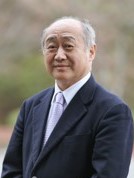 Kingo Uchida (内田欣吾)合作论文数Course of Materials Chemistry, Faculty of Advanced Science and Technology, Ryukoku University15
 Takao Kobayashi合作论文数14Satoshi Yokojima合作论文数11Alexander Goldberg合作论文数National Institute on Drug Abuse, National Institutes of Health8
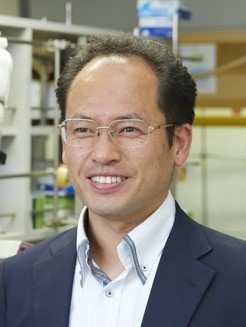 Seiya Kobatake (小畠誠也)合作论文数Department of Applied Chemistry, Graduate School of Engineering, Osaka City University7
 Osamu Kanie合作论文数Mitsubishi Kagaku Institute of Life Sciences (MITILS)5Shusaku Daikoku合作论文数5M Saito合作论文数5
 Hiroyuki Yoshitomi合作论文数4Takayuki Fujii合作论文数4
 Kenji Matsuda (松田建児)合作论文数Department of Synthetic Chemistry and Biological Chemistry, Graduate School of Engineering, Kyoto University4Hidemi Terashima合作论文数4Kohei Nishitani合作论文数Department of Orthopaedic Surgery, Kyoto University Graduate School of Medicine4
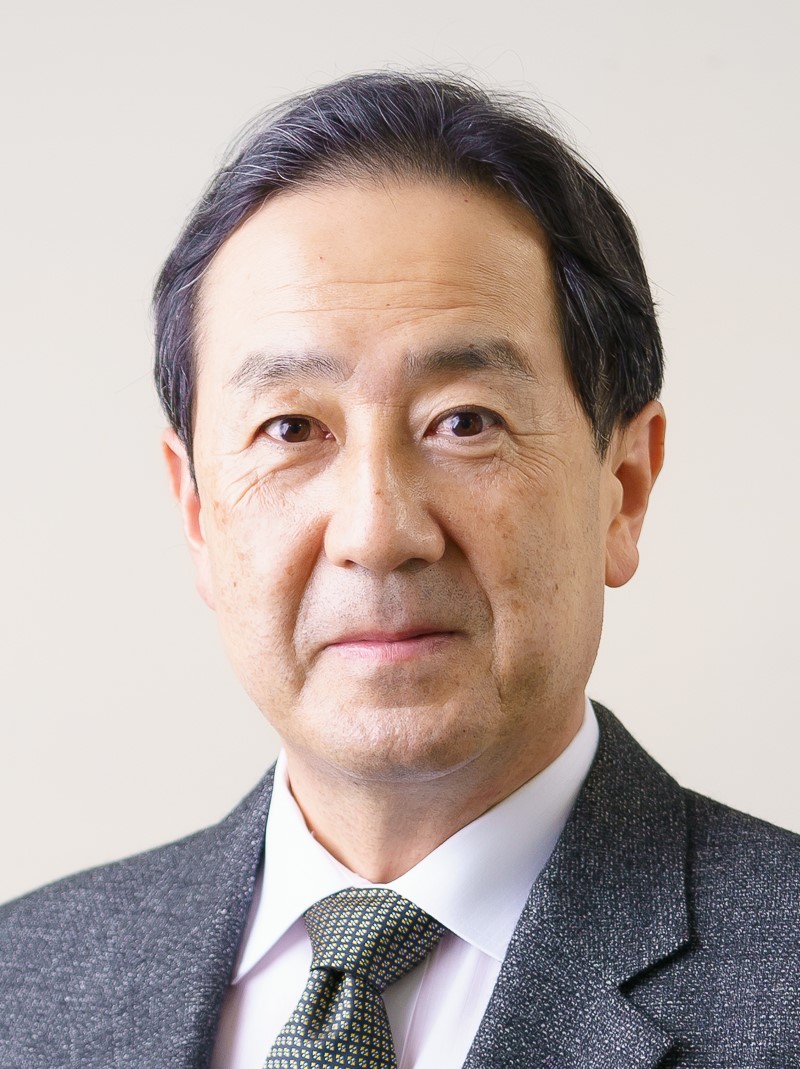 Shuichi Matsuda (松田秀一)合作论文数Department of Orthopaedic Surgery, Kyoto University Hospital;Graduate School of Medicine and Faculty of Medicine, Kyoto University4Tatiana A. Romanova合作论文数3hiroaki iwaki合作论文数3Hiromu Ito合作论文数3Keiko Shinoda合作论文数3Kuriyama Shinichi合作论文数3
 Kentarou Kawaguchi (川口建太郎)合作论文数Department of Chemistry, Okayama University3Koichi Murata合作论文数Department of Orthopaedic Surgery, Kyoto University Graduate School of Medicine3
 Hideki Ueno合作论文数Institute for the Advanced Study of Human Biology, Faculty of Medicine, Kyoto University;Department of Immunology, Graduate School of Medicine, Kyoto University3Motomu Hashimoto合作论文数Department of General Internal Medicine, Rakuwakai Otowa Hospital3
 Masayoshi Mikami合作论文数Yokohama Research Center, Mitsubishi Chemical Corporation3
 Tsuyoshi Tsujioka合作论文数3Atsushi Takata合作论文数Graduate School of Medical Sciences, Kyushu University3Takayuki Shoda合作论文数3Dominique Guillaumont合作论文数3S Yabushita合作论文数2T Noro合作论文数2Yugo Morita合作论文数2
 Yasuhiro Murakawa合作论文数2Iwasaki Takeshi合作论文数2
 Shigeru Ikuta合作论文数General Education Department, Tokyo Metropolitan University2Shuji Saito合作论文数2
 Kozo Aoki合作论文数2
 Chikashi Terao合作论文数The School of Pharmaceutical Sciences, University of Shizuoka;Laboratory for Statistical and Translational Genetics, RIKEN Center for Integrative Medical Sciences;Clinical Research Center, Shizuoka General Hospital2
 Motoyuki Shiga合作论文数Center for Computational Science and E-systems, Japan Atomic Energy Agency2
 Tuyoshi Fukaminato合作论文数Graduate School of Engineering, Kyushu University2
 Ryu Watanabe合作论文数Department of Rheumatology and Hematology, Tohoku University Graduate School of Medicine2
 Yukinori Okada (岡田随象)合作论文数Department of Genome Informatics, Graduate School of Medicine, University of Tokyo;Department of Statistical Genetics, Osaka University Graduate School of Medicine;Laboratory for Systems Genetics, RIKEN Center for Integrative Medical Sciences2T. Shoda合作论文数1Akio Umemoto合作论文数1Hideo Onizawa合作论文数1yasuhiro hirahara合作论文数1Shinichiro Ishie合作论文数1




