This is a brief account of the professional life of the writer and of some of the people who influenced him along the way.
The Argument from Design is possibly the oldest attempt to 'prove' the existence of a deity, or, at least, to persuade people that it is reasonable to believe in one. Although the Argument has often been used in the context of biology, its use in the context of astronomy is arguably earlier. In this paper, its history in astronomical contexts is traced from ancient times to modern discussions of the 'fine tuning' of the Universe.
I read the series of articles responding to Stephen Hawking’s warning about the possible motivations of extra-terrestrial beings with interest and some surprise. The surprise arose from the apparen...
The Argument from Design is possibly the oldest attempt to 'prove' the existence of a deity, or, at least, to persuade people that it is reasonable to believe in one. Although the Argument has often been used in the context of biology, its use in the context of astronomy is arguably earlier. In this paper, its history in astronomical contexts is traced from ancient times to modern discussions of the 'fine tuning' of the Universe.
The emission profile of H a above the continuum in the spectrum of s Lyr appears to consist of two components, a one of total width about 1000 km sec1 and central intensity approximately equal to that of the neighboring continuum at midprimary eclipse, and a one of total width between 600 km sec1 and 700 km sec1 and central intensity several times that of the broad component. The total intensity of the emission remains approximately constant over time intervals comparable to the orbital period, the large apparent changes being mainly the results of the changing intensity of the stellar continua during the eclipses. From one year to another, however, real changes in the mean emission intensity may occur. The center of the narrow component shows little or no velocity shift throughout the orbital cycle. The center of the broad component shows shifts that could be interpreted as being opposite in phase to those shown by the primary (B8 absorption) spectrum. Preliminary measures of Hs and H y suggest that the Balmer decrement of the narrow component is appreciably steeper than that of the broad component. A tentative explanation of these facts is offered. The narrow component of the emission is believed to arise in a shell or ring surrounding the whole system, while the broad component comes from an envelope around the still unobserved secondary star. The satellite lines seen in the spectrum during primary eclipse are explained as absorption lines produced in the envelope, rather than as a direct result of absorption by gaseous streams. Actually there is only one gaseous stream in the system flowing from the B8 component toward its companion.
Auguste Comte is frequently ridiculed by astronomers for saying that human beings would never be able to know the physical nature and constitution of the stars. His philosophy, however, influenced scientists throughout his lifetime and for over a century after his death. That influence is traced here in the work of three outstanding scientists who spanned, roughly speaking, three successive generations after his own, namely, Ernst Mach, Max Planck and Arthur Stanley Eddington.
Observational errors are inevitable in astronomy, and statements of results are not complete without some estimate of the uncertainties involved. While we always strive to reduce those uncertainties, we know that some will remain. There have been times in the history of science when errors have masked second-order effects and actually assisted in the process of scientific discovery.
Although the University of St Andrews is much older, teaching of and research in modern astronomy began there little more than sixty years ago. Their inception was strongly associated with one man, Erwin Finlay-Freundlich. Some account is given here of his work in St Andrews and the influence he had on younger generations.(1)
William Herschel's solar model in which the Sun was believed to be a dark solid body surrounded by two atmospheres, of which the outer was luminous, continued to be accepted by astronomers well into the nineteenth century. Developments in spectroscopy and in our understanding of thermodynamics eventually led to the abandonment of this model in favour of one in which the Sun was considered to be gaseous throughout, but traces of the older theories can be found even in the early twentieth century.
I. Hubeny Welcome to the last panel meeting. We invite general comments either from the audience or from the panelists. V. Trimble Well, Mercedes started us with a vocabulary item and I think I would like to end with a vocabulary item. When they were first discovered, we called them ‘extra solar system planets’ which was descriptive and fine, but it's just rather cumbersome. At some point they became ‘extra solar planets.’ Now I have never seen a planet inside the Sun. And therefore ‘extrasolar’ is not a good descriptor. ‘Exoplanets’ is OK, but now that there are so many of them that perhaps they are simply ‘the planets.’ When you want to specialize to ours, you could say ‘solar system planets.’ Think how much ink it would save.
The Program Group for World-wide Development of Astronomy (PG-WWDA) is one of nine Commission 46 program groups engaged with various aspects of astronomical education or development of astronomy education and research in the developing world. In the case of PG-WWDA, its goals are to promote astronomy education and research in the developing world through a variety of activities, including visiting astronomers in developing countries and interacting with them by way of giving encouragement and support.
 Hugo Levato合作论文数5
 Julieta Fierro合作论文数4
 Guillermo Torres合作论文数Center for Astrophysics, Harvard & Smithsonian4
 Dimitri Pourbaix合作论文数Institut d'Astronomie et d'Astrophysique;Universite Libre de Bruxelles;Institut d'Astronomie et d'Astrophysique, Universite Libre de Bruxelles4
 Andrei A. Tokovinin合作论文数Cerro Tololo Inter-American Observatory, CTIO/AURA Inc.4C. D. Scarfe合作论文数4
 Stéphane Udry合作论文数Department of Astronomy, Universite de Geneve4d g maccarthy合作论文数3A. Athem Alsabti合作论文数3John B Hearnshaw合作论文数3William I. Hartkopf合作论文数3
 Nidia Morrell合作论文数Carnegie Institution for Science;Las Campanas Observatory3Yoshihide Kozai合作论文数3Francis C. Fekel合作论文数3
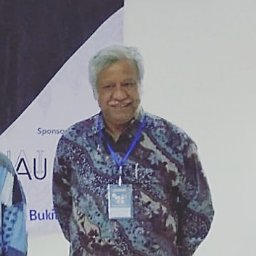 Hakim Luthfi Malasan合作论文数Bosscha Observatory, Institut Teknologi Bandung3J. V. Narlikar合作论文数3Jm Fletcher合作论文数2Robert D. Mcclure合作论文数2Jack M Fletcher合作论文数2John R. Percy合作论文数2Don Wentzel合作论文数2Michele Gerbaldi合作论文数2
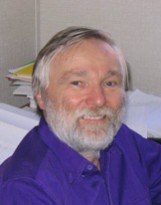 Ivan Hubeny合作论文数Department of Astronomy and Steward Observatory, University of Arizona2Jay M. Pasachoff合作论文数2Derek McNally合作论文数1Barrie W. Jones合作论文数1R. E. Wilson合作论文数1E. Budding合作论文数1A. Linnell合作论文数1D. G. Wentzel合作论文数1G Wallerstein合作论文数1G. Hill合作论文数1Rw Hilditch合作论文数1J Andersen合作论文数1William Tobin合作论文数1v trimble合作论文数1h levato合作论文数1Cd Scarfe合作论文数1d mcnally合作论文数1J. D. Pritchard合作论文数1p eggleton合作论文数1A. Arellano Ferro合作论文数Inst Astron, Univ Nacl Autonoma Mexico1
 Helmut Lammer合作论文数Space Research Institute, Austrian Academy of Sciences;University of Graz1
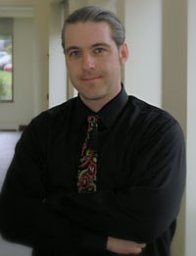 Andrew T. Young合作论文数Department of Economics, West Virginia University1
 Edward Guinan合作论文数Department of Astrophysics and Planetary Science, College of Liberal Arts and Sciences, Villanova University1
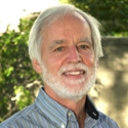 D. Crampton合作论文数1
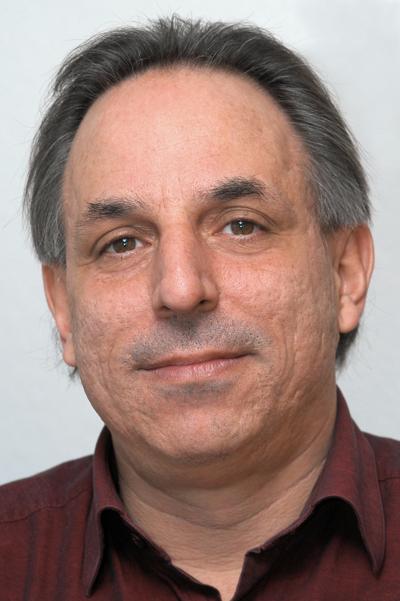 Artie Hatzes合作论文数Thuringer Landessternwarte Tautenburg1




