AbstractSince 1990, the United Nations has held an annual workshop on basic space science for the benefit of the worldwide development of astronomy. Additional to the scientific benefits of the workshops and the strengthening of international cooperation, the workshops lead to the establishment of astronomical telescope facilities through the Official Development Assistance (ODA) of Japan. Teaching material, hands-on astrophysics material, and variable star observing programmes had been developed for the operation of such astronomical telescope facilities in the university environment. This approach to astronomical telescope facility, observing programme, and teaching astronomy has become known as the basic space science TRIPOD concept. Currently, a similar TRIPOD concept is being developed for the International Heliophysical Year 2007, consisting of an instrument array, data taking and analysis, and teaching space science.
The Program Group for the World-wide Development of Astronomy (PGWWDA) is one of nine Comm. 46 program groups engaged with various aspects of astronomical education or development of astronomy education and research in the developing world. In the case of PGWWDA, its goals are to promote astronomy education and research in the developing world through a variety of activities, including visiting astronomers in developing countries and interacting with them by way of giving encouragement and support.
An abstract is not available for this content so a preview has been provided. As you have access to this content, a full PDF is available via the ‘Save PDF’ action button.
 Julieta Fierro合作论文数2Alan H. Batten合作论文数National Research Council2Derek McNally合作论文数1Barrie W. Jones合作论文数1A. Athem Alsabti合作论文数1Joseph M Davila合作论文数1John B Hearnshaw合作论文数1
 David F. Webb合作论文数Institute for Scientific Research, Boston College1
 Hugo Levato合作论文数1
 Jay White合作论文数1
 Richard E. West合作论文数Educational Psychology and Instructional Technology Program, University of Georgia1
 Mary K. Hemenway合作论文数1Michele Gerbaldi合作论文数1
 Masatoshi Kitamura合作论文数Tokyo Astronomical Observatory;University of Tokyo;Tokyo Astronomical Observatory, University of Tokyo1Yoshihide Kozai合作论文数1H. M. K. Al-Naimiy合作论文数1Jeffrey Bennett合作论文数1
 Arak Mathai Mathai合作论文数Department of Mathematics, McGill University1
 Natchimuthuk Gopalswamy合作论文数NASA Goddard Space Flight Center1
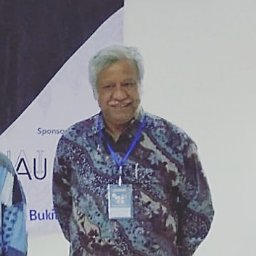 Hakim Luthfi Malasan合作论文数Bosscha Observatory, Institut Teknologi Bandung1
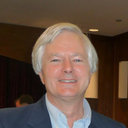 Arne Henden合作论文数1Jay M. Pasachoff合作论文数1
 Hans Joachim Haubold合作论文数Office for Outer Space Affairs;Vienna International Centre;Programme on Space Applications Office for Outer Space Affairs, Vienna International Centre1
 Barbara June Thompson合作论文数Laboratory for Solar & Space Physics, NASA Goddard Space Flight Center1J. V. Narlikar合作论文数1




