Development in the early part of the nineteenth century is pertinent to the discipline of psycholinguistics, with detailed case studies appearing of psychological deficits of various kinds. Just as psychology as a science is traditionally traced to the founding of Wundt's laboratory in Leipzig, modern (largely Anglo-Saxon) psycholinguistics has its quasi-mythical founding moment. The foundation of Wundt's lab and its notional date of 1879 are well known. Less well known is that there was a thriving tradition of experimental work on the psychology of language, particularly in Wundt's own lab. Wundt's early psycholinguistic work and that of other German-speaking or German-influenced psychologists in the late nineteenth and early twentieth centuries has been documented in detail by Arthur Blumenthal. In North America, too, Wundt's influence waned dramatically with the advent of behaviorism. In Europe, Wundt became involved in the kind of arguments that led directly to behaviorism in the United States about the use of introspective techniques—for example. Wundt, himself, favored strict experimentation but the Würzburg group favored the use of introspective techniques. It was from this group that the next great European psycholinguistic, Karl Bühler, emerged. There is no doubt that psycholinguistics is alive and kicking. All psycholinguists have their own favored questions and techniques, but there is plenty to keep all, and more, busy for the foreseeable future. They should learn whatever they can however and from whomever.
 Yosef Grodzinsky合作论文数Neurolinguistics Laboratory, Edmond and Lily Safra Center for Brain Sciences, The Hebrew University of Jerusalem;Department of Cognitive and Brain Sciences, The Hebrew University of Jerusalem3
 Lorraine K. Tyler合作论文数Centre for Speech, Language, and the Brain, Department of Psychology, University of Cambridge3
 Marcia C. Linebarger合作论文数Paramax Systems Corporation3Joanna Miller合作论文数2Thomas Roeper合作论文数2Moira Yip合作论文数2George Miller合作论文数2Christopher Longuet-Higgins合作论文数2Elan Dresher合作论文数2Edward E. Smith合作论文数2George Boolos合作论文数2Deirdre Gentner合作论文数2
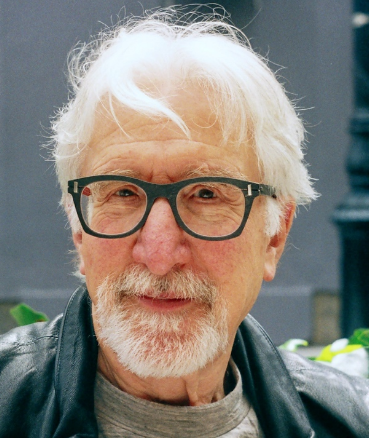 Ned Block合作论文数Department of Philosophy, College of Arts & Science, New York University2Berwick Robert C合作论文数2
 Lance Rips合作论文数Department of Psychology, Weinberg College of Arts and Sciences, Northwestern University2
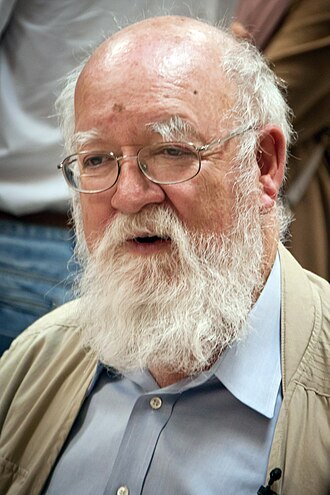 Daniel C. Dennett合作论文数Philosophy Dept, Tufts University2
 Daniel Kahneman合作论文数School of Public and International Affairs, Princeton University2Henry Gleitman合作论文数2Uli H. Frauenfelder合作论文数2
 Andrew W. Ellis合作论文数1Scott Weinstein合作论文数1Maria Luisa Zubizarreta合作论文数1
 Myrna F. Schwartz合作论文数Moss Rehabilitation Research Institute1
 Rebecca Treiman合作论文数Department of Education, College of Arts and Sciences, Washington University;Reading and Language Lab, College of Arts and Sciences, Washington University1
 Duane D. Miller合作论文数Neuroscience Institute, University of Tennessee Health Science Center;Department of Pharmaceutical Sciences, College of Pharmacy, University of Tennessee Health Science Center1
 William Marslen-Wilson合作论文数Department of Psychology, University of Cambridge;Interdisciplinary Research Centre, University of Cambridge1Jean-Roger Vergnaud合作论文数1
 Eleanor M. Saffran合作论文数Department of Communication Sciences and Disorders, Temple University1Scott Weinstein合作论文数Information
Computation Program
School of Arts and Sciences
University of Pennsylvania1Yonata Levy合作论文数1Edgar Zurif合作论文数1Gillian Sin合作论文数1
Eleanor M. Saffran合作论文数Department of Communication Sciences and Disorders, Temple University1Scott Weinstein合作论文数Information
Computation Program
School of Arts and Sciences
University of Pennsylvania1Yonata Levy合作论文数1Edgar Zurif合作论文数1Gillian Sin合作论文数1




